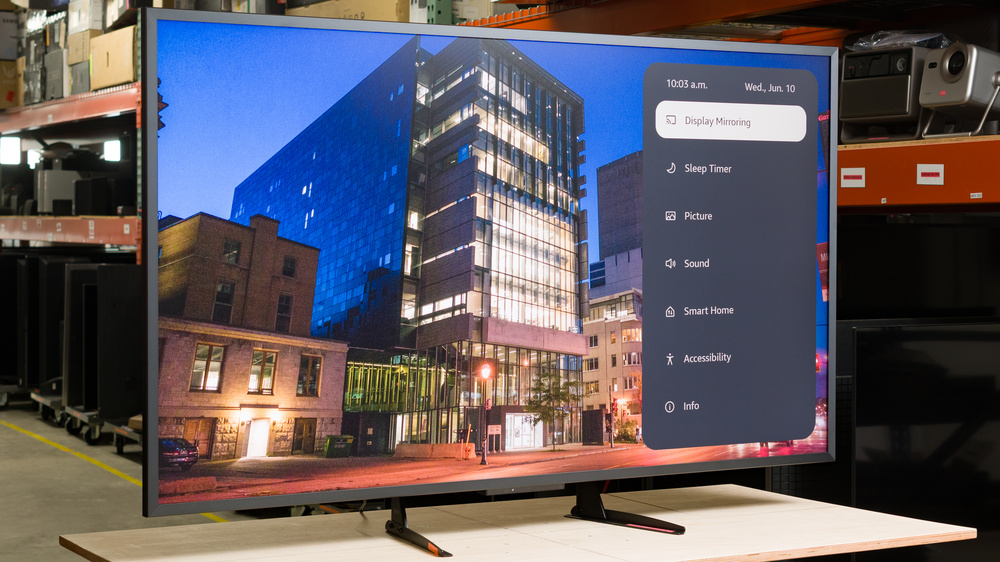
The Amazon Ember Artline 2026 is a new model in Amazon's Ember TV lineup. Designed to compete with other gallery-style models, it features user-replaceable bezels that are designed to make it look like a piece of art when not in use. New software features allow it to display slideshows of your pictures or artwork, with over 2,000 pieces of art built in, and like most Amazon devices, it supports hands-free voice control with Alexa. The TV itself is a pretty basic edge-lit LED model, with no local dimming and few picture-enhancing features. We bought and tested the 65-inch model, but it's also available in a 55-inch version if you want something a bit smaller.
Our Verdict
The Amazon Ember Artline is a mediocre TV overall. It looks best in a moderately lit room thanks to its good peak brightness and great direct reflection handling. It's not a great choice for a darker home theater room, as its low contrast ratio results in washed-out dark scenes. It's not well-suited for gaming due to its very slow response time, and fast action in any content is very blurry due to the TV's slow response time. It has a good selection of smart features, though, and its art feature offers good customization, but its high minimum brightness makes it less suitable for use at night.
Good peak brightness.
Great reflection handling.
Poor contrast and no local dimming.
Does very little to smooth out low-quality content.
Sub-par uniformity.
Image degrades when viewed from the sides.
The Amazon Ember Artline is a mediocre TV for use in a home theater. It has low contrast, so very dark shadow details are raised and look washed out, and bright parts of the scene don't stand out well at all. It has good color volume, though, and decent peak brightness. Sadly, it has sub-par processing and can't do much to clean up macro blocking and pixelization from low-quality streaming services. It also has very limited audio format support, and while it technically supports eARC, you're better off connecting your external devices straight to your audio system.
Good peak brightness.
Poor contrast and no local dimming.
Does very little to smooth out low-quality content.
Bad upscaling.
Significant banding in dark shades.
Can't remove judder from most content.
The Amazon Ember Artline is good for use in a bright room. It has good peak brightness in SDR, so it can overcome some glare, and its matte anti-reflective coating helps reduce glare from lights and windows. This comes with a hit to the overall picture quality, though, as dark scenes are more washed out during the day and colors are less vibrant. The matte coating also adds a slight haze to the screen that can be distracting.
Good peak brightness.
Great reflection handling.
Ambient light reduces contrast and color saturation.
The Amazon Ember Artline is just okay for watching sports during the day. It has good peak brightness, so it can handle some glare during the day, but with its narrow viewing angle, it's not a good choice for a wide seating arrangement or large groups. It has mediocre screen uniformity as well, and the sides of the screen are noticeably darker than the center. It also has disappointing motion handling, and fast action is blurry, with noticeable color artifacts in some scenes. It also has sub-par processing, and it can't clean up low-quality streams from cable TV channels or streaming sports.
Good peak brightness.
Great reflection handling.
Does very little to smooth out low-quality content.
Bad upscaling.
Motion is extremely blurry.
Sub-par uniformity.
Image degrades when viewed from the sides.
The Amazon Ember Artline TV is a sub-par choice for gaming. It has a limited selection of gaming features, with a low 60Hz refresh rate. It supports VRR, but it doesn't work properly and can only be enabled on one input. It also has higher-than-average input lag, so fast action feels sluggish. Finally, it has very high CAD, meaning all motion looks blurry. On the positive side, changing to the lowest-latency Game Mode has no negative impact on picture quality.
Game Mode has no negative impact on picture quality.
Above average input lag.
Motion is extremely blurry.
Limited gaming features don't work properly.
The Amazon Ember Artline has decent peak brightness. It gets bright enough in SDR to overcome some glare during the day. It also brings out most HDR content well enough, but combined with its low contrast ratio, small details lack punch, and bright highlight details don't stand out at all.
Good peak brightness.
The Amazon Ember Artline has poor black levels. The native contrast ratio of the panel is good, but since it lacks a local dimming feature, dark scenes are always raised and blacks look washed out.
Poor contrast and no local dimming.
The Amazon Ember Artline has satisfactory colors. It displays a wide range of colors, and they're bright and vibrant for the most part, but they're a bit washed out in very bright scenes. It also has okay accuracy out of the box, but the color temperature is a bit warm, and it has a slightly reddish tint to it.
Good color volume.
Warm color temperature out of the box.
Can't display chroma 4:4:4 properly.
The Amazon Ember Artline has disappointing motion handling when watching content. It has a terrible response time, with slow, uneven transitions that cause motion to appear blurry and with unwanted intermediate colors. On a processing level, it can't remove judder from most content, so the frame timing is noticeably off, and motion isn't smooth. On the flip side, there's relatively little stutter, and it doesn't drop frames when watching content.
Can't remove judder from most content.
Noticeable color artifacts in fast-moving content.
Motion is extremely blurry.
The Amazon Ember Artline TV has bad responsiveness in Game Mode. It has very limited format support, a low refresh rate, and its VRR feature doesn't work properly. More importantly, its CAD is extremely high, meaning that fast motion is incredibly blurry when gaming. It also has higher-than-usual input lag, which is fine for turn-based or slower games, but faster action feels sluggish.
Above average input lag.
Motion is extremely blurry.
Limited gaming features don't work properly.
Note: We're in the process of improving our tests related to image processing, but this score should give you a general idea of how a TV performs overall with its image processing capabilities.
The Amazon Ember Artline has sub-par processing. The TV's processors simply can't do much at all to clean up low-quality streams like cable TV channels or streaming broadcasts, and its upscaling is very soft. It tracks the intended brightness level well with midtones, but shadow details are noticeably off, and there's significant banding in darker tones.
Does very little to smooth out low-quality content.
Significant banding in dark shades.
Can't display chroma 4:4:4 properly.
Performance Usages
Changelog
-
Updated Jul 21, 2026:
We added more details on the art mode to the Interface section of the review.
-
Updated Jul 14, 2026:
We bought and tested the Samsung The Frame 2026, and added a comparison in the SDR Brightness section of the review.
- Updated Jun 15, 2026: Review published.
- Updated Jun 10, 2026: Early access published.
Check Price
Differences Between Sizes And Variants
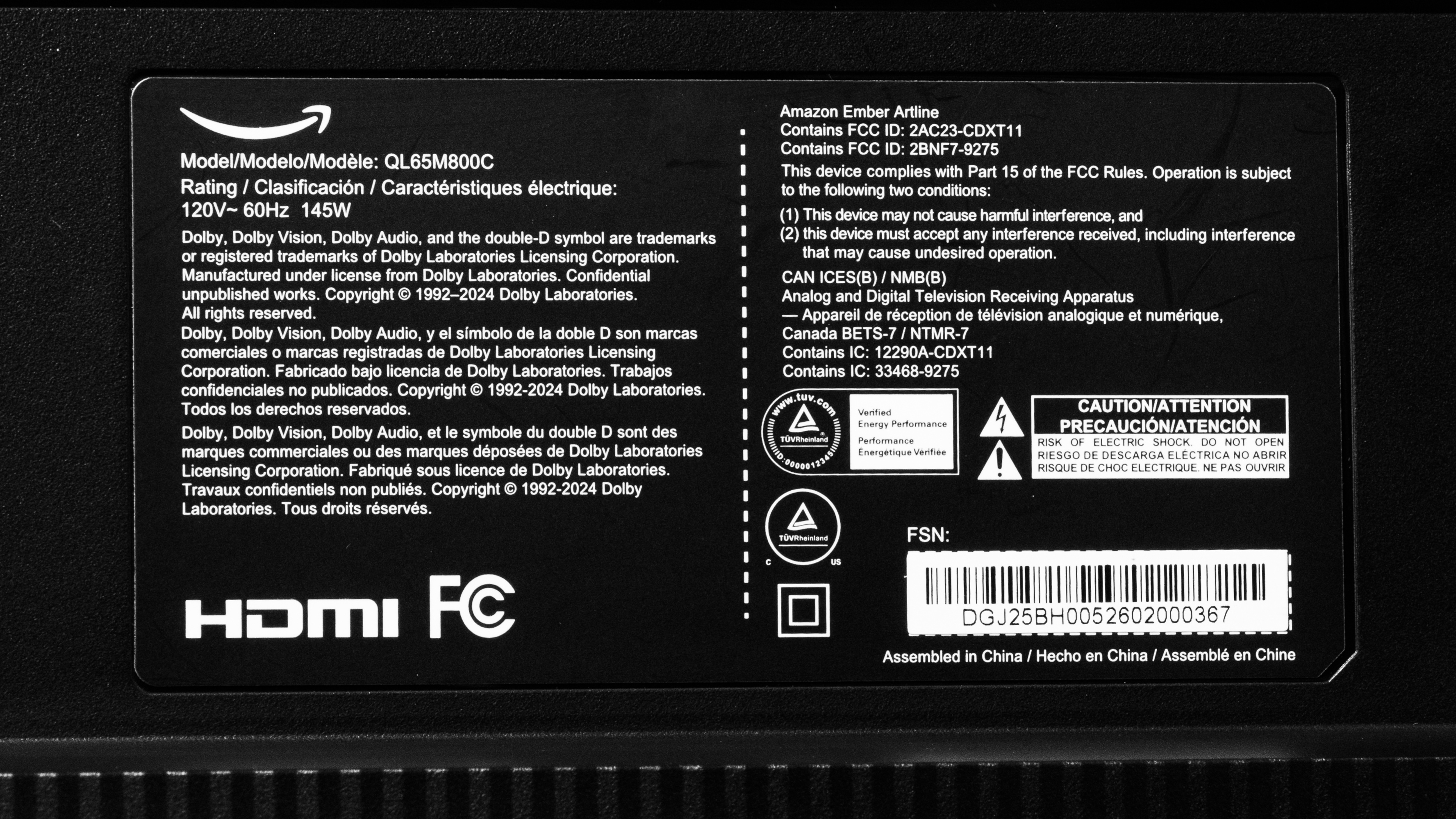
We bought and tested the 65-inch Amazon Ember Artline 2026, and these results also apply to the 55-inch model. There are no variants or regional versions of this TV, and it's only available through Amazon. The last letter of the model varies between regions, but there's no difference in performance or features.
| Size | US Model | Canadian Model |
|---|---|---|
| 55" | QL55M800A | QL55M800C |
| 65" | QL65M800A | QL65M800C |
Our unit was manufactured in China in January 2026.
Popular TV Comparisons
Amazon has finally entered the increasingly popular gallery TV market with the introduction of the Amazon Ember Artline TV. It competes with other models in this space, including the Hisense CanvasTV 2026, the Samsung The Frame Pro 2026, and the LG Gallery 2026. Unfortunately, it's the worst performer of the bunch, and with its poor picture quality and numerous processing and motion issues, you're far better off getting one of the competing models.
See our recommendations for the best 4k TVs, the best budget TVs, and the best frame TVs.
The Amazon Ember Artline 2026 and the Samsung The Frame 2026 trade blows in a few different ways, but the Samsung is much better overall. The Amazon gets a lot brighter, but has worse reflection handling, so the Samsung is still the better choice for a bright room. The Samsung also has much better image and motion processing.
The TCL QM6K is a significantly better TV than the Amazon Ember Artline 2026. The TCL delivers much better picture quality, with much better contrast thanks to its full-array local dimming feature. The TCL also has a much better range of additional features, especially for gaming, where it can take full advantage of the latest consoles with lower input lag and significantly less blur in fast-moving content.
The Hisense CanvasTV 2026 delivers a much better experience than the Amazon Ember Artline 2026. While they offer similar overall picture quality, the Hisense has much better processing. Low-quality content like streaming services and cable TV look significantly better on the Hisense, with smoother motion, less banding, and an overall cleaner image.
The Samsung QN80H is a much better TV than the Amazon Ember Artline 2026. While you lose out on the replaceable bezels, the Samsung delivers a far superior image, with much deeper blacks, brighter highlights, and more accurate colors. The Samsung also has much better processing and motion handling, so streaming content is much smoother and cleaner overall, and older, lower-resolution content is scaled better.

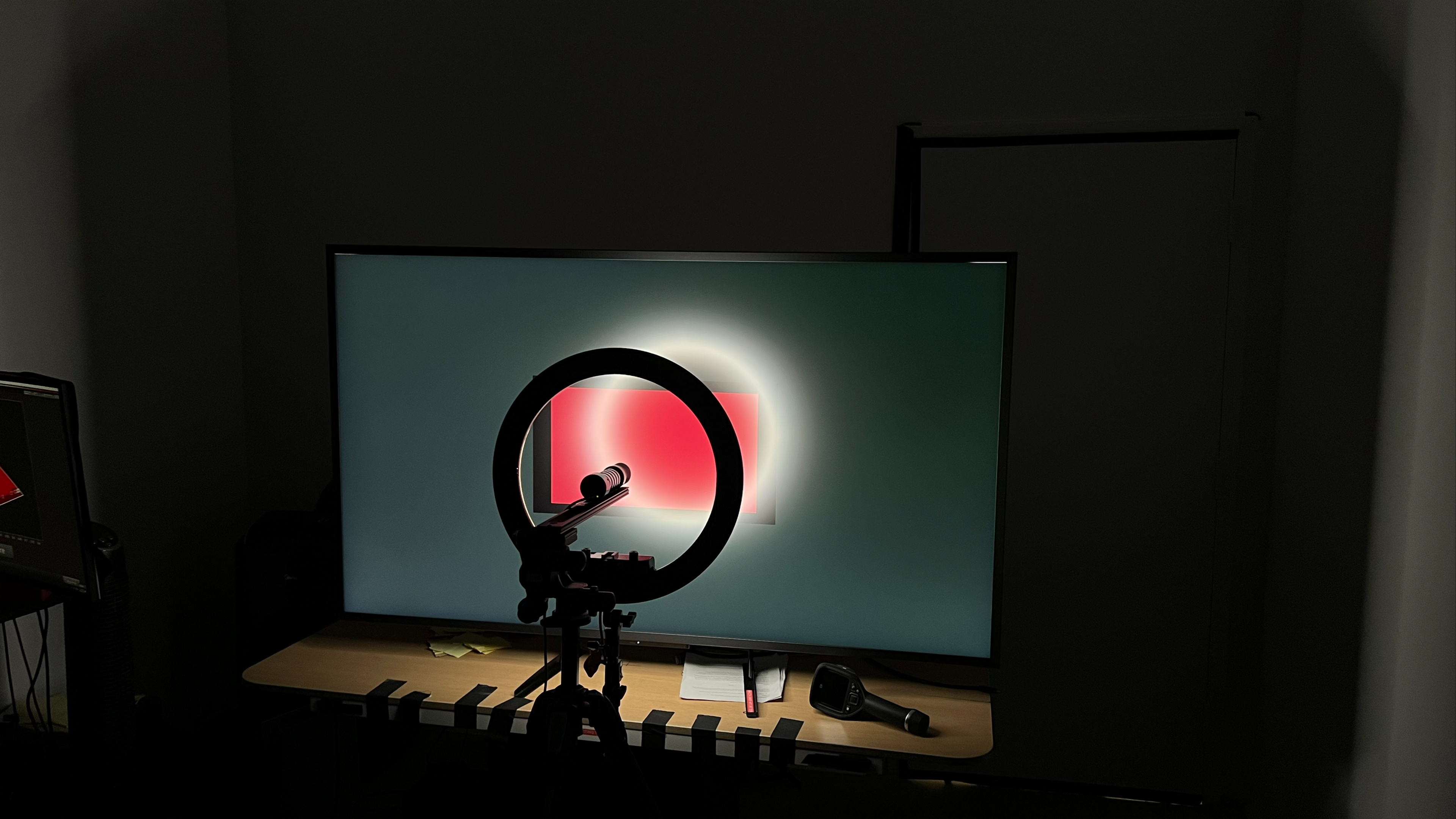
We buy and test dozens of TVs yearly, taking an objective, data-driven approach to deliver results you can trust. Our testing process is complex, with hundreds of individual tests that take over a week to complete. Most of our tests use specially designed test patterns that mimic real content, but we also use the same sources you have at home to ensure our results match the real-world experience. We use two main tools for our testing: a Colorimetry Research CR-100 colorimeter and a CR-250 spectroradiometer.
Test Results
for pictures & test results

for pictures & test results

for pictures & test results

The Amazon Ember Artline has just alright peak brightness in HDR. While most content is bright overall, small details don't stand out at all, and most real scenes look flat and dull. There's no variation in brightness with different content, though, which is great.
for pictures & test results

for pictures & test results

for pictures & test results

Switching to Game Mode has no noticeable impact on brightness in HDR. Colors are slightly more saturated overall, despite using the same picture settings in both modes.
The SDR peak brightness on this TV is good. It's bright enough to overcome glare in a moderately lit room, but it's not a good choice for an overly bright room. It's considerably brighter than some competing models, like the Samsung The Frame 2026.
for pictures & test results

Unfortunately, this TV has poor contrast. The native contrast of the panel is good, so most content looks okay, but since there's no local dimming feature, dark scenes are washed out.
for pictures & test results

This TV doesn't have a local dimming feature, so there's no haloing around bright objects or subtitles during dark scenes, but the entire screen is washed out.
for videos & test results

This TV doesn't have a local dimming feature, so it can't adjust the backlight of individual zones to brighten up highlights without impacting the rest of the image. This means that there's no distracting flicker or brightness changes as bright highlights move between dimming zones.


for pictures & test results

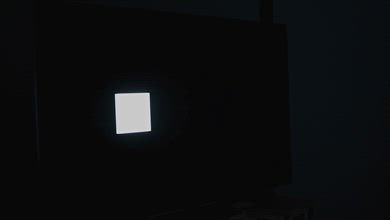
The black uniformity is just okay. There's some noticeable flashlighting around the four corners of the screen, which can be distracting in a dark room. There's no local dimming feature to improve it.
for pictures & test results

for pictures & test results

The SDR color volume is good. It has great coverage of the DCI-P3 color space, with very little variation in color saturation with lighter scenes. Coverage of the wider BT.2020 color space isn't quite as good, though, and it struggles a bit more with very light scenes, so some colors look a bit washed out.
| Volume ΔE³ | DCI-P3 Coverage |
BT.2020 Coverage |
|---|---|---|
| L10 | 95.10% | 73.51% |
| L20 | 95.06% | 74.77% |
| L30 | 94.07% | 73.88% |
| L40 | 92.47% | 74.52% |
| L50 | 90.52% | 74.35% |
| L60 | 89.16% | 73.24% |
| L70 | 88.67% | 67.40% |
| L80 | 88.39% | 65.33% |
| L90 | 88.58% | 65.16% |
| L100 | 90.36% | 67.64% |
| Total | 90.10% | 70.24% |
for pictures & test results

for pictures & test results

The color volume in HDR is good. Most colors are bright and vibrant, but very bright scenes are a bit washed out. It can't display deep saturated colors in dark scenes well due to its low contrast, though.
for pictures & test results

for pictures & test results

for pictures & test results

The Amazon Ember Artline has mediocre accuracy before calibration. The white balance is noticeably off, with way too much red in most shades, which contributes to its warm color temperature. Color accuracy is much better, though, as saturated colors are displayed well, but off-whites are slightly inaccurate. Gamma tracking is very good overall, but slightly high, so most scenes are just a touch darker than they should be.
for pictures & test results

for pictures & test results

for pictures & test results

The accuracy after calibration is fantastic. It's a fairly easy TV to calibrate, but the settings don't allow for an overly aggressive calibration, so it's a bit limiting. There are no significant issues after calibration, but very bright scenes are noticeably darker than they should be.
See our full calibration settings.
for pictures & test results

for pictures & test results

The Amazon Ember Artline has decent accuracy in HDR before calibration. The white balance and color accuracy are both decent, with just a few minor issues across the board. There are noticeable color mapping errors, especially saturated shades of red, and luminance mapping is a bit off on everything. The overall color temperature is noticeably warm, and brighter shades of gray have too much red in them.
for pictures & test results

for pictures & test results

The TV has great accuracy in HDR after a full calibration. Color accuracy didn't improve much, but the color temperature improved significantly, and the red tone in brighter shades is gone. The white balance improved significantly in brighter shades, but shadow details are still off.
for pictures & test results

The PQ EOTF tracking on this TV is just okay. It tracks most midtones extremely well, but can't display shadow details properly due to its low contrast. Near-blacks are raised, and darker details are a bit crushed. All content cuts off sharply at the TV's peak brightness, which limits gradation in bright areas.
for pictures & test results

The low-quality content smoothing on this TV is sub-par. It preserves details extremely well, but it just doesn't do much to reduce macro blocking and pixelization. This is mainly noticeable in low-quality streams like most streaming services or cable TV channels.
for pictures & test results

Unfortunately, the upscaling on this TV is bad. Fine details are very soft and hard to make out.
for pictures & test results
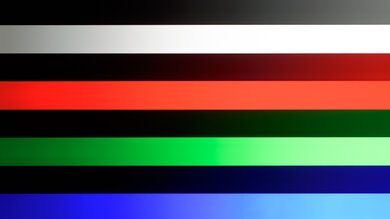
The gradient handling on this TV is sub-par. There's severe banding in all dark shades and in brighter shades of green and blue.
The input lag on this TV is mediocre. It's a bit higher than most other TVs on the market, and while it's low enough for casual gaming or turn-based games, PC users and FPS players will likely find it to be a bit sluggish.
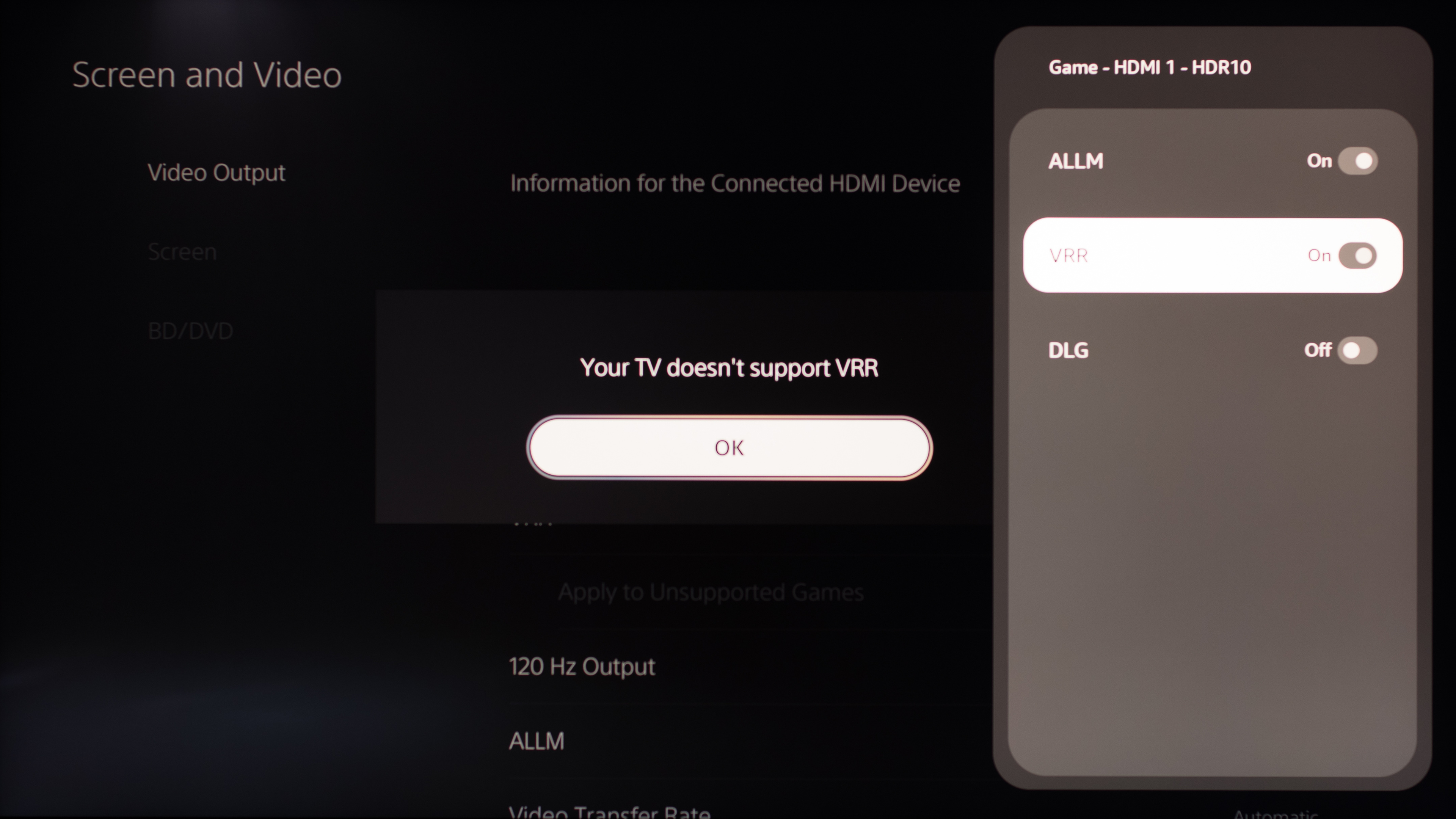
There are a few different ways to enable this TV's low-latency mode. On HDMI 1, you can enable the Gaming HDMI option, which gives you the lowest latency but also enables VRR. On the other ports, you can enable Game Mode, which delivers the same input lag but doesn't support VRR, as VRR only works on port 1.
Although there's a setting for chroma 4:4:4 support, it doesn't actually work, and 4:4:4 isn't displayed properly in any mode. This results in blurry text when used with a PC but doesn't impact picture clarity when gaming on a console.
This TV supports VRR, but only on HDMI 1. There's a separate VRR toggle on the other inputs, but it doesn't actually work, and external devices don't detect the TV as VRR compatible. The VRR feature isn't very effective, anyway, as it has a very narrow range, so it can't take advantage of Low Framerate Compensation. The frame timing is also very inconsistent, even when you're within the operating range of VRR, so it looks better with VRR disabled entirely.
for pictures & test results
for pictures & test results

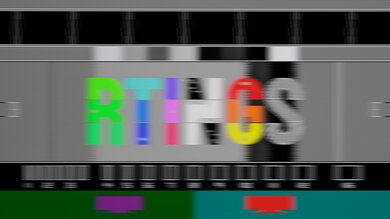
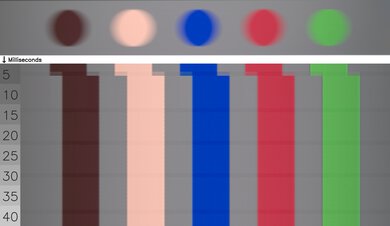
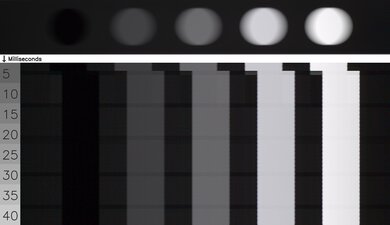
Unfortunately, the Amazon Ember Artline has a bad CAD at the max refresh rate of 60Hz. Motion is incredibly blurry in most scenes. There's no overshoot, but pixels are extremely slow to even transition part way to the next shade.
The Amazon Ember Artline doesn't support a 120Hz refresh rate.
for pictures & test results

for pictures & test results

These results are the same as the max refresh rate, as this TV is limited to a 60Hz refresh rate.
for pictures & test results

This TV can't take full advantage of the PS5 or PS5 Pro. It doesn't support any 120Hz inputs, so you're limited to 60Hz.
for pictures & test results

This TV can't take full advantage of the PS5 or PS5 Pro. It doesn't support any 120Hz inputs, so you're limited to 60Hz. It supports Dolby Vision gaming, though.
for videos & test results
for pictures & test results

for pictures & test results
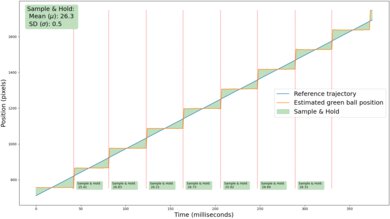
Thanks to its slow response time, there's relatively little stutter on this TV when watching content. You might still notice it in very slow panning shots, but it's minor.
for videos & test results
for pictures & test results

for pictures & test results
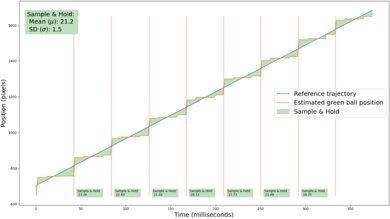
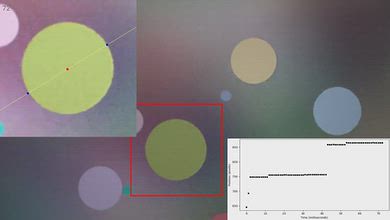
Unfortunately, the motion interpolation feature is ineffective at reducing stutter. While it reduces the average amount of time that each frame is held on the screen, since the TV can't remove judder the frame pacing is noticeably uneven.
for pictures & test results
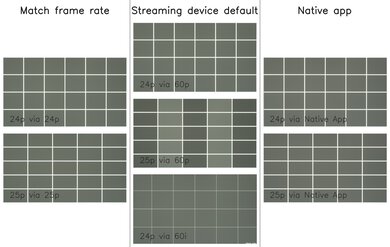
This TV is incapable of removing judder from any 24p content, regardless of the source type or settings used on the TV. This is extremely uncommon, as the TV should technically be able to adjust its refresh rate to remove 24p stutter, but it just doesn't work. This results in a noticeably uneven frame pacing.
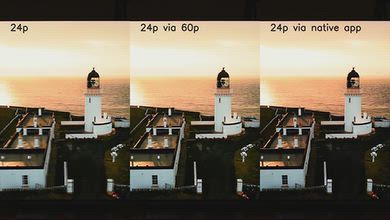
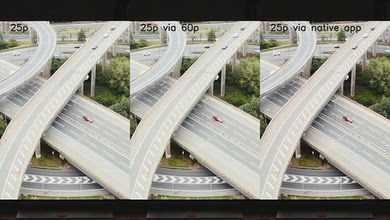
for pictures & test results

for pictures & test results

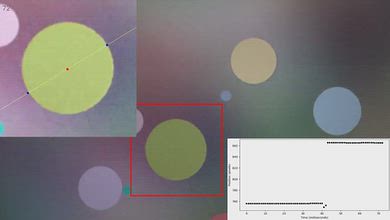
This TV has a terrible response time when watching content. All transitions are incredibly slow, which helps reduce stutter but results in very blurry motion overall.
for pictures & test results

This TV uses pulse-width modulation (PWM) to adjust the backlight intensity. It uses true PWM, with a shorter duty cycle as you lower the backlight setting, and no flicker at max brightness. The PWM frequency is fairly low, which may cause headaches and discomfort in people sensitive to it.
There's no optional backlight strobing feature on this TV, also known as black frame insertion.
for pictures & test results

for pictures & test results

The matte anti-reflective coating on the Amazon Ember Artline does a great job reducing the intensity of direct, mirror-like reflections. Windows and lights directly opposite the screen are barely noticeable.


for pictures & test results

for pictures & test results

The matte coating reduces direct reflections, but works by spreading them out across the screen, so the total amount of reflected light is mediocre. There are no unwanted diffraction artifacts like rainbow smear, though.
for pictures & test results

This TV has decent color saturation in a bright room. Ambient light has a noticeable impact on color saturation, especially for very bright colors.
for videos & test results

for pictures & test results

for pictures & test results

for pictures & test results

The Amazon Ember Artline has a mediocre viewing angle. The brightness of the screen fades noticeably as you move to the sides, and at a wide angle, it becomes very noticeably washed out. This makes it less suitable for a wide seating arrangement.
for pictures & test results

for pictures & test results

The gray uniformity of this TV is sub-par. While there's not too much dirty screen effect in the center, the rest of the screen is considerably darker, which is noticeable in any content.


for pictures & test results

for pictures & test results

The inputs are a bit dated, as all four HDMI ports are limited to HDMI 2.0 bandwidth, and there's no ATSC 3.0 tuner for 4k over-the-air broadcasts.
The TV supports eARC, which allows it to pass uncompressed high-quality audio from a connected source to your home theater system or soundbar. Unfortunately, it has extremely limited format support, and it can only pass through two channels of LPCM audio. The formats it supports work fine for watching shows on the native apps, but external devices like game consoles and Blu-ray players should be connected directly to your audio system instead.
for pictures & test results

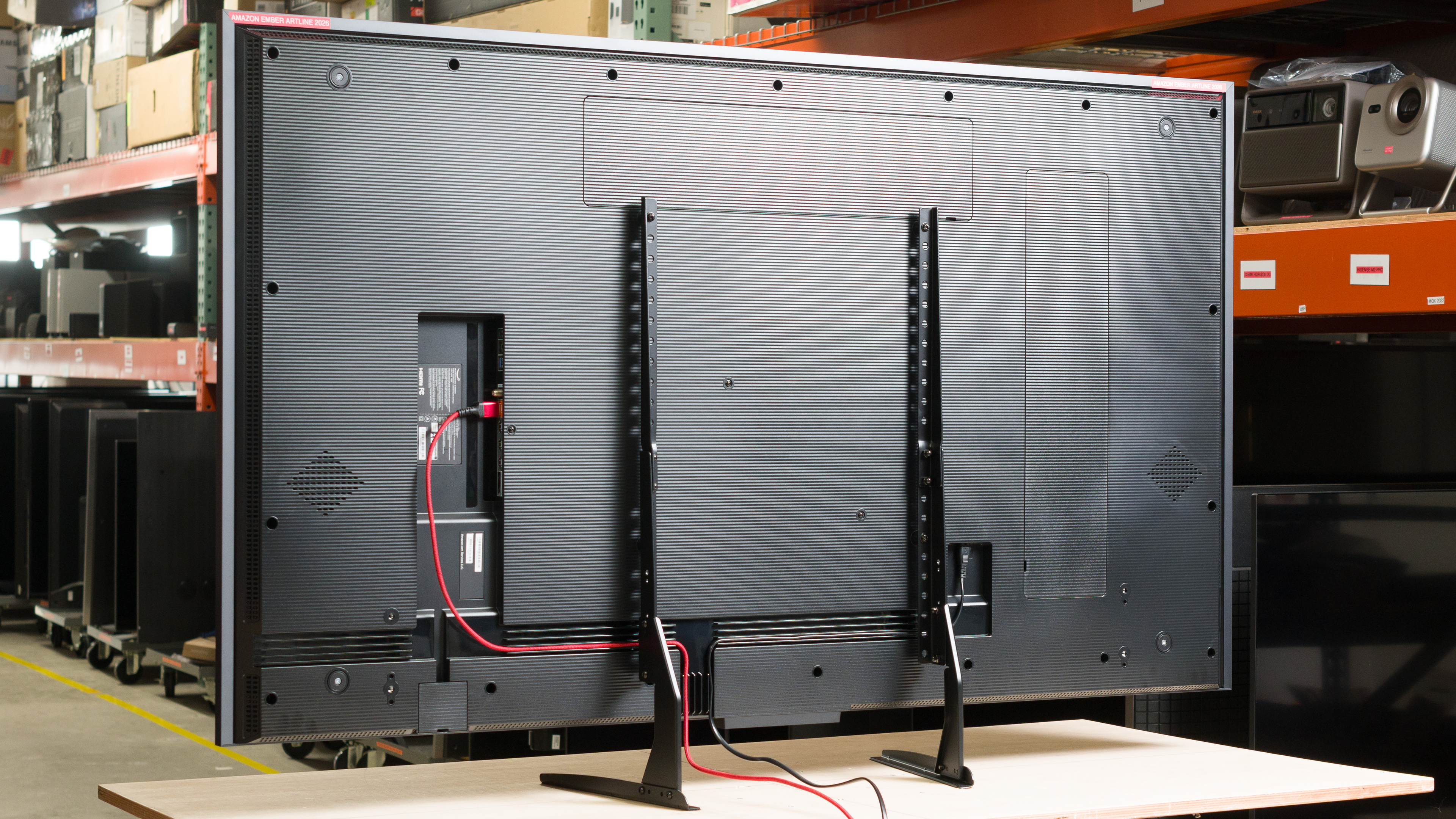
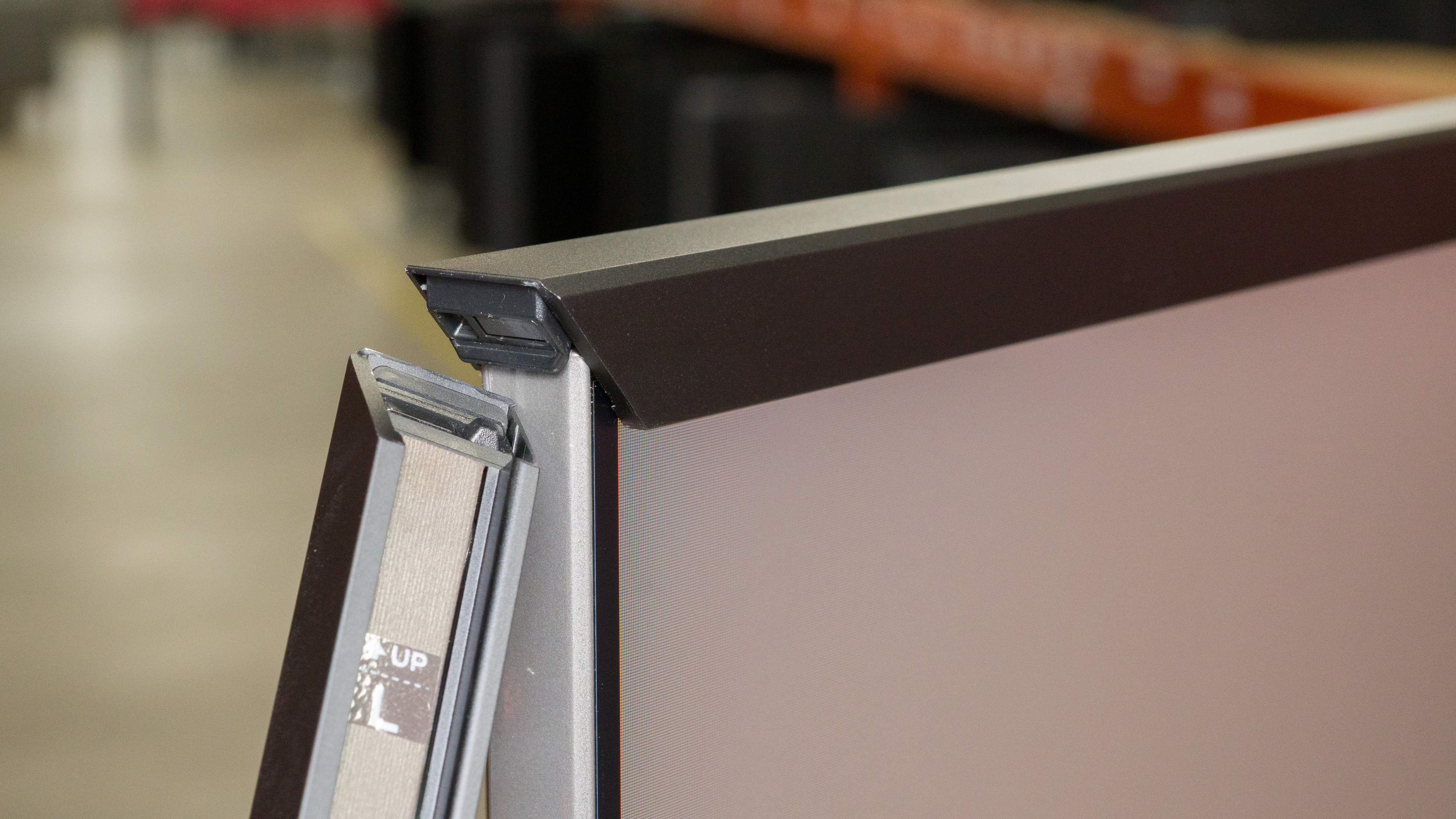
The Amazon Ember Artline has a very typical design for an art gallery TV. It comes with a mounting kit instead of a stand; the ones shown here are third-party feet that mount to the VESA brackets. The bezels are thicker than usual on all four sides, but are uniform, and they can be customized to match your decor, with different colors and finishes available at the time of purchase.
for pictures & test results

This TV doesn't come with a stand. The feet shown are a third-party stand that we purchased separately for testing.
for pictures & test results

The inputs are housed in a recessed box on the right side of the TV (when facing the front). This makes them very difficult to access, but it helps keep the TV flush to the wall when mounted. There are grooves on the back to help route cables out to the bottom of the TV for a clean setup.


for pictures & test results

This TV has good build quality. There are no obvious issues with its construction. The bezels clip on magnetically, and feel nice and solid when installed.
for pictures & test results

This TV runs the Fire TV smart interface, which is modern and has a decent selection of streaming apps. The apps work fairly well, but the interface freezes at times, and there are some bugs, like the VRR feature not working properly and the 4:4:4 setting not actually displaying 4:4:4 properly.
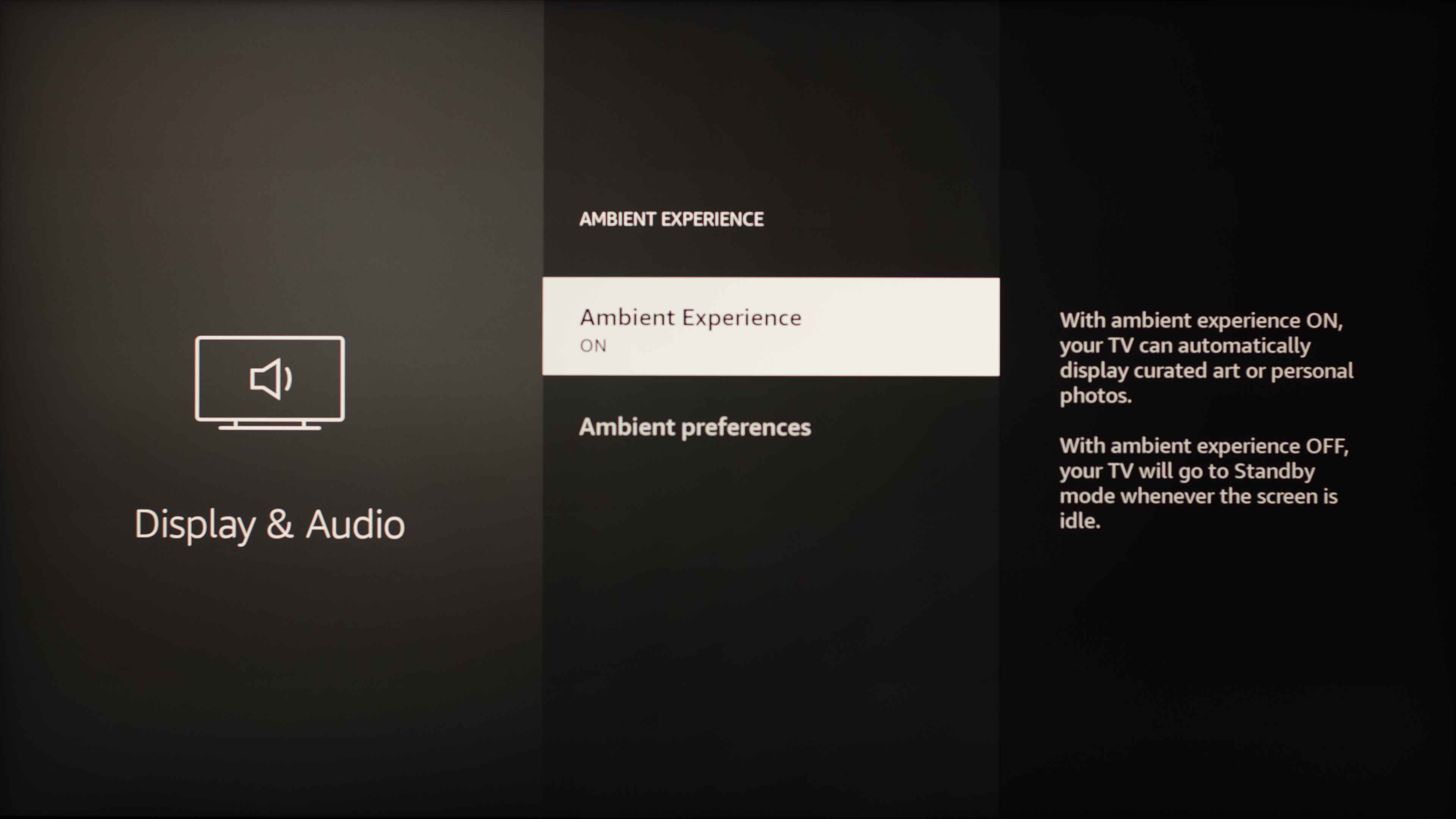
The ambient art experience can be customized to display artwork or your own pictures automatically, and it uses motion detection to turn off when there's nobody in the room. Amazon doesn't offer a subscription service for more artwork, and they offer a good selection of free artwork instead. Like the LG Gallery 2026, there's also a built-in AI feature that can be used to generate artwork. Unfortunately, the minimum brightness in the art mode is only 125 nits, which is very high for use in a dark room.
for pictures & test results

Like all TVs on the market, there are ads throughout the interface, and they can't be fully disabled.


for pictures & test results

- Remote
- Batteries
- Mounting kit
- Bezels (you can choose which one you want at the time of purchase)
- Manuals
This TV was originally tested with firmware version 8.1.7.6 (RS8176/4060).
for pictures & test results

The Amazon Ember Artline has a sub-par frequency response. While it gets very loud, it struggles to deliver clear dialogue, with a noticeable low-treble dip that causes dialogue to sound somewhat recessed and less detailed.