
The Hisense A7N is a budget, entry-level 4k TV released in 2024 as part of Hisense's A-Series lineup, and succeeds the Hisense A7K series. It's a basic TV, but it does have a few additional features that we don't always see in entry-level models, such as full variable refresh rate support, a wide color gamut, and support for both Dolby Vision and HDR10+. It also passes through most advanced audio formats from DTS and Dolby through its eARC port. It's available in 43-, 50-, 55-, 65-, 75, and 85-inch sizes, so there's something for almost any room setup.
Our Verdict
The Hisense A7 is mediocre for mixed usage. It doesn't look very good in a dark room, since blacks lack depth and look gray most of the time. Furthermore, HDR movies and games look lackluster due to the TV's inadequate HDR brightness. Although its image quality is mostly retained when you flip your lights on, this is a dim model that doesn't overcome glare in a well-lit room, making it best suited for a dimly lit environment. The TV doesn't have the modern gaming features needed to take advantage of current consoles, so it's really only suitable for very casual gamers. Unfortunately, it's not a good option for wide seating arrangements since it has a narrow viewing angle.
Great overall color accuracy out of the box.
Blacks and colors are mostly unaffected in a bright room.
Inadequate HDR brightness leads to a lackluster experience.
Too dim in SDR to overcome glare in a well-lit room.
No local dimming to improve contrast.
Unsuitable for wide seating arrangements due to its narrow viewing angle.
The Hisense A7 is inadequate for a home theater. It lacks a local dimming feature, so blacks look gray anytime highlights are on screen, making it look lackluster in a dark room. It displays a wide range of colors, so the image looks somewhat vibrant, but it doesn't display very dark or very bright colors. Furthermore, highlights in HDR don't stand out as they should, so the TV doesn't provide an impactful HDR experience. The TV does a good job upscaling, but it does a poor job cleaning up low-quality content. Finally, it has mediocre motion handling, as it can't remove judder from 60Hz sources like a cable box or from the native apps, and there's noticeable stutter in slow panning shots.
Great overall color accuracy out of the box.
Good upscaling capabilities.
Removes judder from 24p and 60p sources.
Inadequate HDR brightness leads to a lackluster experience.
Poor low-quality content smoothing.
No local dimming to improve contrast.
Can't remove judder from 60Hz sources or the native apps.
The Hisense A7 is mediocre for a bright room. The TV's blacks are similar in a bright room as a dark one, and colors are barely affected by ambient lighting. However, the TV only has alright reflection handling and it's too dim in SDR to overcome very much glare at all, making it best suited for dimly lit environments.
Blacks and colors are mostly unaffected in a bright room.
Too dim in SDR to overcome glare in a well-lit room.
The Hisense A7 is unremarkable for watching sports. The TV has alright reflection handling, but it's too dim in SDR to overcome glare in a well-lit room, so it's best to keep your curtains closed during a sunny day. Low-resolution feeds are upscaled well enough for a detailed image, but the TV has poor low-quality content smoothing, so compressed feeds have visible artifacts present. Colors are well-saturated enough that jerseys and playing fields look vibrant, so the image doesn't look dull. Unfortunately, the TV has a pretty narrow viewing angle, so you need to be seated directly in front for the best image quality. It also has mediocre motion handling, with noticeable color artifacts and soft edges.
Great overall color accuracy out of the box.
Good upscaling capabilities.
- Noticeable uniformity issues in brighter content.
Too dim in SDR to overcome glare in a well-lit room.
Poor low-quality content smoothing.
Unsuitable for wide seating arrangements due to its narrow viewing angle.
Noticeable transition artifacts.
The Hisense A7 is sub-par for gaming. It only has HDMI 2.0 bandwidth on all four of its ports, so you're limited to 4k @ 60Hz. It does support VRR, which helps to keep your screen free from tearing when your frame rate fluctuates. The TV's input lag is low enough that you don't feel a delay when gaming, but its slower pixel transitions mean fast motion lacks clarity. Unfortunately, the TV's black levels are poor. It's too dim in HDR for highlights to stand out, and it struggles to display very dark and bright colors, so its overall image quality leaves a lot to be desired.
Low enough input lag for a responsive feel.
- Supports all VRR technologies.
- Limited to a 60Hz refresh rate.
Inadequate HDR brightness leads to a lackluster experience.
Slow pixel transitions lead to blurry motion.
No local dimming to improve contrast.
The Hisense A7 has poor brightness overall. It's too dim in HDR for highlights to stand out, so HDR content looks lackluster. Furthermore, its SDR brightness is sub-par, meaning it doesn't overcome glare in well-lit rooms.
Inadequate HDR brightness leads to a lackluster experience.
Too dim in SDR to overcome glare in a well-lit room.
The Hisense A7 has poor black levels. It doesn't have local dimming, so there's no haloing around highlights, but the entire image looks washed out anytime highlights are on screen since it has a low contrast ratio. It has decent black uniformity, but there's some noticeable cloudiness throughout the screen during dark scenes.
No local dimming to improve contrast.
The Hisense A7 has decent colors overall. The TV has okay color volume in HDR, but it doesn't display very dark and very bright colors well. Colors have good accuracy in HDR out of the box, so it mostly stays true to the content creator's intent. The TV has decent SDR color volume, so most SDR content looks vibrant enough, but it does struggle with the more rare BT.2020 color space. Fortunately, the TV has great SDR color accuracy out of the box, so it doesn't require calibration if you care about accurate colors.
Great overall color accuracy out of the box.
The Hisense A7N has mediocre motion handling when watching content. It can't remove judder from 60Hz sources or when watching content from the native apps. There's noticeable stutter in slow panning shots, and the TV's motion interpolation feature behaves inconsistently, so even with it enabled, motion is choppy and uneven. There are also noticeable transition artifacts, like unwanted intermediate colors in fast-changing scenes.
Noticeable transition artifacts.
Can't remove judder from 60Hz sources or the native apps.
Terrible frame pacing with motion interpolation.
The Hisense A7 has adequate responsiveness while using its dedicated gaming mode. It's limited to 4k @ 60Hz since it only has HDMI 2.0 bandwidth, but it still has some gaming features like VRR. Input lag is low enough that you don't feel a delay when gaming, but you miss out on the low input lag provided by higher refresh rates. Sadly, the TV's pixel response times are on the slow side, so fast motion is noticeably blurry.
Low enough input lag for a responsive feel.
- Limited to a 60Hz refresh rate.
Slow pixel transitions lead to blurry motion.
Note: We're in the process of improving our tests related to image processing, but this score should give you a general idea of how a TV performs overall with its image processing capabilities.
The Hisense A7 has alright processing overall. It does a good job upscaling, so low-resolution content doesn't lack detail. On the other hand, it does a poor job of removing artifacts from low-quality content. It does a good job displaying HDR content at the brightness level intended by the filmmaker, but it's not perfect, and blacks are noticeably raised. Dark gray and dark blue gradients have visible banding, but overall, the TV's HDR native gradient handling is alright, so you don't see a ton of banding in other colors.
Good upscaling capabilities.
Poor low-quality content smoothing.
Performance Usages
Changelog
-
Updated Mar 12, 2026:
We added text to our new Cinematic Motion Handling performance usage and our new Transition Artifacts and Stutter Reduction Via Interpolation test sections after converting the review to TV 2.2.
- Updated Mar 10, 2026: This review has been updated to TV 2.2. We've added new sections for Transition Artifacts and Stutter Reduction Via Interpolation, and updated the way we test Stutter. Additionally, we removed the 'Broken' disclaimer from our Motion Handling usage.
- Updated Feb 05, 2026: We added text to the new Micro-Judder section and refreshed the text in the updated Judder and Response Time Stutter sections after converting the review to TV 2.1.
-
Updated Nov 21, 2025:
Mentioned the newly reviewed Hisense 98QD5QG in the Low-Quality Content Smoothing section.
Check Price
Differences Between Sizes And Variants
We tested the 65-inch Hisense A7 TV, and our results are also valid for the 50, 55, 75, and 85-inch models. The 43-, 50, and 55-inch sizes only have three HDMI inputs, but they have a full-sized composite input with dedicated audio and video ports. The 65-, 75, and 85-inch sizes have four HDMI ports, but they require an adapter for composite inputs, which is sold separately.
The 43-inch model has less powerful speakers and a reduced set of features, so our results aren't valid for that size.
| Size | US Model | HDMI Ports |
|---|---|---|
| 43" | Hisense 43A7N | 3 |
| 50" | Hisense 50A7N | 3 |
| 55" | Hisense 55A7N | 3 |
| 65" | Hisense 65A7N | 4 |
| 75" | Hisense 75A7N | 4 |
| 85" | Hisense 85A7N | 4 |
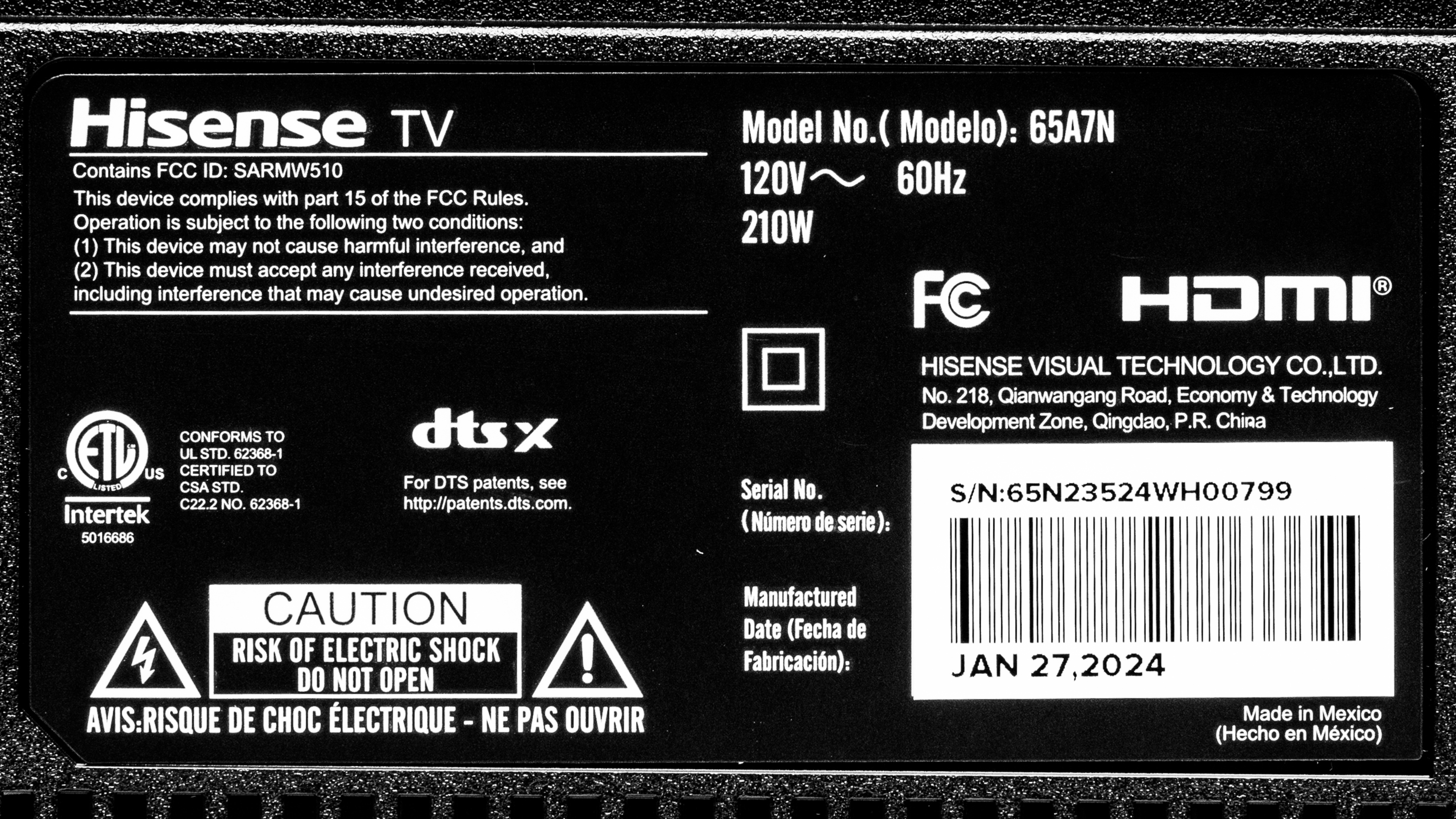
The unit we tested was manufactured in Mexico in January 2024.
Popular TV Comparisons
The Hisense A7 is a budget TV with a few nice features for the price. While it lacks some of the features found on the higher-end Hisense U6N, such as local dimming, it still has VRR support with low input lag for gamers, and it supports both Dolby Vision and HDR10+. Plus, it passes through most advanced audio formats through its eARC port. Ultimately, this is one of the best options at this price point, as it offers not bad image quality overall, and its performance is good enough not to make you regret your purchase. It also competes well against slightly more expensive models like the TCL Q651G, and if you're in need of more features or superior image quality, you can always consider upgrading to the Hisense U65QF or TCL QM6K.
See our recommendations for the best 4k TVs, the best budget TVs, and the best 4k gaming TVs.
The Hisense QD65NF and the Hisense A7N are similar overall. Both are solid budget options for the price, but the QD6 gets a bit brighter in HDR and has better contrast, delivering slightly better overall picture quality. That being said, the A7N is a bit better for gaming, with a faster response time and VRR support, though neither TV is well-suited for modern gaming consoles since they lack HDMI 2.1 bandwidth and are limited to 4k @ 60Hz.
The Hisense QD7N is better than the Hisense A7N in most ways. The QD7 has HDMI 2.1 bandwidth for up to 4k @ 144Hz gaming with VRR, so it's fully compatible with modern consoles and is better for gamers looking for the best possible performance. The QD7 also gets brighter overall, so it's better suited for a bright room. However, the A7N has much better contrast and black levels, so it looks much better when watching movies or shows in a dark room.
The Hisense U65QF is significantly better than the Hisense A7N. The U65QF is brighter in HDR and SDR, has way better contrast due to having a local dimming solution, and has better color volume. The U65QF also has better image processing, except when it comes to PQ EOTF tracking; here, the A7N is noticeably more accurate. For gamers, the U65QF is also better due to supporting 4k @ 144Hz with a wide VRR range; in turn, the A7N tops out at 4k @ 60Hz, with a narrow 48-60Hz VRR range. In the end, the U65QF is just a far better TV.
The Hisense A7N and the TCL S551G are closely matched; in most cases, you should get the cheapest one you can find. The TCL has slightly better contrast, but in turn, the Hisense is a bit brighter, with a wider color gamut, but barely. The TCL's low-quality content smoothing is better than the Hisense's, but the latter's upscaling is noticeably better. The TCL is the better option for gaming due to its 120Hz support at 1440p and 1080p with a wide VRR range. Conversely, the Hisense is limited to 60Hz at all resolutions, with a narrow 48–60Hz VRR range.

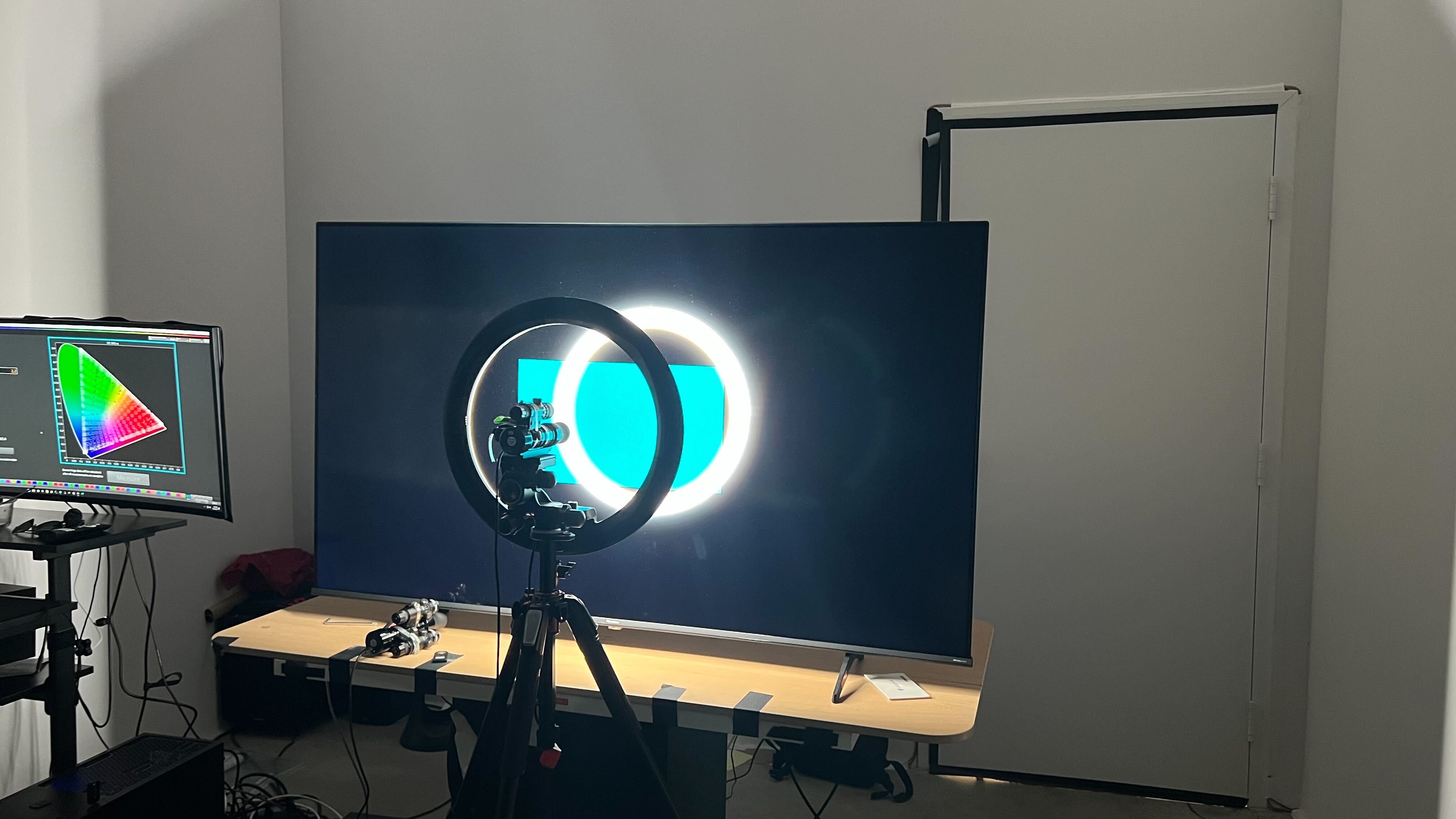
We buy and test dozens of TVs yearly, taking an objective, data-driven approach to deliver results you can trust. Our testing process is complex, with hundreds of individual tests that take over a week to complete. Most of our tests use specially designed test patterns that mimic real content, but we also use the same sources you have at home to ensure our results match the real-world experience. We use two main tools for our testing: a Colorimetry Research CR-100 colorimeter and a CR-250 spectroradiometer.
Test Results
for pictures & test results

for pictures & test results

for pictures & test results

Unfortunately, this TV has inadequate peak brightness in HDR. HDR content looks flat and dull overall, as the TV isn't bright enough to bring out specular highlights, and with the lack of a local dimming feature, bright spots don't pop at all.
These measurements are after calibrating the HDR white point with the following settings:
- HDR Picture Mode: Filmmaker Mode
- Brightness: 100
- Contrast: 50
- Black Level: 0
- Dark Detail: Off
- Gamma: ST2084
- Active Contrast: Off
- Dynamic Tone Mapping: Off
- Color Temperature: Warm 1
If you prefer a brighter but less accurate image, here are the results with Dynamic Tone Mapping set to 'On':
- Hallway Lights: 333 cd/m²
- Yellow Skyscraper: 247 cd/m²
- Landscape Pool: 246 cd/m²
for pictures & test results

for pictures & test results

for pictures & test results

Switching to PC/Game Mode causes a slight, but noticeable decrease in overall peak brightness.
These measurements are after calibrating the HDR white point with the following settings:
- HDR Picture Mode: HDR Game
- Brightness: 100
- Contrast: 50
- Black Level: 0
- Dark Detail: Off
- Gamma: ST2084
- Active Contrast: Off
- Dynamic Tone Mapping: Off
- Color Temperature: Warm 1
If you prefer a brighter but less accurate image, here are results with Dynamic Tone Mapping set to 'On':
- Hallway Lights: 333 cd/m²
- Yellow Skyscraper: 242 cd/m²
- Landscape Pool: 271 cd/m²
The peak brightness of this TV in SDR is sub-par. There's no distracting variation in brightness with different scenes, but it's not bright enough to overcome glare in a well-lit room, although it's just bright enough for moderately lit rooms. If you're looking for a TV to watch in a brighter room, look up the Hisense CanvasTV QLED 2024 instead.
These measurements are after calibration with the following settings:
- Picture Mode: Theater
- Brightness: 100
- Contrast: 45
- Gamma: 2.2
- Color Temperature: Warm 1
- Active Contrast: Off
for pictures & test results

The Hisense A7N has a decent native contrast ratio, so blacks look okay in dark scenes. Unfortunately, it lacks a local dimming feature, so blacks are raised and appear washed out when highlights appear on the screen. If you're looking for a similar TV with a somewhat better native contrast ratio, check out the Hisense QD6/QD65NF QLED.
for pictures & test results

This TV doesn't have a local dimming feature, so there's no haloing around bright objects or subtitles in dark scenes. But as the TV can't brighten highlights without impacting the rest of the image, dark scenes look washed out.
for videos & test results

This TV doesn't have a local dimming feature, so it can't adjust the backlight of individual zones to brighten up highlights without impacting the rest of the image. But this means that there's no distracting flicker or brightness changes as bright highlights move between zones, as the TV doesn't have any.


for pictures & test results

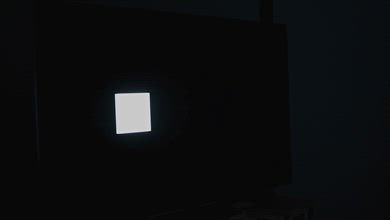
This TV's black uniformity is decent overall. There's no local dimming feature, so the entire screen is a bit raised and cloudy when bright highlights are on the screen. There are no bright spots, though, and there's no noticeable backlight bleed; just uniform clouding throughout.
for pictures & test results

for pictures & test results

The Hisense A7N has decent SDR color volume. It has very good coverage of the DCI-P3 color space, but it does struggle a bit more with yellows and reds. It has mediocre coverage of the widest BT.2020 color space, and the TV struggles with colors across the board in that space.
| Volume ΔE³ | DCI-P3 Coverage |
BT.2020 Coverage |
|---|---|---|
| L10 | 84.90% | 64.22% |
| L20 | 87.03% | 64.93% |
| L30 | 88.63% | 65.87% |
| L40 | 89.14% | 67.99% |
| L50 | 89.34% | 68.39% |
| L60 | 88.46% | 65.64% |
| L70 | 86.44% | 56.01% |
| L80 | 86.18% | 53.36% |
| L90 | 86.95% | 54.52% |
| L100 | 91.87% | 74.93% |
| Total | 87.87% | 61.65% |
for pictures & test results

for pictures & test results

The color volume of this TV is okay. It displays a satisfactory range of colors at many luminance levels, but it struggles with some dark saturated colors due to its lack of local dimming. It's also not bright enough to display very bright colors in HDR content.
for pictures & test results

for pictures & test results

for pictures & test results

The Hisense A7 has impressive accuracy in SDR even before calibrating it. Gamma is very close to the 2.2 level for a moderately lit room, and the color temperature is nearly perfect. Color accuracy is great overall, but with minor color mapping issues, moreso with blues, across the entire color range. White balance is also great, although colors are slightly undersaturated in the entire range of grays.
for pictures & test results

for pictures & test results

for pictures & test results

The TV has fantastic SDR accuracy after calibration, and the TV is easy to calibrate. Any issues with white balance are gone, and the color accuracy is outstanding, with only some minor inaccuracies, again moreso with blues, that aren't noticeable to most people.
See our full calibration settings.
for pictures & test results

for pictures & test results

The TV has very good HDR accuracy before calibration. The white balance is excellent, but there's a bit too much blue in some grays, which contributes to the TV's overly cool color temperature. The accuracy of colors is still good overall, but there's some mapping errors throughout, most notably in warmer tones.
for pictures & test results

for pictures & test results

The TV has excellent accuracy after calibration. The white balance is mostly unchanged, but there's a no longer too much blue in brighter grays. The color temperature is now incredibly close to 6,500K, and overall color accuracy is excellent.
for pictures & test results

The TV has good PQ EOTF tracking, but it's decidedly not perfect. Blacks and shadows are raised in all mastered content, but then, for content mastered at 600 and 1000 nits, the TV closely follows the curve until it reaches its peak brightness. With content mastered at 4000 nits, the TV is too dark across the entire curve from darker midtones onward, and it gets darker as the content gets brighter. There's a gradual roll-off near the TV's peak brightness with all mastered content, which helps to preserve detail in very bright specular highlights.
for pictures & test results

The TV has poor low-quality content smoothing. It does a fantastic job at preserving details, but unfortunately, it just doesn't smooth out artifacts in low-bitrate content. If you want a large TV with much better low-quality content smoothing, take a look at the Hisense 98QD5QG.
for pictures & test results

The Hisense A7 does a good job at upscaling low-resolution content like DVDs or lower-resolution streams. Details are clear enough, but finer details are hard to make out.
Sharpness processing was calibrated with no over-sharpening for low-resolution content, with the following settings:
- Sharpness: 13
- Super Resolution: On
for pictures & test results
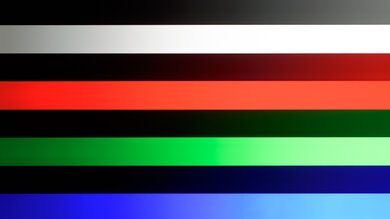
The Hisense A7's gradient handling in HDR is alright. There's some distracting banding in darker shades, especially in grays and blues, but it's also a bit distracting in all other darker colors. Bright shades are displayed well, though, with minimal banding.
The TV has low input lag when set to PC/Game Mode, which ensures a very responsive gaming experience.
There is a weird bug where the input lag is much higher than expected. Rebooting the TV multiple times fixes it, and the input lag numbers subsequently fall within expectations.
The TV supports most common resolutions. It displays chroma 4:4:4 signals properly at all supported resolutions, which is essential for clear text from a desktop PC. If you're looking for an affordable TV that supports 4k @ 120Hz, take a look at the Hisense QD7N QLED.
The Hisense A7 supports all VRR technologies, which is great for gamers. Still, the refresh rate range is narrow, so its usefulness is limited. It also doesn't support Low Framerate Compensation (LFC), so you'll see tearing if your game's frame rate drops below 48Hz.
for pictures & test results
for pictures & test results

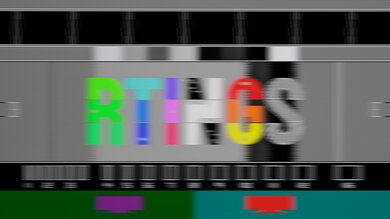
The TV has sub-par pixel transitions at its maximum refresh rate of 60Hz. Pixels change RGB values pretty slowly, which leads to visible motion blur. Response times are extra slow when the TV exits a dark state, which also leads to some black smearing. Overall, this isn't a great TV if you want clear motion while gaming.
This TV doesn't support a 120Hz refresh rate.
for pictures & test results

for pictures & test results

The TV has sub-par pixel transitions at 60Hz. Pixels change RGB values pretty slowly, which leads to visible motion blur. Response times are extra slow when the TV exits a dark state, which also leads to some black smearing. Overall, this isn't a great TV if you want clear motion while gaming.
for pictures & test results

This TV can't take full advantage of the PS5, as it's limited to a 60Hz refresh rate. As such, it's best suited for gamers who prefer the 'Graphics' preset in their games and not competitive gamers who prefer 'Performance' presets with higher frame rates.
for pictures & test results

This TV can't take full advantage of the Xbox Series X|S. It supports a few advanced features, including HDR and VRR, as well as Dolby Vision gaming, but it's limited to a 60Hz refresh rate. This makes it a better choice for more casual gamers who prefer immersive graphics over higher frame rates.
for videos & test results
for pictures & test results

for pictures & test results
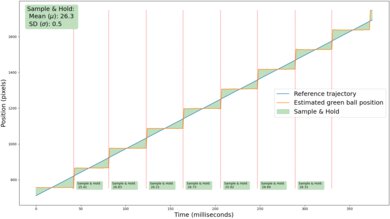
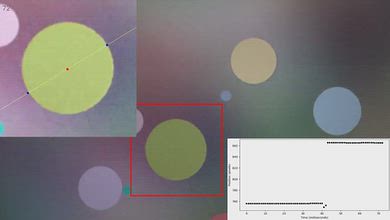
Despite the relatively slow pixel response time on this TV, there's still some noticeable stutter, especially in slow panning shots.
for videos & test results
for pictures & test results

for pictures & test results
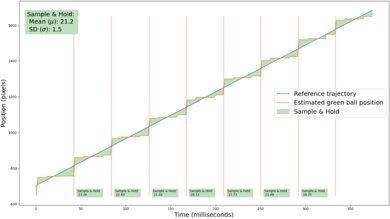
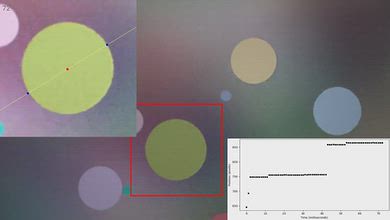
While the motion interpolation feature is effective at reducing the frame hold time when interpolating 24p content up to 30 fps, the overall experience is poor. The feature behaves inconsistently, leading to an extremely inconsistent frame time and choppy motion overall.
for pictures & test results
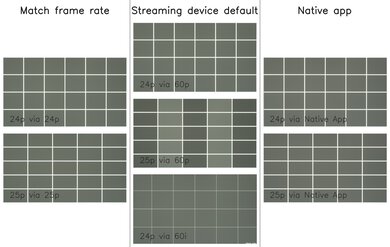
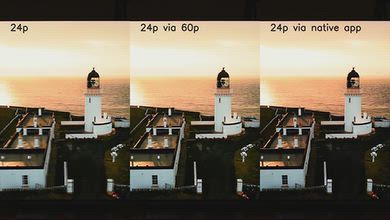
The TV removes judder from most sources automatically, without the need for any additional motion settings. Unfortunately, it can't remove judder from 60Hz sources like an older cable box or from the native apps.
for videos & test results
for videos & test results
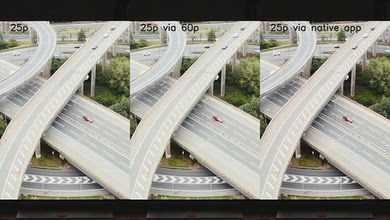
There's some occasional micro judder when watching 24p content sent from a 60p source, but it's very minor.
for pictures & test results

for pictures & test results

The Hisense A7 has a decent response time when watching content. You don't notice any added blur in 24 fps and 30 fps content, but there's some noticeable blur behind fast motion in 60 fps content.
for pictures & test results
for pictures & test results
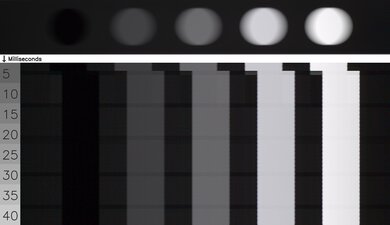
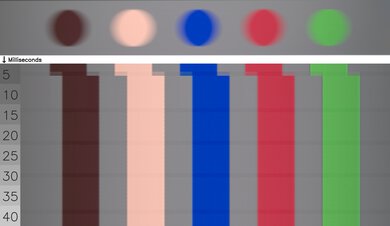
Unfortunately, transitions on this TV aren't smooth, and there are noticeable artifacts. Colors don't transition smoothly, causing a noticeable intermediate color, and edges are noticeably blurry compared to the center.
for pictures & test results

Unfortunately, the backlight on the Hisense A7 Series uses pulse width modulation (PWM) to dim the backlight, and there's a low flicker frequency at all backlight levels below the maximum. This low-frequency flicker causes duplications in motion and can cause eye strain if you're sensitive to flicker. The good news is that the backlight is flicker-free when set to max. Since the TV can't get very bright, if flicker bothers you, just make sure that the backlight is at maximum, and you won't have any issues. This backlight behavior is consistent across all picture modes.
This TV doesn't have an optional backlight strobing feature, also known as BFI. Instead, the backlight always flickers at 180Hz with the backlight below max, which helps reduce persistence blur but introduces severe image duplication below max brightness.
for pictures & test results

for pictures & test results

The TV has mediocre handling of direct reflections, so you do see your lamp, wall light, or window on the screen when watching content or playing video games in a bright room if you have a light source placed opposite the screen.


for pictures & test results

for pictures & test results

The amount of total reflected light is decent. It reduces the intensity of reflections, but they're still quite noticeable in a room with more than one or two lights on, especially during dark scenes. Unfortuntatly, direct reflections cause noticeable light banding.
for pictures & test results

The TV's perceived color volume in a bright room is decent. Colors barely lose any saturation when they're exposed to light, so you get almost equally as vibrant colors in a well-lit room as you do a dark one.
for videos & test results
for pictures & test results

for pictures & test results

for pictures & test results

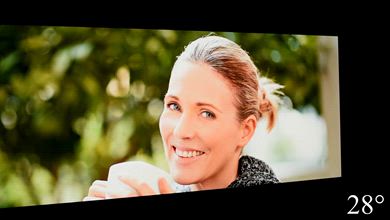
Unfortunately, this TV has unremarkable off-angle viewing, much worse than the Hisense A6N. The image degrades rapidly as you move off-center, as colors fade rapidly and brightness decreases, causing the image to appear washed out. This makes it a poor choice for a wide seating arrangement.
for pictures & test results

for pictures & test results

The gray uniformity is sub-par overall, but is particularly disappointing with large areas of bright uniform colors. Here, the sides of the screen are very noticeably darker than the center. The center of the screen is also a bit darker, and there's noticeable dirty screen effect. Uniformity is better in near-black scenes, but here there's some visible dirty screen effect.
for pictures & test results

for pictures & test results

The TV uses a BGR (Blue-Green-Red) subpixel layout instead of the traditional RGB layout. This doesn't cause any issues for video or gaming content, but it can be a problem for PC monitor use as it impacts the text clarity, although not everyone will notice this.
The TV uses a KSF phosphor coating to produce red light, and it has good color purity, helping it display a wide color gamut.


The Hisense A7 Series supports eARC, which lets you pass high-quality, uncompressed audio to a compatible receiver or soundbar through an HDMI cable. It supports all major audio formats, so you don't have to worry about compatibility with external sources.
for pictures & test results

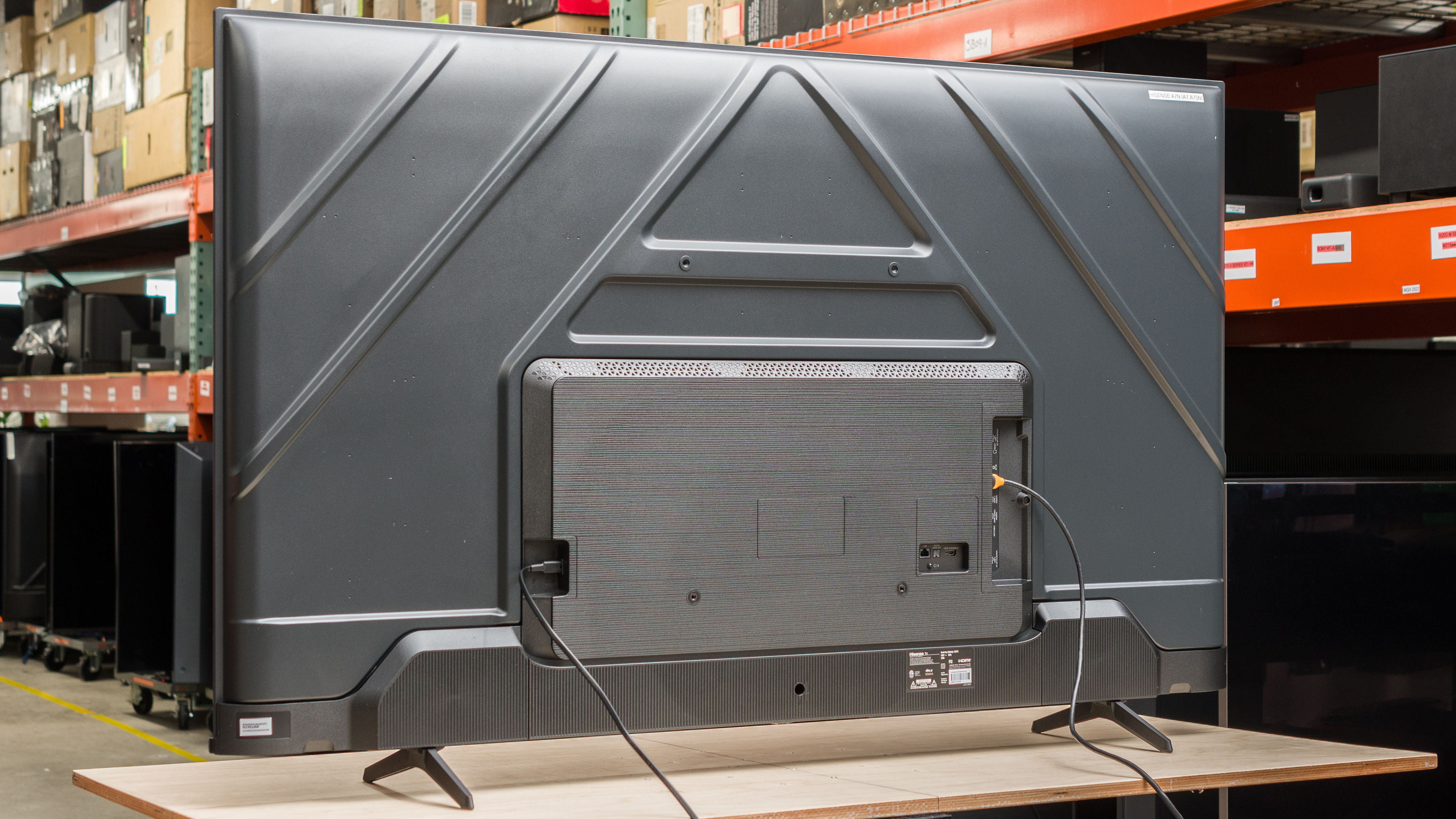
The Hisense 65A7N features a similar design to many other Hisense models, with a metal back enclosure, plastic housing for the inputs, and a set of plastic feet. It's simple, but it's a functional design that looks good enough.
for pictures & test results

The Hisense 65A7N uses two plastic feet that don't take up a lot of space. They lift the TV about three inches, so most soundbars fit underneath without blocking the screen.
Footprint of the 65-inch stand: 39" x 11.8".
for pictures & test results

The top section of the TV is metallic, and the section that houses the inputs is made of plastic. Most of the inputs are side-facing, but they're pushed toward the middle of the TV, making them a bit of a reach if you're trying to access them while the TV is wall-mounted. However, the HDMI 4, Ethernet, and digital audio out ports located on the back are definitely not easily accessible if you have it wall-mounted. Unfortunately, the TV doesn't come with any clips to help with cable management.


for pictures & test results

The Hisense 65A7N has decent build quality. The metal back is sturdy, but there's quite a bit of flex on the plastic portion housing the inputs. There's also quite a bit of wobble when the TV is pushed, but it does a good job of settling relatively quickly. Overall, the materials used don't feel premium, but there are no serious issues with its assembly or quality.
for pictures & test results

The Hisense A7N uses version 12 of the popular Google TV operating system. The interface is smooth and easy to use.
for pictures & test results

Unfortunately, like almost all TVs on the market, the smart interface contains ads, and you can't disable them.
for pictures & test results

The included remote is simple, with no number buttons and six buttons for quick access to popular streaming apps. It has a built-in mic for voice control, and you can use voice commands to change inputs or launch apps, but you can't use it to change settings on the TV.
for pictures & test results

There's a single button on the bottom center of the TV that you can use to switch inputs and power the TV on/off.
for pictures & test results

- Remote
- 2x AAA batteries
- Power cable
- User manual
for pictures & test results

The Hisense A7N has a barely adequate frequency response. Like most TVs, the bass is pretty much non-existent. At least dialogue is clear at moderate listening levels, but the sound becomes increasingly unbalanced as you raise the volume. This is unfortunate since the speakers don't get very loud, so it's best suited for a quiet environment.