
Our Verdict
Below average for mixed usage. Low contrast ratio results in poor dark scene performance. Motion handling is below average. Can't get very bright, and poor uniformity. Colors remain accurate at an angle.
- Good color accuracy at an angle
- No smart platform
- Poor dark scene performance
- Can't get very bright
Poor for movies in a dark room. Native contrast is below average, and black uniformity is poor. Doesn't have features such as local dimming to improve performance.
Below average for watching TV is a bright living room. Picture quality is below average. Colors remain accurate when viewed at an angle, but TV doesn't get bright enough to counter glare. Reflections are difficult to see through. No smart interface for casual watching.
Slightly below average for watching sports. Motion performance is below average, with blur following fast moving objects. Dirty screen effect is quite visible. When viewed at an angle, colors remain accurate.
Below average for gamers. Input lag is quite low which is good. Motion performance is below average. Picture quality is below average.
Doesn't support HDR. Picture quality is below average, and dark room performance is especially poor.
Doesn't support HDR gaming. Below average motion performance, and picture quality.
Poor PC monitor. Picture quality is below average. Doesn't support chroma subsampling or 1:1 pixel mapping and so text appears blurry.
Check Price
Differences Between Sizes And Variants
We tested the 43" (43LH5000). This is the only size available at the moment.
If someone comes across a different type of panel or if their LG LH5000 doesn't correspond to our review, let us know and we will update the review.
| Size | Model |
| 43" | 43LH5000 |
Popular TV Comparisons
The LG LH5000 is a budget TV, but unfortunately it offers worse than average picture quality and disappointing performance for almost any use. For the same price, there are better options out there and so it's hard to recommend this TV. Keep this in mind when viewing our recommendations below.

We buy and test dozens of TVs yearly, taking an objective, data-driven approach to deliver results you can trust. Our testing process is complex, with hundreds of individual tests that take over a week to complete. Most of our tests use specially designed test patterns that mimic real content, but we also use the same sources you have at home to ensure our results match the real-world experience. We use two main tools for our testing: a Colorimetry Research CR-100 colorimeter and a CR-250 spectroradiometer.
Test Results
Older Test Bench: We tested this product using an older TV test methodology before a major update. Some of the test results below aren't directly comparable with other TVs. Learn more
for pictures & test results

The LG LH5000 has a basic design, with all plastic borders and stand. It looks very similar to other basic TVs, so although it doesn't look good it definitely won't stand out in any room. It is more blocky than most of the other budget LG TVs this year, such as the LH5700.
for pictures & test results

The stand is quite wide, but due to its square shape has a smaller footprint than most other stands which are angled outwards.
Footprint of the 43" TV stand: 9.2" x 35.2"
for pictures & test results

The back is all plastic and more blocky than other LG TVs. If wall mounted all of the inputs are still accessible which is good.
for pictures & test results

The borders are of an average thickness. They don't look as good as higher end TVs, but are simple and all-plastic.
for pictures & test results

When viewed from the side the TV appears quite bulky. The lowest part of the TV is the thickest, but it also protrudes where the inputs are. If wall mounted, it will stick out a bit.
for pictures & test results

The native contrast ratio is below average for the LH5000 TV. IPS TVs always have lower contrast ratio compared to VA panel TVs and this one is on the lower end of the IPS range. Blacks are not very deep and look grayish when viewed in a dark room.
for videos & test results

There is no local dimming feature on this TV, the video is only for reference.
The peak brightness performance is bad. This TV can't get very bright and at only 185 cd/m², it won't be enough to fight bright glare from a sunny window of even from a bright light. Since there is no local dimming, the brightness remains the same independently of what is shown on the screen.
for pictures & test results

Gray uniformity is below average. Both sides of the screen are really dark when compared to the center. A big patch in the center is also a lot warmer than the rest of the screen. Some vertical bands are also visible. Dirty screen effect is noticeable, but luckily is not that bad.
for videos & test results
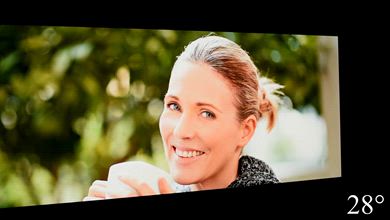
The viewing angle is good and should provide good viewing even if you are not seated right in front of the TV. Color remains the same and contrast ratio start to drop only after about 29 degrees. This is a good result and beats most of the VA TVs out there, even the top of the line, like the Samsung KS9500.
Update: We have changed the methodology of testing. Since this is an old TV which we don't have anymore, we extrapolated the results.
for pictures & test results

Black uniformity is pretty bad on this LG TV. Here again IPS TVs tend to have less than stellar results in this test compared to VA panel TVs, but this one is very bad. There is a lot of backlight bleeding overall and also the upper left corner does suffer from flashlighting.
for pictures & test results
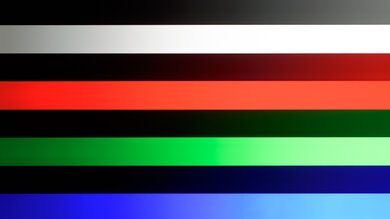
The 8 bit gradations can be seen when displaying out test picture. Some banding problems are visible in the darker color and in the grayscale. Some color shade problems can also be seen in the blue and the red, which could result in some banding on screen, when watching normal content.
for pictures & test results

for pictures & test results

for pictures & test results

The pre-calibration white balance and color space are a bit off with a dE over 4.5. For most people this probably isn't an issue, but it can be noticeable especially when compared to other more accurate TVs.
for pictures & test results

for pictures & test results

for pictures & test results

Unfortunately, there is no calibration option on the LH5000, so there is no way to fix those little imperfections. You can see our recommended settings here.
for pictures & test results

480p content such as DVDs look quite good, but is a little too soft. Some finer details are lost, especially around sharp edges.
for pictures & test results

720p content is a bit too soft. Details and sharpness are lost, at the edges of objects.
for pictures & test results

At the native resolution of 1080p, the content appears sharp as expected. There are no issues to be seen for high quality content.
for pictures & test results
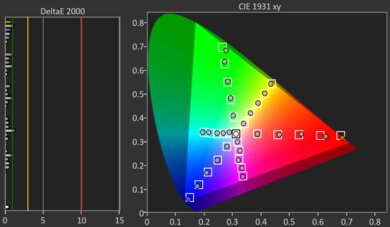
The range of color that can reproduced by this TV is average. There is no wide color gamut option and the coverage is just enough for rec. 709 or SDR TV.
for pictures & test results
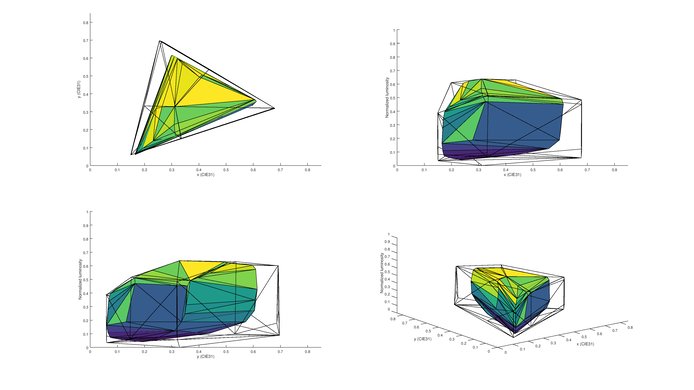
for pictures & test results
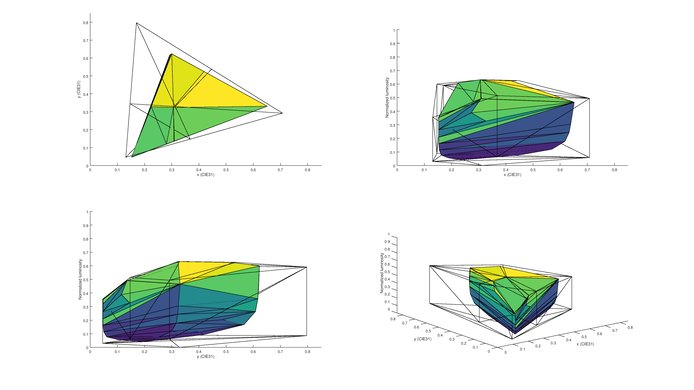
The color volume of the LH5000 is poor. The TV can't produce dark saturated colors, and doesn't have a wide color gamut.
for pictures & test results

The LH5000 budget IPS TV does have some image retention and it worse than average. The retention lasted pass the 6 minutes of recovery and was not noticeable after the 8 minutes mark. This is no so good and should be noticeable to people playing video games or using their TV as a PC monitor.
for pictures & test results

for pictures & test results
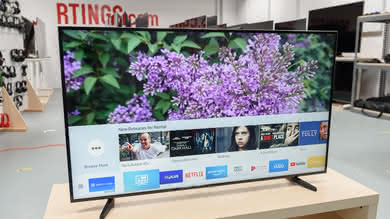
Rainbow fringes can be seen around direct reflections. The percentage of light reflected is higher than average, and results in a washed out picture in a bright room. This TV is not recommended for a bright room or one with a few direct reflections.

for pictures & test results

for pictures & test results
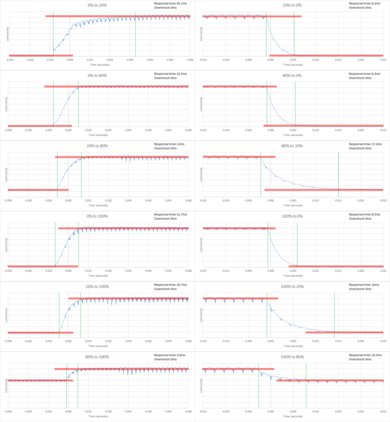
Motion blur is slightly below average. The response time is a bit longer than usual, resulting in a trail following moving objects. The backlight uses PWM flicker to dim, at a frequency of 120Hz.

The LG LH5000 can't play movie without judder on any of the content format available. Meaning that movie will have judder from any sources, that be from DVDs, Blu-rays, streaming apps or any cable/satellite or set-up boxes. Unfortunately, no setting on the TV itself can help to eliminate judder.
The LH5000 doesn't support any motion interpolation features.
Input lag is good for the LH5000 but is not stable. The test result is an average of many tests we did, since each test gave a different result from the test before. Also, it tends to cycle over time.


for pictures & test results

Poor overall performance. Frequency response is average at 75dB and 85dB, but poor under heavier loads due to the presence of compression and pumping. Maximum volume and low-end cut off are also poor, even for a TV.
for pictures & test results

Poor harmonic distortion performance. At lower volumes, the produced harmonic distortion is within decent limits. However, under heavier loads, there is a significant rise in the harmonic distortion with some amount of aliasing.
The LH5000 is not a smart TV, and so there are no options to download apps. It doesn't even have a WiFi or ethernet connection.
Unlike most new TVs, the LH5000 doesn't have a smart platform. It only features a basic interface which allows changing settings or playing files off a USB. Those who want to watch from streaming services will require an external box. There is a tuner in the TV, so it is still possible to watch free to air channels. Due to the slimmed down nature of the OS, it is quick and easy to navigate settings.
for pictures & test results

A power switch is located close to the stand, on the left hand side of the TV. It is easy to access, but does not allow any settings or inputs to be changed.


