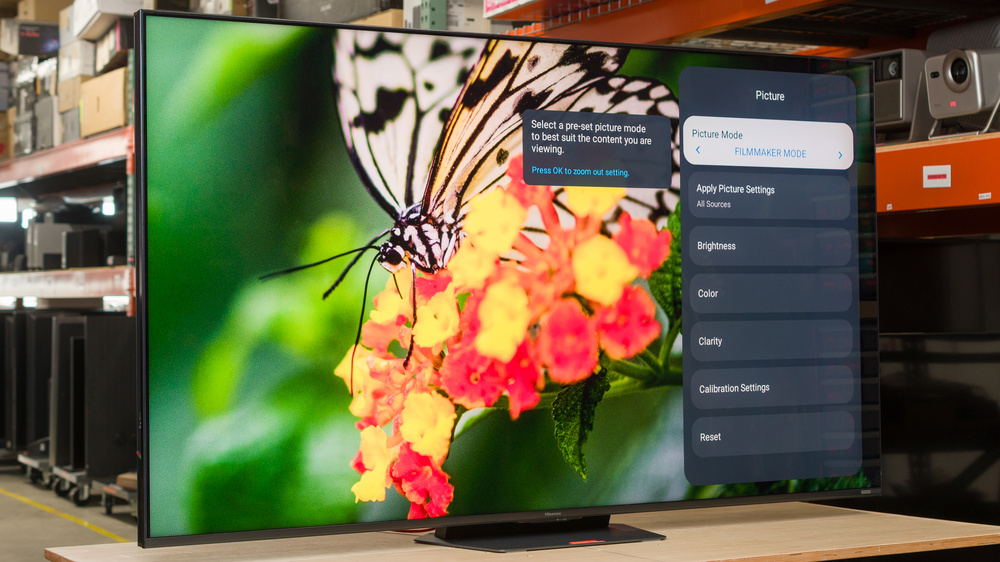
The Hisense UR9SG (UR9 for short) is a flagship 4k TV released in 2026. Featuring RGB Mini LED backlighting, it's advertised to achieve an incredibly wide color gamut with incredibly deep blacks and ultra-low reflections thanks to Hisense's new Obsidian panel coating. It's also a very feature-rich TV, with a 180Hz maximum refresh rate at 4k that can be boosted to 330Hz at lower resolutions, HDMI 2.1 bandwidth on all three inputs, and a USB-C port that supports DisplayPort Alt Mode for greater connectivity. It's powered by the Google TV 14 smart interface, which has a massive selection of streaming apps and games, and supports multiple viewing profiles. We bought and tested the 65-inch version, but it's also available in a 75-, 85-, and 100-inch size.
Note: Hisense has informed us that the first unit we purchased and tested didn't perform as they expected, and they requested that we buy another one per our out-of-spec policy, based on our early access results and the software issues we've reported. We bought a second unit from a different retailer. We didn't encounter any software issues with the new unit, so we've updated the results for any test below that was affected by the software issue with the results from the new unit.
Our Verdict
The Hisense UR9 is a great TV for mixed usage. It's a versatile TV that looks great in just about any setting. It's bright enough to overcome glare during the day, and it looks great in a dark room thanks to its high contrast and very effective local dimming feature. It's great for gaming thanks to its low input lag and wide selection of gaming features, but motion can be a bit blurry at times, especially in darker scenes. Finally, colors are incredibly bright and vibrant thanks to the new RGB Mini LED backlight, but there are a few noticeable downsides to it, including distracting color crosstalk in some scenes.
Fantastic black levels with minimal haloing.
Bright highlights stand out incredibly well in HDR.
Fantastic SDR brightness helps it overcome glare during the day with bright content.
Does a great job smoothing out low-quality content.
Colors are incredibly bright and vibrant.
Limited reflection handling makes dark scenes hard to see during the day.
Image degrades rapidly when viewed from the sides.
Software issues on both units we bought.
The Hisense UR9 is a very good TV for home theater usage. It looks great in the dark thanks to its high contrast ratio and effective local dimming feature. Colors in movies are bright and vibrant, and it's bright enough to deliver an incredibly impactful HDR experience. It also supports most common formats, including most audio formats, so you can simplify your connections by using eARC. It has just decent motion handling, though, and there's some blur around fast-moving objects.
Fantastic black levels with minimal haloing.
Bright highlights stand out incredibly well in HDR.
Does a great job smoothing out low-quality content.
Colors are incredibly bright and vibrant.
Outstanding PQ EOTF tracking.
Whites can take on a tint from surrounding colors.
Noticeable intermediate colors in fast action.
The Hisense UR9 is excellent for watching TV in a bright room. It's bright enough that most content easily overcomes glare during the day, especially brighter content like sports. It struggles a bit more in dark scenes, though, as the screen coating does little to reduce reflections, so you'll still see them when the screen is darker.
Fantastic SDR brightness helps it overcome glare during the day with bright content.
Colors are incredibly bright and vibrant.
Ambient light has no noticeable impact on picture quality.
Limited reflection handling makes dark scenes hard to see during the day.
Whites can take on a tint from surrounding colors.
The Hisense UR9SG is a great TV for watching sports. It looks great during the day thanks to its high peak brightness, so you don't have to close the curtains to enjoy the big game. It also has great processing, which helps clean up low-quality cable sports channels or low-bandwidth streams. Unfortunately, fast action can be a bit blurry, and there are color artifacts around quickly changing colors. It's also not suited for a wide seating area, as the image fades rapidly as you move to the sides.
Fantastic SDR brightness helps it overcome glare during the day with bright content.
Does a great job smoothing out low-quality content.
Colors are incredibly bright and vibrant.
Whites can take on a tint from surrounding colors.
Fast action can be a bit blurry at times.
Image degrades rapidly when viewed from the sides.
Noticeable intermediate colors in fast action.
The Hisense UR9 delivers a great gaming experience. It has low input lag, so games feel responsive. There's also a slew of gaming features, from VRR support to reduce tearing to HDMI 2.1 bandwidth on all three ports so you can take full advantage of multiple consoles. Switching to Game Mode has no negative impacts on picture quality either, which is great. On the other hand, it has a very high CAD, so motion can be blurry at times, especially in dark scenes.
Bright highlights stand out incredibly well in HDR.
Colors are incredibly bright and vibrant.
Game Mode has barely any impact on picture quality.
Low input lag.
Great selection of gaming features including a high refresh rate mode.
Whites can take on a tint from surrounding colors.
Fast action can be a bit blurry at times.
The Hisense UR9 delivers fantastic peak brightness. It's incredibly bright in SDR, so bright content like sports is very easy to see without having to close the blinds. It's bright enough to deliver an incredibly vibrant and impactful HDR experience.
Bright highlights stand out incredibly well in HDR.
Fantastic SDR brightness helps it overcome glare during the day with bright content.
The black levels on the Hisense UR9 are great. The local dimming feature does a fantastic job of maintaining deep blacks even near bright highlight details. The native contrast of the panel is also good, which helps keep black levels somewhat low in more complicated scenes where the local dimming can't keep up. There's some haloing around bright spots and subtitles on dark backgrounds, but it's minor.
Fantastic black levels with minimal haloing.
The Hisense UR9SG has great colors. It has fantastic color volume, and saturated colors are both bright and vibrant. It has poor accuracy out of the box, though, so if you care about color accuracy, you may want to consider having it calibrated. Unfortunately, its RGB Mini LED backlight feature causes noticeable color crosstalk, especially when bright, saturated colors are close to whites, and the color tends to bleed into the surrounding areas.
Colors are incredibly bright and vibrant.
Whites can take on a tint from surrounding colors.
The Hisense UR9 has decent motion handling when watching content. It removes judder from the vast majority of content with no issues, and there's no micro judder at all. There's some stutter in slow panning shots, but it's not too terrible, and the motion interpolation feature is effective at reducing it if this bothers you. Unfortunately, there are some noticeable color artifacts in fast action, and its overall response time is just decent, so darker scenes tend to look a bit blurry.
Most content is judder free.
Fast action can be a bit blurry at times.
Noticeable intermediate colors in fast action.
The Hisense UR9 has decent responsiveness when gaming. It has low input lag, high refresh rate, and VRR support to reduce tearing when gaming, all of which contribute to a fairly responsive feel. It struggles a bit with fast motion, though, so games tend to look a bit blurry, especially in darker areas.
Great selection of gaming features including a high refresh rate mode.
Fast action can be a bit blurry at times.
Note: We're in the process of improving our tests related to image processing, but this score should give you a general idea of how a TV performs overall with its image processing capabilities.
The Hisense UR9SG has great image processing. It upscales low-resolution content like DVDs extremely well, with no obvious issues. It also does a great job cleaning up low-quality content, like most streaming services or older cable TV channels. HDR content is processed extremely well, with accurate brightness tracking and very little banding in most areas of similar color.
Does a great job smoothing out low-quality content.
Outstanding PQ EOTF tracking.
Only slight banding in color gradients.
Low input lag.
Performance Usages
Changelog
-
Updated Jul 29, 2026:
We corrected a mistake in the HDR Pre-Calibration Color Accuracy section of the review, which led to an incorrect calibration being applied. The Post-Calibration results were also updated, and the TV is much more accurate than before.
-
Updated Jul 13, 2026:
We added additional brightness measurements in the HDR Brightness section of the review.
-
Updated Jul 09, 2026:
We bought and tested a second unit after Hisense flagged the first one as not performing within their expected specifications. The results have been updated to the new unit.
- Updated Jun 18, 2026: Review published.
Check Price
Differences Between Sizes And Variants
We bought and tested the 65-inch Hisense UR9SG, and these results also apply to the 75-, 85-, and 100-inch models. The 65-inch has considerably denser local dimming zones and likely offers slightly better contrast and improved zone precision over the larger sizes.
| Size | US Model | Area Per Dimming Zone (approximate) | Dimming Zones |
|---|---|---|---|
| 65" | Hisense 65UR9SG | 1.71 in² | 1,056 |
| 75" | Hisense 75UR9SG | 2.45 in² | 980 |
| 85" | Hisense 85UR9SG | 2.34 in² | 1,320 |
| 100" | Hisense 100UR9SG | 2.23 in² | 1,920 |
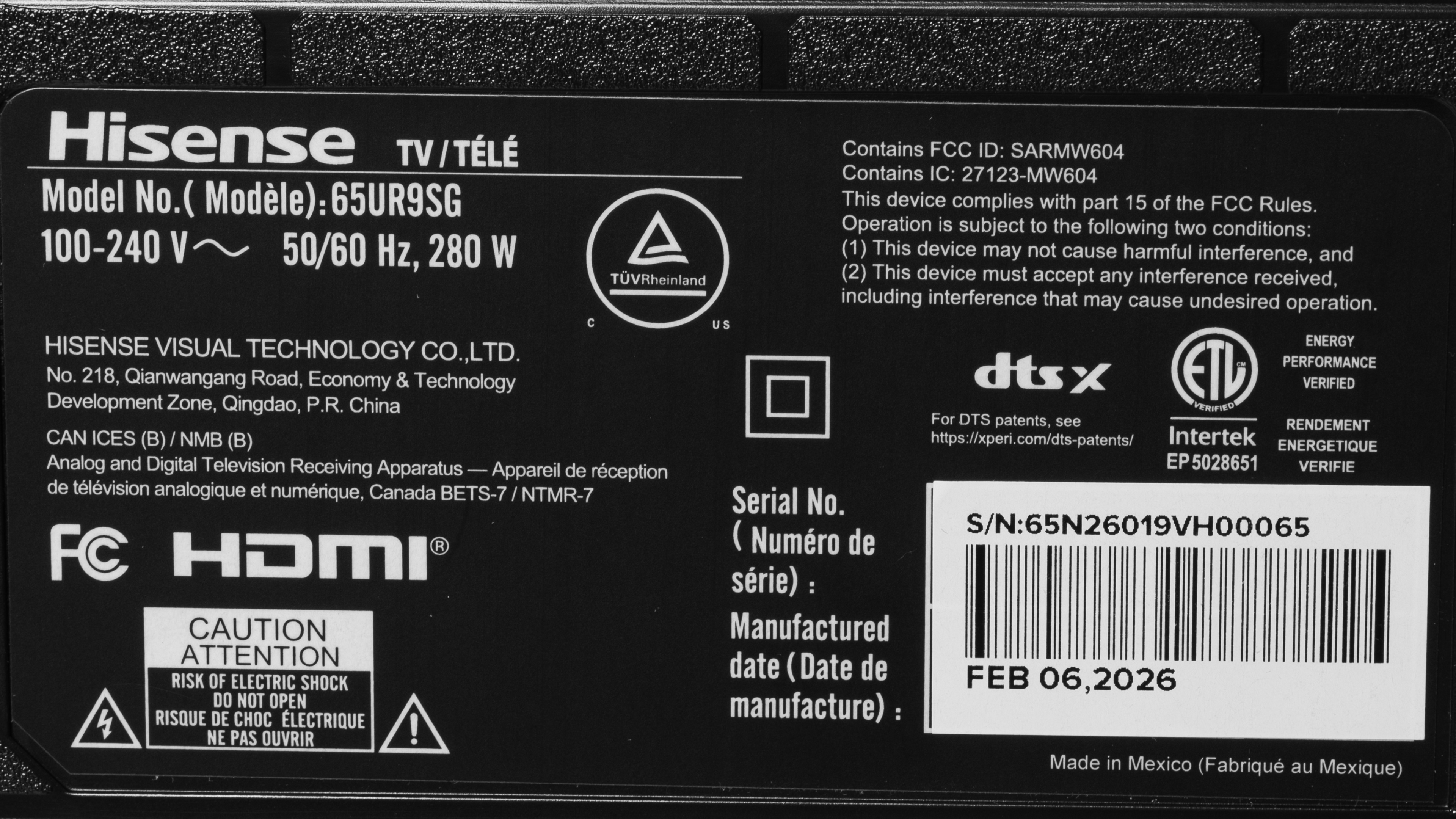
Our unit was made in Mexico in Feb. 2026, according to the label.
Popular TV Comparisons
The Hisense UR9SG is a great TV overall. It delivers impressive picture quality overall. It's brighter and more colorful than some competing models like the Sony BRAVIA 7 II, but it's also less accurate out of the box and offers a less polished experience overall. Still, it's a great TV for most users, and it offers an impressive array of features, including some that aren't found on TVs from other brands, like USB-C connectivity. If you're looking to save a bit of money, you can also get a standard Mini LED TV instead, like the TCL QM8L, which actually performs a bit better overall.
For more options, check out our picks for the best RGB Mini LED TVs, the best gaming TVs, and the best TVs.
The Hisense UR9SG and the Hisense UR8SG are similar, but the UR9 is a bit better. The UR9 offers much deeper blacks with less haloing around highlights, so it's a better option for dark rooms. Both TVs are very bright, but the UR9's higher peak brightness allows it to overcome a bit more glare in a bright room. Finally, the UR9's motion interpolation does a better job reducing stutter.
The Hisense U8QG is better than the Hisense UR9SG. The newer UR9SG uses an RGB Mini LED backlight, which delivers more vibrant colors, but there are significant downsides to that technology that make the older model the better choice. The UR9 is significantly less accurate, with noticeable color errors and a very warm color temperature out of the box. There's also no distracting color crosstalk on the U8QG, which causes light shades to take on the tint of surrounding colors on the UR9SG.
The LG G6 OLED is a much better TV than the Hisense UR9SG. The LG delivers a much better viewing experience overall, with deeper, more uniform blacks that give the image an almost 3D-like appearance. The LG also handles motion a lot better, as its nearly instantaneous response time results in no noticeable motion blur or intermediate colors in fast action.
While the Sony BRAVIA 7 II and the Hisense UR9SG are very similar in a lot of ways, the Sony delivers a far more polished experience overall. They both use RGB Mini LED backlights, but the Sony offers more moderate settings that fall back to a standard backlight more frequently, resulting in less noticeable color crosstalk in real content. The Sony is also far more accurate out of the box, and it has even better image processing and upscaling.

We buy and test dozens of TVs yearly, taking an objective, data-driven approach to deliver results you can trust. Our testing process is complex, with hundreds of individual tests that take over a week to complete. Most of our tests use specially designed test patterns that mimic real content, but we also use the same sources you have at home to ensure our results match the real-world experience. We use two main tools for our testing: a Colorimetry Research CR-100 colorimeter and a CR-250 spectroradiometer.
Test Results
for pictures & test results

for pictures & test results

for pictures & test results

The Hisense UR9 has fantastic peak brightness in HDR. Bright details in most content get incredibly bright and stand out well, but the small highlight details are dimmed a bit by the TV's local dimming. Very bright scenes like outdoor shots or the odd HDR sports stream are incredibly bright as well.
The posted results are with the TV in its most accurate picture mode with 'HDR Tone Mapping' set to 'Off.' Below are additional measurements with the other settings.
Detail preferred:
- Hallway Lights: 1,093 cd/m²
- Yellow Skyscraper: 641 cd/m²
- Landscape Pool: 431 cd/m²
Brightness preferred:
- Hallway Lights: 1,034 cd/m²
- Yellow Skyscraper: 817 cd/m²
- Landscape Pool: 565 cd/m²
for pictures & test results

for pictures & test results

for pictures & test results

Overall, switching to Game Mode doesn't change the peak brightness of the TV much. The smallest highlights and details aren't dimmed by the TV's local dimming feature in this mode, though, so they stand out a bit better.
The posted results are with the TV in its most accurate picture mode with 'HDR Tone Mapping' set to 'Off.' Below are additional measurements with the other settings.
Detail preferred:
- Hallway Lights: 1,020 cd/m²
- Yellow Skyscraper: 607 cd/m²
- Landscape Pool: 432 cd/m²
Brightness preferred:
- Hallway Lights: 966 cd/m²
- Yellow Skyscraper: 712 cd/m²
- Landscape Pool: 556 cd/m²
The peak brightness in SDR is amazing. It's bright enough to easily overcome glare during the day. It's also bright enough to overcome bright lights during the day when watching sports or bright outdoor shots where more of the screen is bright at once.
for pictures & test results

The Hisense UR9 has fantastic contrast. The native contrast of the panel is pretty good, which helps maintain deep blacks in more challenging scenes where the local dimming feature can't keep up. When local dimming does kick in, though, it does a fantastic job keeping black levels low even when they're close to bright highlights.
for pictures & test results

The lighting zone precision is great. There's some noticeable haloing around bright details on a dark background, or around subtitles, but it's very minor. It's significantly less noticeable if you're sitting directly in front of the TV.
for videos & test results

The local dimming algorithms do a great job keeping up with fast-moving transitions. There are some noticeable flickers as small highlights move between zones on a dark background, but everything is illuminated properly, with no dark edges. There's some excess haloing in fast action, but it's not too bad. The Fast Backlight Control setting is advertised to improve zone transitions, but in practice, we found it to make no noticeable difference.

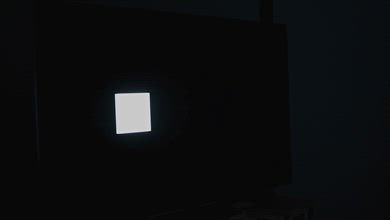

for pictures & test results

for pictures & test results

The black uniformity on this TV is just decent. The screen is a bit cloudy throughout when local dimming is disabled, but it's not too bad. Enabling local dimming removes most of the clouding, but there's more noticeable haloing around bright parts of the screen that reduce the overall uniformity.
for pictures & test results

for pictures & test results

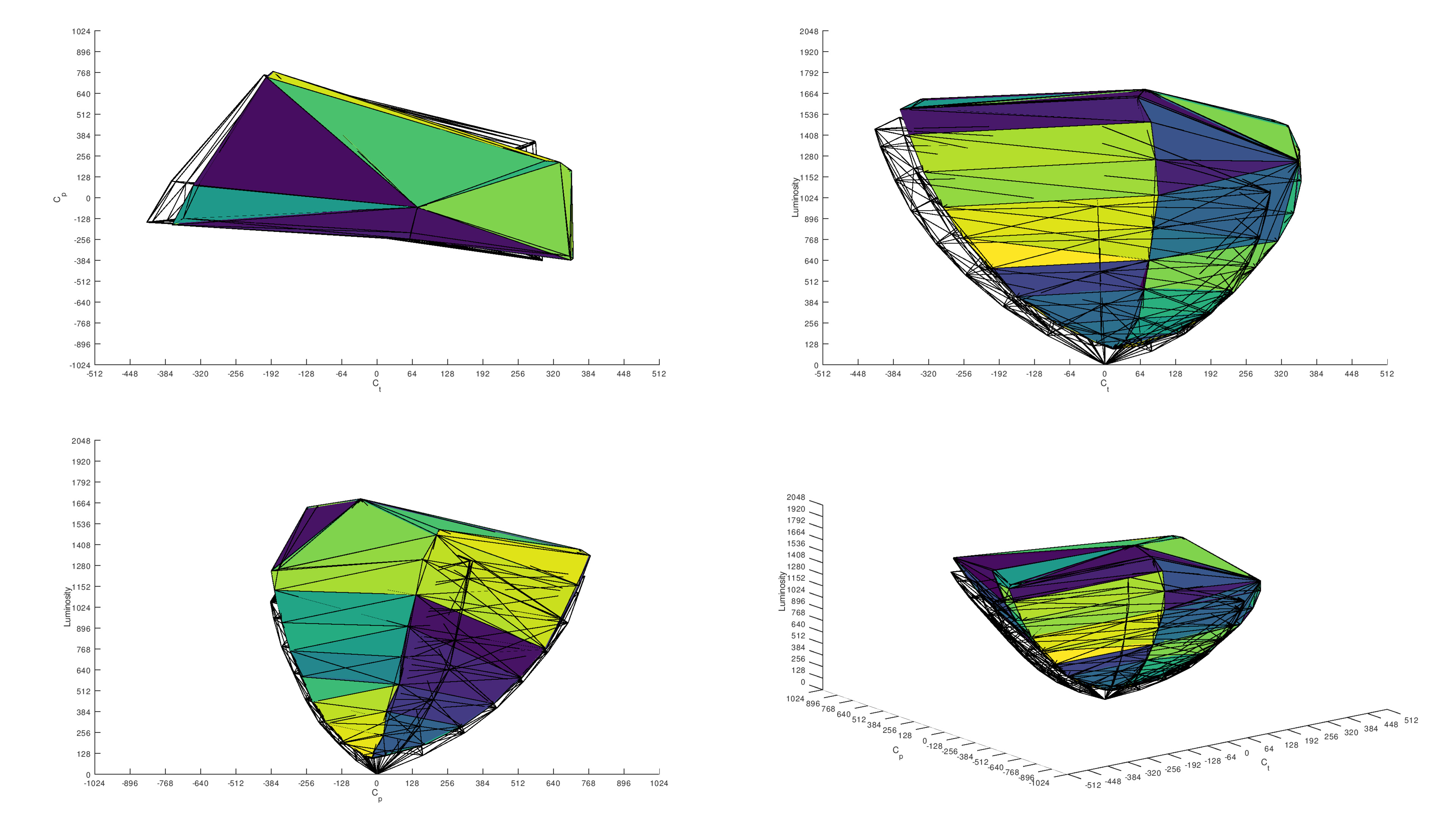
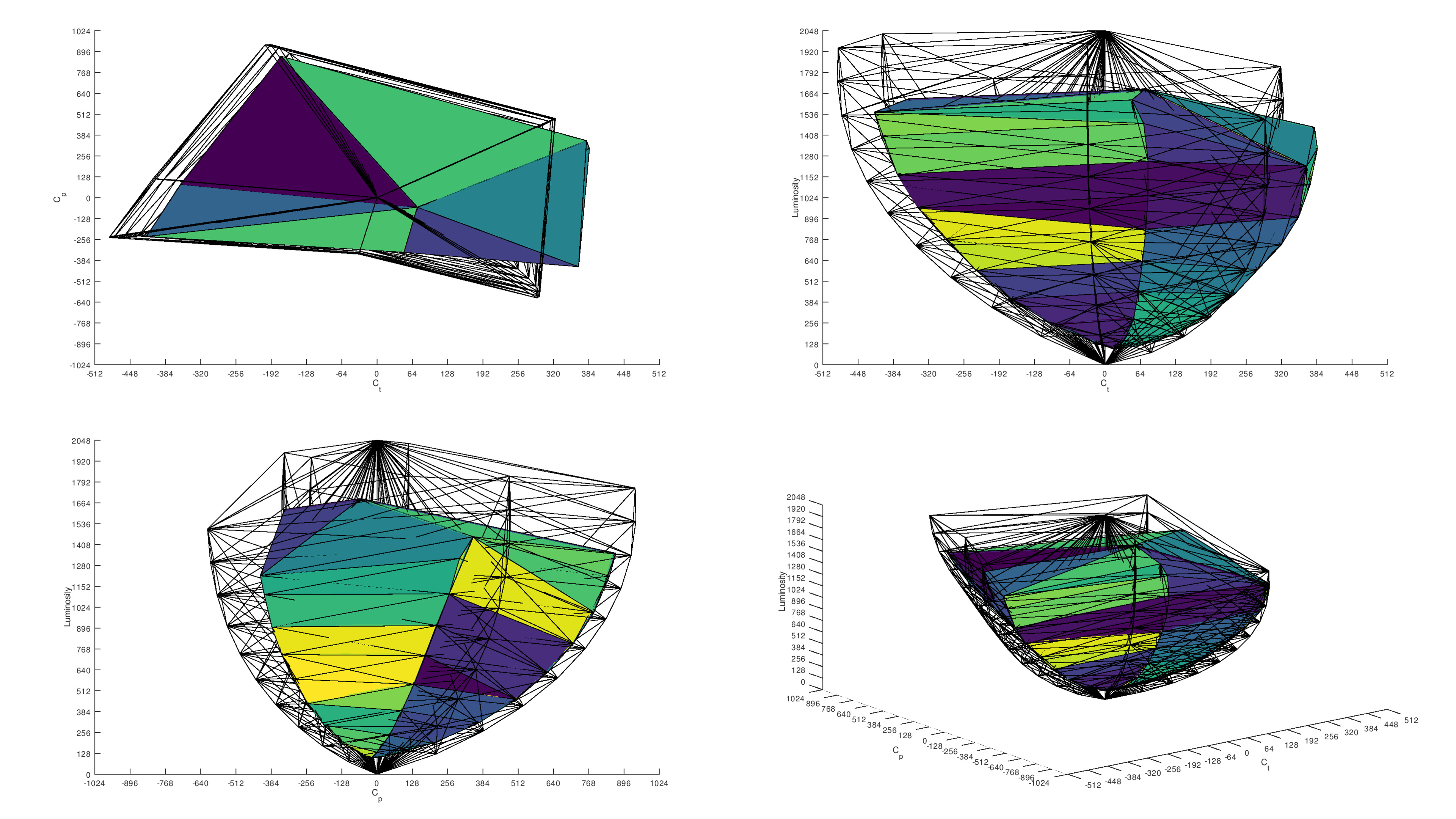
The Hisense UR9 has fantastic color volume. Colors are incredibly bright and vibrant for the most part, but it struggles to maintain color saturation in the lightest scenes.
| Volume ΔE³ | DCI-P3 Coverage |
BT.2020 Coverage |
|---|---|---|
| L10 | 99.25% | 83.96% |
| L20 | 99.07% | 85.94% |
| L30 | 98.67% | 86.03% |
| L40 | 97.86% | 87.75% |
| L50 | 97.49% | 88.71% |
| L60 | 96.75% | 87.31% |
| L70 | 96.65% | 87.83% |
| L80 | 95.89% | 85.35% |
| L90 | 93.89% | 80.21% |
| L100 | 76.27% | 60.59% |
| Total | 96.09% | 85.41% |
for pictures & test results

for pictures & test results

The HDR color volume on this TV is amazing. Colors are incredibly bright and vibrant, and dark details are displayed well thanks to its high contrast ratio. It doesn't have perfect coverage of either HDR color space, but it's essentially perfect for most real content.
Of course, like the Sony BRAVIA 7 II and the Samsung R95H, there's noticeable color crosstalk caused by the RGB backlight system. This is especially noticeable when colors bleed into something white on the screen.
This new backlight system makes the color volume seem better than it is when measuring it with synthetic test patterns, as the TV is able to turn off the unneeded colors, and there's no crosstalk since most color volume test patterns only use one color at a time.
We took additional measurements with a modified test pattern that's designed to better represent real content. With this modified test pattern, the DCI-P3 color volume decreased by about 9%, and the BT.2020 coverage by about 11%.
for pictures & test results

for pictures & test results

for pictures & test results

Unfortunately, the Hisense UR9SG has poor color accuracy out of the box. The white balance is terrible, with a noticeable red tint on all mid and bright tones. Colors are also noticeably off, especially the less saturated ones that are close to white. The overall average color temperature isn't too bad, though, and gamma tracking is fantastic.
for pictures & test results

for pictures & test results

for pictures & test results

This TV is very easy to calibrate, and the results after calibration are nearly perfect. The white balance is fantastic, with a much better average color temperature, and gamma tracking is still nearly perfect. It wasn't possible to fully correct very saturated blues, but other than that colors are nearly perfect.
Check out the full list of our calibration settings.
for pictures & test results

for pictures & test results

The Hisense UR9 has okay color accuracy in HDR before calibration. The color temperature is noticeably warm, giving the TV a noticeable red tint. Bright shades of gray are noticeably off, but the color balance is good overall. Most colors are mapped inaccurately, but there are relatively few luminance mapping errors, which is nice.
for pictures & test results

for pictures & test results

The HDR color accuracy is excellent after a full calibration. The white balance is nearly perfect, with very few remaining issues, and the color temperature is much closer to the target. There are still a few minor color mapping errors, but they're minor enough that most people won't notice them.
for pictures & test results

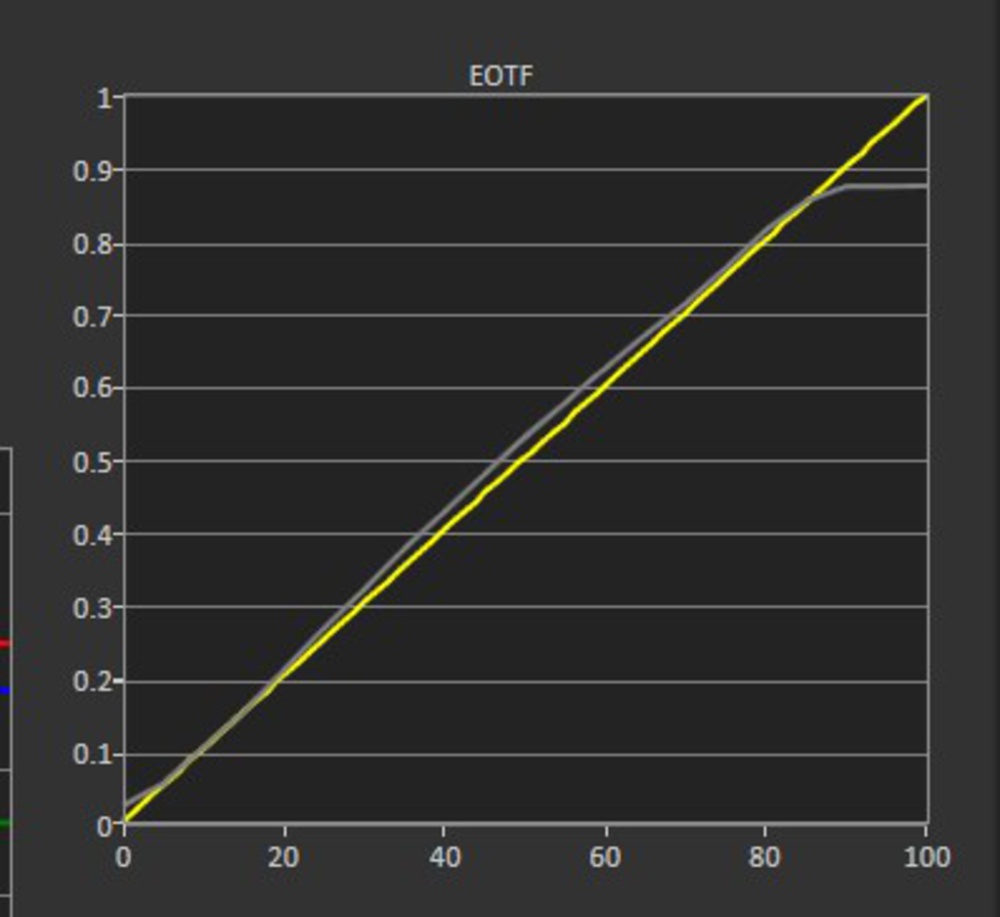
The PQ EOTF tracking on this TV is great. Almost all content is slightly darker than it should be, but it's not too bad, and most people won't notice it. There's no difference in tracking with content mastered at different brightness levels, but since it's bright enough to display content mastered at 600 and 1,000 nits perfectly anyway, this doesn't matter.
The PQ EOTF tracking is a bit worse in Game Mode, as it displays most content a bit brighter than it should be.
for pictures & test results

This TV has very good low-quality content smoothing. It cleans up streaming content well, reducing macro-blocking and pixelization, and there's barely any loss of fine details.
for pictures & test results

The upscaling on this TV is excellent. Fine details in low resolutions are sharp, with no obvious over-sharpening, and text is easy to make out.
for pictures & test results
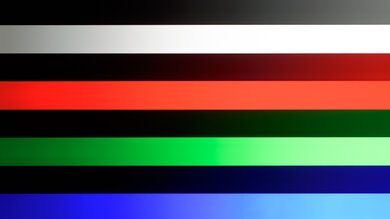
The Hisense UR9 has good gradient handling. There's some banding in brighter shades of green and blue, but it's not too bad.
The Hisense UR9SG has excellent input lag. The max refresh rate is different at 1080p and 4k resolutions, so the difference in input lag there is normal and expected. It's low enough in all modes that games feel responsive, and there's no noticeable delay between your actions on your controller and the action on the screen.
Like the TCL QM8L, it offers a low-latency motion interpolation feature. This helps improve the fluidity of older games that don't support frame generation natively, without adding too much latency.
The USB-C port has slightly higher input lag, but it still delivers a responsive gaming experience:
| 4k @ 180Hz | 7.8 ms |
| 4k @ 120Hz | 8.9 ms |
| 4k @ 60Hz | 18.2 ms |
| 1080p @ 180Hz | 5.8 ms |
| 1080p @ 120Hz | 7.6 ms |
| 1080p @ 60Hz | 16.3 ms |
The TV supports all common resolutions up to 4k @ 180Hz on all three of its HDMI ports. It also supports up to 330Hz with 1080p signals. All supported formats also support proper chroma 4:4:4, which is essential for clear text from a PC.
The TV supports all three types of variable refresh rate (VRR) technology to reduce screen tearing. It works well with AMD sources, like an AMD GPU or any console across a wide refresh rate range, and it works with Low Framerate Compensation (LFC), ensuring your games remain nearly tear-free even when your frame rate drops very low. It also supports VRR over the USB-C port in DisplayPort Alt Mode.
for pictures & test results
for pictures & test results

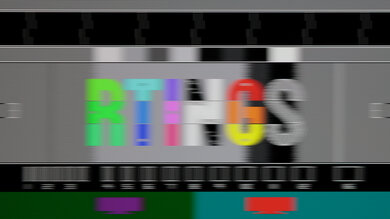
The CAD at the max 4k refresh rate of 180Hz is mediocre. It's slow across the board, resulting in somewhat blurry motion in most scenes. It's also a bit inconsistent, with some transitions showing signs of over and undershoot, which causes noticeable inverse ghosting and a white trail behind dark objects.
for pictures & test results

for pictures & test results

The TV's CAD is actually a bit better at 120Hz, but motion is still a bit blurry overall. It struggles a bit more in dark scenes, so shadow details are blurrier than brighter content.
for pictures & test results

for pictures & test results

The CAD at 60Hz is poor. Almost all motion is blurry due to the slow transition time. There's no significant overshoot or undershoot, though, which limits the amount of white trails that you'll see in shadow details.
for pictures & test results

The TV is fully compatible with everything the PS5 and PS5 have to offer, like 1440p @ 120Hz and 4k @ 120Hz, as well as HDMI Forum VRR. It also supports Auto Low Latency Mode, so you don't have to worry about manually switching to Game Mode to get the lowest input lag.
for pictures & test results

The TV is fully compatible with everything the Xbox Series X|S offers, including 1440p @ 120Hz, 4k @ 120Hz, HDMI Forum VRR, Dolby Vision, and FreeSync Premium Pro. It also supports Auto Low Latency Mode, so you don't have to manually switch to Game Mode to get the lowest input lag.
for videos & test results
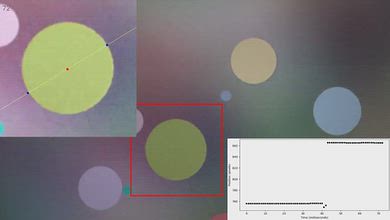
for pictures & test results
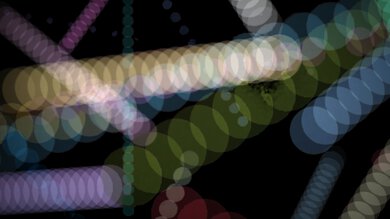
for pictures & test results
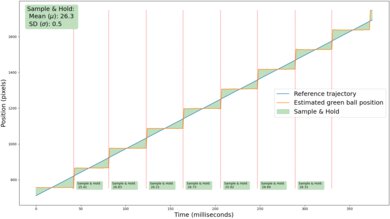
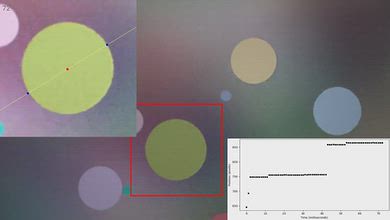
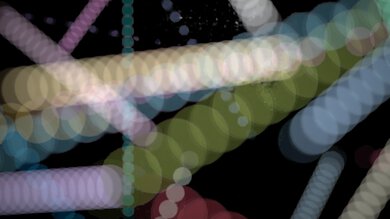
There's some noticeable stutter when watching content on this TV. It's mainly limited to slow panning shots or wide shots with light action, but it's not too bad.
for videos & test results
for pictures & test results
for pictures & test results
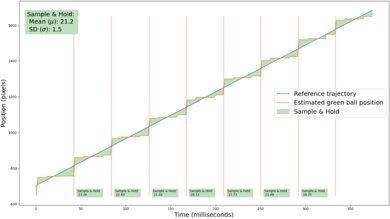
Introducing low levels of motion interpolation to this TV does a good job reducing stutter without adding a noticeable soap opera effect. The feature has great consistency overall, but occasionally creates an extra frame that can cause motion to appear jittery for a brief moment.
for pictures & test results
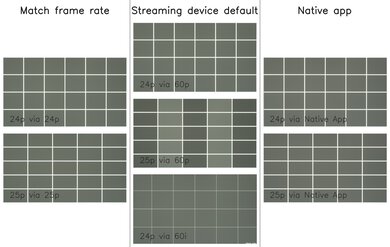
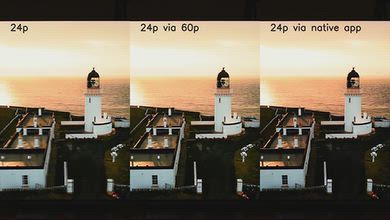
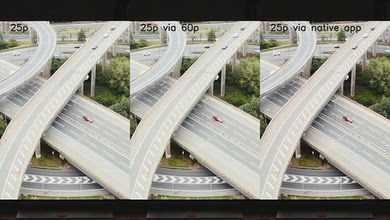
This TV removes judder from the vast majority of content. It's not quite perfect with 25p content sent over a 60p signal, but it's not too bad.
for pictures & test results

for pictures & test results

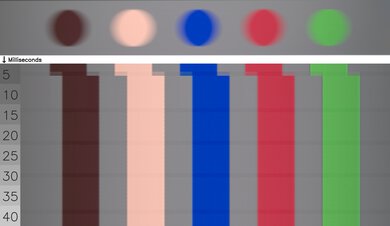
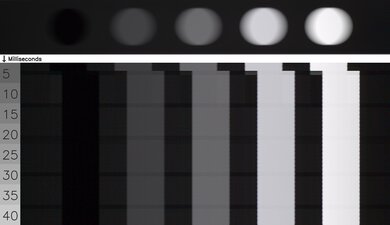
The Hisense UR9 has a decent response time when watching content. It struggles more in dark scenes, so dark details are a bit blurrier than the rest. There's also some slight undershoot in certain transitions, but it's not enough to be very noticeable.
for pictures & test results

The TV uses pulse width modulation (PWM) to dim its backlight, which introduces flicker that can bother people who are sensitive to it. Fortunately, it flickers at a very high frequency in all picture modes, at all brightness levels, and with local dimming enabled, so it's not visible.
for pictures & test results
for pictures & test results
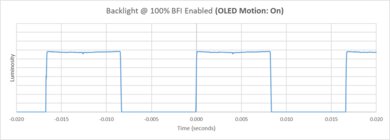
The TV supports backlight strobing, more commonly known as black frame insertion (BFI). The feature is designed to improve the appearance of motion by strobing its backlight and reducing the amount of persistence blur. Unfortunately, it only flickers at 120Hz, and the image is blurry with some image duplication as the pulse timing is a bit off.
for pictures & test results

for pictures & test results

The TV's glossy coating does a mediocre job of reducing the intensity of direct, mirror-like reflections. You'll still see bright lights and windows opposite the TV, especially in darker scenes.


for pictures & test results

Ambient light has almost no impact on perceived color saturation.
for videos & test results
for pictures & test results

for pictures & test results

for pictures & test results

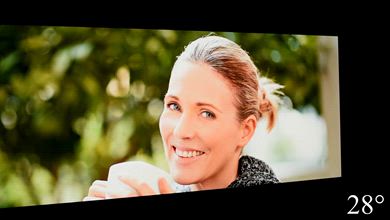
The Hisense UR9 has a mediocre viewing angle. The image fades and washes out quickly as you move to the sides, so it's not well-suited for a wide seating area.
for pictures & test results

for pictures & test results

The Hisense UR9 has okay gray uniformity. There's a slight dirty screen effect in the center, which is a bit distracting when watching sports. The left side of the screen is a bit darker than the center, though, and there are a few patchy spots throughout.
for pictures & test results

for pictures & test results

The Hisense UR9SG uses a new RGB Mini LED panel, which is mainly designed to increase color volume. Instead of a traditional blue backlight with quantum dot color converters, it uses separate red, green, and blue LEDs to produce light.
There are high peaks on reds, blues, and greens, and there's excellent separation between them, giving the TV great color purity. Unfortunately, unlike the Sony BRAVIA 7 II and Samsung R95H, it uses a BGR subpixel layout, which can make text harder to read when using the TV as a PC monitor.
for pictures & test results

for pictures & test results

All three HDMI inputs support the full HDMI 2.1 bandwidth, so you can take full advantage of the latest gaming consoles or PCs. It also offers a USB-C port with DisplayPort Alt mode, so you can easily connect a PC or laptop.
The TV supports eARC, which lets you pass high-quality, uncompressed audio to a compatible receiver or soundbar through an HDMI cable. It supports all major audio formats, so you don't have to worry about compatibility with external sources.
for pictures & test results

The Hisense U9SG has a modern, premium design that looks great. The bezels are slightly thicker than usual for a modern TV, but they don't look bad.
for pictures & test results

The center-mounted pedestal stand takes up very little space and supports the TV well. It can be adjusted to a high or low position so you can place a soundbar in front of the TV without blocking the screen.
Footprint of the 65-inch screen: 16.6" x 11.5".
Height: 3.3 inches in the regular position, 2.1 inches in the low-profile position
for pictures & test results

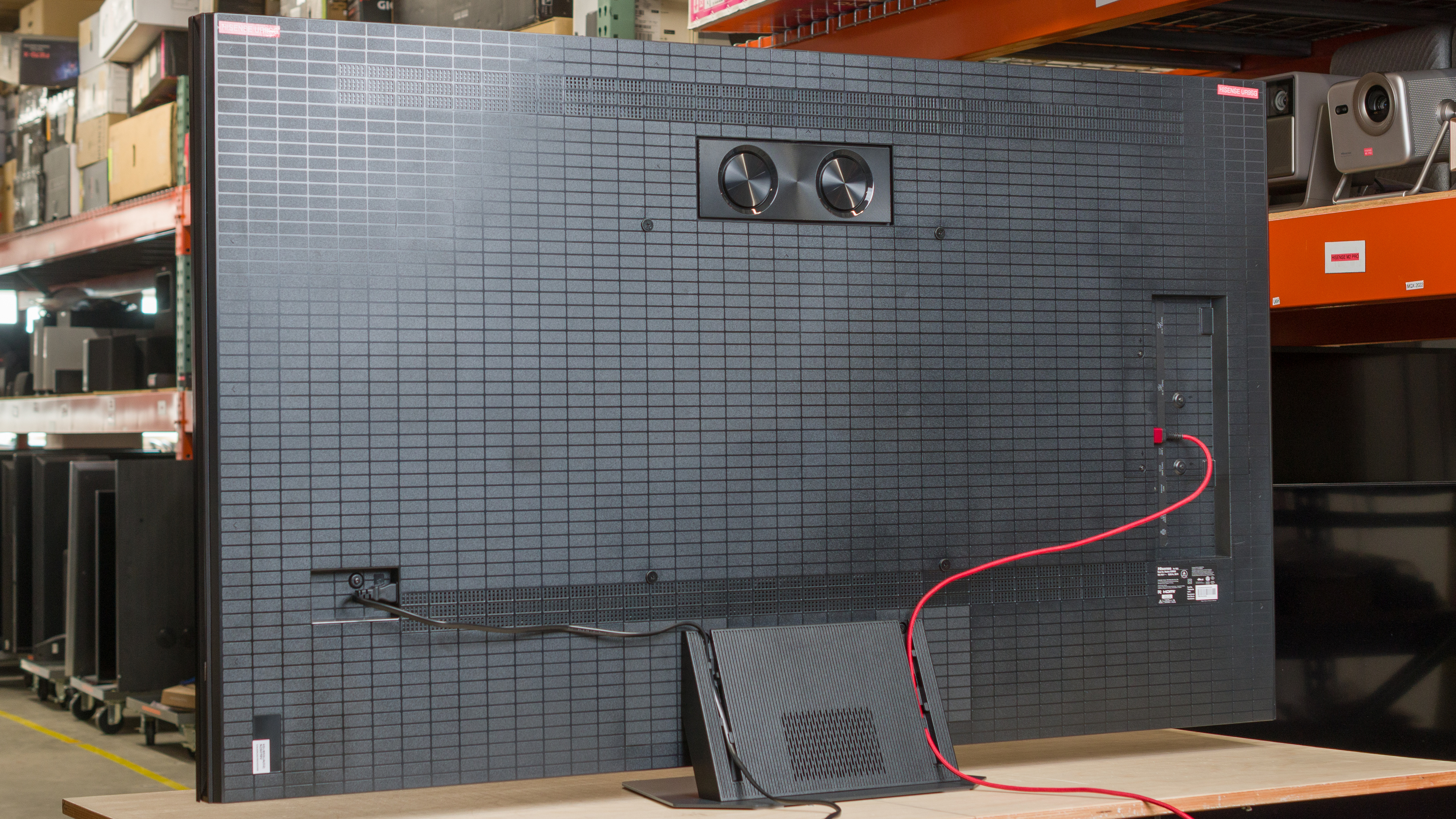
The back of the TV has a premium checkerboard pattern that looks a lot like older Sony TVs, like the Sony BRAVIA 9. There are a few tracks on the back of the stand to help with cable management.


for pictures & test results

The Hisense UR9 has excellent build quality. It's a fairly solid TV overall, with no obvious construction issues. The first unit we purchased had some severe software issues that made it difficult to use, which could indicate potential quality control gaps.
for pictures & test results

The Hisense UR9 runs version 14 of the very popular Google TV smart interface. There's a huge selection of apps for both streaming and gaming, and it supports multiple user profiles. The system works well for the most part, and it's fast and easy to use.
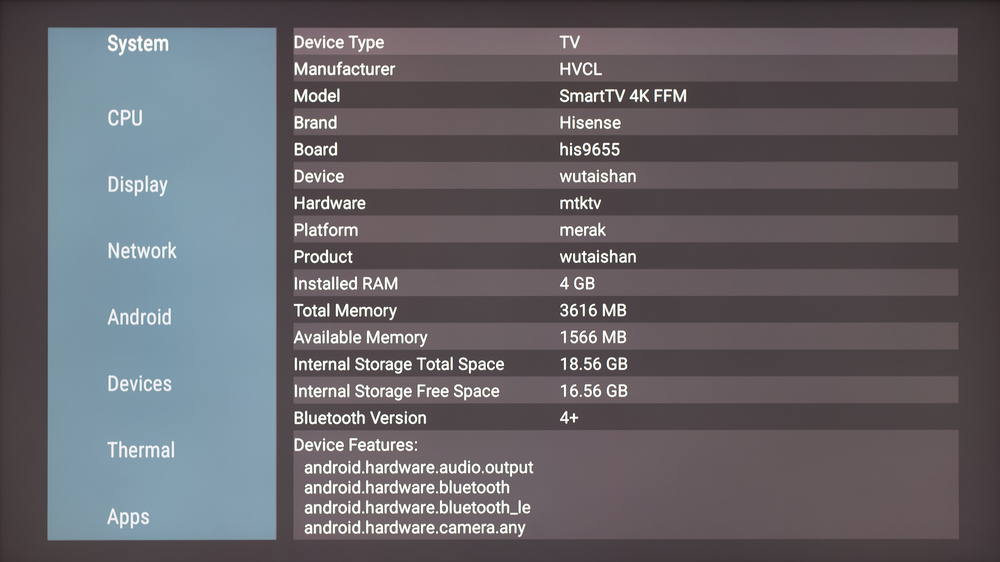
Running AIDA64 on the TV shows that it's powered by the MediaTek Pentonic 800 SoC (HIS9655), with 4GB of RAM and 18GB of total internal storage.
The first unit we bought had some serious software issues, and we were unable to change most settings. The second unit doesn't have this issue. Both units experienced a boot loop issue when they were first unboxed, with the Google TV home page crashing and reloading constantly. A factory reset fixed that specific issue on both units.
for pictures & test results

Unfortunately, like most TVs, the interface contains ads. You can opt out of personalized ads, but this doesn't change the number of ads you'll see; they just won't be personalized to match your search and viewing history.
You have the option to set up the TV using the 'Basic Google TV' option, which gets rid of ads but prevents you from using most of the TV's smart features.


for pictures & test results

- Quick setup guide
- Remote
- 2x AAA batteries
- Power cable
The Hisense UR9SG was originally tested with firmware version V02.01.00K.Q0427.
for pictures & test results

The Hisense UR9 has a decent frequency response. It has an unusual dip in the high-bass to low-mid section that slightly reduces the warmth and body of dialogue, but it's still clear and easy to understand. It gets pretty loud, so you should have no trouble hearing it in a loud room.