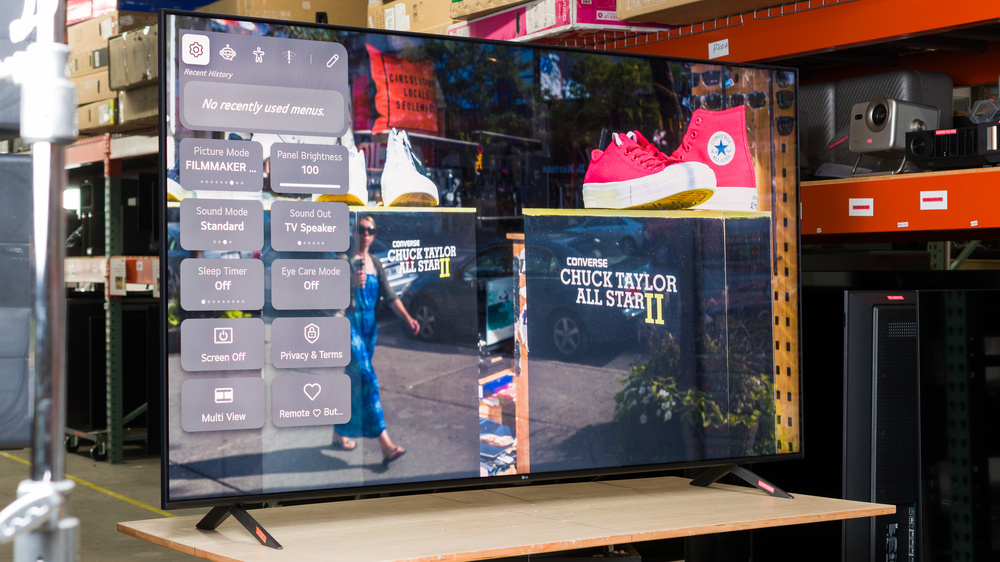
The LG MRGB95B is a new TV in LG's 2026 TV lineup, sitting above the LG MRGB85B. It features a new RGB Mini LED backlight that's designed to improve color volume by replacing color converters and color filters with separate red, green, and blue LEDs in the backlight. It's powered by the Alpha 11 Gen 3 AI Processor and comes equipped with webOS 26, with guaranteed OS updates for five years through LG's Re:New Program. It supports Dolby Vision but not HDR10+ or the newer Dolby Vision 2. Like LG's 2025 models, it only passes through Dolby audio formats and doesn't support DTS, which may disappoint physical media collectors. The TV has a ton of modern gaming features, such as HDMI 2.1 bandwidth on all four ports, up to 4k @ 165Hz or 1080p @ 330Hz for PC gamers, and support for all major VRR formats. We bought and tested the 75-inch model, but it's also available in an 86- and 100-inch size.
Our Verdict
The LG MRGB95B is a very good TV overall. It looks great in either a bright or dark room thanks to its high peak brightness and excellent black levels. Reflections can still be a bit distracting during the day, but it's not too bad. It has good image processing and cleans up streaming content well. It doesn't track the creator's intent very well and has sub-par accuracy, though, so it's not a good choice for people who care mainly about accuracy. It also has a very slow response time and high CAD, so motion is extremely blurry when gaming or watching fast action like sports.
Bright enough to overcome glare.
Excellent upscaling.
Effective local dimming for deep blacks in simple scenes.
Distracting direct reflections.
Image degrades rapidly when viewed at an angle.
Sub-par accuracy out of the box.
Fast action is very blurry.
The LG MRGB95B is great for home theater use in a dark room. It looks great in the dark thanks to its high contrast, effective local dimming, and great black uniformity. Movies look good for the most part thanks to its decent colors and high peak brightness, and HDR content stands out incredibly well. It struggles more in SDR, though, and it has sub-par accuracy out of the box. It also doesn't track the creator's intent in HDR very well, so it's best to get it calibrated if you care about that. It supports Dolby Vision and passes through all Dolby audio formats, but it doesn't support HDR10+ or DTS audio.
Barely any banding in color gradients.
Effective local dimming for deep blacks in simple scenes.
Specular highlights are bright and stand out well in most content.
Removes judder from most sources.
Doesn't support DTS audio formats commonly used on physical media.
Sub-par accuracy out of the box.
Fast action is very blurry.
The LG MRGB95B is an excellent TV for use in a bright room. It gets extremely bright, so bright content like sports is very easy to see even during the day. It has just decent reflection handling, though, so darker scenes are a bit harder to make out, and bright mirror-like reflections from windows or lamps facing the screen are very clear and easy to see.
Bright enough to overcome glare.
Ambient light has no impact on black levels or color saturation.
Distracting direct reflections.
The LG MRGB95B is very good for watching sports. It's very bright, so visibility of the screen isn't an issue during the day. It also has great processing, and it cleans up low-quality streaming channels well. There's relatively little dirty screen effect in the center of the screen, so uniform colors like the playing field look good. Unlike most other RGB Mini LED models, there's also fairly little color crosstalk, so the white lines on the field don't look green. On the other hand, it has a very slow response time, so fast action is blurry and hard to see. It also has a narrow viewing angle, so it's not well-suited for a wide seating arrangement, as the image degrades quickly as you move to the sides.
Bright enough to overcome glare.
Excellent upscaling.
Few transition artifacts.
Smooths out low-quality content well but removes some fine details in the process.
Distracting direct reflections.
Image degrades rapidly when viewed at an angle.
Fast action is very blurry.
The LG MRGB95B is just decent for gaming. It has a wide selection of gaming features, like VRR support and HDMI 2.1 bandwidth on all four inputs. It also has a high refresh rate, including a boosted 330Hz mode with a 1080p resolution, great for PC esports players. On the other hand, it has very high CAD at all refresh rates, resulting in very blurry motion that doesn't feel snappy.
Bright enough to overcome glare.
HDMI 2.1 bandwidth.
1080p @ 330Hz or 4k @ 165Hz.
Very low input lag.
Fast action is very blurry.
The LG MRGB95B has fantastic peak brightness. Small highlight details stand out incredibly well, but it can't maintain them for very long. This isn't an issue with most real content, though. Very bright scenes, like outdoor shots and sports, get extremely bright and stand out well.
Bright enough to overcome glare.
Specular highlights are bright and stand out well in most content.
The LG MRGB95B delivers excellent black levels. Its local dimming feature delivers deep, uniform blacks with fairly smooth zone control. There's a bit of haloing around bright details on a dark background, but it's minor. The native contrast of the panel is high, which helps maintain deep blacks in more complicated scenes.
Effective local dimming for deep blacks in simple scenes.
The LG MRGB95B delivers just decent colors. Colors are bright and vibrant in HDR, with excellent color volume and no color washout in bright scenes. It struggles with colors in SDR, though, and it has sub-par accuracy out of the box. Its color volume also varies depending on the local dimming setting used, and there are distracting color temperature fluctuations when the average brightness of a scene changes.
Colors are extremely bright and vibrant in HDR.
Color temperature changes between scenes.
Sub-par accuracy out of the box.
The LG MRGB95B has decent motion handling when watching content. It removes judder from most sources, resulting in an even cadence, and there's little stutter even in slow-panning shots. There are a few minor transition artifacts, including minor color ghosting, but it's not really noticeable. On the other hand, it has a very slow response time, and fast action scenes look very blurry.
Removes judder from most sources.
Few transition artifacts.
Can't remove judder from 25p content sent via a 60p source.
Fast action is very blurry.
The LG MRGB95B delivers mediocre responsiveness when gaming. It has low input lag and a very fast refresh rate, especially when gaming on a PC, so there's very little additional delay in your actions. On the other hand, it has a very high CAD, so motion is very blurry and doesn't feel smooth.
HDMI 2.1 bandwidth.
1080p @ 330Hz or 4k @ 165Hz.
Very low input lag.
Fast action is very blurry.
Note: We're in the process of improving our tests related to image processing, but this score should give you a general idea of how a TV performs overall with its image processing capabilities.
The LG MRGB95B has very good processing. It does a good job cleaning up low-quality content like streaming service, but there's some loss of fine details. On the other hand, it does an excellent job upscaling older content on DVDs or cable TV channels. It has great gradient handling, with just a bit of banding in darker shades. Unfortunately, its PQ EOTF tracking is patchy, and most scenes aren't displayed at the correct brightness level.
Excellent upscaling.
Barely any banding in color gradients.
Smooths out low-quality content well but removes some fine details in the process.
Performance Usages
Check Price
Differences Between Sizes And Variants
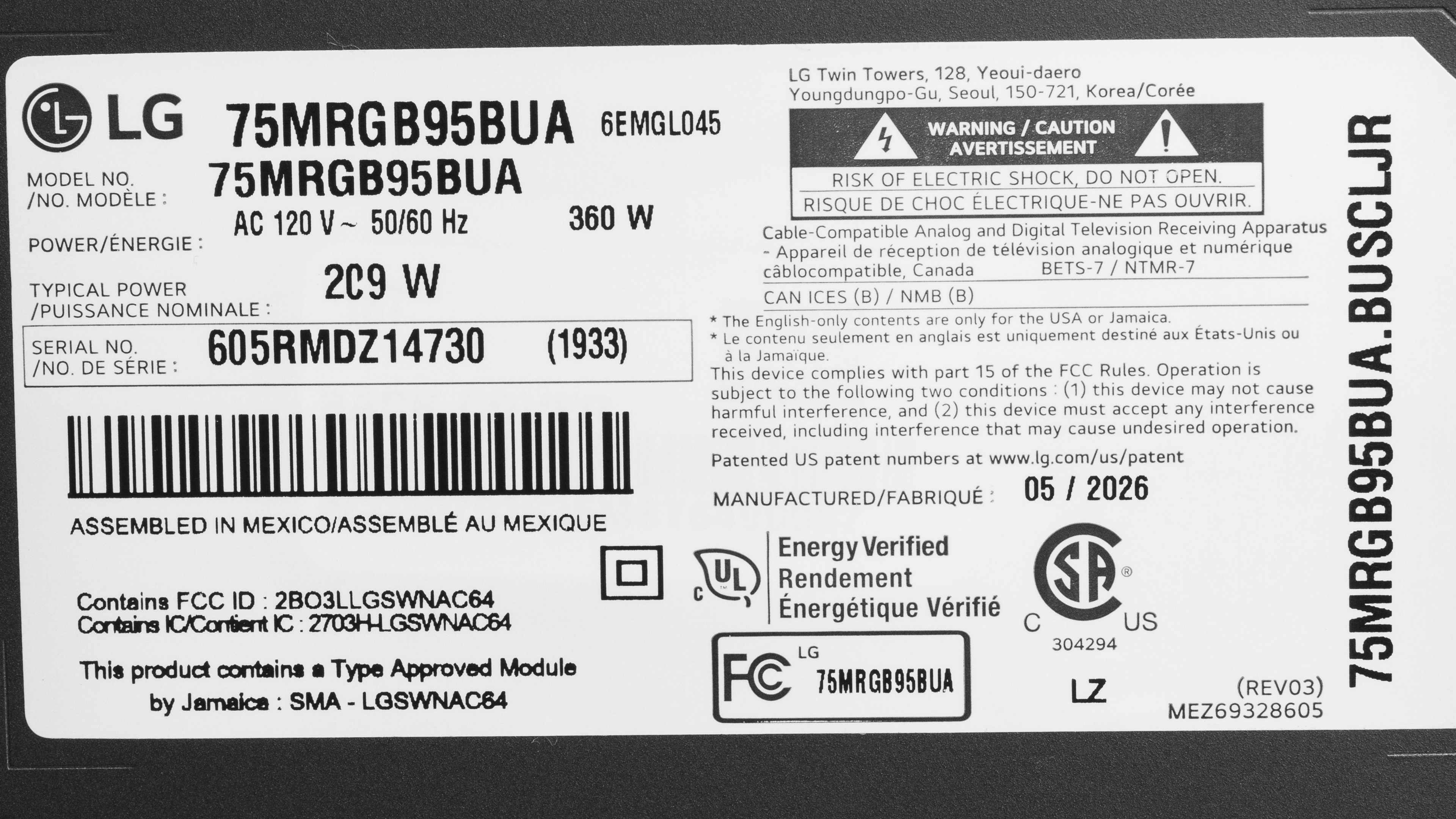
We bought and tested the 75-inch LG MRGB95B, but our results also apply to the 86- and 100-inch models. Note that the last three letters in the model number (BUA in this case) vary between retailers and individual regions, but there's no difference in performance.
| Size | US Model |
|---|---|
| 75" | 75MRGB95BUA |
| 86" | 86MRGB95BUA |
| 100" | 100MRGB95BUA |
Our unit was manufactured in Mexico in May 2026.
Popular TV Comparisons
The LG MRGB95B is a very good TV on paper, but it's held back by its lackluster image accuracy out of the box and noticeable color issues. It faces steep competition from the other 2026 flagship RGB Mini LED models, like the Hisense UR9SG, the Samsung R95H, and the Sony BRAVIA 9 II, and unfortunately, it's by far the worst of the pack. While it's extremely bright, the RGB backlight is poorly tuned, causing noticeable color temperature issues in some scenes. The RGB backlight doesn't even seem to be working properly, as disabling it entirely and forcing the backlight to be always white actually results in better color saturation. Overall, while the hardware shows promise, it's a disappointing first entry for LG into the RGB Mini LED market.
For other options, check out our recommendations for the best TVs, the best gaming TVs, and the best RGB Mini LED TVs.
The Samsung R95H is much better than the LG MRGB95B. The Samsung has a much better anti-reflective coating, so it looks a lot better during the day, and dim scenes are easier to see. The Samsung also has much better color volume, and no distracting changes in color temperature between scenes. Finally, the Samsung has a better local dimming feature, with significantly less haloing around bright details or subtitles on a dark background.
The Sony BRAVIA 9 II is a much better TV than the LG MRGB95B. The Sony delivers a far more accurate image, with significantly better accuracy out of the box, and it displays an image that's much closer to the creator's intent. The Sony has much better reflection handling, so glare from windows and lights facing the TV is far less noticeable, and dark scenes are easier to see during the day. The Sony also has much better color volume, and bright scenes look a lot more vibrant.
The Sony BRAVIA 7 II is better than the LG MRGB95B. The Sony has much better color volume, so bright scenes are more vibrant and lifelike. The Sony also has much better accuracy out of the box, and unlike the LG, there's no change in color temperature between scenes. The LG is a bit brighter and has slightly better contrast, but it's not a significant difference.
The Hisense UR9SG and the LG MRGB95B trade blows in a few different ways, but the Hisense is slightly better overall. The Hisense has much better colors, with brighter, more vibrant colors in most scenes. Motion is also smoother on the Hisense, especially when gaming at high refresh rates. The LG on the other hand, has slightly better native contrast and better black uniformity.

We buy and test dozens of TVs yearly, taking an objective, data-driven approach to deliver results you can trust. Our testing process is complex, with hundreds of individual tests that take over a week to complete. Most of our tests use specially designed test patterns that mimic real content, but we also use the same sources you have at home to ensure our results match the real-world experience. We use two main tools for our testing: a Colorimetry Research CR-100 colorimeter and a CR-250 spectroradiometer.
Test Results
for pictures & test results

for pictures & test results

for pictures & test results

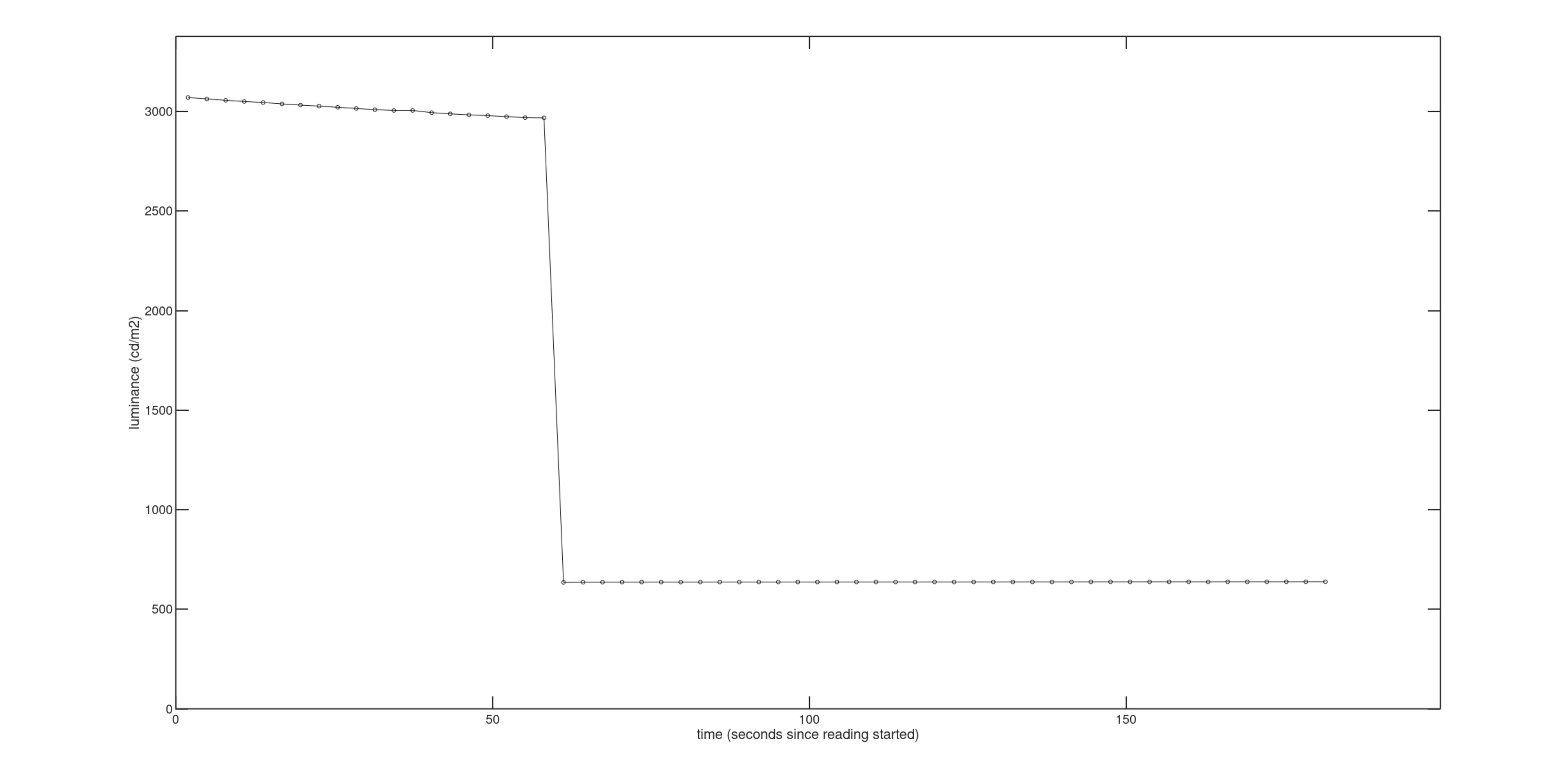
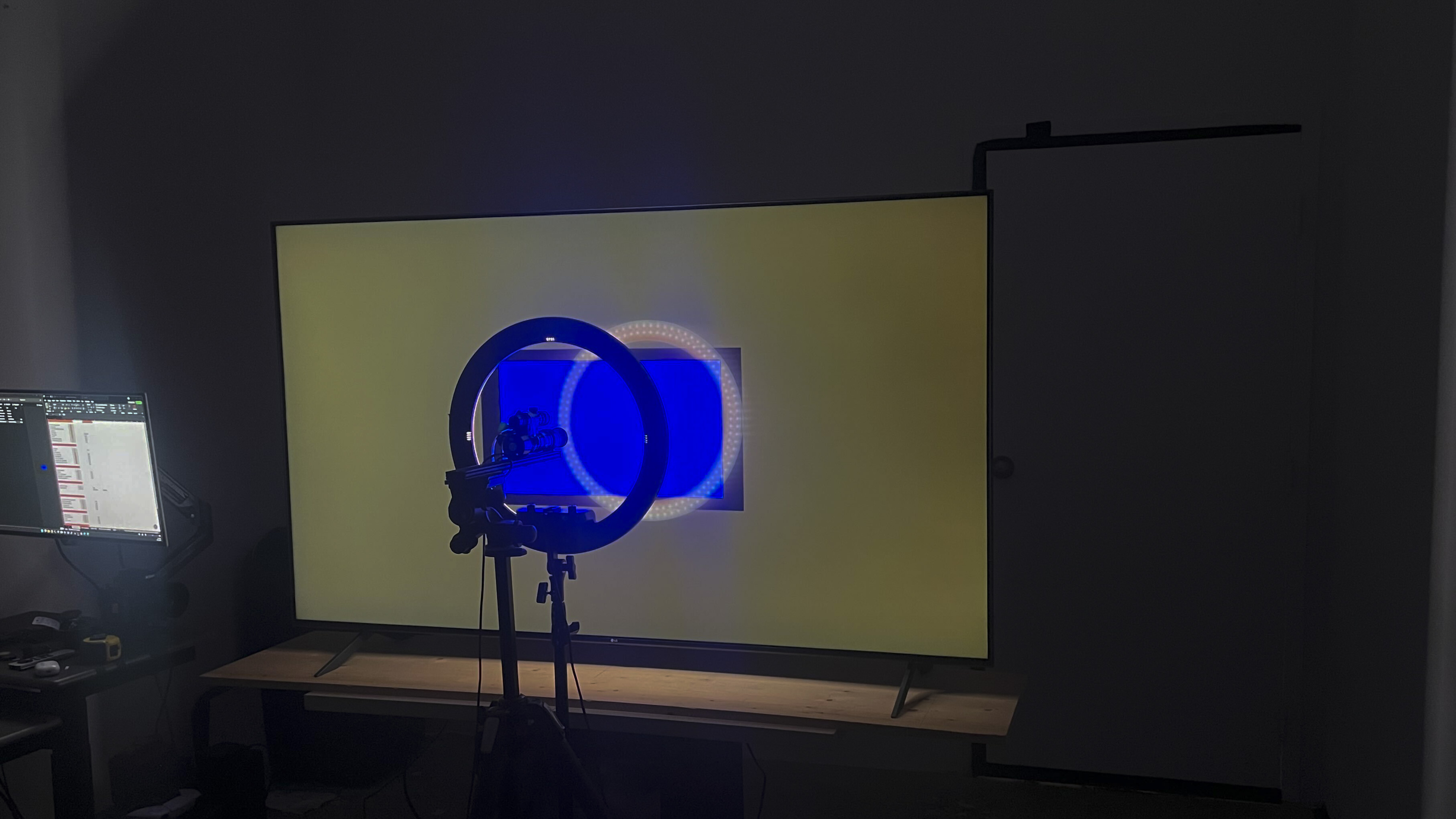
The LG MRGB95B has fantastic peak brightness in HDR. It's bright enough to easily bring out small specular highlight details, like the sun glinting off a car or the bright peaks of a flame. Very bright outdoor scenes or sports are also incredibly bright. Unfortunately, it can't maintain that brightness for very long, though, and after about a minute of sustained brightness, the TV dims considerably. This isn't noticeable with the vast majority of real content, though.
The posted results are with the TV in its most accurate picture mode with 'Dynamic Tone Mapping' disabled. Below are the results with DTM turned on, which significantly increases brightness in some real scenes but isn't as accurate.
- Hallway Lights: 1,222 cd/m²
- Yellow Skyscraper: 1,359 cd/m²
- Landscape Pool: 508 cd/m²
for pictures & test results

for pictures & test results

for pictures & test results

The TV is slightly dimmer when you switch to Game mode, but it's not really a noticeable difference. It's still bright enough to deliver excellent HDR peak brightness when gaming. Bright details in games stand out well, and very bright scenes look impressive.
The posted results are with the TV in its most accurate picture mode with 'Dynamic Tone Mapping' set to 'HGIG.' Below are the results with DTM turned on, which significantly increases brightness in some real scenes but isn't as accurate.
- Hallway Lights: 1,319 cd/m²
- Yellow Skyscraper: 1,260 cd/m²
- Landscape Pool: 537 cd/m²
The TV has fantastic peak brightness in SDR. It's bright enough to easily overcome glare during the day, even when most of the screen is bright at once, like when watching sports. Like with HDR, it can't sustain very bright details for long, and there's a very noticeable drop in brightness after about a minute. It's rarely noticeable when watching real content, though.
for pictures & test results

The LG MRGB95B has excellent contrast. The local dimming feature does a great job of reducing black levels in dark parts of the scene while maintaining high brightness in bright areas. The panel's native contrast is also high enough that black levels aren't noticeably raised in more difficult parts of the scene.
for pictures & test results

The local dimming feature has great zone precision. It can dim the backlight tightly around bright details or subtitles, so you'll just see a bit of haloing around them.
for videos & test results

Zone transitions on this TV look good. The leading edge of very bright details moving across a black background is slightly darker than it should be, as the TV can't quite keep up with them. There's very little halo trailing them, though.


for pictures & test results

for pictures & test results

The black uniformity of this TV is excellent. There's no obvious pinching or flashlighting with local dimming disabled, but black levels are slightly raised across the screen. It looks fantastic with local dimming on, with barely any noticeable uniformity issues in dark scenes.
for pictures & test results

for pictures & test results

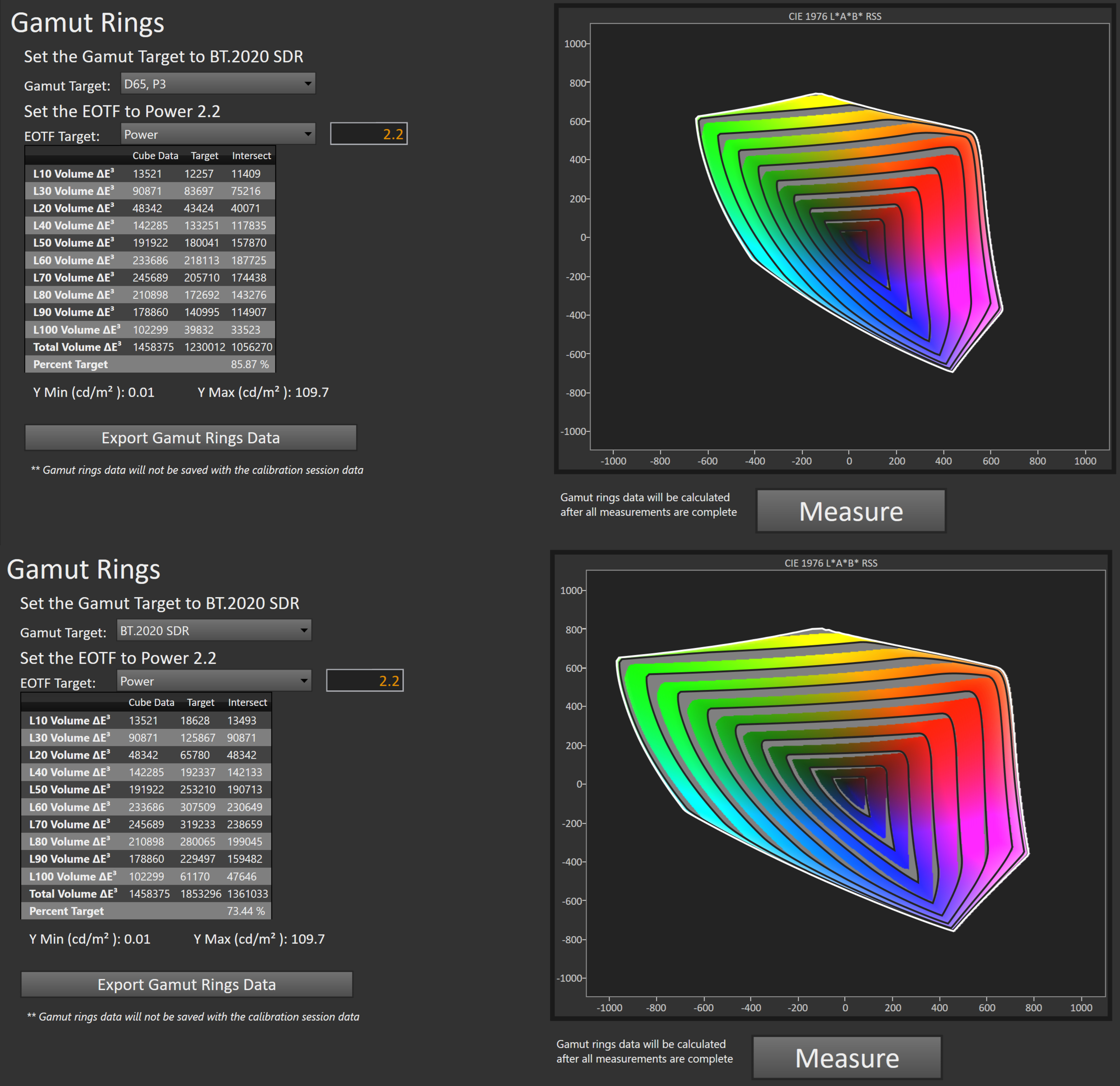
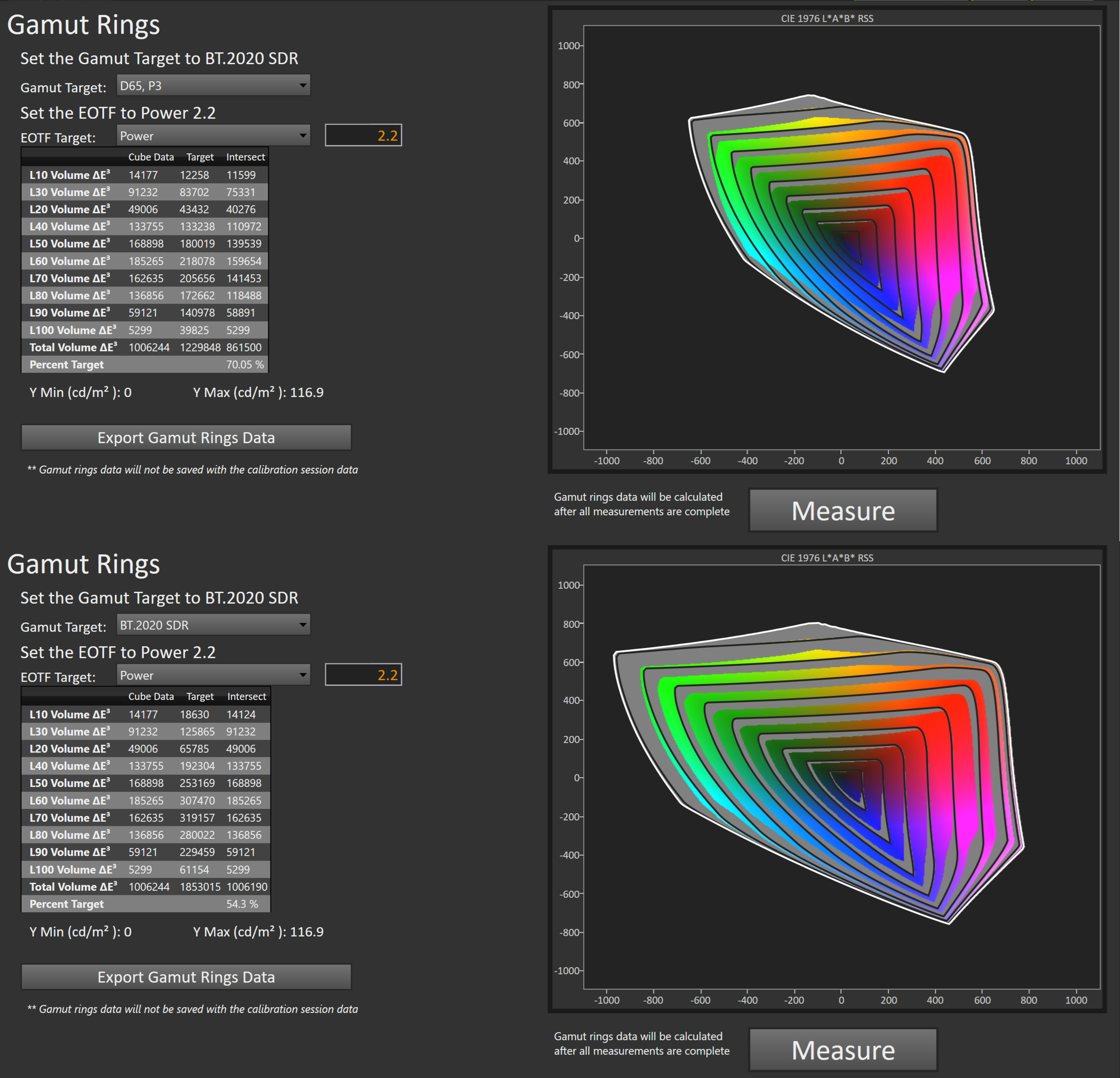
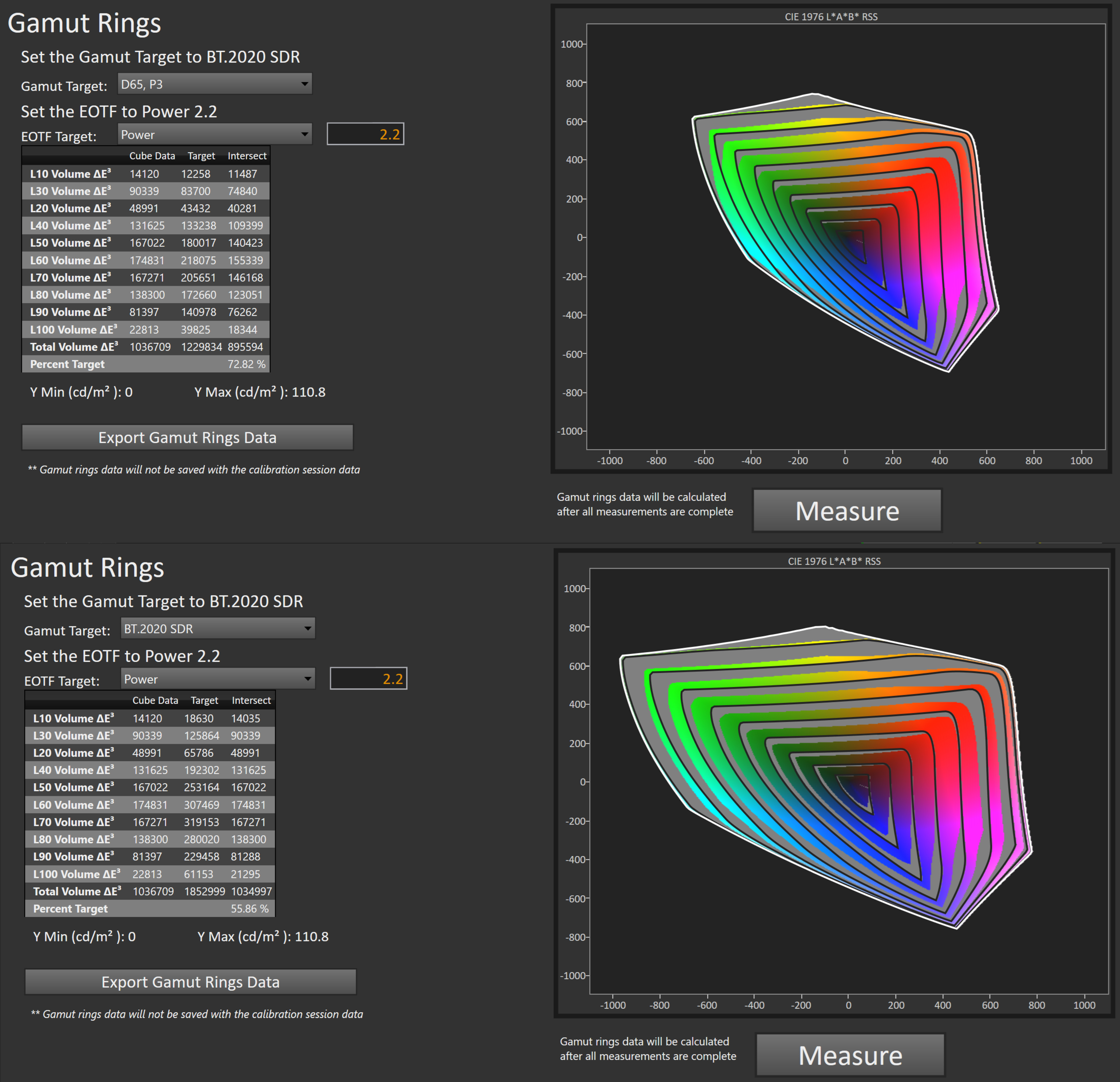
The LG MRGB95B has decent color volume in SDR, but it's much worse than other RGB Mini LED models like the Hisense UR9SG or the Samsung R95H. The TV reverts to white often, which reduces the amount of color cross-talk that you'll see, but it also limits the usefulness of the RGB backlight.
| Local Dimming Setting | Average DCI-P3 Coverage | Average BT.2020 Coverage | Chart |
|---|---|---|---|
| Off | 85.87% | 73.44% | Chart |
| Low | 70.05% | 54.3% | Chart |
| Medium | 72.82% | 55.86% | Chart |
The chart above shows the color volume with each of the different local dimming settings. The 'Low' and 'Medium' settings deliver considerably worse color volume, with the posted 'High' results and 'Off' delivering similar overall color volume.
| Volume ΔE³ | DCI-P3 Coverage |
BT.2020 Coverage |
|---|---|---|
| L10 | 83.91% | 65.05% |
| L20 | 87.93% | 72.50% |
| L30 | 85.49% | 72.15% |
| L40 | 83.58% | 73.03% |
| L50 | 82.14% | 73.34% |
| L60 | 80.42% | 72.43% |
| L70 | 78.86% | 70.51% |
| L80 | 78.16% | 70.00% |
| L90 | 78.21% | 63.94% |
| L100 | 79.20% | 66.39% |
| Total | 80.79% | 70.58% |
for pictures & test results

for pictures & test results

The TV has fantastic color volume in HDR. It displays deep, saturated colors well, thanks to its high contrast ratio and very effective local dimming feature. Most colors are bright and vibrant, as well, and bright colors aren't washed out at all.
for pictures & test results

for pictures & test results

for pictures & test results

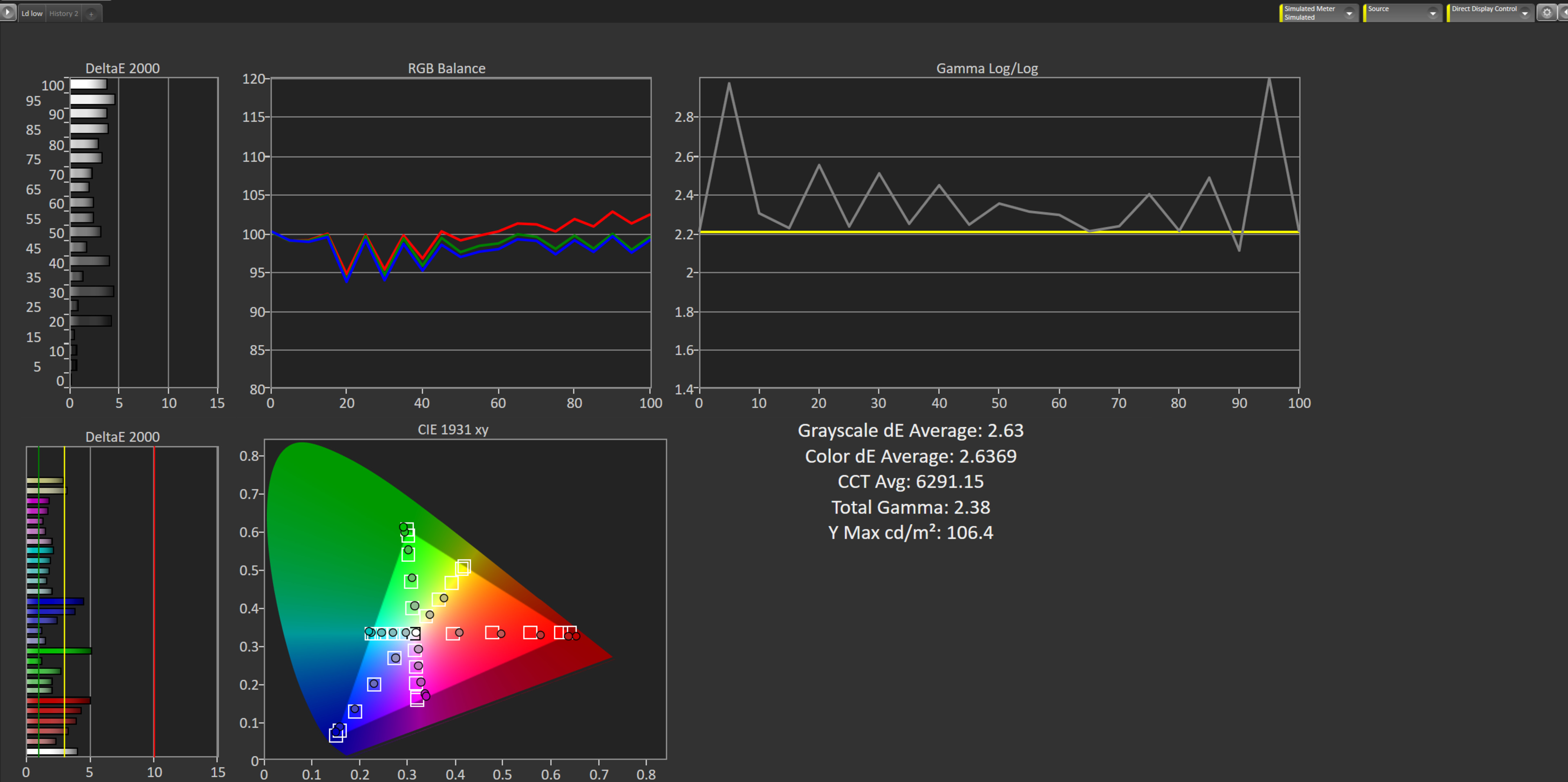
Unfortunately, the TV has poor accuracy out of the box in SDR. Its gamma tracking is very off, and it crushes mid-tones drastically, impacting the overall RGB balance and gray tones noticeably. The average color temperature is fine. Color mapping is also slightly off in all shades. It's not too bad, but you'll notice it if you're sensitive to color accuracy.
The color balance also shifts noticeably as the screen's APL changes. You can see this even with a uniform low-luminance slide while moving the mouse across the screen. The issue is far more noticeable with lower Local Dimming settings.
- Local dimming 'Low' video 1.
- Local dimming 'Low' video 2.
- Local dimming 'Low' pre-calibration measurements.
for pictures & test results

for pictures & test results

for pictures & test results

Thankfully, the TV is very accurate after a full calibration, but its poor pre-calibration accuracy means that it requires a more aggressive approach to achieve acceptable results.
You can see our full calibration settings.
for pictures & test results

for pictures & test results

The pre-calibration accuracy in HDR is mediocre. The color temperature is okay, but the overall white balance is poor, with significant errors in all shades of gray. It has alright color mapping, but there are significant luminance errors, resulting in a very high overall color error.
for pictures & test results

for pictures & test results

Calibrating the TV in HDR doesn't improve its accuracy much. The white balance is a bit better, especially in brighter scenes, but dark shades are still noticeably off. The color error is also technically better, but still poor overall.
for pictures & test results

The LG MRGB95B has decent PQ EOTF tracking. It's very uneven across all luminance levels, with some scenes crushed slightly and others overbrightened. It also handles bright content differently depending on the level it was mastered at, and bright areas of content mastered at 600 nits are significantly brighter than they should be.
for pictures & test results

The TV has very good low-quality image smoothing. It does an excellent job of reducing macro blocking and other compression artifacts, but there's some loss of fine details.
for pictures & test results

The TV has excellent upscaling. Low-resolution content like DVDs is upscaled well, with no obvious over-sharpening.
for pictures & test results
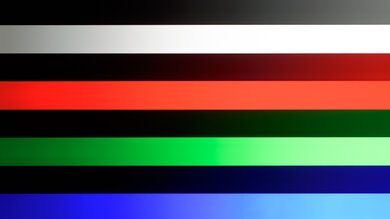
The TV has great gradient handling. There's some minor banding in dark shades of blue and green, but it's not too bad.
The LG MRGB95B has great input lag in the low latency Game mode. There's very little added delay, which helps deliver a responsive feel when gaming.
The TV supports all common formats up to a maximum refresh rate of 165Hz with 4k signals or 330Hz at 1080p. It also displays chroma 4:4:4 properly, which is important for clear text from a PC.
This TV supports VRR across a wide refresh rate range, which helps reduce tearing when the frame rate fluctuates.
for pictures & test results
for pictures & test results

Unfortunately, the TV's CAD at its max 4k refresh rate of 165Hz is bad. There's very little overshoot and no inverse ghosting, but all transitions are very slow to complete, resulting in very blurry motion in all content.


for pictures & test results

This TV is fully compatible with everything the PS5 and PS5 Pro offer, including 1440p @ 120Hz and 4k @ 120Hz, as well as VRR to reduce screen tearing. It also supports Auto Low Latency Mode, so you don't have to worry about switching to Game Optimizer to get the lowest input lag.
for pictures & test results

This TV is fully compatible with everything the Xbox Series X|S offers, including 1440p @ 120Hz, 4k @ 120Hz, HDMI Forum VRR, FreeSync Premium Pro, and Dolby Vision gaming. It also supports Auto Low Latency Mode, so you don't have to worry about switching to Game Optimizer to get the lowest input lag.
for videos & test results
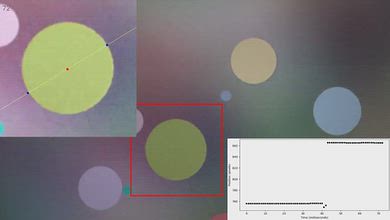
for pictures & test results

for pictures & test results
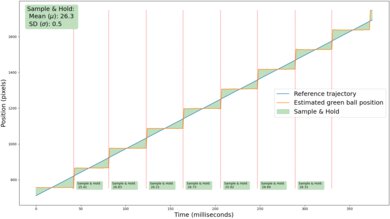
The LG MRGB95B has a slow cinematic response time, resulting in relatively little stutter. It's still somewhat present in very slow, wide-panning shots, but it's very minor.
for videos & test results
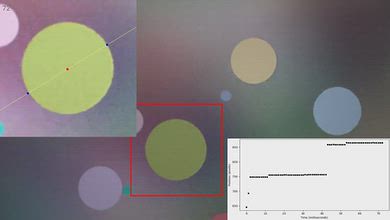
for pictures & test results

for pictures & test results
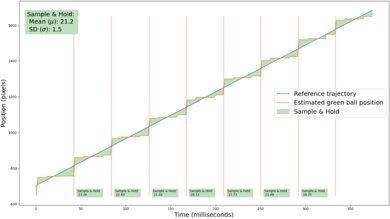
The motion interpolation feature does a good job of reducing stutter on this TV. Even just interpolating 24p content up to 30p reduces the frame hold time without adding soap opera effect. The feature is extremely consistent as well, so the frame timing doesn't change much between scenes.
for pictures & test results
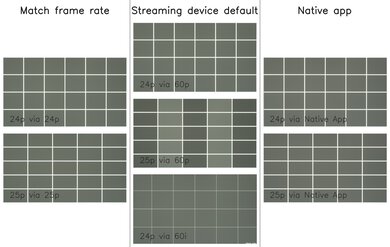
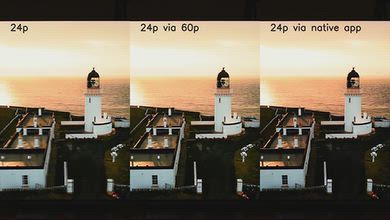
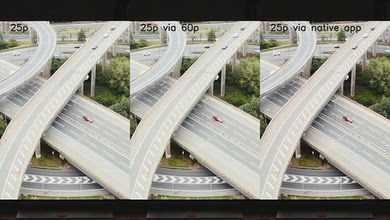
The TV removes judder from most sources. The frame timing is off with 25p content sent via a 60p signal, like from a cable TV box or a streaming device that's not matching the content frame rate.
for pictures & test results

for pictures & test results

The LG MRGB95B has a bad response time when watching content. Shows and sports look blurry, making it difficult to make out fine details in busier scenes.
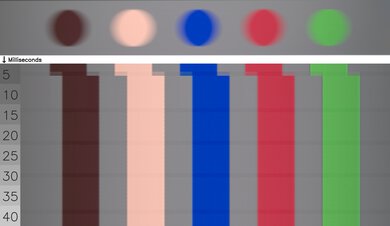
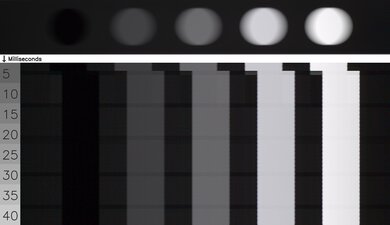
for pictures & test results

This TV doesn't use pulse width modulation (PWM) to adjust the backlight intensity, but it's not flicker-free, either. There's a consistent, very high-frequency flicker in the backlight, but only the intensity changes as you change the backlight level.
for pictures & test results
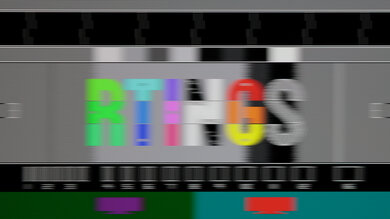
for pictures & test results
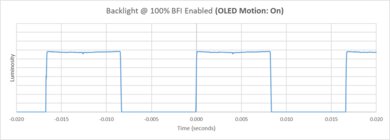
The TV has an optional backlight strobing feature, commonly known as black frame insertion. It's supported at both 60Hz and 120Hz, but the pulse timing is bad, resulting in a noticeable double image with the feature enabled.
for pictures & test results

for pictures & test results

The LG MRGB95B has a glossy coating that doesn't do much to reduce the intensity of direct, mirror-like reflections. It slightly reduces their intensity, but they're still noticeable.


for pictures & test results

for pictures & test results

The total amount of reflected light off the screen is great. Reflections aren't too distracting when you're watching TV in a bright room. There are some minor diffraction artifacts, though, including a slight rainbow smear around bright lights.
for pictures & test results

Ambient light has no impact on perceived color volume.
for videos & test results
for pictures & test results

for pictures & test results

for pictures & test results

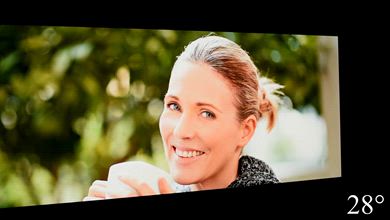
Unfortunately, this TV has a mediocre viewing angle, so it's not a good choice for a wide seating arrangement. The image fades as you move to the sides, and colors shift noticeably, with the TV taking a very noticeable red tint at a moderate angle.
for pictures & test results

for pictures & test results

The panel uniformity is just okay. There's relatively little dirty screen effect near the center of the screen, which is great for watching sports. The sides are noticeably darker than the center, though.
for pictures & test results

for pictures & test results

This TV uses a VA panel with a red-green-blue subpixel layout. This structure helps with text clarity when using it with a desktop PC. The spectral power distribution shows the distinct blue, green, and red spikes from the RGB Mini LED backlight.
for pictures & test results

for pictures & test results

This TV supports the full 48Gbps bandwidth of HDMI 2.1 on all four HDMI ports. This allows you to take full advantage of multiple high-bandwidth devices, like if you own multiple current-gen consoles and a high-end gaming PC.
This TV passes through all Dolby Digital options. However, it doesn't support any DTS audio formats commonly used on physical media.
for pictures & test results

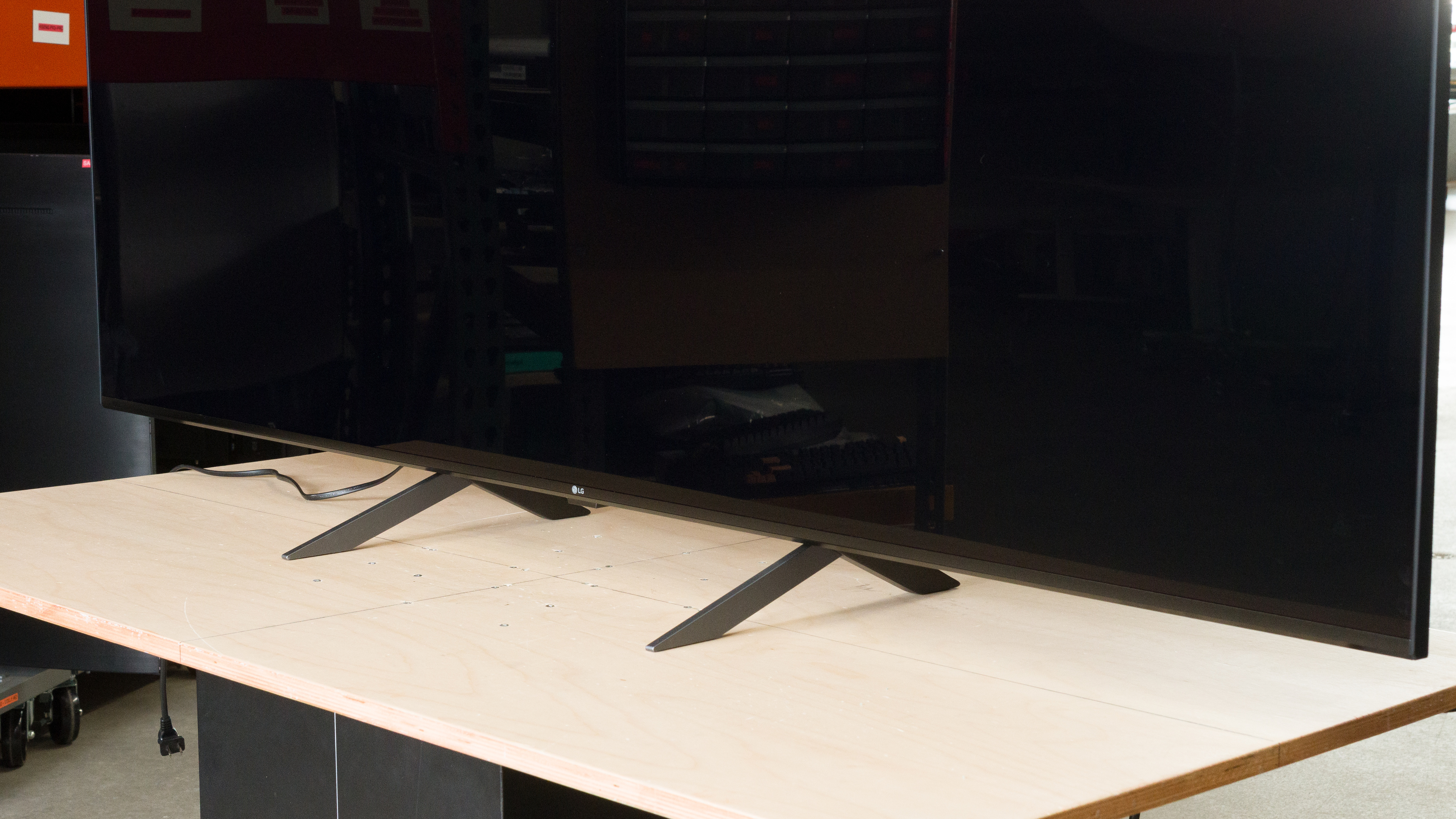
The LG MRGB95B has a slightly premium design. The bezels are thin on all four sides, with just a slight gap between the frame and the first pixels.
for pictures & test results

The blade-style feet support the TV well and look premium. They can also be adjusted to either the wide position shown or a narrow position for a shorter table.
Footprint of the 75-inch model in the wide position: 52.4" x 14.2" x 3.1"
Footprint of the 75-inch model in the narrow position: 20.0" x 14.2" x 3.1"
for pictures & test results

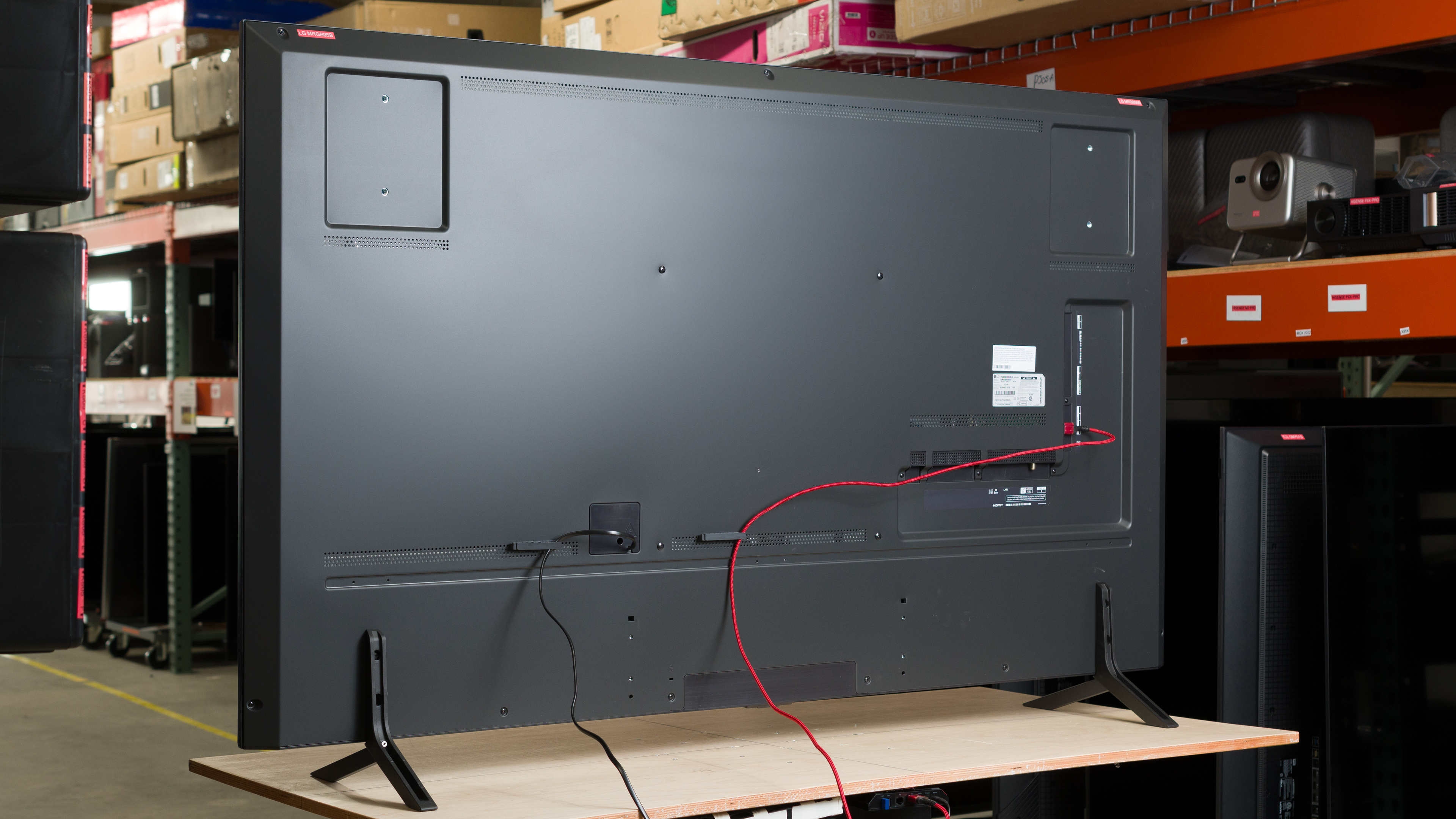
The back of the TV is very plain. The inputs are housed in a cutout at the side of the TV, and they're easy to access. There are clips on the back for cable management. There are also two cutouts near the top two corners for the EZ Slim Wall Mount (sold separately).


for pictures & test results

The LG MRGB95B has great build quality. There's some metal used in its construction, and it feels fairly premium. It's solid overall and feels well-built.

for pictures & test results

The TV ships at launch with the 2026 version of LG's proprietary smart interface, webOS. LG promises at least five years of webOS updates on their TVs, and you get updated versions of the operating system once a year.
for pictures & test results

There are two settings in the 'Home Settings' menu, namely the 'Home Promotion' and 'Content Recommendation' settings. These settings remove the top banner ads and suggested content from the home screen. This gives your home screen a clean look, but there's no way to remove ads from the apps page.


The TV was originally tested on firmware version 32.21.62.
for pictures & test results

The LG MRGB95B has a decent frequency response. It gets decently loud, so it can handle a somewhat noisy environment. It has a well-balanced sound profile at moderate listening levels, so dialogue is clear and easy to understand, but it's a bit uneven at max volume.