
The Hisense U7K is a lower mid-range 4k TV released in 2023. It sits between the Hisense U6/U6K and the Hisense U8/U8K in the company's 2023 ULED lineup and replaces the Hisense U7H. Compared to its predecessor, the U7K offers more local dimming zones and two HDMI 2.1 bandwidth ports that can do up to 4k @ 144Hz. It still has a full suite of gaming features, like variable refresh rate support and Hisense's Game Mode Pro gaming interface. It's also compatible with Dolby Vision HDR and HDR10+, is certified as IMAX Enhanced, and supports DTS and Dolby advanced audio formats. It has Google TV's user-friendly interface, which is easy to use, and has a great selection of streaming apps. It comes in four sizes: 55, 65, 75, and 85 inches.
Our Verdict
The Hisense U7K is a great TV overall. It gets bright in both HDR and SDR and has fantastic reflection handling, so it's stellar in any bright room setting. Its contrast is amazing, with outstanding black uniformity, so it also looks amazing in dark rooms when watching HDR movies and games. Plus, it has very good image processing and supports advanced audio and video formats, making it a great choice for home entertainment. It's also great as a gaming TV with a remarkably low input lag and great response time. Unfortunately, its viewing angle is inadequate, so it's not a great TV for any wide seating arrangement, like watching TV shows or sports with friends.
- Amazing contrast results in deep blacks in a dark room.
- Fantastic reflection handling.
- Image degrades when viewed from the side.
The Hisense U7K is good for TV shows. It gets very bright in SDR and has fantastic reflection handling, making it a good fit for bright rooms. It also has good image processing, so low-bitrate shows from streaming platforms look good, as does low-resolution content from cable boxes and DVDs. Plus, Google TV OS offers a wide selection of apps to access all your favorite shows. That said, its viewing angle is inadequate, so it's not the best TV to watch shows in a wide seating arrangement.
- Great peak brightness in SDR.
- Fantastic reflection handling.
- Low-resolution content is upscaled without any issues.
- Very good low-quality content smoothing.
- Image degrades when viewed from the side.
The Hisense U7K is good for watching sports. It gets very bright in SDR and has fantastic reflection handling, so it's well-suited to bright rooms. Its response time is great in most content, so there's minimal blur behind fast-moving objects or players. Its gray uniformity is decent, but there's a noticeable difference in color tone between the left and right side of the screen, which can be distracting in sports with large areas of bright color. Unfortunately, the TV's viewing angle is inadequate, so it isn't the best TV for a wide seating arrangement.
- Great peak brightness in SDR.
- Fantastic reflection handling.
- Low-resolution content is upscaled without any issues.
- Great response time with most content.
- Image degrades when viewed from the side.
- Some noticeable uniformity issues on large areas of bright color.
The Hisense U7K is an excellent TV to play games on. Its picture quality is great, with impressive contrast and dark details in Game Mode. It also gets very bright in SDR and has fantastic reflection handling, so it has no issues with glare in brighter rooms. It also has very little input lag, so there's hardly any delay between your inputs and the action on-screen. Its response time is great as well, so there's minimal blur behind fast-moving objects in most content. Unfortunately, the TV's response time is slower when coming out of dark states, so darker games have some noticeable black smear.
- Amazing contrast results in deep blacks in a dark room.
- Great peak brightness in SDR.
- Superbly low input lag for a responsive gaming experience.
- Great response time with most content.
- Vast selection of gaming features.
- VRR leads to image quality issues when the refresh rate hovers around 100Hz.
The Hisense U7K is a great TV to watch the latest movies on. Its contrast is amazing, with outstanding black uniformity, so it looks fantastic in a dark room. Its HDR brightness is very good, so highlights pop next to the TV's very deep blacks. The TV is very accurate even without any calibration, so you don't have to worry about calibrating it to get an accurate viewing experience. Finally, the TV's image processing is quite good, so movies look clean and sharp regardless of the source or quality.
- Amazing contrast results in deep blacks in a dark room.
- Very good low-quality content smoothing.
- Very wide color gamut and impressive color volume.
- Image degrades when viewed from the side.
The Hisense U7K is an excellent TV for playing the latest HDR games. The TV's Game Mode looks great in a dark room with its amazing contrast and outstanding black uniformity. It gets bright in HDR and has fantastic reflection handling, so it looks amazing even in bright rooms. Its input lag is superbly low, so your inputs feel quick and responsive. Its response time is great except in dark content, as there's some noticeable black smear when the TV comes out of dark states. Still, there's minimal blur with most content, which is great.
- Amazing contrast results in deep blacks in a dark room.
- Superbly low input lag for a responsive gaming experience.
- Great response time with most content.
- Vast selection of gaming features.
- VRR leads to image quality issues when the refresh rate hovers around 100Hz.
The Hisense U7K is an excellent TV to use as a PC monitor. It gets very bright in SDR and has fantastic reflection handling, so it easily handles bright offices. It has extremely low input lag, so your mouse movements are quick and responsive. Its response time is also good; there's some blur when things start moving quickly, like when playing action games, but it does a solid job overall. Unfortunately, it has an inadequate viewing angle, so the sides of the screen look washed out when sitting close to the TV.
- Fantastic reflection handling.
- Superbly low input lag for a responsive gaming experience.
- Great response time with most content.
- Image degrades when viewed from the side.
- VRR leads to image quality issues when the refresh rate hovers around 100Hz.
Changelog
-
Updated Nov 08, 2024:
We reviewed the text and made some minor tweaks for clarity to ensure the review is up to date.
-
Updated Oct 16, 2024:
We changed the TV's Native Refresh Rate to match its maximum refresh rate at its native resolution in the Variable Refresh Rate section of this review.
- Updated Aug 21, 2024: Mentioned the newly-reviewed TCL QM7/QM751G QLED in the HDR Brightness section of this review.
- Updated Jun 07, 2024: Mentioned the newly-reviewed Hisense U7N in the HDR Brightness section of this review.
Check Price
Differences Between Sizes And Variants
We tested the 65-inch Hisense U7K, and the results are also valid for the 55, 75, and 85-inch models. It's called the Hisense U75K at Costco, but it's the same as the regular U7K, except that it comes with a three-year warranty. In Canada, it's known as the Hisense U78KM, and it performs the same. There are similar international models, like the U7KAU in Australia, but these models perform differently from the North American U7K, so our results aren't valid for those models.
| Size | US Model | Costco Variant | Local Dimming Zones | Panel Type |
|---|---|---|---|---|
| 55" | Hisense 55U7K | Hisense 55U75K | 240 | Unknown |
| 65" | Hisense 65U7K | Hisense 65U75K | 384 | VA |
| 75" | Hisense 75U7K | Hisense 75U75K | 512 | Unknown |
| 85" | Hisense 85U7K | - | 684 | Unknown |
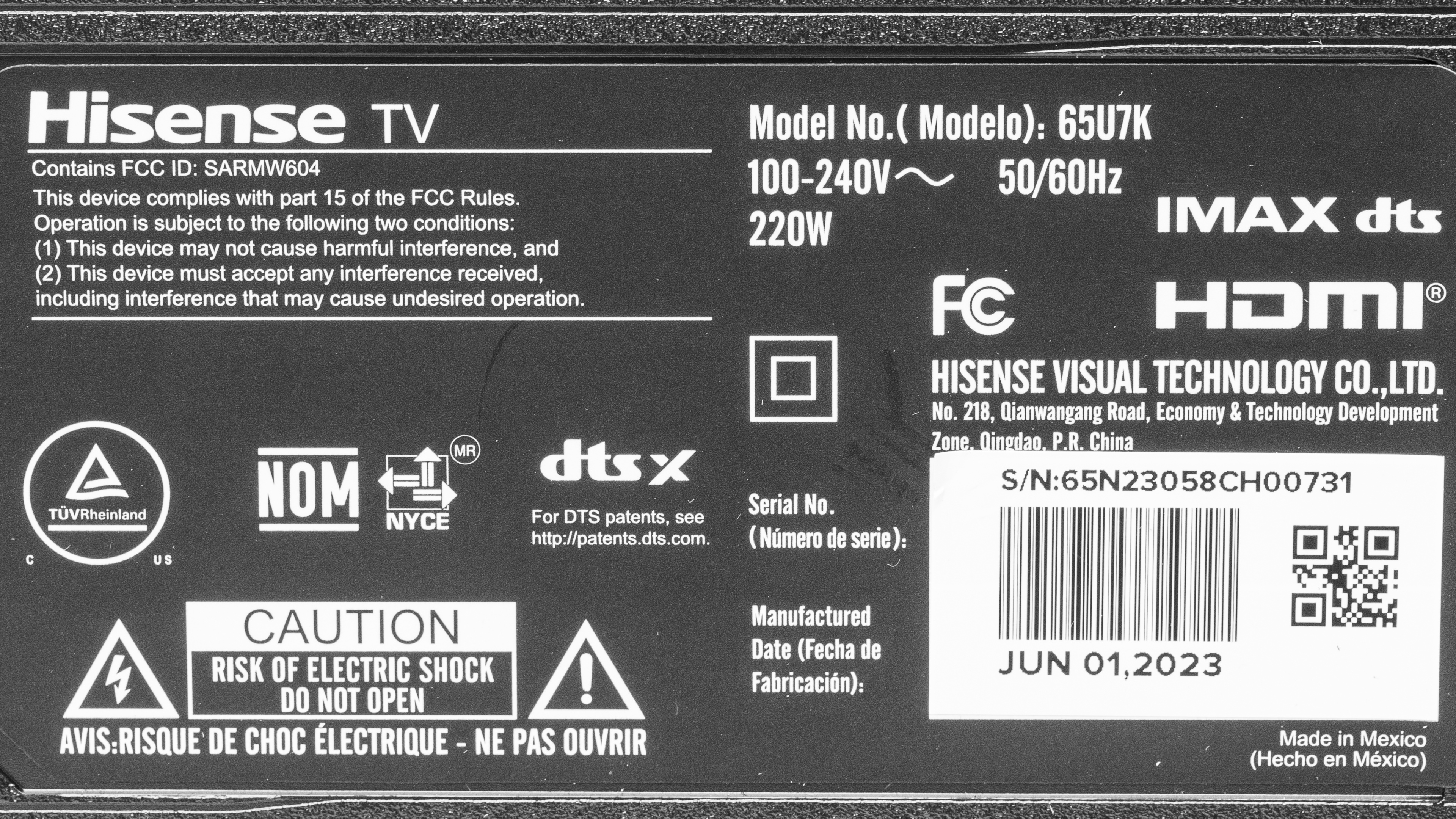
Our unit was manufactured in June 2023, as shown on the label.
Popular TV Comparisons
The Hisense U7K is a great performer and is one of the best TVs from 2023 at its price point. It's a big improvement over its predecessor, the Hisense U7H, with a better local dimming feature and better reflection handling. It has good image processing capabilities and support for advanced audio and video formats, so it can also serve as a cheaper home theater alternative to more expensive models from LG and Sony.
See also our recommendations for the best 65-inch TVs, the best 4k TVs, and the best TVs for bright rooms.
The Hisense U7K and the Hisense U7N are similar, but the U7N is a bit better in several ways. The U7N is brighter overall, so it handles more glare in a bright room when watching SDR content, and highlights in HDR content stand out more. The U7N has better contrast thanks to its more effective local dimming feature, so blacks are deeper on it. The U7N also has much better PQ EOTF tracking, so it's more accurate with HDR content. On the other hand, the U7K has much better pre-calibration SDR accuracy, so it's better for those who care most about color accuracy without needing calibration.
The Hisense U7K is a noticeable improvement from the Hisense U7H. The U7K has better contrast with a better local dimming feature, so it looks better in dark rooms. While the U7K is about as bright as the older model, it has much better reflection handling and looks better in bright rooms. Its pre-calibration color accuracy is also vastly better than the U7H. The U7K also has a much better response time and much improved low-quality content smoothing. It's just a better TV all-around.
The Hisense U7K and Hisense U8K are similar: they have the same feature set, but the U8K is a higher-tier TV, so it has better overall performance. The U8K gets brighter than the U7K, and this also gives it a higher color volume: colors are brighter and pop more on the more expensive model. It also has a more powerful local dimming feature, giving it better contrast in dark rooms. The U7K does have a better response time than the U8K, which is good for gamers or sports fans.
The Hisense U7K is essentially a better version of the Hisense U6K. The U7K has better contrast and black uniformity, so blacks are deeper when viewed in a dark room. Its better SDR brightness makes it better suited for a bright room since it can overcome more glare, and its better HDR brightness makes highlights pop more in HDR content. The U7K also has a quicker response time for less blur behind quick-moving objects and is the better choice to pair with modern gaming consoles due to its HDMI 2.1 bandwidth for 4k @ 120Hz and its more functional VRR feature.

We buy and test dozens of TVs yearly, taking an objective, data-driven approach to deliver results you can trust. Our testing process is complex, with hundreds of individual tests that take over a week to complete. Most of our tests use specially designed test patterns that mimic real content, but we also use the same sources you have at home to ensure our results match the real-world experience. We use two main tools for our testing: a Colorimetry Research CR-100 colorimeter and a CR-250 spectroradiometer.
Test Results
Older Test Bench: We tested this product using an older TV test methodology before a major update. Some of the test results below aren't directly comparable with other TVs. Learn more

for pictures & test results

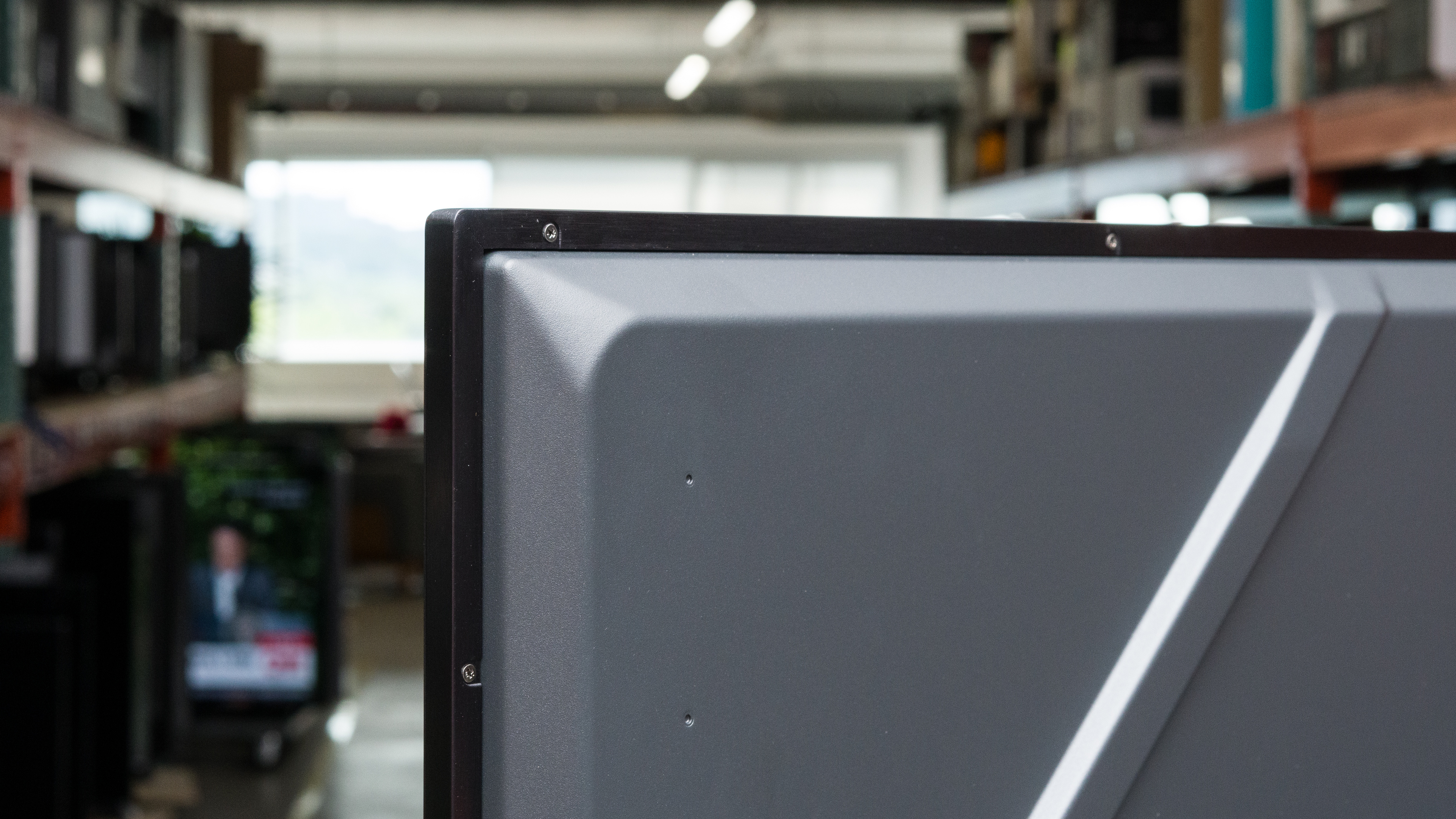
From the front, the TV has a premium design that looks great. It has thin bezels on three sides, with a thicker, but still thin, bottom bezel. The feet are slim and don't take up much space. From the back, the TV has visible screws around its border, which look a bit cheap overall.
for pictures & test results

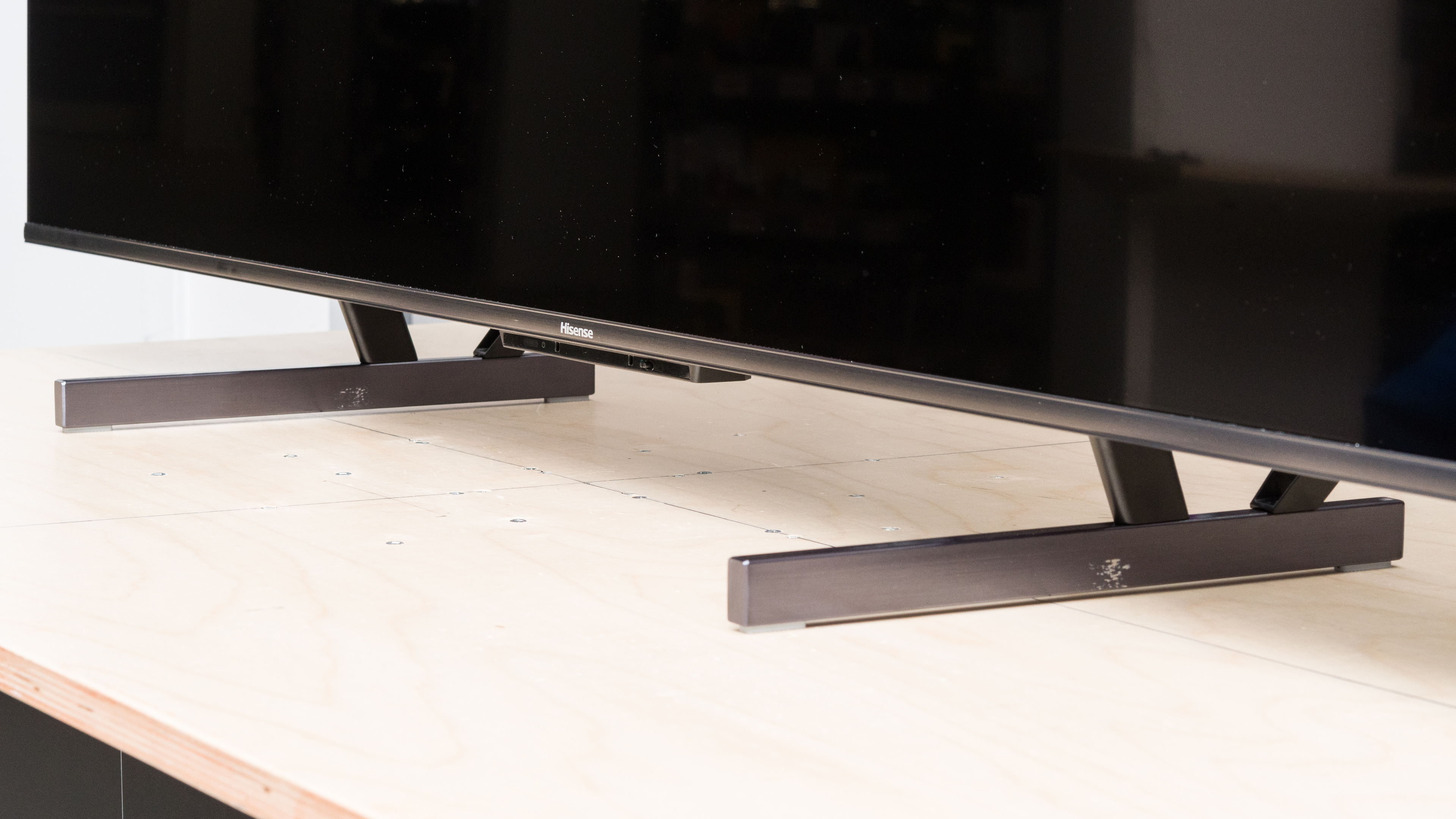
The TV comes with a pair of adjustable metallic feet that support it well, although there's still some wobble front to back.
Footprint of the 65-inch stand in the wide position: 46.1" x 12.3". In the narrow position, the 65-inch stand has a footprint of 27.6" x 12.3". In either position, the feet lift the TV about 3.3" above the table, so most soundbars fit in front without blocking the screen. Some longer soundbars don't fit between the feet when they're set in the narrow position.
for pictures & test results

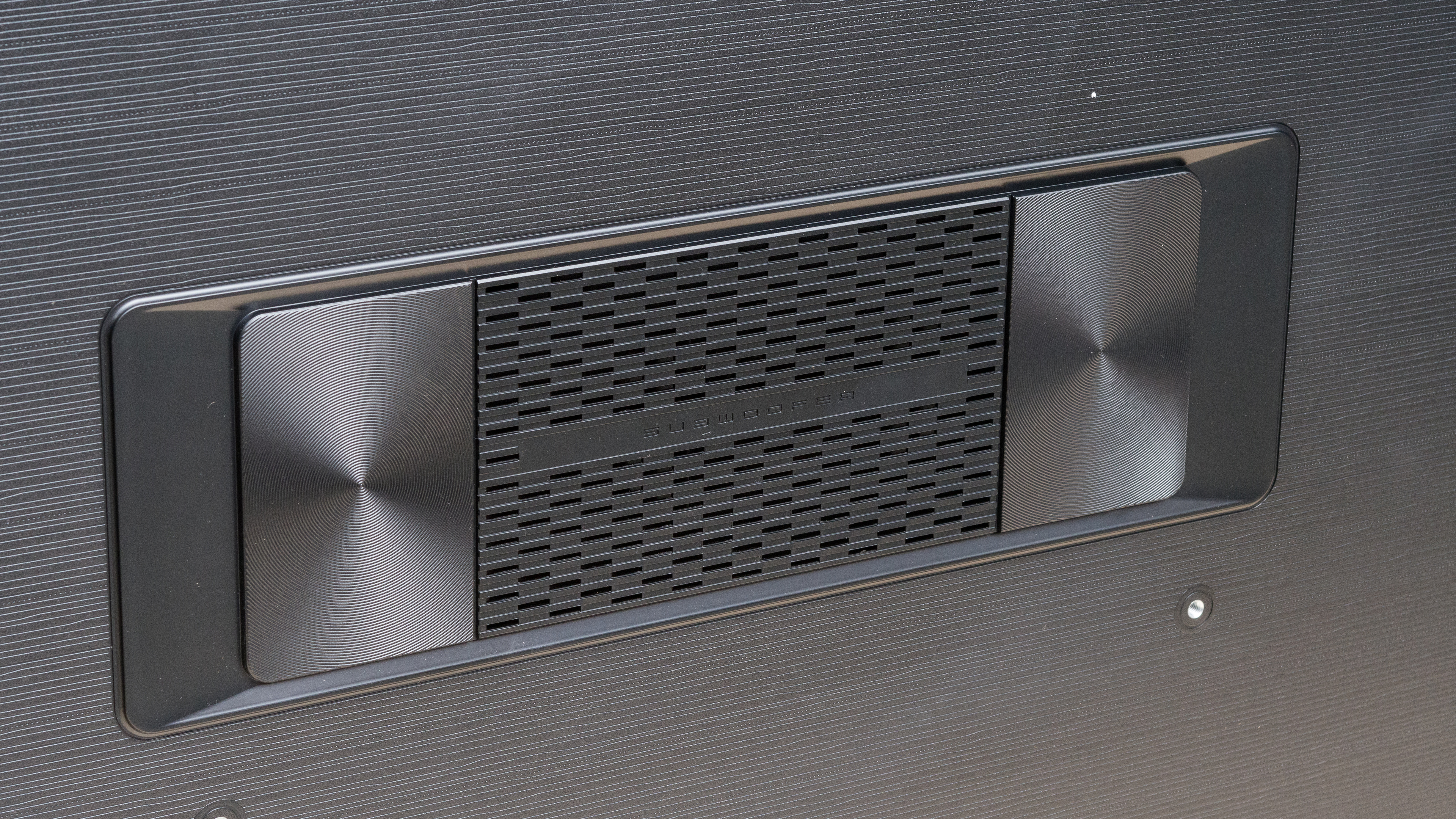
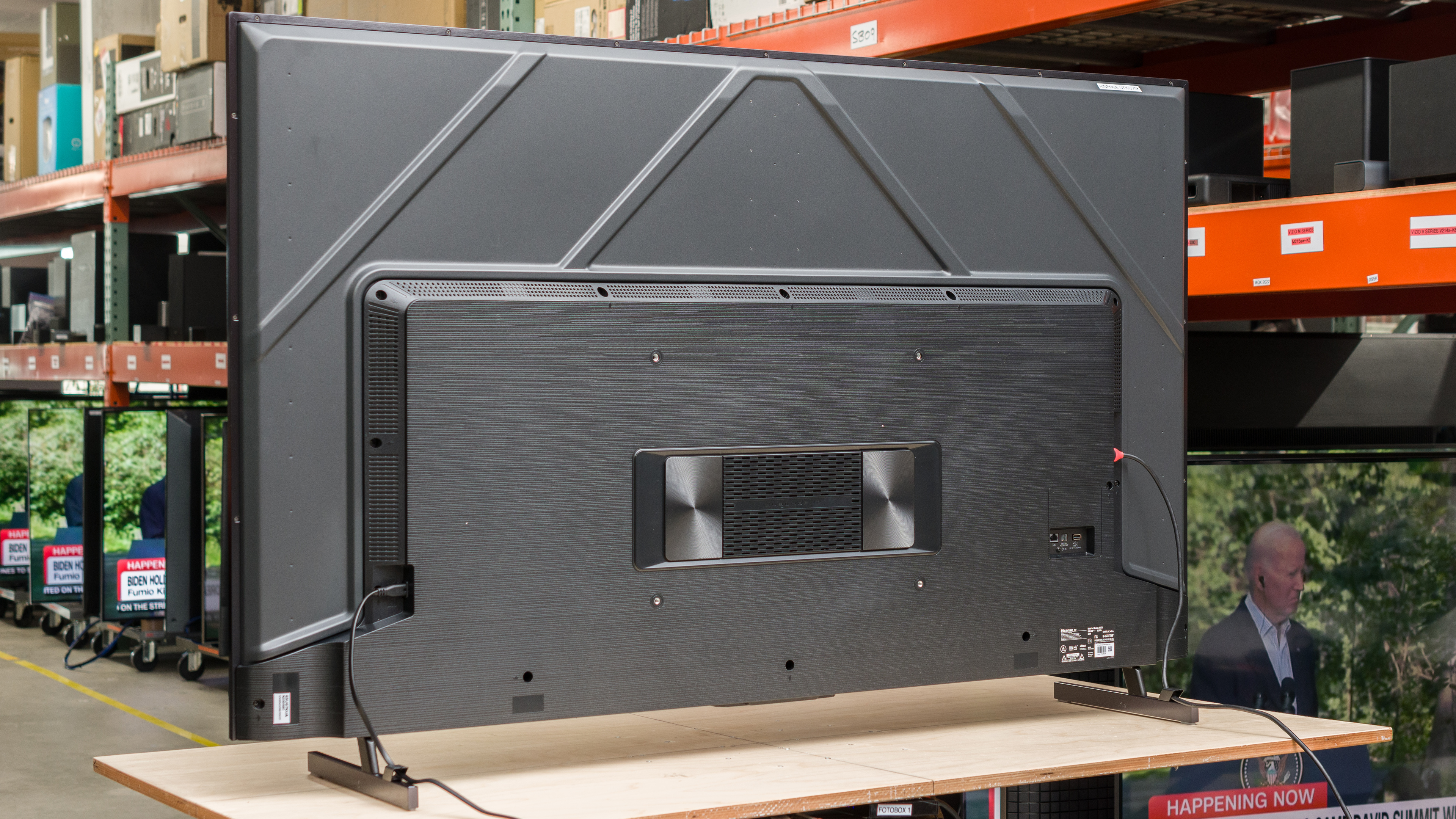
The back has a flat metallic top part and a thicker plastic housing on the bottom half. There's a built-in subwoofer on the bottom section. Most of the inputs are side-facing and aren't set into the TV, so they're easy to access unless you have the TV mounted flush against the wall. There are clips built into the feet to help with cable management.


for pictures & test results

The TV has decent build quality. There's a bit of flex in the plastic portion of the back, but this isn't uncommon and won't cause any issues. The feet are sturdy and support the TV well, but there's some wobble front to back. More worrisome, it creaks when it wobbles, which is slightly concerning. Our unit also has 10 dead pixels, or possible dirt stuck under the panel, around the top of the screen—they aren't visible from a normal viewing distance, but it speaks to less than stellar quality control.
for pictures & test results

The Hisense U75K Series has a fantastic contrast ratio with local dimming enabled, leading to deep blacks in a dark room, even when bright highlights are shown on the screen. With local dimming disabled, the TV's contrast ratio is good, but blacks are raised and appear washed out when bright highlights are present. If you want a similar TV with even better contrast, check out the Sharp AQUOS XLED FV1.
for pictures & test results

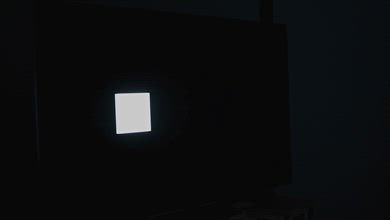
The Hisense U7K has decent blooming performance. There's some visible blooming around bright highlights or in dark areas when they're next to brighter ones.
for videos & test results

Overall, the TV's processing keeps up well with fast-moving objects. Still, the leading edge of bright, moving objects is noticeably dimmer, and fast-moving objects leave a visible trail.


for pictures & test results

for pictures & test results

for pictures & test results

The Hisense U7K has very good peak brightness in HDR. Bright highlights stand out well, delivering an impactful HDR experience. If you'd prefer a brighter TV, check out the TCL QM7/QM751G QLED instead.
These measurements are after calibrating the HDR white point with the following settings:
- HDR Picture Mode: HDR Theater
- Brightness: 100
- Gamma: ST2084
- Local Dimming: High
- Color Temperature: Warm 1
- Dynamic Tone Mapping: Off
If you want better HDR brightness, check out the newer Hisense U7N [U7, U75N].
for pictures & test results

for pictures & test results

for pictures & test results

The TV's HDR brightness in Game Mode is very good. There's no noticeable difference in peak brightness from 'HDR Theater' mode.
These measurements are after calibrating the HDR white point with the following settings:
- HDR Picture Mode: HDR Game
- Brightness: 100
- Gamma: ST2084
- Local Dimming: High
- Color Temperature: Warm 1
- Dynamic Tone Mapping: Off
for pictures & test results

The TV has decent PQ EOTF tracking, but all scenes appear brighter than the content creator's intent. There's a smooth roll-off as content approaches the its peak brightness, more so with content mastered at 4000 nits, ensuring that fine details are preserved.
It has impressive peak brightness in SDR and easily overcomes glare in a bright room. The TV maintains its brightness well across different scenes, although smaller highlights aren't as bright as bigger ones.
These measurements are after calibration with the following settings:
- Picture Mode: Theater Night
- Brightness: 100
- Color Temperature: Warm 1
- Local Dimming: High
- Gamma: 2.2
- Active Contrast: Off
for pictures & test results
for pictures & test results
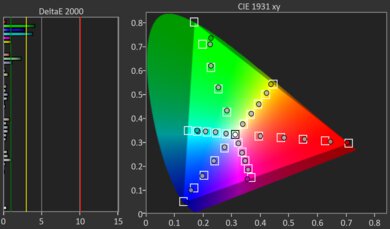
The Hisense U7K TV has an excellent HDR color gamut. It has fantastic coverage of the commonly used DCI-P3 color space, although there are small tone mapping errors with most colors. It also has good coverage of the wider Rec. 2020 color space, but again, with frequent tone mapping errors with most colors.
for pictures & test results

for pictures & test results

The TV has great color volume. It displays a wide range of colors at all luminance levels, and dark saturated colors are displayed well thanks to the TV's excellent contrast.
for pictures & test results

for pictures & test results

for pictures & test results

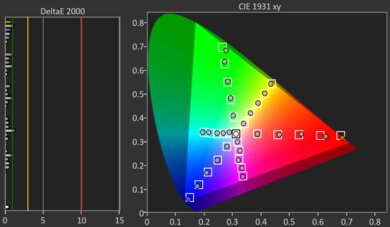
The Hisense U75K has excellent pre-calibration accuracy. Gamma is close to the 2.2 target for a moderately lit room, and the white balance is great, with minor accuracy errors in bright whites and mid-grays. Color accuracy is excellent, although saturated blues have noticeable tone mapping errors. The color temperature is fantastic; neither too warm nor too cold.
for pictures & test results

for pictures & test results

for pictures & test results

The TV has incredible accuracy after calibration. It's a bit tricky to calibrate, as you need to calibrate it at a lower stimulus than usual; otherwise, the calibration settings don't stick. Plus, changing settings at a lower stimulus affects higher settings significantly. For example, if you change the blue levels on an 80% white stimulus, it affects the blue levels at the 85% and 90% white stimulus. Still, it already has excellent accuracy before calibration, so you don't need to calibrate it too much, if at all, for an accurate image.
See our full calibration settings.
for pictures & test results

for pictures & test results

The TV has decent gray uniformity. There's some vignetting in the corners, and the right side of the screen has a green tint, while the left side veers towards pink. These uniformity issues are noticeable in large areas of bright, uniform color, like when watching sports or browsing the web. There's visible banding in near-black scenes, with a greenish tint towards the right side of the screen.
for pictures & test results

for pictures & test results

The TV has fantastic black uniformity. With local dimming disabled, there's a bit of backlight bleed, especially visible in the upper right corner of the screen, but it isn't too distracting. Enabling local dimming almost completely eliminates the backlight bleed.
for videos & test results
for pictures & test results

for pictures & test results

for pictures & test results

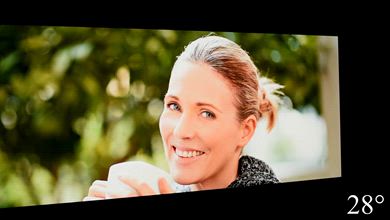
The TV has an inadequate viewing angle. The image fades and looks washed out as you move even slightly off-center. This makes it a poor choice for a wide seating arrangement, as anyone sitting off-center sees a degraded image. If you have a wide seating arrangement, an option with a wide viewing angle, like the Vizio Quantum Pro QLED, is a better choice.
for pictures & test results

for pictures & test results
for pictures & test results

The TV's reflection handling is fantastic. Its finish reduces the impact of reflections enough that it can easily handle even very bright rooms.
for pictures & test results
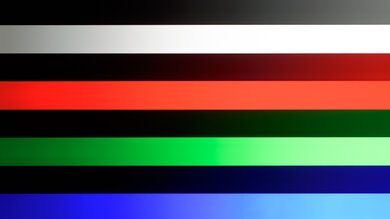
The TV has decent HDR gradient handling. There's some banding in dark grays, reds, and greens, as well as in bright blues. Other color gradients have minimal banding.
for pictures & test results

This Hisense U7K has very good low-quality content smoothing. It's great at avoiding macro-blocking in dark scenes and preserves fine details well.
for pictures & test results

The Hisense U7K's upscaling capabilities are good. The resulting image looks sharp overall, with some, but not excessive, blurring. Fine details are preserved well, and text is easy to read.
Sharpness processing was calibrated for low-resolution or low-bitrate content, with no over-sharpening, with the following setting:
- Super Resolution: On
- Sharpness: 10
for pictures & test results

The TV uses a BGR (blue-green-red) subpixel layout. For multimedia usage, this doesn't cause any issues, but it causes text clarity issues when you use this TV as a PC monitor. There are easy workarounds for these issues, however.
for pictures & test results

for pictures & test results
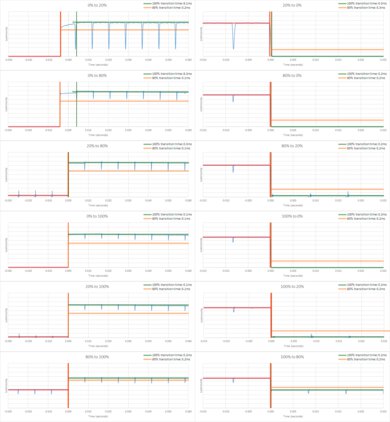
The TV has an excellent response time at 4k @ 60Hz, but the Hisense's response time tuning is different when the TV's refresh rate is below and above 100Hz: it's more aggressive above 100Hz, leading to a faster overall response time but with more overshoot errors. This doesn't cause any issues when running at a fixed refresh rate, but with VRR enabled, the TV's response time behavior rapidly changes as the TV's refresh rate hovers around 100Hz, which is very noticeable. You can see the two response time behaviors here:
for pictures & test results

Like most TVs on the market, this TV uses pulse width modulation (PWM) to dim the backlight. It flickers at 4000Hz in all picture modes and at every brightness level, but it isn't noticeable.
for pictures & test results
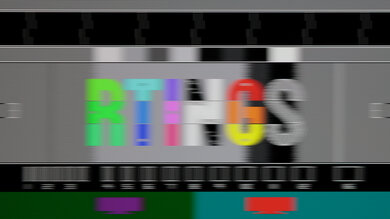
for pictures & test results
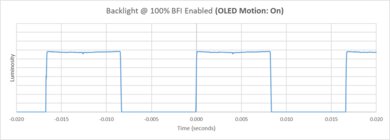
The TV has an optional backlight strobing feature, commonly known as black frame insertion (BFI). This feature is meant to reduce persistence blur and improve the appearance of motion. It works on the Hisense at both 60Hz and 120Hz, leading to a sharp image, but at the cost of some image duplication.
for pictures & test results

for pictures & test results

The TV has an optional motion interpolation feature to interpolate content up to 120 fps. It works decently well with slower content, like slow panning shots, but there's a lot of artifacting the moment the action ramps up.
The TV's good response time results in an adequate overall stutter performance. There's some noticeable stutter in slow-panning shots in 24p content, like movies.
The TV automatically removes judder from any source, ensuring a smooth movie-watching experience.
The Hisense U7K supports all three variable refresh rate (VRR) technologies, and its VRR range caps out at 144Hz. It can also do 1080p @ 240Hz, but not with VRR enabled. With VRR enabled, the TV sets itself to 72Hz with resolution halving when you attempt to run it at 1080p @ 240Hz.
When the TV is connected to a PC using an AMD graphics card, it disables HDR when the FreeSync toggle is enabled in the TV's Game Settings menu. For VRR and HDR to work simultaneously, FreeSync needs to be disabled on the TV, although this disables VRR for sources that only use FreeSync for VRR, such as older AMD graphic cards.
The input lag is incredibly low in Game Mode, resulting in a responsive gaming or desktop experience. The TV also outputs proper chroma 4:4:4 when in Game Mode, so you can have clear text and the fastest possible input lag when using this TV as a PC monitor.
The TV can't do 1080p @ 240Hz when VRR is enabled: it instead locks itself to 72Hz with resolution halving. With VRR disabled, the TV does proper 1080p @ 240Hz, with a measured input lag of 3.4ms.
Note: These numbers were measured with the 'High Refresh Rate' mode disabled except at 1080p @ 240Hz, as it locks itself to 'On' at that refresh rate. Enabling the setting at refresh rates lower than 240Hz noticeably increases input lag.
The TV supports up to 4k @ 144Hz on HDMI ports 3 and 4. The TV does proper 1080p @ 240Hz on HDMI ports 3 and 4, but only with VRR disabled.
The TV supports chroma 4:4:4 at 4k @ 144Hz with Game Mode enabled, so you can simultaneously have the sharpest text and lowest input lag.
for pictures & test results

The Hisense U7K takes full advantage of the PS5, with 4k @ 120Hz support on HDMI ports 3 and 4 and variable refresh rate (VRR) support.
for pictures & test results

The TV can also take full advantage of the Xbox Series X|S consoles, with 4k @ 120Hz support on HDMI ports 3 and 4, as well as variable refresh rate (VRR) support with both AMD FreeSync and HDMI Forum VRR. Like the Hisense U8/U8K, it can do Dolby Vision at 4k @ 120Hz.
The TV has HDMI 2.1 bandwidth on HDMI ports 3 and 4, with both supporting up to 4k @ 144Hz. Unfortunately, HDMI 3 is the eARC port, so you lose one HDMI 2.1 port when you plug in a soundbar. It has an ATSC 3.0 TV tuner, so it streams 4k content over-the-air. Its wireless tuner supports the Wi-Fi 6E standard, so it can use the 6GHz spectrum with compatible devices.




The TV supports eARC and can pass advanced DTS and Dolby formats from a connected source to your soundbar or sound system without reducing audio quality.
for pictures & test results

The frequency response of the built-in speakers is okay overall. There's very little bass, although it's alright for a TV. Dialogue is clear and easy to understand, but there's a pretty significant dip in the mid-to-high treble range. However, it isn't very noticeable in most content.
for pictures & test results
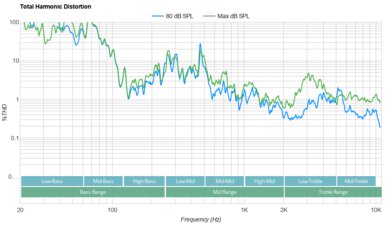
This TV has decent distortion performance. There's some audible total harmonic distortion, but mainly at high volume levels; it isn't noticeable at moderate volume.
for pictures & test results

The Hisense U7K uses version 12 of Google's popular Google TV OS. It's relatively easy to use and especially fast and smooth, with a large selection of apps.
for pictures & test results

Like most TVs on the market, this one has ads throughout the interface, and you can't disable them.
for pictures & test results
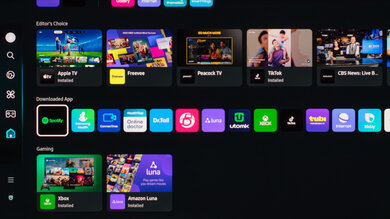
The TV has a great selection of streaming apps, with every popular streaming app being present. The interface is very smooth and pleasant to use.
for pictures & test results

Like most modern remotes, the included remote lacks a numpad, but there are quick-access buttons to popular streaming services. It also has a built-in mic, as does the TV itself, for hands-free voice control, giving you access to Google Assistant and Alexa. You can ask the TV to search for content, open apps, ask for the time or the weather, and switch inputs.
for pictures & test results

There's a button underneath the center of the TV to turn the TV on/off and switch inputs. There's a switch seen on the right side of the above photo to turn off the mic built into the TV if you're concerned about privacy.
for pictures & test results

- Remote
- 2x AAA batteries
- Power cable
- Quick setup guide