
Our Verdict
The LG LF5800 is very similar to the cheaper LF5600. The picture quality is about the same, but it adds 60hz motion interpolation, smart features and better upscaling. However, it still isn't a good TV. In a dark room, the blacks are gray, and in a bright room, it reflects too much light. At least the colors stay true off-axis.
- Good color accuracy off-axis.
- Poor blacks.
- Significant amount of reflection.
Check Price

We buy and test dozens of TVs yearly, taking an objective, data-driven approach to deliver results you can trust. Our testing process is complex, with hundreds of individual tests that take over a week to complete. Most of our tests use specially designed test patterns that mimic real content, but we also use the same sources you have at home to ensure our results match the real-world experience. We use two main tools for our testing: a Colorimetry Research CR-100 colorimeter and a CR-250 spectroradiometer.
Test Results
Older Test Bench: We tested this product using an older TV test methodology before a major update. Some of the test results below aren't directly comparable with other TVs. Learn more

for pictures & test results

It has a stand as wide as the TV itself, which requires a wide table. Our 42" model had a footprint of 36" by 8.5".
The LG LF5800 has the same design as a few other budget LG TVs. The border has a gray finish, which makes it stand out a little bit in the room.


As with a lot of LG TVs, the contrast ratio is sub-par. When you have the lights off, the black color appears gray.
for pictures & test results

The corners are darker than the center of the screen. Also, the top and bottom edge are brighter than the rest.
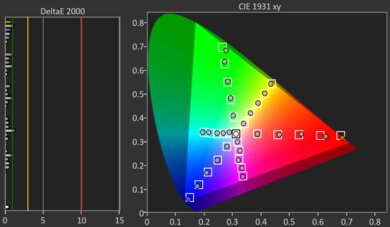
The main upside of the LG LF5800 is its wide viewing angle. You need to sit at a very wide angle to notice discoloration.
Update 01/06/2017: We have changed the methodology of testing. Since this is an old TV which we don't have anymore, we extrapolated the results from 2016 TVs.
for pictures & test results

The top and bottom border is brighter in dark scenes. Our unit also had a spot of clouding on the right side.



for pictures & test results

720p content, like cable TV also look good once upscaled.
for pictures & test results

1080p content like Blu-ray look good on this TV.
for pictures & test results



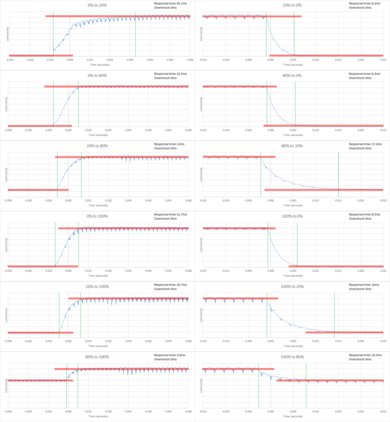

There is no judder in movies when watching them over 24p (Blu-ray players usually). However, it cannot do the reverse 3:2 pulldown. Also, it is only a 60hz, but at least it has motion interpolation.
for pictures & test results

If you play video games, set the mode to Game to get input lag of 49.6 ms. To get chroma 4:4:4, you will need to set the label of the input to PC. Note that doing so increases the lag to 59.9 ms.
Set the label of the HDMI input to PC to enable chroma 4:4:4 subsampling.


for pictures & test results

Poor frequency response which gets even worse under heavy load. It doesn't get loud, either. The low-end cut off, however, is decent for a TV.
for pictures & test results

Good distortion levels all around, and there's not a significant increase under heavy load. But the TV doesn't get loud.
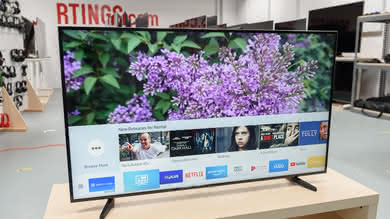
The LG LF5800 is a smart TV, but it doesn't have LG's latest WebOS. Instead, it features the two year old interface. It works, but it feels a bit outdated.

for pictures & test results

The remote included in the box is basic, which makes navigating the smart features a bit cumbersome.


