The Roku Pro Series 2025 sits at the top of Roku's TV lineup, above the 2025 versions of the Roku Plus Series and Roku Select Series. It's a Mini LED model with local dimming, and supports Dolby Vision and HDR10+. It has two ports with HDMI 2.1 bandwidth for 4k @ 120Hz gaming with VRR. It runs version 15 of the Roku TV OS, which provides access to a vast catalog of applications and supports smart features like voice control. It comes with a motion-activated, backlit remote, and if you lose it, the TV features a remote-finder function. We bought and tested the 65-inch model, but it's also available in 55 and 75-inch sizes.
Our Verdict
The Roku Pro Series TV is decent for mixed usage. The TV is more than bright enough to overcome glare from indirect light sources in bright rooms, but direct reflections are distracting. It looks quite good in home theaters and other dark spaces due to its very good black levels, and highlights stand out well in HDR content. It has the modern gaming features needed for full compatibility with today's consoles, although there's visible motion blur in faster games. Unfortunately, the TV's narrow viewing angle means it's not suitable for wide seating arrangements.
Amazing SDR brightness makes it suitable for bright rooms.
Good color vibrancy overall.
Good contrast for deep blacks.
HDMI 2.1 bandwidth, 4k @ 120Hz, and VRR.
Poor handling of direct reflections.
Narrow viewing angle.
The Roku Pro Series TV is good for a home theater. It has good contrast and zone precision, so blacks are deep with only some minor haloing around subtitles and highlights. The TV is bright enough in HDR to make highlights pop, and colors are vibrant, making HDR content impactful. It has good motion handling, with a quick response time, and it removes judder from most sources. However, it has poor PQ EOTF tracking, so most of the image is over-brightened in HDR, meaning it doesn't stay true to the filmmaker's intent. Unfortunately, its upscaling and low-quality content smoothing are only alright, so it's best to stick to high-quality sources when possible.
Accurate colors in SDR out of the box.
Good color vibrancy overall.
Good contrast for deep blacks.
Good zone precision means haloing is kept to a minimum.
Most content is judder free.
HDR content is brighter than intended due to poor PQ EOTF tracking.
Sub-par HDR color accuracy.
Is only alright at cleaning up low-quality content and upscaling.
The Roku Pro Series TV is very good for a bright room. It easily handles glare from indirect lighting in very bright rooms due to its amazing SDR brightness. On the other hand, its screen coating doesn't do much to lessen the intensity of direct reflections, so it's best to avoid placing the TV screen in front of any lamps or windows. Fortunately, its black levels and color saturation barely change in a well-lit room, so you don't have to trade in much image quality when you flip your lights on.
Amazing SDR brightness makes it suitable for bright rooms.
Blacks remain deep and colors stay vibrant in a room with ambient lighting.
Poor handling of direct reflections.
The Roku Pro Series TV is good for watching sports. The TV's amazing SDR brightness means it easily overcomes glare from indirect lighting, but it has poor handling of direct reflections, so any windows directly facing the TV on a sunny day cause mirror-like reflections. It has a relatively fast response time when watching content, but there's still some motion blur in fast-paced sports. Unfortunately, the corners of the screen are dimmer than the rest of the image, and there's visible dirty screen effect towards the center. It has a narrow viewing angle, making it unsuitable for wide seating arrangements. There are also a few noticeable color artifacts as colors change rapidly on the screen.
Amazing SDR brightness makes it suitable for bright rooms.
Accurate colors in SDR out of the box.
Good color vibrancy overall.
Blacks remain deep and colors stay vibrant in a room with ambient lighting.
Poor handling of direct reflections.
Dirty screen effect and dim corners.
Narrow viewing angle.
Some minor color artifacts.
The Roku Pro Series TV is good for gaming. It has HDMI 2.1 bandwidth, 4k @ 120Hz, and VRR, so it's fully compatible with modern gaming consoles. Gaming feels responsive due to the TV's low input lag, but since it has only okay pixel transitions, there's visible motion blur in fast-paced games. Fortunately, it has solid image quality with deep blacks, vibrant colors, and decent HDR brightness, so games look quite good.
Good color vibrancy overall.
Good contrast for deep blacks.
HDMI 2.1 bandwidth, 4k @ 120Hz, and VRR.
Low input lag.
Sub-par HDR color accuracy.
This TV has great expected reliability. Similar to direct-lit models, since the LEDs are housed directly behind the LCD layer, they're less likely to overheat and fail than edge-lit models. There's also no possibility of burn-in or image retention, so the type of content you watch doesn't affect its lifespan. Unlike direct-lit models, the LEDs are grouped together in zones, so a single failed LED will usually cause only one zone to fail, not the entire backlight.
No possibility of permanent burn-in.
Single LED failures affect only a single zone, not the entire backlight.
The Roku Pro Series TV has very good brightness. It has amazing SDR brightness, so it overcomes glare from indirect lighting in very bright rooms. The TV's HDR brightness is good enough for highlights to stand out in most HDR content, which makes HDR movies, shows, and games impactful.
Amazing SDR brightness makes it suitable for bright rooms.
The Roku Pro Series TV has very good black levels. It has good contrast and zone precision, so blacks are deep with only minor haloing around highlights and subtitles. The TV's black uniformity is essentially perfect with local dimming enabled, so blacks are even across the screen in dark scenes.
Good contrast for deep blacks.
Good zone precision means haloing is kept to a minimum.
Excellent black uniformity.
The Roku Pro Series TV has good colors overall. Its color volume in SDR and HDR is good enough for a vibrant viewing experience. The TV has excellent color accuracy in SDR out of the box, so colors mostly look as they should. Unfortunately, its HDR color accuracy out-of-the-box is sub-par, so colors don't look the way they should in HDR content.
Accurate colors in SDR out of the box.
Good color vibrancy overall.
Sub-par HDR color accuracy.
The Roku Pro Series TV has good motion handling when watching content. It's completely judder-free from most sources; only 25p content played on an external player still has judder. It also has a quick response time and smooth transitions for the most part, but there are some minor color artifacts. Due to its quick response time, there's some noticeable stutter in slow panning shots. Unfortunately, its motion interpolation feature can't reduce stutter without adding noticeable soap opera effect.
Most content is judder free.
Quick response time.
Noticeable stutter that can't be reduced without adding soap opera effect.
Some minor color artifacts.
The Roku Pro Series TV has good responsiveness in its dedicated gaming mode. It has modern gaming features like HDMI 2.1 bandwidth, 4k @ 120Hz, and VRR, so it takes full advantage of the features offered by modern consoles. Its input lag is low, which helps make gaming feel responsive; however, the TV's pixel response times are only average, resulting in visible motion blur that's especially noticeable in fast-paced games.
HDMI 2.1 bandwidth, 4k @ 120Hz, and VRR.
Low input lag.
Note: We're in the process of improving our tests related to image processing, but this score should give you a general idea of how a TV performs overall with its image processing capabilities.
The Roku Pro Series TV has mediocre image processing. It only does an alright job upscaling and cleaning up low-quality content, so low-resolution content looks a bit soft, and low-bitrate content has visible artifacts. It has very good HDR gradient handling, so you don't see much banding at all in most gradients. Unfortunately, the TV has poor PQ EOTF tracking, so HDR content isn't presented at the brightness level intended by the filmmaker.
Very good gradient handling.
HDR content is brighter than intended due to poor PQ EOTF tracking.
Is only alright at cleaning up low-quality content and upscaling.
Performance Usages
Changelog
- Updated Oct 02, 2026: We converted this review to Test Bench 2.3. With this update, we've added a new Expected Reliability performance usage, a Lifetime Burn-In Potential test, and a new test box for the Longevity 3.0 test.
- Updated Sep 18, 2026: We converted this review to Test Bench 2.2.1, adding a new Dumb TV test for whether or not the TV can be used offline.
-
Updated Mar 13, 2026:
We added text to our new Cinematic Motion Handling performance usage and our new Transition Artifacts and Stutter Reduction Via Interpolation test sections after converting the review to TV 2.2.
- Updated Mar 10, 2026: This review has been updated to TV 2.2. We've added new sections for Transition Artifacts and Stutter Reduction Via Interpolation, and updated the way we test Stutter. Additionally, we removed the 'Broken' disclaimer from our Motion Handling usage.
Check Price
Differences Between Sizes And Variants
We bought and tested the 65-inch Roku Pro Series 2025 (65R8C5), and most of our results should also be valid for the 55 and 75-inch models. The number of dimming zones varies by size, so overall black level performance may be slightly different depending on the size you select. In Canada, the model code has 'CA' tacked onto the end, but there's no difference in performance. There are no known variants of the TV.
| Size | US Model |
|---|---|
| 55" | 55R8C5 |
| 65" | 65R8C5 |
| 75" | 75R8C5 |
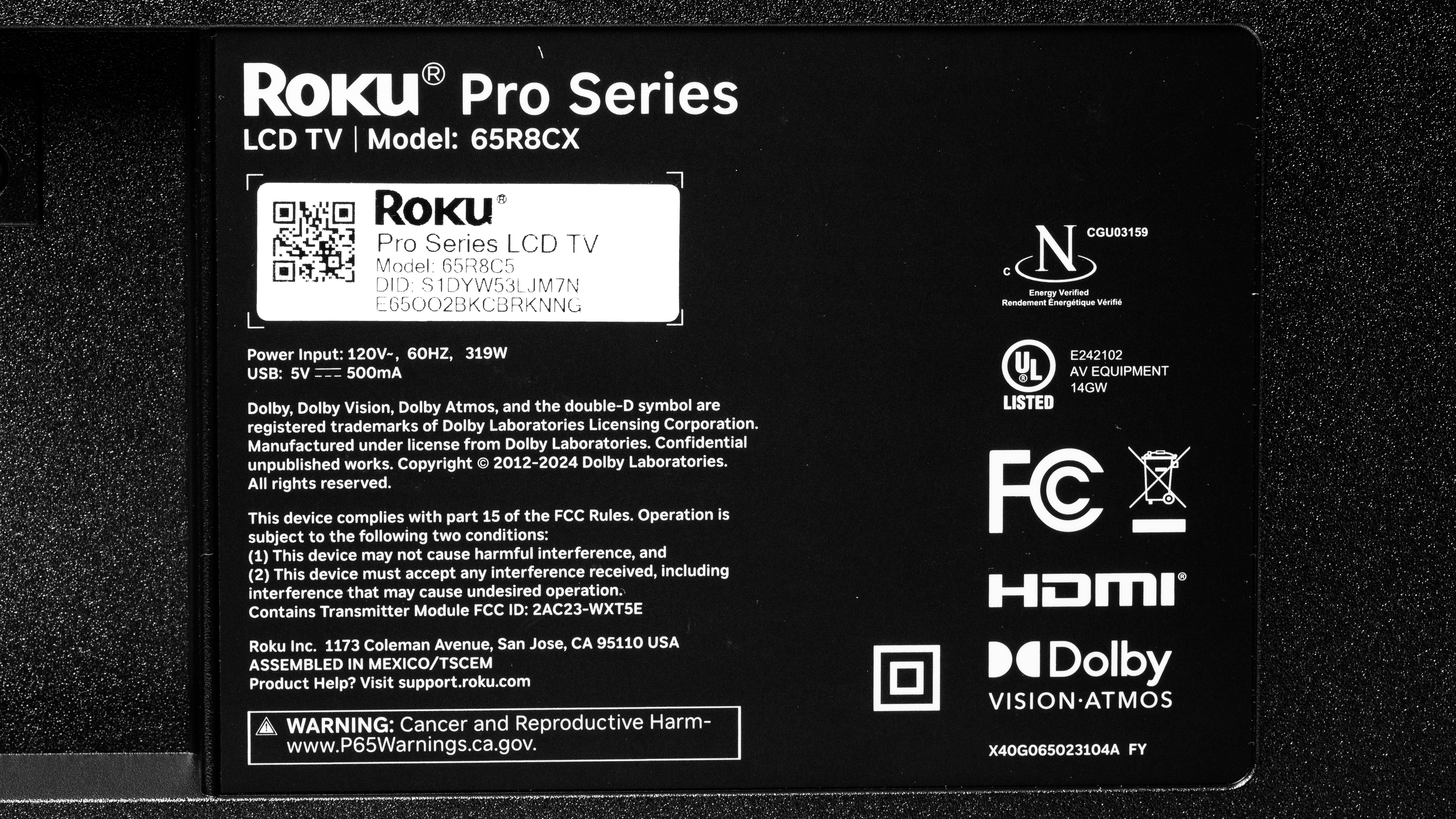
Our unit was assembled in Mexico, which can be seen on the label.
Popular TV Comparisons
The Roku Pro Series 2025 is a pretty good TV. It performs well overall, making it suitable for both bright and dark rooms, and offers modern features that cater to gamers. Unfortunately, it's somewhat hindered by its poor HDR accuracy, and calibrating the TV doesn't significantly improve it, so it's not a great choice if you're concerned about preserving the filmmaker's intent in HDR. It also has mediocre image processing, which means it's not a great option if you frequently watch low-resolution and low-quality content. It outperforms similarly priced models like the Samsung QN80F, but you can get better image quality from TVs like the TCL QM7K and Hisense U75QG. However, if you want a TV that runs Roku's smart OS but still want good image quality and many features, the Roku Pro Series 2025 is a solid choice.
See our recommendations for the best smart TVs, the best movie TVs, and the best Mini LED TVs.
The Roku Pro Series 2025 and the Roku Pro Series 2024 are very similar. The 2025 model offers significantly improved SDR color accuracy out of the box, performs better in upscaling and refining low-quality content, and exhibits slightly less banding in gradients. On the other hand, the 2024 model displays deeper blacks with a bit less haloing and has the edge with color volume.
The TCL QM7K is better than the Roku Pro Series 2025. The TCL displays deeper blacks, so it looks better in a dark room. The TCL does a better job cleaning up low-quality content and upscaling low-resolution content, and it displays HDR content at a more accurate brightness level. Additionally, the QM7K offers 4k @ 144hz and 1080p @ 288Hz, and it has less motion blur, so it offers more for gamers.
The Roku Pro Series 2025 is better than the Samsung QN80F overall. The Roku is noticeably brighter in HDR, has superior black levels, and displays more vibrant colors, resulting in noticeably better image quality overall. However, the Samsung has better upscaling, and it has superior HDR color and brightness accuracy.
The Hisense U75QG is better than the Roku Pro Series 2025. The Hisense is brighter in SDR and has superior reflection handling, so it overcomes even more glare in very bright rooms. The Hisense is also brighter in HDR, meaning highlights in HDR content stand out more. Blacks are deeper on the Hisense, and colors are more vibrant, so it provides a punchier image. Additionally, the Hisense has better image processing and offers a few more features for gamers.

We buy and test dozens of TVs yearly, taking an objective, data-driven approach to deliver results you can trust. Our testing process is complex, with hundreds of individual tests that take over a week to complete. Most of our tests use specially designed test patterns that mimic real content, but we also use the same sources you have at home to ensure our results match the real-world experience. We use two main tools for our testing: a Colorimetry Research CR-100 colorimeter and a CR-250 spectroradiometer.
Test Results
for pictures & test results

for pictures & test results

for pictures & test results

The Roku Pro Series TV has decent HDR brightness. It's bright enough for most highlights to stand out as they should in content mastered up to 1000 nits, so it provides an impactful HDR experience with most content. It's not as bright in entirely well-lit scenes, like an outdoor scene that takes place on a sunny day. However, there's not a massive drop in luminance with these types of scenes, so they're still bright enough to be impactful.
Our results are with dynamic tone mapping disabled, since that's the most accurate setting. If you prefer a brighter image, below are the results with DTM enabled.
- Hallway Lights: 748 cd/m²
- Yellow Skyscraper: 277 cd/m²
- Landscape Pool: 349 cd/m²
for pictures & test results

for pictures & test results

for pictures & test results

There's no visible difference in HDR brightness when using Game Mode, so you don't have to worry about trading in brightness for the best gaming performance.
Our results are with dynamic tone mapping disabled, since that's the most accurate setting. If you prefer a brighter image, below are the results with DTM enabled.
- Hallway Lights: 751 cd/m²
- Yellow Skyscraper: 276 cd/m²
- Landscape Pool: 346 cd/m²
The TV boasts impressive SDR brightness, easily overcoming glare from indirect lighting in a bright room.
for pictures & test results

The Roku Pro Series TV has good contrast. With local dimming on 'High,' it displays deep blacks, so dark scenes don't look washed out, and the image has solid depth.
for pictures & test results

There's some minor haloing around some bright highlights, but the TV has good lighting zone precision overall, so you don't notice it during most scenes. However, there's a noticeable glow around subtitles.
for videos & test results

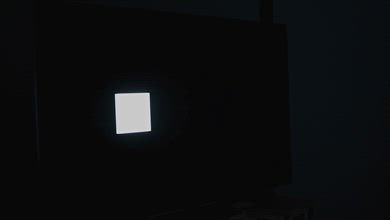
The Roku Pro Series TV has good lighting zone transitions overall. It does struggle a bit with fast-moving content, so there's some haloing and the leading edge of quick-moving objects is visibly dimmer.


for pictures & test results

for pictures & test results

The TV's black uniformity is excellent. With local dimming disabled, there's some minor cloudiness across the screen. However, with local dimming on 'High,' blacks are perfectly uniform across the screen.
for pictures & test results

for pictures & test results

The TV has decent SDR color volume. It has very good coverage of the DCI-P3 color space, but it does struggle a bit with lighter shades. It has only adequate coverage of the widest BT.2020 color space.
| Volume ΔE³ | DCI-P3 Coverage |
BT.2020 Coverage |
|---|---|---|
| L10 | 94.00% | 72.89% |
| L20 | 93.65% | 72.44% |
| L30 | 92.38% | 71.72% |
| L40 | 90.40% | 71.89% |
| L50 | 88.29% | 70.92% |
| L60 | 86.76% | 68.68% |
| L70 | 85.85% | 60.71% |
| L80 | 85.00% | 57.92% |
| L90 | 84.57% | 58.43% |
| L100 | 86.22% | 68.70% |
| Total | 87.41% | 65.43% |
for pictures & test results

for pictures & test results

The TV has very good HDR color volume. Since it has good contrast, dark colors are displayed well. Furthermore, it displays a wide range of colors at fairly high luminance levels.
for pictures & test results

for pictures & test results

for pictures & test results

The Roku Pro Series TV has excellent color accuracy before calibration. The RGB balance is slightly off, and the gamma is between 2.2 and 2.4, resulting in an image that appears slightly too dark overall. Still, the color temperature is very close to 6,500K, and there are only minor inaccuracies in colors that are barely noticeable.
for pictures & test results

for pictures & test results

for pictures & test results

The TV has outstanding SDR color accuracy after calibration. Any minor errors in white balance, gamma, and color temperature are gone. Overall color accuracy has also improved, and there's only very minor inaccuracies in dark blues that aren't noticeable.
See our full calibration settings.
for pictures & test results

for pictures & test results

Unfortunately, the TV has sub-par HDR color accuracy before calibration. Blues are massively overrepresented in most shades of gray, which contributes to its overly cool color temperature. There are noticeable color mapping errors throughout the entire color range, so this TV doesn't stay true to the filmmaker's intent in HDR out of the box.
for pictures & test results

for pictures & test results

The TV has decent HDR color accuracy after calibration. The white balance has improved, but the RGB balance is still off. The color temperature is closer to 6,500K, although it's still a bit too cool. There are still mapping errors throughout, most notably in warmer tones, but the overall color accuracy is good.
for pictures & test results

The TV has poor PQ EOTF tracking. Near blacks are dimmer than intended, and it overbrightens the rest of the image. There's a sharp cutoff near its peak brightness, but the TV is bright enough to display most highlights in 600 and 1000 nit content, so no details are lost. However, the sharp cutoff means that very bright highlight details are lost in content mastered at 4000 nits.
for pictures & test results

The TV has decent low-quality content smoothing. It reduces macro-blocking from low-bitrate feeds a bit, but there's some loss of fine detail in the process.
for pictures & test results

The TV does an alright job at upscaling low-resolution content like DVDs or lower-resolution streams. Details are somewhat clear, but finer details are hard to make out.
for pictures & test results
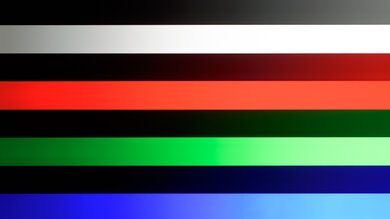
The Roku Pro Series TV has very good HDR native gradient handling. There's some visible banding in darker grays and greens, but all other gradients have minimal banding or none at all.
The TV has low input lag, which helps to ensure a responsive gaming experience. Unlike most TVs, the Roku Pro Series 2025 automatically switches to PC Mode when connected to a computer, and there's no easy way to switch out of that mode. However, switching to 4:2:0 in the NVIDIA control panel essentially takes you out of PC Mode, as it provides access to features such as motion interpolation and sharpness adjustment.
The TV supports all common resolutions up to 4k @ 120Hz on two of its four HDMI inputs.
The TV supports FreeSync, G-SYNC, and HDMI Forum VRR, ensuring a nearly tear-free gaming experience from any VRR-enabled source. It works well across its entire refresh rate range and supports sources with Low Framerate Compensation (LFC), which ensures your games remain nearly tear-free even when your frame rate drops very low.
for pictures & test results
for pictures & test results

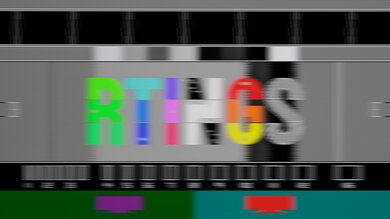
The TV has okay pixel transitions at its 120Hz maximum refresh rate. It's at its slowest when entering and exiting a dark state, which leads to some noticeable black smearing. Motion is a bit blurry overall, but it's not too bad for an LED model.
for pictures & test results

for pictures & test results

The TV has okay pixel transitions at its 120Hz maximum refresh rate. It's at its slowest when entering and exiting a dark state, which leads to some noticeable black smearing. Motion is a bit blurry overall, but it's not too bad for an LED model.
for pictures & test results

for pictures & test results

Like at 120Hz, the TV's pixel transitions are slowest when transitioning to and from dark states, leading to black smearing. Transitions are a bit slow overall, which leads to visible motion blur, especially in fast-paced games.
for pictures & test results

The Roku Pro Series is fully compatible with everything the PS5 offers, like 1440p @ 120Hz and 4k @ 120Hz, as well as HDMI Forum VRR. It also supports Auto Low Latency Mode, so you don't have to worry about manually switching to Game Mode to get the lowest input lag.
for pictures & test results

The TV is fully compatible with everything the Xbox Series X|S offers, including 1440p @ 120Hz, 4k @ 120Hz, HDMI Forum VRR, FreeSync Premium Pro, and Dolby Vision gaming. It also supports Auto Low Latency Mode, so you don't have to worry about manually switching to Game Mode to get the lowest input lag.

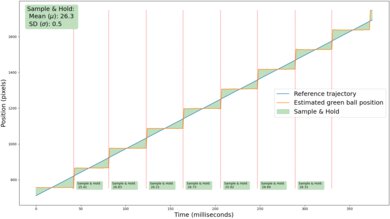
for videos & test results
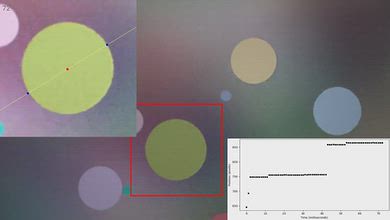
for pictures & test results

for pictures & test results
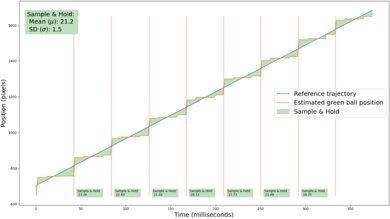
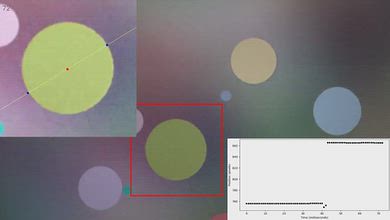
Unfortunately, none of the Action Smoothing settings output close to 30 fps, which is the target we use to reduce stutter without adding noticeable soap opera effect. As the 'Low' setting outputs well above 30 fps, we tested this TV with Action Smoothing disabled, so these results are the same as the Stutter box.
for pictures & test results
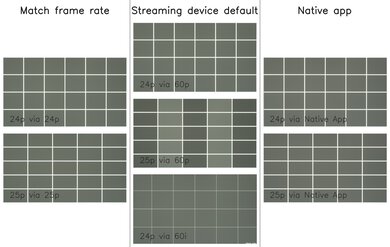
The Roku Pro Series automatically removes 24p judder from any source, including those that output content in 60Hz. Unfortunately, it can't remove 25p judder from any external source, but playback from the native apps is fine.
for videos & test results
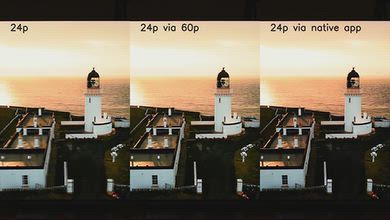
for videos & test results
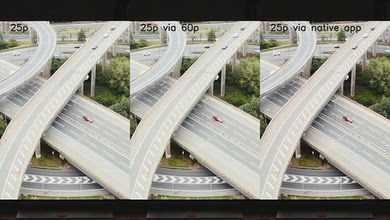
There's some very minor micro judder when playing back 24p content from a 60p source, like a cable box or older streaming device.
for pictures & test results

for pictures & test results

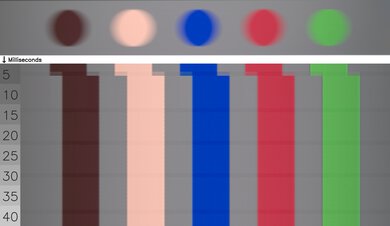
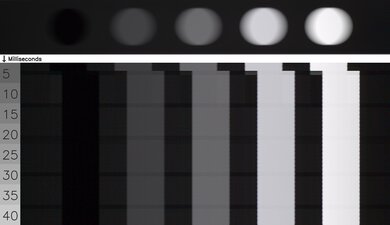
The TV has an excellent response time when watching content. There's some black smearing when exiting dark scenes, but other than that you don't notice any severe motion blur when watching movies and shows.
for pictures & test results

The Roku Pro Series TV has a very fast flicker rate of 32,100Hz in all pictures mode and at all brightness settings.
for pictures & test results
for pictures & test results
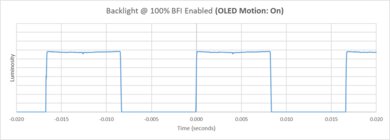
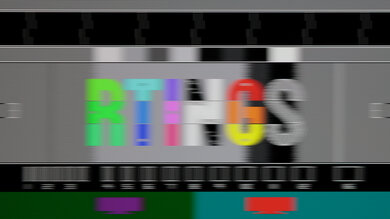
There's an optional backlight strobing feature, which is called 'LED Motion Clarity' on this TV, that you can enable to improve the appearance of motion. Unfortunately, it only flickers at 120Hz, and the image is blurry with some image duplication.
To turn the 'LED Motion Clarity' setting on with 60Hz sources, all the motion interpolation settings need to be set to 'High.' However, you can use the setting independently from motion interpolation if the TV handshakes at 120Hz, but the setting doesn't work if you're using Game Mode.
for pictures & test results

for pictures & test results

The Roku Pro Series TV has poor direct reflection handling. It barely reduces the intensity of direct light sources like a lamp placed opposite the screen, which is very distracting in darker scenes.


for pictures & test results

The TV has great color saturation in a bright room. While there's some slight color degradation in well-lit contexts, it's not noticeable.
for videos & test results
for pictures & test results

for pictures & test results

for pictures & test results

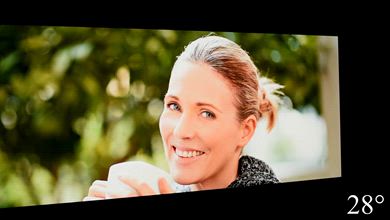
The TV has a mediocre viewing angle, so image quality is degraded if you're watching from the sides of the screen. Its biggest weaknesses are its raised black levels and gamma shifting, which causes the image to look washed out, so it's not suitable for a wide seating arrangement.
for pictures & test results

for pictures & test results

The TV has unremarkable gray uniformity. The corners of the screen are noticeably dimmer than the rest, there's uneven patches of brightness, and there's visible dirty screen effect towards the center of the screen. On a near-black screen, there are brighter splotches and cloudiness across the screen.
for pictures & test results

for pictures & test results

The Roku Pro Series 2025 uses a BGR (Blue-Green-Red) subpixel layout instead of the traditional RGB layout. This doesn't cause any issues for video or gaming content, but it can be a problem for PC monitor use, as it impacts the text clarity, although not everyone will notice this.
The TV uses quantum dots to achieve high color peaks with excellent separation between blues, greens, and reds. This gives it great color purity and helps it display a wide color gamut.
TVs with LCD panels, like this one, are immune to permanent burn-in.
for pictures & test results

for pictures & test results

HDMI ports 1 and 2 support the full 48Gbps bandwidth of HDMI 2.1, while HDMI 3 and 4 are limited to HDMI 2.0 bandwidth. HDMI 4 is the eARC port on this TV. The TV only supports ATSC 1.0, so 4k over-the-air isn't possible.
The TV passes through all Dolby Digital formats. It supports DTS 5.1 when using ARC or optical, but it doesn't support more advanced DTS audio formats commonly used on physical media.
for pictures & test results

The Roku Pro Series TV looks good. It has thin metal bezels around all four sides, which helps give it a premium look and feel.
for pictures & test results

The Roku Pro Series features two feet that hold it securely in place, but they only lift it approximately 2.36 inches, which can block the bottom of the screen when encountering chunkier soundbars.
Footprint of the 65-inch model: 44.7" x 14.3".
for pictures & test results

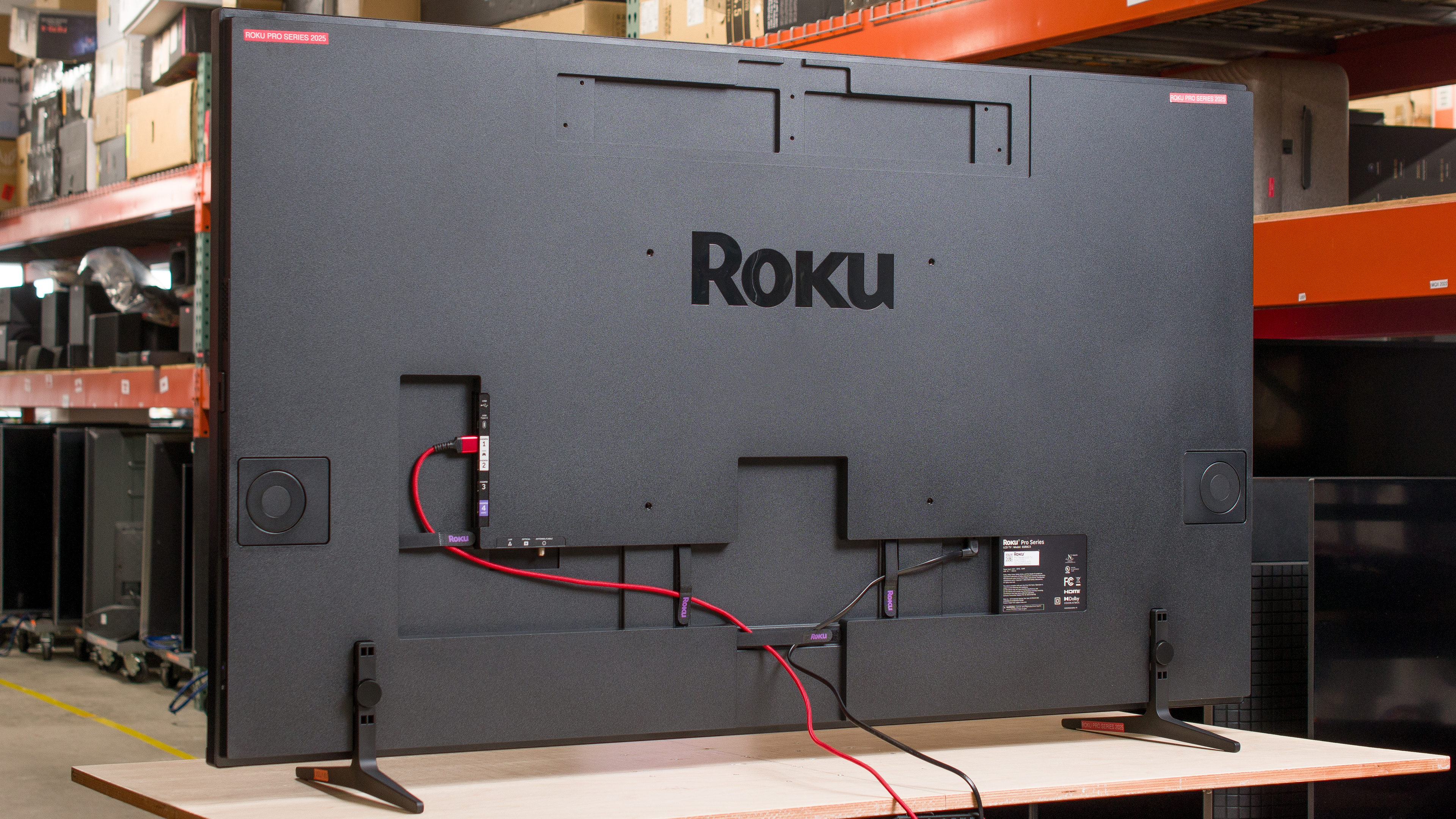
The back of the Roku Pro Series is made of sturdy plastic that doesn't feel cheap. You can purchase a slim wall mount specifically designed for this TV, but the inputs are located in a recessed cutout that's quite difficult to access when the TV is wall-mounted. Fortunately, it has velcro straps on the back to help with cable management.


for pictures & test results

The Roku Pro Series TV has good build quality. It's mostly made from sturdy plastic, but the metal bezels are a nice touch that makes the TV feel more premium.
for pictures & test results

The remote is backlit and is motion sensitive, making it easy to see buttons when you're in the dark. You can charge the remote via a USB-C port that's located on the bottom.
for pictures & test results

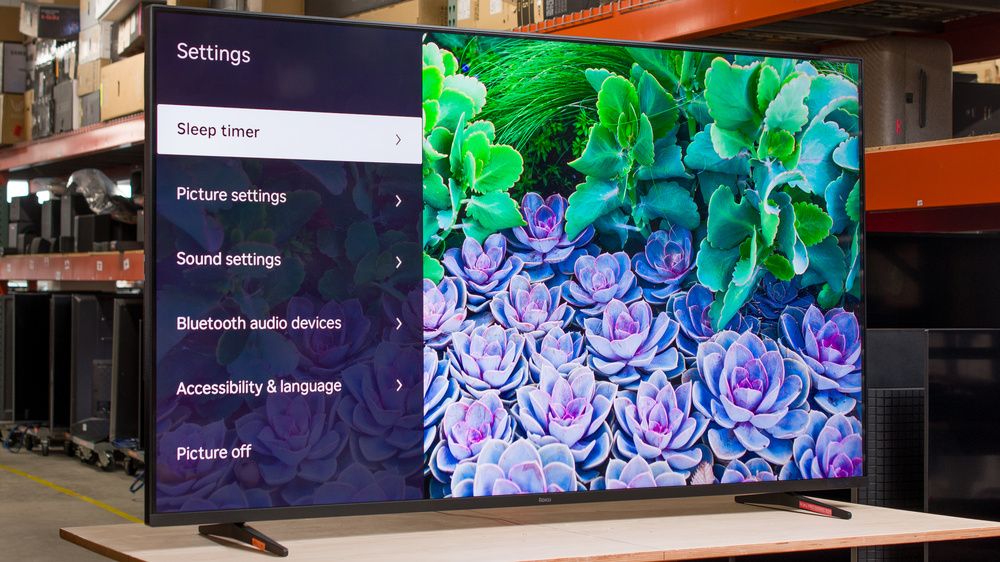
The Roku Pro Series TV runs version 15 of the Roku TV smart OS. Unfortunately, the remote randomly stops working at times, and the TV needs to be restarted for it to function again. Also, if it's disconnected from Wi-Fi, the home screen is blank, and you can't access inputs.
for pictures & test results

Like most TVs, the interface contains ads that can't be disabled. You also can't opt out of personalized ads, so the ads you see are always targeted at you based on your viewing history.
for pictures & test results

There are two buttons on the right side of the TV. The power button can be used to turn the device on/off, but it can also be used to change inputs or access the home screen. The button with the plus sign activates its remote finding feature.

for pictures & test results

The Roku Pro Series TV has an alright frequency response. The speakers don't get very loud, but the sound profile is well-balanced enough that dialogue is easy to understand at all volume levels. Like most TVs, there's very little bass. Unfortunately, the speakers cause an audible rattling during scenes with bass, and you can even hear the rattle at lower volume levels.