
The TCL NXTVISION QLED, which TCL originally launched as the TCL NXTFRAME, is a mid-range 4k TV in TCL's 2024 lineup and is yet another TV in the burgeoning 'Art' TV segment. It comes with a wood-like magnetic frame alongside a series of included landscapes and paintings and is meant to double as an art piece in your home when wall-mounted using TCL's included proprietary wall mount. You can also buy separate stands directly from TCL. Like other art TVs, the NXTFRAME uses a matte screen coating that is meant to significantly reduce reflections in a bright room while making the picture look like a canvas when the TV displays any of its included paintings.
Otherwise, the TV uses a KSF phosphor coating, designed to deliver more vibrant and lifelike colors than traditional LED TVs. It comes with TCL's AIPQ Pro Processor, which is used for image processing and motion-smoothing capabilities. It has four HDMI ports, two of which carry HDMI 2.1 bandwidth with support for 4k @ 144Hz and 1080p @ 240Hz gaming. The TV supports all HDR formats and passes through advanced audio formats from Dolby and DTS through its eARC port. We bought and tested the 65-inch model, but it also comes in 55, 75, and 85-inch formats.
Our Verdict
The TCL NXTVISION is inadequate for mixed usage. It doesn't look good in reference conditions due to its bad black levels and lackluster colors. It's not bad when you turn your lights on, mostly due to its great handling of direct reflections, but black levels and colors look even worse than they do in a dark room, and it doesn't have the SDR brightness needed to overcome glare. HDR content is very underwhelming due to its grayish black levels and HDR brightness, so its best to stick with SDR content on this TV. It has modern gaming features, but since its pixel transitions are slow, gamers will want to look elsewhere. Its viewing angle is acceptable from a slight angle, but it's still not wide enough for large rooms with couches and chairs that are off to the side of the screen.
Great handling of direct reflections.
Good upscaling and great low-quality content smoothing.
No local dimming feature to improve contrast, giving it bad black levels.
Image quality degrades rapidly at more aggressive angles.
Smudges glare from ambient lights across the screen instead of reducing its size.
Poor color accuracy in SDR and HDR.
Lacks the SDR brightness needed for a well-lit room.
The TCL NXTVISION is inadequate for a home theater. It has bad black levels, mostly due to its lack of local dimming and mediocre black uniformity, so blacks look gray anytime highlights are on screen. Its HDR brightness is also bad, which leads to dim and lackluster highlights in HDR content. Furthermore, HDR content is dimmer than the filmmaker intends due to its disappointing PQ EOTF tracking. Colors aren't well-saturated and they're inaccurate in both SDR and HDR, so colors really don't pop out the way they should with modern TVs. Fortunately, it does a really good job reducing artifacts in heavily compressed content. It also does a good job upscaling, so low-resolution content isn't too soft looking. Since the TV has a slow response time, there's very little stutter in 24fps content, and most people won't even notice it.
Good upscaling and great low-quality content smoothing.
Only minor banding in color gradients.
No local dimming feature to improve contrast, giving it bad black levels.
Bad HDR brightness means highlights are dim in HDR content.
Poor color accuracy in SDR and HDR.
HDR content is displayed dimmer than the content creator intends.
The TCL NXTVISION is not bad in a bright room. Due to its matte coating, it significantly reduces the intensity of lights placed opposite the screen, and you barely see them. It's still not an ideal choice for a bright room, since its sub-par SDR brightness means it still struggles to overcome glare. Unfortunately, its black levels are noticeably raised in a bright room and colors lack saturation, so you lose a good amount of picture quality when your lights are turned on.
Great handling of direct reflections.
Smudges glare from ambient lights across the screen instead of reducing its size.
Lacks the SDR brightness needed for a well-lit room.
Black levels and color saturation are affected by ambient lighting.
The TCL NXTVISION is acceptable for watching sports. It has good upscaling and great low-quality content smoothing, so heavily compressed HD streams and broadcasts still look pretty good. It also does a great job reducing the visibility of direct light sources placed opposite the screen. The TV's SDR brightness is sub-par, so it still doesn't completely overcome glare. Unfortunately, colors look a bit muted due to its limited color volume, and there's some dirty screen effect towards the center of the screen. Motion is clear enough in most sports, but fast sports like racing do have some noticeable blurriness. Finally, its viewing angle is acceptable if you're at a slight angle, but its image quality quickly degrades from more aggressive angles, limiting its usefulness in wide seating arrangements.
Great handling of direct reflections.
Good upscaling and great low-quality content smoothing.
Image quality degrades rapidly at more aggressive angles.
Smudges glare from ambient lights across the screen instead of reducing its size.
Lacks the SDR brightness needed for a well-lit room.
Sub-par gray uniformity with noticeable dirty screen effect.
The TCL NXTVISION is unremarkable for gaming. It has bad black levels and HDR brightness, so HDR games are very underwhelming. The TV supports HDMI 2.1 bandwidth, 4k @ 144Hz, and VRR, so it's fully compatible with modern consoles. You also get low input lag for a responsive feel, especially at higher refresh rates. However, its pixel transitions are slow, so you don't get clear looking motion.
HDMI 2.1 bandwidth, 4k @ 144Hz, and VRR.
Low input lag provides a responsive feel while gaming.
No local dimming feature to improve contrast, giving it bad black levels.
Poor color accuracy in SDR and HDR.
Chroma 4:4:4 isn't displayed properly in Game Mode.
Slow pixel transitions means fast motion is blurry.
The TCL NXTVISION has poor brightness overall. Its SDR brightness is sub-par, so it's best suited for a dimly-lit room. Unfortunately, its HDR brightness is bad, so highlights in HDR content don't stand out at all.
Bad HDR brightness means highlights are dim in HDR content.
Lacks the SDR brightness needed for a well-lit room.
The TCL NXTVISION has bad black levels. It doesn't have a local dimming feature, so despite having an okay native contrast ratio and passable black uniformity, dark scenes with highlights on screen look gray.
No local dimming feature to improve contrast, giving it bad black levels.
The TCL NXTVISION has unremarkable colors. Its SDR color volume is okay, so Rec.709 content will look fine, but any content that exceeds that will look muted. Furthermore, its HDR is mediocre, and it struggles to display both dark and bright colors. Unfortunately, the TV's colors have poor accuracy, so it requires calibration if you care about colors looking the way the filmmaker intends.
Poor color accuracy in SDR and HDR.
Note: We're in the process of improving our tests related to image processing, but this score should give you a general idea of how a TV performs overall with its image processing capabilities.
The TCL NXTVISION has decent image processing overall. It does a good job upscaling low-resolution content and it does a great job reducing artifacts in low-quality content that's heavily compressed. There's some visible banding in dark grays, reds, and greens, but it's not too bad and other gradients have almost no banding at all. Unfortunately, its PQ EOTF tracking is disappointing, since HDR content is displayed dimmer than the filmmaker intends.
Good upscaling and great low-quality content smoothing.
Only minor banding in color gradients.
HDR content is displayed dimmer than the content creator intends.
The TCL NXTVISION has satisfactory Game Mode responsiveness. It has low input lag for a responsive feel, and you get HDMI 2.1, 4k @ 144Hz, and VRR. However, it has slow pixel transitions, so there's noticeable blur when the action in your game ramps up.
HDMI 2.1 bandwidth, 4k @ 144Hz, and VRR.
Low input lag provides a responsive feel while gaming.
Chroma 4:4:4 isn't displayed properly in Game Mode.
Slow pixel transitions means fast motion is blurry.
We're in the process of fixing the way we evaluate a TV's overall motion handling. This section is currently broken, and the score isn't indicative of how well a TV handles motion overall.
Performance Usages
Changelog
-
Updated Jul 21, 2026:
We bought and tested the LG Gallery 2026 and added a comparison in the 24p Judder section of the review.
-
Updated Jun 15, 2026:
We bought and tested the Amazon Ember Artline 2026 and added a comparison in the SDR Brightness section.
-
Updated May 25, 2026:
We bought and tested the Hisense CanvasTV 2026, and added a comparison in the HDR Brightness section of the TV.
-
Updated May 22, 2026:
We bought and tested the Samsung The Frame Pro 2026, and added comparisons in the Contrast and HDR Brightness sections of the review.
Check Price
Differences Between Sizes And Variants
We bought and tested the 65-inch TCL NXTVISION (65A300W), and these results are also valid for the 55 (55A300W), 75 (75A300W), and 85-inch (85A300W) models. There are no other known variants of the TV, and the TV is currently exclusive to the North American market.
This TV was originally launched as the TCL NXTFRAME QLED, but TCL renamed the lineup to the TCL NXTVISION QLED in 2025.
| Size | Model Code |
| 55" | 55A300W |
| 65" | 65A300W |
| 75" | 75A300W |
| 85" | 85A300W |
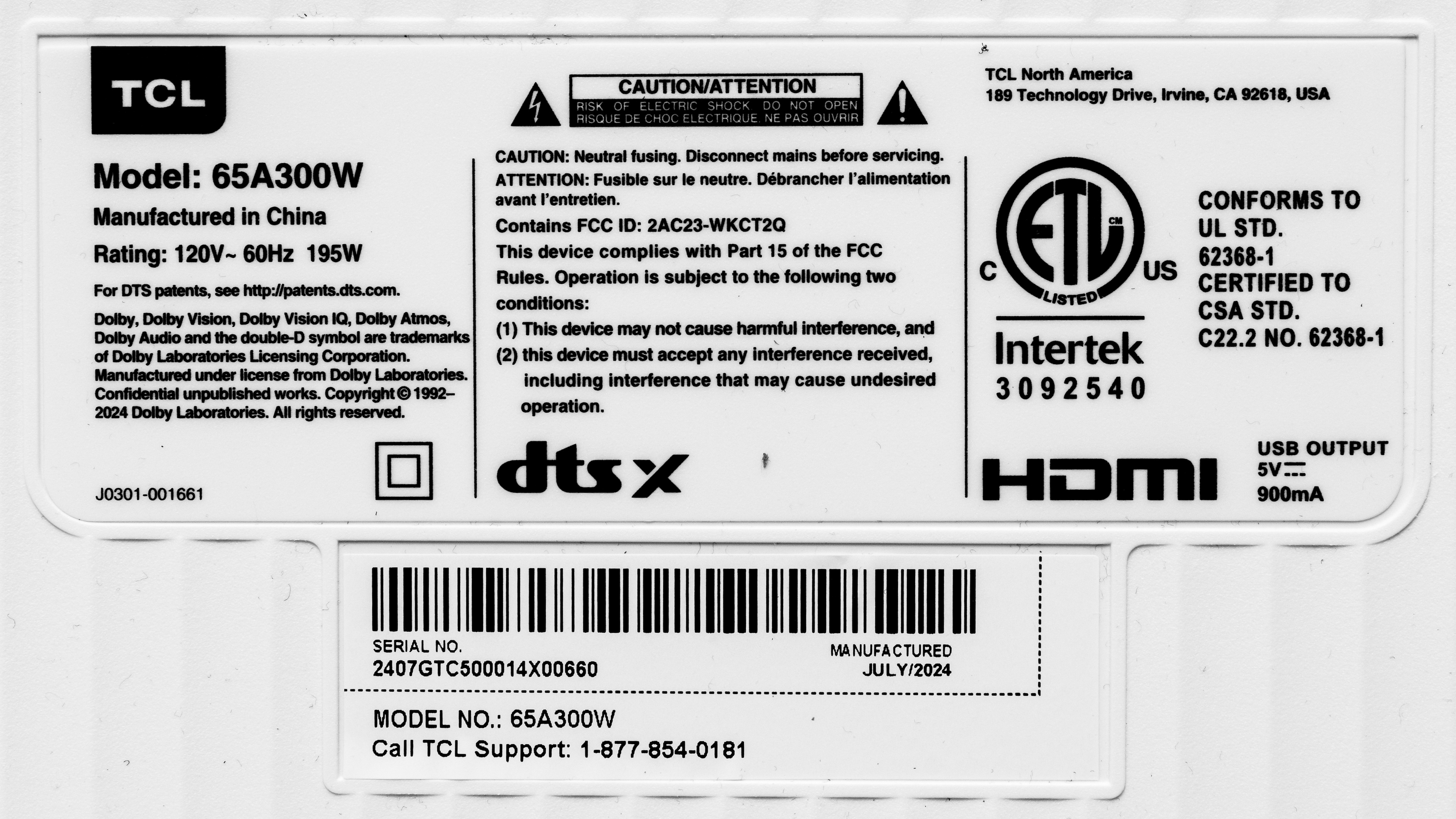
Our unit was manufactured in July 2024, as seen on our product's label.
Popular TV Comparisons
The TCL NXTVISION is an underwhelming TV, but it's fine if you're looking specifically for an 'Art' TV. It has solid image processing, and it handles reflections from direct sources of light very well. It has modern gaming features, but its slow pixel transitions means it's not the best option if you're looking for a gaming TV. Unfortunately, it falls short when compared to its two closest rivals: the Hisense CanvasTV QLED 2024 and the Samsung The Frame 2024 QLED. The Hisense delivers similar, if slightly better, image quality, but it is also sold for a tad below what the TCL is going for. The Samsung, for its part, is much more expensive, but it delivers superior image quality. Ultimately, it's hard to recommend the TCL over the Hisense, as the latter undercuts the former in price for similar performance. If you want a similarly priced TV that performs much better and you don't care about the 'Art TV' style, the Hisense U8/U8N, TCL QM8/QM851G QLED, and LG B4 OLED all offer significantly better picture quality.
See our recommendations for the best 4k TVs, the best budget TVs, and the best 4k gaming TVs.
The Hisense CanvasTV 2026 is better than the TCL NXTVISION. The Hisense is considerably brighter, so it can handle more glare for daytime viewing and HDR stands out a bit better at night. The screen coating is also better on the Hisense, and ambient light doesn't have as much of an impact on picture quality, especially contrast, when you're watching TV during the day.
The Samsung The Frame Pro 2026 is a much better TV than the TCL NXTVISION. The Samsung delivers much better picture quality, with significantly higher peak brightness and much better color accuracy. On the other hand, while both TVs have a wide selection of gaming features, the TCL stands out for its much lower input lag, resulting in a smoother gaming experience.
The TCL NXTVISION and the LG Gallery 2026 are very similar TVs overall, with no clear winner between the two. The LG is more accurate out of the box in SDR, as the TCL has a slightly pink tint with the default settings. The TCL, on the other hand, has better motion handling when watching content, and it can remove judder from more content, resulting in smoother motion overall.
The Hisense CanvasTV 2024 and the TCL NXTVISION are extremely similar products, with little to differentiate them. The TCL has slightly better contrast, but in turn, the Hisense is the brighter of the two TVs, especially in SDR content. The Hisense is a bit more accurate in HDR, but its SDR accuracy is abysmal; the TCL, while not very accurate in SDR either, is still much better than the Hisense. Overall, the two TVs are similar enough that you should get the cheapest of the two, although the Hisense TV's SDR brightness advantage is noticeable.

We buy and test dozens of TVs yearly, taking an objective, data-driven approach to deliver results you can trust. Our testing process is complex, with hundreds of individual tests that take over a week to complete. Most of our tests use specially designed test patterns that mimic real content, but we also use the same sources you have at home to ensure our results match the real-world experience. We use two main tools for our testing: a Colorimetry Research CR-100 colorimeter and a CR-250 spectroradiometer.
Test Results
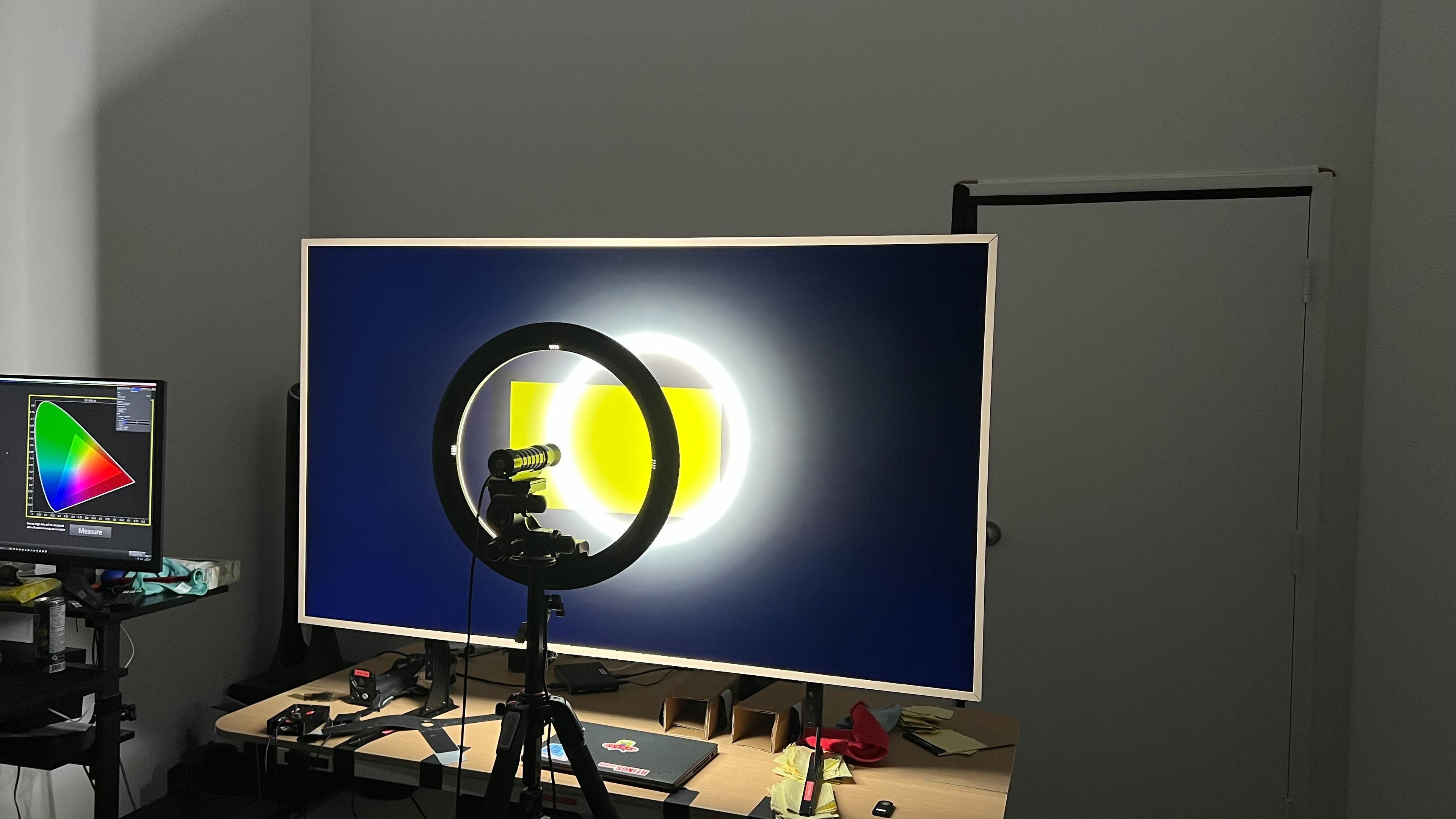
for pictures & test results

for pictures & test results

for pictures & test results

The TCL NXTVISION has bad HDR brightness. The TV's HDR brightness isn't good enough to display brighter highlights with impact. If you want a TV with a similar design but higher peak brightness, check out the Samsung The Frame Pro 2026 or the Hisense CanvasTV 2026 instead.
These measurements are after calibrating the HDR white point with the following settings:
- HDR Picture Mode: Movie
- Brightness: 100
- Contrast: 100
- Gamma: 2.2
- Micro Contrast: Off
- Color Temperature: Warm -5
- Dynamic Tone Mapping: Off
Results with Dynamic Tone Mapping set to 'Detail Priority':
- Hallway Lights: 247 cd/m²
- Yellow Skyscraper: 228 cd/m²
- Landscape Pool: 111 cd/m²
Results with Dynamic Tone Mapping set to 'Balance':
- Hallway Lights: 260 cd/m²
- Yellow Skyscraper: 245 cd/m²
- Landscape Pool: 126 cd/m²
Results with Dynamic Tone Mapping set to 'Brightness Priority':
- Hallway Lights: 264 cd/m²
- Yellow Skyscraper: 262 cd/m²
- Landscape Pool: 135 cd/m²
for pictures & test results

for pictures & test results

for pictures & test results

There's no noticeable difference in HDR brightness when the TCL NXTVISION is set to Game Mode.
These measurements are after calibrating the HDR white point with the following settings:
- HDR Picture Mode: Game
- Game Master: On
- Brightness: 100
- Contrast: 100
- Gamma: 2.2
- Micro Contrast: Off
- Color Temperature: Warm -5
- Dynamic Tone Mapping: Off
Results with Dynamic Tone Mapping set to 'Detail Priority':
- Hallway Lights: 249 cd/m²
- Yellow Skyscraper: 234 cd/m²
- Landscape Pool: 115 cd/m²
Results with Dynamic Tone Mapping set to 'Balance':
- Hallway Lights: 258 cd/m²
- Yellow Skyscraper: 253 cd/m²
- Landscape Pool: 125 cd/m²
Results with Dynamic Tone Mapping set to 'Brightness Priority':
- Hallway Lights: 263 cd/m²
- Yellow Skyscraper: 267 cd/m²
- Landscape Pool: 138 cd/m²
The TV's SDR brightness is sub-par, and it's not bright enough to overcome glare in bright rooms. It's not nearly as bright as some competing models, like the Amazon Ember Artline 2026.
These measurements are after calibration with the following settings:
- Picture Mode: Movie
- Brightness: 100
- Contrast: 100
- Black Level: 50
- Dynamic Contrast: Off
- Black Stretch: Off
- Dynamic Brightness: Off
- Micro Contrast: Off
- Gamma: 2.2
for pictures & test results

The TCL NXTVISION has bad contrast. Its native contrast is okay, but it lacks a local dimming feature, so blacks are grayish during most scenes. This results in worse dark scene performance than comparable models like the Samsung The Frame Pro 2026.
for pictures & test results

This TV doesn't have a local dimming feature, so there's no blooming around bright objects or subtitles in dark scenes. However, as it can't brighten highlights without impacting the rest of the image, dark scenes look washed out.
for videos & test results

It doesn't have a local dimming feature, so it can't adjust the backlight of individual zones to brighten up highlights without impacting the rest of the image. But this means that there are no distracting flicker or brightness changes as bright highlights move between zones, as it doesn't have any.

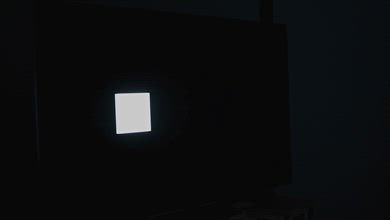

for pictures & test results

The TV's black uniformity is passable, but there's very noticeable clouding when bright highlights are on screen.
for pictures & test results

for pictures & test results

It has okay SDR color volume. It has decent coverage of the DCI-P3 color space, but it doesn't fully display warmer colors. This is even more apparent in the wider BT.2020 color space, and it also doesn't display close to the full range of blues and cyans.
| Volume ΔE³ | DCI-P3 Coverage |
BT.2020 Coverage |
|---|---|---|
| L10 | 92.08% | 67.13% |
| L20 | 92.45% | 66.44% |
| L30 | 91.40% | 65.48% |
| L40 | 89.37% | 65.48% |
| L50 | 87.26% | 64.82% |
| L60 | 84.60% | 61.53% |
| L70 | 80.78% | 52.05% |
| L80 | 79.61% | 49.09% |
| L90 | 79.17% | 49.24% |
| L100 | 81.34% | 61.01% |
| Total | 84.25% | 57.84% |
for pictures & test results

for pictures & test results

The TV has unremarkable HDR color volume. It doesn't do a very good job of displaying dark saturated colors due to its lack of local dimming, even with its good native contrast. It's also not bright enough to display vibrant colors.
for pictures & test results

for pictures & test results

for pictures & test results

It has disappointing pre-calibration accuracy. Its white balance is very poor, with significant accuracy errors throughout every range of gray except blacks, with more errors in brighter grays. Reds, in particular, are significantly overrepresented in most grays, and so are blues, but to a lesser extent. This does make its color temperature too warm overall. The TV's color accuracy is alright, but undersaturated colors show a lot of accuracy errors, although the errors go down as the colors get more saturated.
for pictures & test results

for pictures & test results

for pictures & test results

It has fantastic SDR accuracy after calibration, and it's easy to calibrate. Any issues with white balance are gone, and the color temperature and gamma are essentially perfect. Color accuracy is also now outstanding.
See our full calibration settings.
for pictures & test results

for pictures & test results

Unfortunately, the TCL A300W has poor HDR pre-calibration color accuracy. There's drastically too much blue in most shades of gray, which makes the TV's color temperature significantly too cool. Color accuracy is middling, with errors across its entire range of colors.
for pictures & test results

for pictures & test results

Thankfully, the TV has excellent HDR color accuracy after calibration. White balance is much better now, but there's still a bit too much blue and not enough red in some lighter shades. However, its color temperature is now incredibly close to 6,500K. Color accuracy is now excellent, with only minor errors that most people won't notice.
for pictures & test results

The TCL NXTVISION has disappointing PQ EOTF tracking. Blacks and near blacks are raised, but everything else is displayed dimmer than intended. There's a gradual roll-off near its peak brightness to maintain detail in highlights that are brighter than what the TV is capable of.
for pictures & test results

The TCL NXTVISION has very good low-quality content smoothing. It does an excellent job at smoothing out artifacts in low bitrate content, but there is some loss of detail.
for pictures & test results

The TV does a good job with upscaling low-resolution content like DVDs, standard definition cable channels, and lower-resolution streams. Details are clear enough, but finer details and small hard-coded text are hard to make out.
Sharpness processing was calibrated with no over-sharpening for low-resolution content with the following settings:
- Sharpness: 20
for pictures & test results
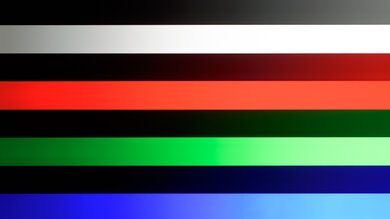
The TV has good HDR gradient handling. There's noticeable banding in dark grays, reds, and greens, but other color gradients have minimal banding.
This TV has low input lag when set to PC Mode or Game Mode, which ensures a very responsive gaming experience. In 1080p @ 240Hz, the input lag is 4.6 ms.
The TCL A300W supports all common resolutions up to 4k @ 144Hz, as well as 1080p @ 240Hz. For 144Hz and 240Hz to work, you must enable 'High Frame Rate Mode.' Unfortunately, it doesn't support chroma 4:4:4 when set in Game Mode and needs to be set to PC to display chroma 4:4:4. VRR also only works properly in Game Mode, which means that you need to choose between displaying 4:4:4 or VRR when gaming.
The TV supports all three types of variable refresh rate (VRR) technology to reduce screen tearing. Its VRR range caps out at 144Hz, 120Hz, or 240Hz, depending on the resolution. Unfortunately, it uses different overdrive settings under and above 65Hz, and also 144Hz if you're gaming at 1080p @ 240Hz. At 144Hz, the TV also seemingly uses different gamma settings, causing the entire screen to flash.
for pictures & test results
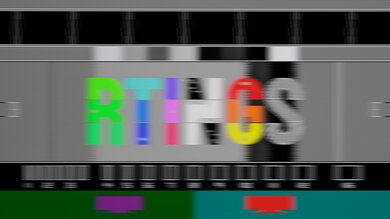
for pictures & test results

The TV's CAD at its maximum refresh rate of 144Hz is not bad. There's no inverse ghosting since the TV doesn't overshoot RGB values. However, pixel transitions are still quite slow overall, so fast motion lacks clarity.
for pictures & test results

for pictures & test results

The TV's CAD at 120Hz is mediocre. There's some overshoot when it transitions from dark states to bright ones, but it's not too bad, so you don't see much inverse ghosting. Still, pixel transitions are mostly slow across the board, so you do see noticeable blur behind fast motion.
for pictures & test results

for pictures & test results

The TV's CAD at 60Hz is disappointing. Since pixel transitions are very slow across the board and there's persistence blur due to the nature of a 60Hz refresh rate, fast motion is very blurry.
for pictures & test results

The TCL NXTVISION is fully compatible with everything the PS5 offers, like 1440p @ 120Hz and 4k @ 120Hz, as well as HDMI Forum VRR. It also supports Auto Low Latency Mode, so you don't have to worry about manually switching to Game Mode to get the lowest input lag.
for pictures & test results

The TV is fully compatible with everything the Xbox Series X|S offers, including 1440p @ 120Hz, 4k @ 120Hz, HDMI Forum VRR, FreeSync Premium Pro, and Dolby Vision gaming. It also supports Auto Low Latency Mode, so you don't have to worry about manually switching to Game Mode to get the lowest input lag.
Due to the TV's response time, there's some minor stutter during slow camera movements when watching movies or TV shows, but it's not too bad at all, and most people won't notice it.
The TV automatically removes judder from all sources when watching movies or shows that are in 24p, even if they're in a 60Hz signal, like from a cable box. This results in a much more even frame cadence than the LG Gallery 2026.


for pictures & test results

The TCL A300W uses pulse width modulation (PWM) to dim its backlight, and it flickers at 150Hz, which is low enough to be noticeable by users who are sensitive to it. Fortunately, the TV is flicker-free in all modes just as long as the brightness is set to 29 or higher.
The TV doesn't have an optional backlight strobing feature, commonly known as black frame insertion (BFI), to help reduce persistence blur.
for pictures & test results

for pictures & test results

The TV has an optional motion interpolation feature to improve the clarity of motion, but it doesn't work very well in faster scenes. It does a better job in slower scenes, as it smoothes out motion without introducing too many artifacts.
for pictures & test results

for pictures & test results

The TCL NXTVISION has great direct reflection handling. Its matte screen coating significantly reduces the intensity of direct reflections, so you aren't distracted by light sources placed opposite the screen.
for pictures & test results

for pictures & test results

The TCL NXTVISION has mediocre black levels in a well-lit room. Blacks become elevated in a bright room, so the image looks grayish. The TV has a limited contrast ratio to begin with, so you only get deep blacks in purely dark scenes when viewed in a dark room.
for pictures & test results

for pictures & test results

The TV has unremarkable total reflected light. It does a good job reducing the intensity of all reflections, but its matte screen coating really spreads those reflections across a large portion of the screen, which impacts picture quality. Fortunately, there's no diffraction artifacts like light banding.
for pictures & test results

The TV has sub-par color saturation in a bright room. Mid-luminance and high-luminance colors remain mostly unchanged with your lights on, but low-luminance colors lose a lot of saturation. Since the TV's colors are only okay to begin with, they really lack vibrancy in a bright room.
for videos & test results
for pictures & test results

for pictures & test results

for pictures & test results

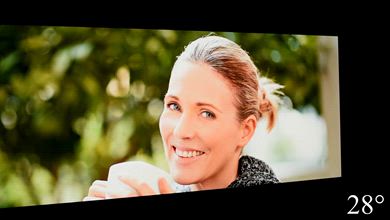
The TCL NXTVISION has an acceptable viewing angle which holds up fine from a slight angle. However, it's still not suitable for a wide seating arrangement. As you move off-center, there's significant gamma shifting, black level raise, brightness loss, and colors look increasingly washed out.
for pictures & test results

for pictures & test results

The TV's gray uniformity is sub-par. The sides of the screen are darker than the rest, and there's some noticeable dirty screen effect throughout. On a very dark or near-black screen, its uniformity is okay, but the edges are slightly lighter than the rest of the screen.
for pictures & test results

for pictures & test results

The TV uses a BGR (Blue-Green-Red) subpixel layout instead of the traditional RGB layout. This doesn't cause any issues for video or gaming content, but it can be a problem for PC monitor use as it impacts the text clarity, although not everyone will notice this.
The TV uses a KSF phosphor coating to produce red light and has solid separation between reds, green, and blues.
for pictures & test results

The TCL NXTVISION has HDMI 2.1 bandwidth on HDMI ports 1 and 2, with both supporting up to 4k @ 144Hz. Unfortunately, unlike some of TCL's other 2024 TVs, the HDMI 1 port is the eARC port, so you lose one of your high-speed ports if you have a connected soundbar.
The TCL NXTVISION supports eARC, which lets you pass high-quality, uncompressed audio to a compatible receiver or soundbar through an HDMI cable. It supports all major audio formats, so you don't have to worry about compatibility with external sources.
for pictures & test results

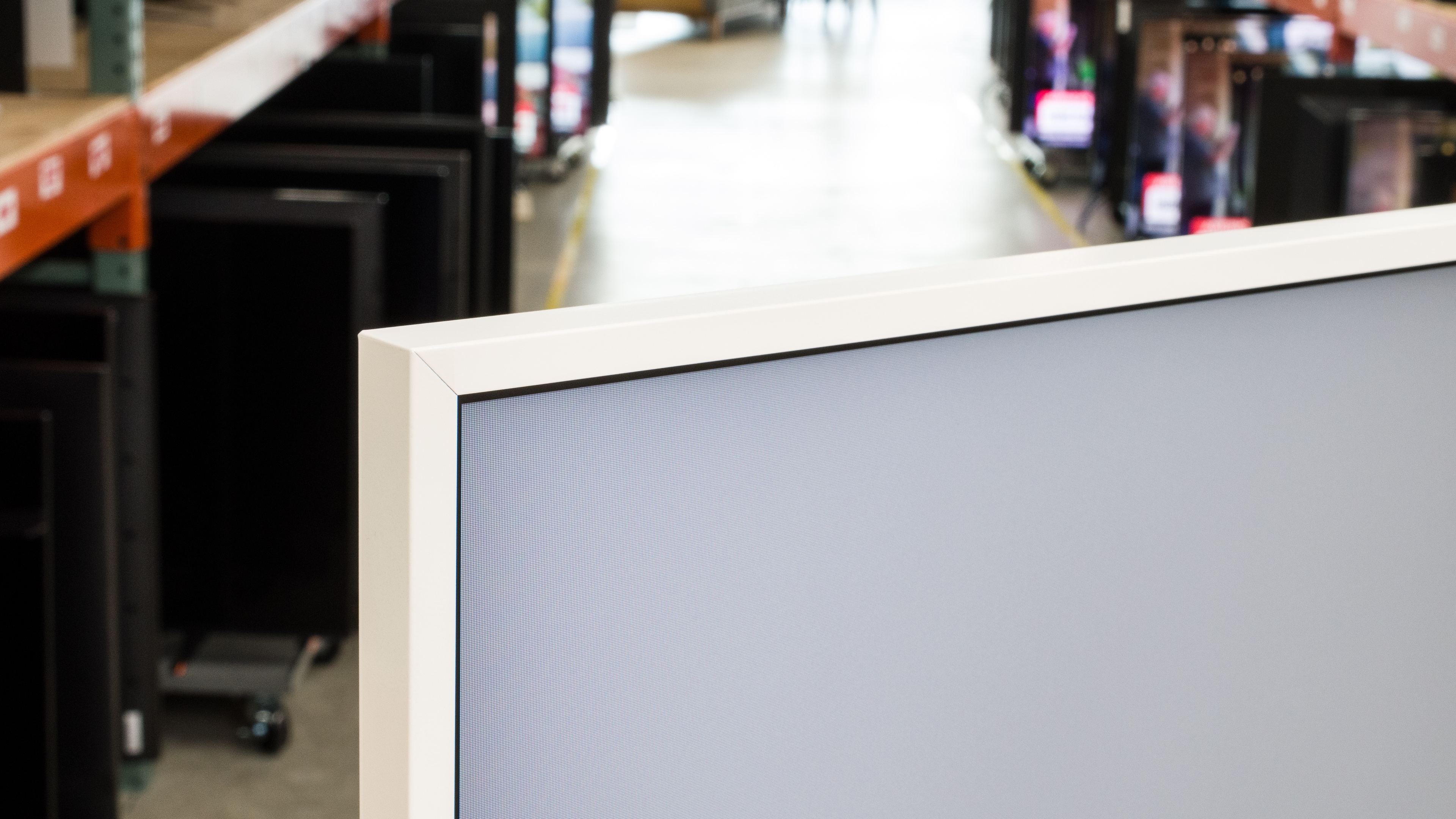
The TCL NXTVISION TV is designed to look like a framed piece of art rather than a traditional TV. It comes with a faux light wood frame that is magnetically attached to the TV's off-white borders. Overall, the TV's all-white design gives it a unique look, although the magnetic frame isn't very securely attached to the frame, as it's easy to knock parts of it off.
for pictures & test results

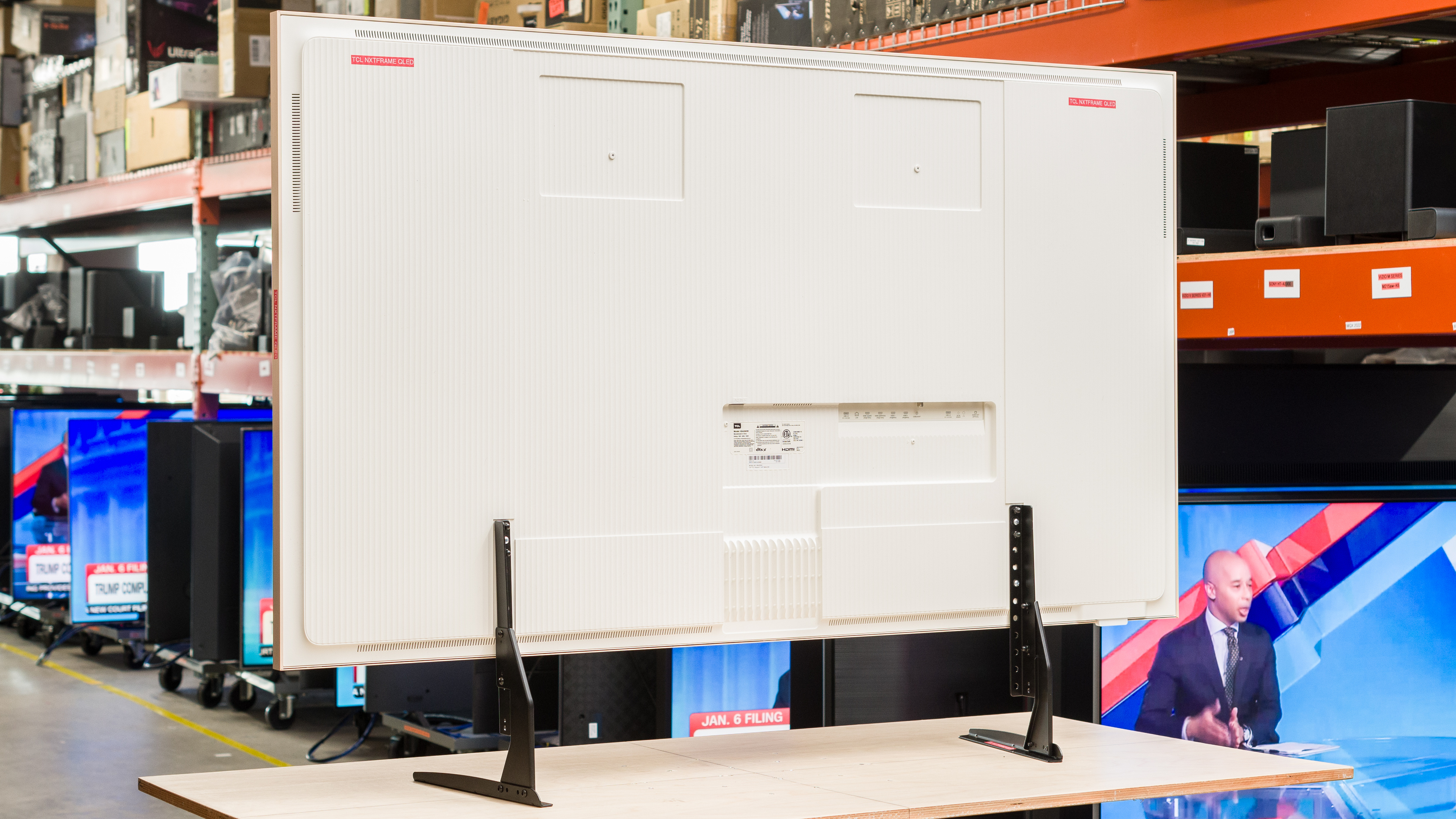
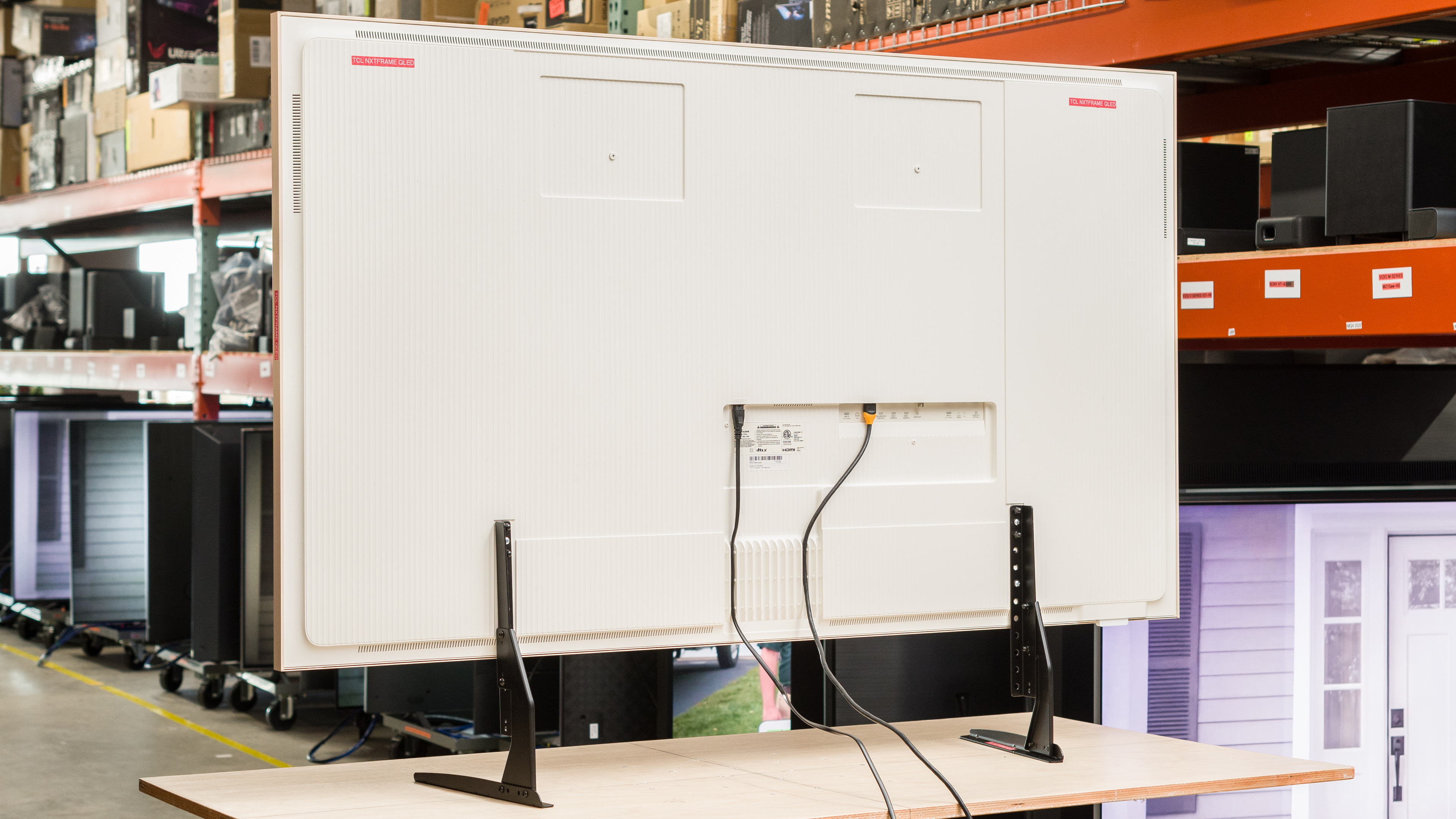
The TCL NXTVISION doesn't come with a stand but with TCL's proprietary ultra-thin wall mount. You can purchase a moveable floor stand or a traditional table stand from TCL separately.
for pictures & test results

The back of the TV is made entirely of plastic, and while there's nothing special about it when it comes to materials, its all-white design gives it a striking look. The inputs are recessed into the back, and this lets the TV sit completely flush with the wall when installed with TCL's proprietary wall mount. There are also channels on the back to help with cable management. Just keep in mind that this TV lacks any VESA mounting options, so using third-party wall mounts is more complicated than on other TVs.
for pictures & test results

The TV comes with a faux light wood magnetic frame that attaches to its all-white borders.

for pictures & test results

The TCL 65A300W build quality is solid overall, as there isn't much flex anywhere on its back plastic covering. However, the biggest issue lies with its magnetic frames; they just don't hold well enough. If you bump into the TV or if there's a stiff breeze coming through the room on a windy day, the bottom frame bezel can pop right off. If you poke it downwards, it also comes off. The frames are also hard to install flush with each other, requiring some finagling to get a seamless result.

for pictures & test results

Unfortunately, like almost all TVs on the market, the smart interface contains ads, and you can't disable them.
for pictures & test results

The TCL NXTVISION comes with a similar remote to some of TCL's other 2024 TVs, although it isn't as long, and comes in white to match the TV's color scheme. It has an art mode button, as well as buttons for popular streaming services, and you can use the built-in microphone to switch inputs, change apps, search within apps, and ask for the weather and time.
for pictures & test results

There's a single button on the bottom left of the TV that can be used to switch inputs, adjust the volume, change channels, and power the TV on/off.
for pictures & test results

- Manuals
- Remote
- 2x AAA batteries
- Power cable
- Wall-mount equipment (brackets, screws, and anchors)
- Frame segments
In its 'Art Mode,' using the 'Starry Night' picture, the TV consumes about 39 watts of power at minimum brightness and up to 140 watts at max brightness.
for pictures & test results

The TV has a sub-par frequency response, especially when it comes to its bass response, which is non-existent. Still, outside of the complete lack of bass, the TV's sound profile is very clear at almost all listening levels, although it's mediocre at max volume. Overall, it's a solid TV for dialogue, but inadequate for listening to most music or for watching booming action movies.