ASUS MX279HS  Monitor Review

Reviewed Oct 24, 2019 at 08:32am
Tested using Methodology v1.1 
ASUS MX279HS
6.7
Mixed Usage 
7.0
Office 
6.8
Gaming 
6.6
Multimedia 
6.6
Media Creation 
4.9
HDR Gaming 
 0

The ASUS Designo MX279HS is a decent budget 1080p monitor. It has a decent overall picture quality with excellent gray uniformity, good reflection handling, and wide viewing angles. It's more suitable for a dim room as it can't get too bright and blacks look like gray in a pitch dark room. It has a completely flicker-free backlight, while the fast response time displays fast-moving content with little motion blur. It has a low input lag, but no support for any advanced gaming features, like FreeSync.

How We Test Monitors

We buy and test more than 30 monitors each year, with units that we buy completely on our own, without any cherry-picked units or samples. We put a lot into each unbiased, straight-to-the-point review, and there's a whole process from purchasing to publishing, involving multiple teams and people. We do more than just use the monitor for a week; we use specialized and custom tools to measure various aspects with objective data-based results. We also consider multiple factors before making any recommendations, including the monitor's cost, its performance against the competition, and whether or not it's easy to find.

Our Verdict

6.7
Mixed Usage 

The ASUS MX279HS is an alright monitor for most uses. It has a large size but the 1080p resolution can be limiting. It can't get very bright so it's more suitable for a dim room. The low input lag offers a responsive gaming experience but there are no advanced gaming features. Motion is smooth and fast-moving content has only a little blur trail.

Pros
  • Excellent gray uniformity.
  • Good reflection handling.
Cons
  • Can't get very bright.
  • Bad ergonomics.
7.0
Office 

The ASUS MX279HS is a decent monitor for office use. It has a large size but the resolution is only 1080p and this will limit the amount of work you can display on your screen. The image remains accurate when viewed from the side, which is good for sharing your work with a colleague. Unfortunately, it can't get too bright, so it's more suitable for a dim office and the terrible ergonomics will trouble you when you set up your desk.

6.8
Gaming 

The ASUS MX279HS is an okay monitor for gaming. It feels very responsive thanks to its low input lag, and fast-moving content has little blur trail. The monitor is a large size, but the 1080p resolution limits the gaming arena displayed on your screen. There's no support for any advanced gaming features like AMD's FreeSync or G-SYNC.

6.6
Multimedia 

The ASUS MX279HS is an okay monitor for consuming multimedia. The monitor has a large size but the 1080p resolution is limiting if you often consume higher resolution content. On the upside, the monitor has excellent gray uniformity, feels very responsive thanks to its low input lag, and the image remains accurate when viewed from the side.

6.6
Media Creation 

The ASUS MX279HS is adequate for media creation. It has a large size, but only a 1080p resolution which can be limiting. The ergonomics don't make it easy to place comfortably, but it has wide viewing angles which favor sharing your work with a colleague. It has a low input lag and only little blur behind fast-moving content.

4.9
HDR Gaming 

The ASUS MX279HS does support HDR.

  • 6.7
    Mixed Usage
  • 7.0
    Office
  • 6.8
    Gaming
  • 6.6
    Multimedia
  • 6.6
    Media Creation
  • 4.9
    HDR Gaming
  • Changelog

    1.  Updated Jul 02, 2021: Changed height adjustment result from 'N/A' to '0' to match our methodology.
    2.  Updated Jun 01, 2021: We've corrected the stand and thickness measurements.
    3.  Updated Aug 24, 2020: Converted to Test Bench 1.1.
    4.  Updated Oct 24, 2019: Review published.

    Check Price

    25"ASUS Designo MX259HS
    SEE PRICE
    Amazon.com
    27"ASUS Designo MX279HS
    SEE PRICE
    Amazon.com

    Differences Between Sizes And Variants

    We tested the 27" (Designo MX279HS) and we expect the review to also be valid for the 25" (Designo MX259HS) variant. There are other variants within the ASUS Designo series, but they have different characteristics and likely perform differently.

    If someone comes across a different type of panel or if their Designo MX279HS doesn't correspond to our review, let us know and we'll update the review. Note that some tests, such as gray uniformity, may vary between individual units.

    Model Size Native Resolution Refresh rate
    MX279HS 27" 1080p 60Hz
    MX259HS 25" 1080p 60Hz

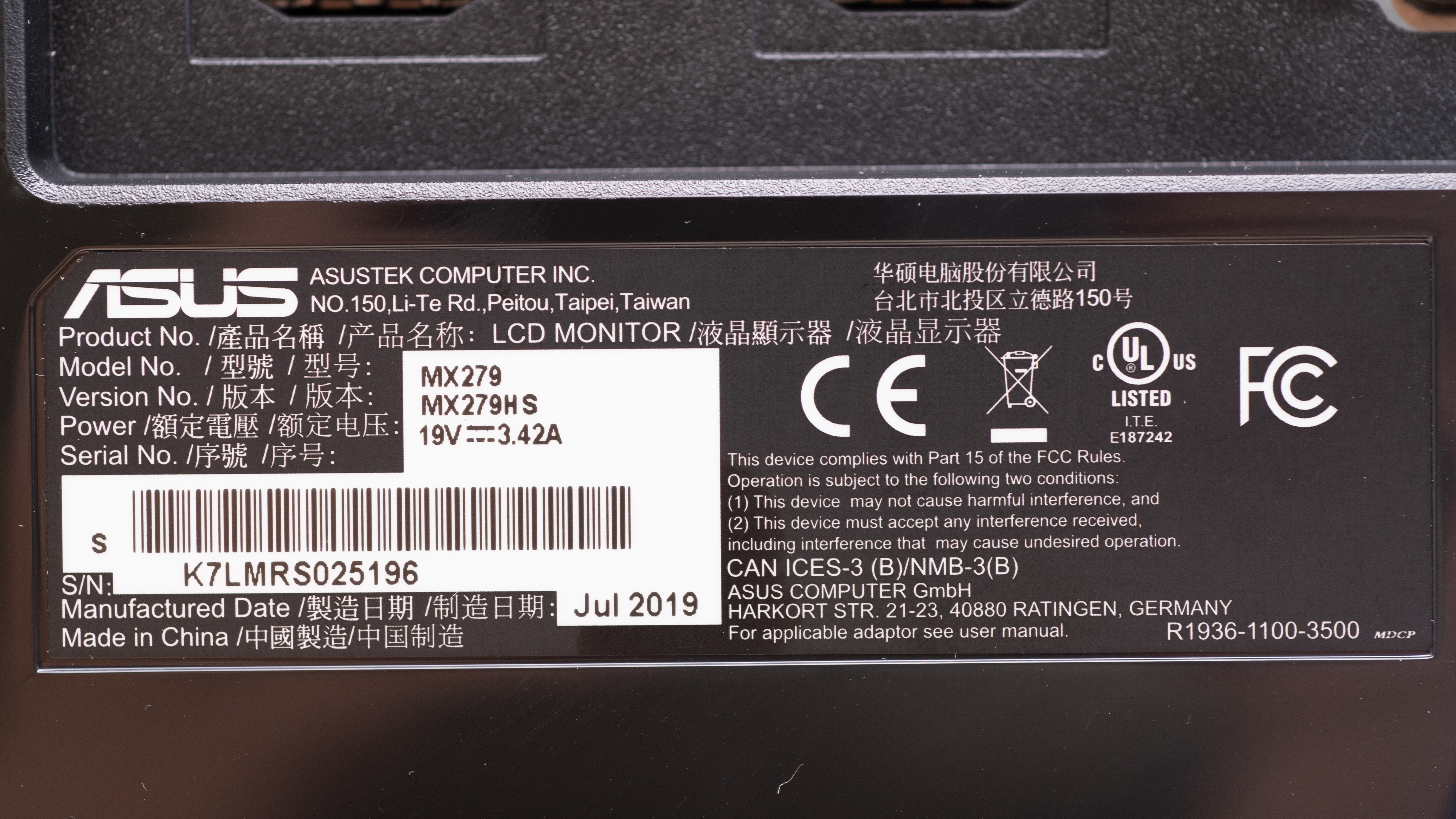
    Note: The ASUS Designo MX279HS we purchased was manufactured in July 2019.

    Popular Monitor Comparisons

    The ASUS Designo MX279HS is a decent 1080p budget monitor. It has a low input lag and wide viewing angles. It delivers a good performance in most uses for the price.

    See also our recommendations for the best budget monitors, the best budget gaming monitors, and the best 1080p monitors.

    Dell P2417H

    The Dell P2417H is better than the ASUS MX279HS, mainly due to its better ergonomics. The Dell has a stand that allows you to place it comfortably on your desk. The MX279HS, on the other hand, is larger, but the Dell can get brighter and has a faster response time that leaves a slightly smaller blur trail behind fast-moving content.

    ASUS VG279Q

    The ASUS VG279Q is much better than the ASUS MX279HS. The VG279G has a much faster refresh rate and faster response time, so motion looks a lot crisper and smoother. The VG279G is much better for gaming, as it supports FreeSync and it can get much brighter, so it's also suitable for brighter rooms.

    Samsung CF398

    The two monitors have different panels, each with advantages and disadvantages. The Samsung CF398 has a VA panel and displays deep uniform blacks when in a dark room, whereas the ASUS MX279HS maintains an accurate image when viewed from the side thanks to its IPS panel. The Samsung has a curved profile and supports FreeSync for nearly tear-free gaming.

    HP 27F

    The HP 27F is better than the ASUS MX279HS. The HP has a higher refresh rate for smoother motion and supports FreeSync for nearly tear-free gaming. Also, blacks appear more uniform on the HP 27F when in a dark room.
    Dell E2220H

    The ASUS MX279HS is much better overall than the Dell E2220H. The ASUS has an IPS panel, with much better viewing angles, better gray uniformity, and better response times. The ASUS is also larger, which results in a lower pixel density, but it's easier to see what you're working on or share your screen.

    Acer Nitro RG241Y Pbiipx

    The Acer Nitro RG241Y Pbiipx is significantly better than the ASUS MX279HS for most uses. The Acer has a much higher refresh rate, quicker response time, and VRR support. It also has a lower input lag and higher peak brightness. However, the ASUS has wider viewing angles, and its 27 inch screen provides more space for multitasking.

    Lepow Z1 Gamut

    The Lepow Z1 Gamut and the ASUS MX279HS perform very similarly in many aspects but are for different uses. The Lepow is a portable monitor with a 15.6 inch screen, while the ASUS is a desktop monitor with a 27 inch screen. They both have a 1080p resolution, 60Hz, and no VRR support. The ASUS has better response times, making it more versatile, but it doesn't support HDR or a wide color gamut, while the Lepow does.

    Test Results

    perceptual testing image
    Sort:
    RATINGS
    Category:
    All
    Design
    Style
    Size27"
    CurvedNo
    Curve RadiusNot Curved
    Weight (without stand)
    N/A
    Weight (with stand)
    12.3 lbs (5.6 kg)
    Stand
    Width
    8.8" (22.3 cm)
    Depth
    8.8" (22.3 cm)

    Update 06/01/2021: We mistakenly indicated the stand's measurement as 22.3 inches instead of 22.3 cm. It has been fixed.

    The stand supports the monitor well and only allows minimal wobble. It doesn't take too much space and won't be in your way.

    1.5
    Ergonomics
    Height Adjustment
    0.0" (0.0 cm)
    Switch Portrait/LandscapeNo
    Swivel RangeNo swivel
    Tilt Range-20° to 5°

    Update 07/02/2021: We incorrectly listed the Height Adjustment as 'N/A' as opposed to '0'. The review has been updated to reflect this change, as the Ergonomics score has dropped slightly.

    The ASUS MX279HS has terrible ergonomics. You can only tilt the monitor which isn't enough to position it comfortably.

    Back
    Wall MountNo Mount

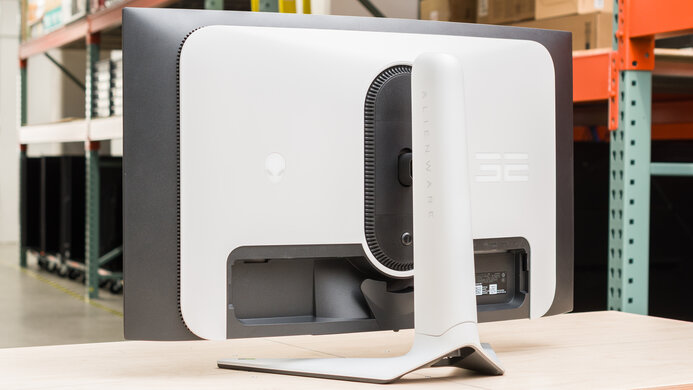
    The ASUS MX279HS's back is plain. It's covered by glossy plastic that is prone to fingerprints. There's no cable management.

    Borders
    Borders
    0.2" (0.5 cm)

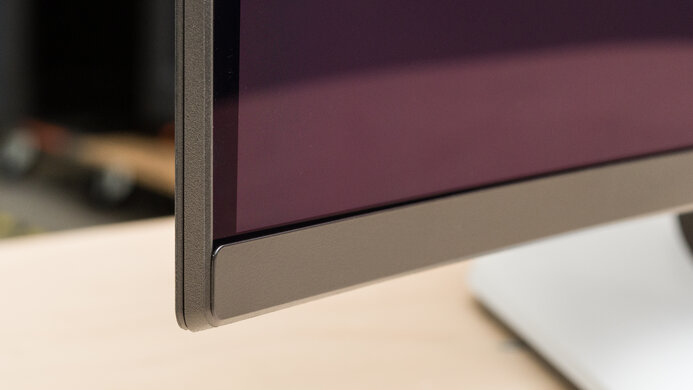
    The monitor's borders are very thin and favor a multi-monitor setup.

    Thickness
    Thickness (with stand)
    5.7" (14.5 cm)
    Thickness (without stand)
    N/A

    Update 06/01/2021: We mistakenly indicated the thickness with stand as 14.5 inches instead of 14.5 cm. It has been fixed.

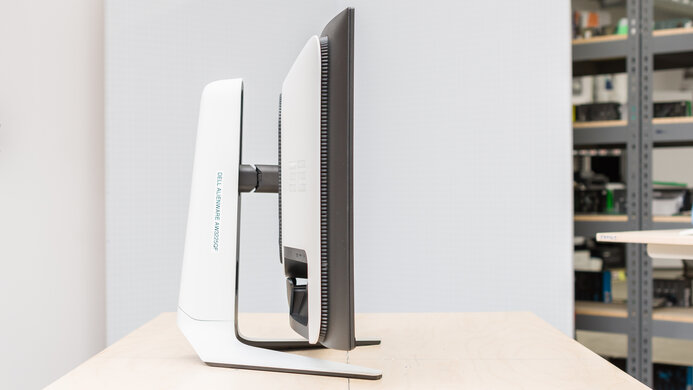
    The monitor is very thin. However, since you can't remove the stand or VESA-mount it, this isn't too helpful.

    7.0
    Build Quality

    The build quality of the ASUS MX279HS is decent. It's mostly plastic and doesn't feel premium. It's a solid build with no gaps or loose ends and resembles the Sceptre C325W.

    Picture Quality
    6.1
    Contrast
    Native Contrast
    1,073 : 1
    Contrast With Local Dimming
    N/A

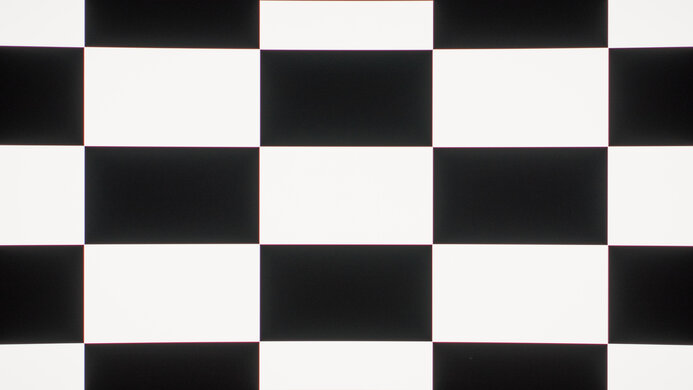
    The ASUS MX279HS has a mediocre contrast ratio, just like most IPS monitors. When in a dark room, blacks tend to look more like gray.

    0.0
    Local Dimming
    Local Dimming
    No
    Backlight
    Direct

    The monitor doesn't have a local dimming feature. This video is for reference only.

    5.9
    SDR Peak Brightness
    SDR Real Scene
    186 cd/m²
    SDR Peak 2% Window
    206 cd/m²
    SDR Peak 10% Window
    206 cd/m²
    SDR Peak 25% Window
    206 cd/m²
    SDR Peak 50% Window
    206 cd/m²
    SDR Peak 100% Window
    206 cd/m²
    SDR Sustained 2% Window
    205 cd/m²
    SDR Sustained 10% Window
    206 cd/m²
    SDR Sustained 25% Window
    206 cd/m²
    SDR Sustained 50% Window
    206 cd/m²
    SDR Sustained 100% Window
    206 cd/m²
    SDR ABL
    0.000

    Sub-par peak brightness although the monitor does hit its marketed values. This monitor isn't suitable for a very bright room as it won't fight glare.

    0.0
    HDR Peak Brightness
    HDR Real Scene
    N/A
    HDR Peak 2% Window
    N/A
    HDR Peak 10% Window
    N/A
    HDR Peak 25% Window
    N/A
    HDR Peak 50% Window
    N/A
    HDR Peak 100% Window
    N/A
    HDR Sustained 2% Window
    N/A
    HDR Sustained 10% Window
    N/A
    HDR Sustained 25% Window
    N/A
    HDR Sustained 50% Window
    N/A
    HDR Sustained 100% Window
    N/A
    HDR ABL
    N/A

    HDR isn't supported.

    8.3
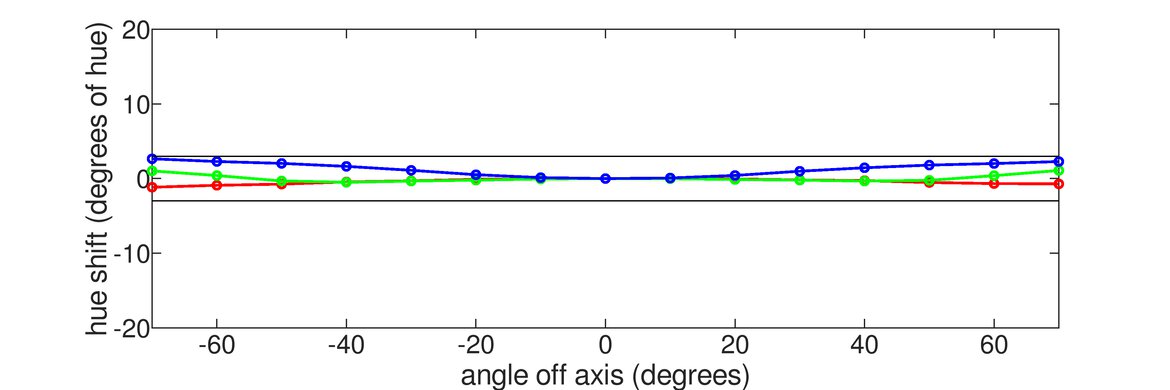
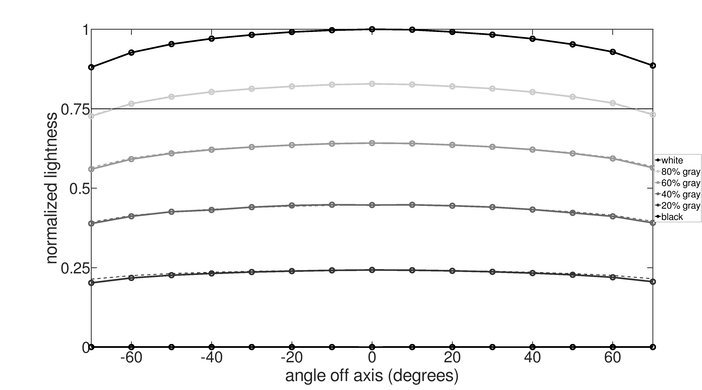
    Horizontal Viewing Angle
    Color Washout From Left
    47°
    Color Washout From Right
    44°
    Color Shift From Left
    52°
    Color Shift From Right
    52°
    Brightness Loss From Left
    48°
    Brightness Loss From Right
    46°
    Black Level Raise From Left
    70°
    Black Level Raise From Right
    70°
    Gamma Shift From Left
    54°
    Gamma Shift From Right
    52°

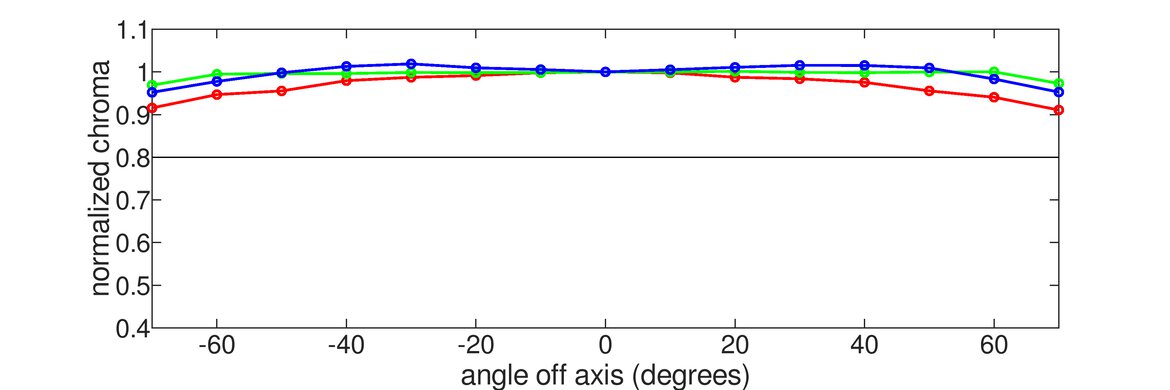
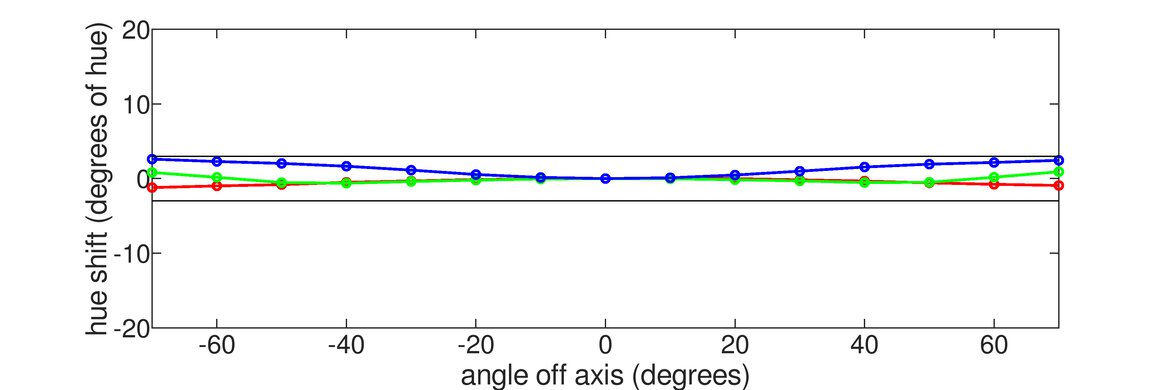
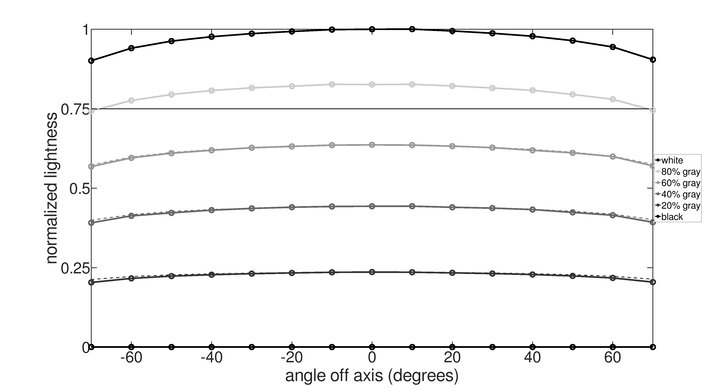
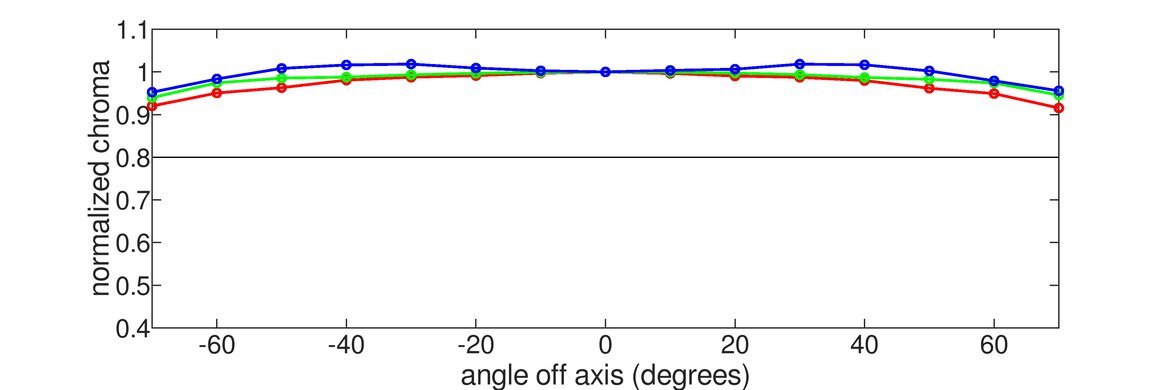
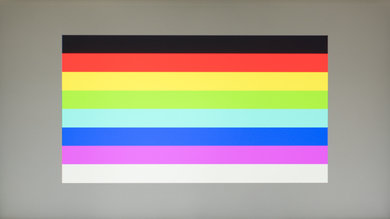
    The ASUS Designo MX279HS has decent horizontal viewing angles. This is important if you often share your work with a colleague, especially since the monitor's ergonomics don't allow any swiveling.

    6.5
    Vertical Viewing Angle
    Color Washout From Below
    30°
    Color Washout From Above
    26°
    Color Shift From Below
    33°
    Color Shift From Above
    26°
    Brightness Loss From Below
    32°
    Brightness Loss From Above
    30°
    Black Level Raise From Below
    70°
    Black Level Raise From Above
    58°
    Gamma Shift From Below
    31°
    Gamma Shift From Above
    27°

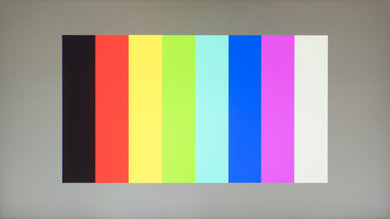
    The ASUS MX279HS's vertical viewing angles are good. When someone is looking at the monitor from above they will enjoy the same accurate image as if they were sitting straight in front.

    8.5
    Gray Uniformity
    50% Std. Dev.
    3.573%
    50% DSE
    0.110%
    5% Std. Dev.
    0.535%
    5% DSE
    0.076%

    This monitor has excellent gray uniformity, although some vignetting is visible in the brighter scenes.

    4.8
    Black Uniformity
    Native Std. Dev.
    2.776%
    Std. Dev. w/ L.D.
    N/A

    Just like most IPS monitors, the ASUS MX279HS has poor black uniformity. There's significant clouding, but it only becomes noticeable when you watch dark scenes in a dark room.

    7.6
    Pre Calibration
    Picture Mode
    Standard
    Luminance
    206 cd/m²
    Luminance Settings
    90
    Contrast Setting
    80
    RGB Controls
    100-100-100
    Gamma Setting
    No Gamma Setting
    Color Temperature
    6,832 K
    White Balance dE
    2.88
    Color dE
    3.01
    Gamma
    2.23

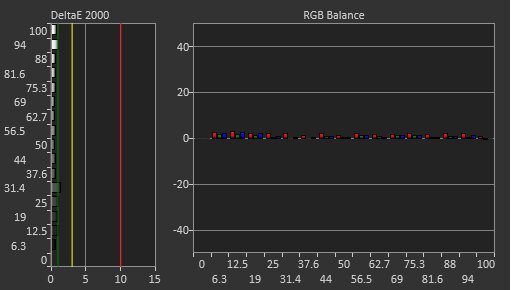
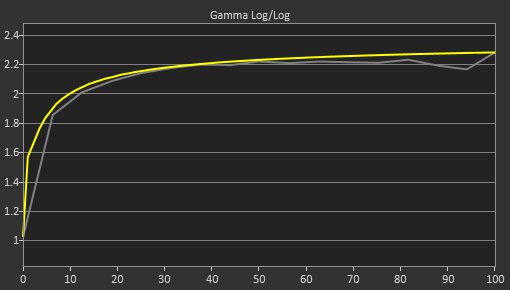
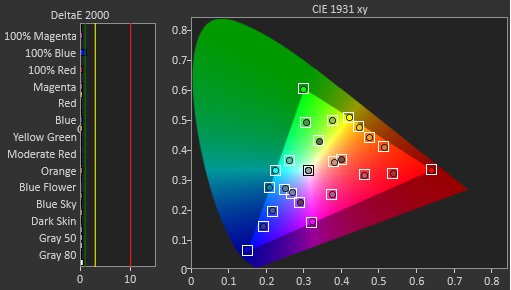
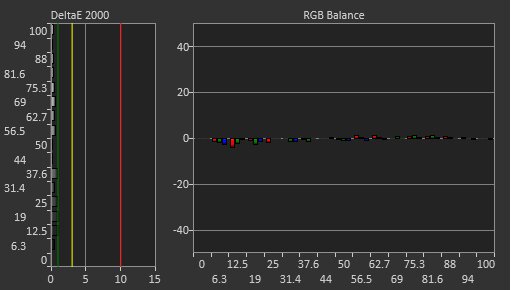
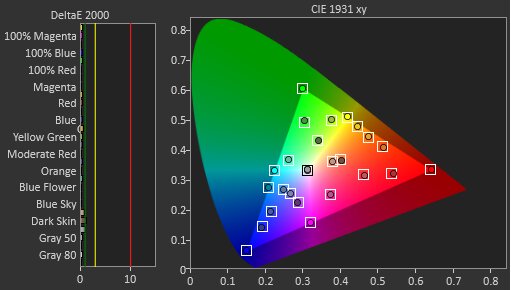
    The pre-calibration color accuracy of this monitor is good. The existing errors both in the grays and in the colors are hard to spot unless you're an enthusiast. The gamma doesn't follow the curve too well and most scenes don't have the brightness they should.

    9.5
    Post Calibration
    Picture Mode
    Standard
    Luminance
    100 cd/m²
    Luminance Settings
    38
    Contrast Setting
    75
    RGB Controls
    100-99-93
    Gamma Setting
    No Gamma Setting
    Color Temperature
    6,466 K
    White Balance dE
    0.44
    Color dE
    0.91
    Gamma
    2.18

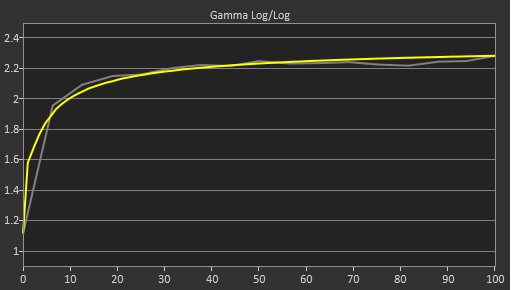
    The ASUS Designo MX279HS has remarkable accuracy after calibration. Most inaccuracies are corrected and even enthusiasts will need a colorimeter to spot them. The gamma follows the curve more closely and the color temperature is very close to the target of 6500K.

    You can download our ICC profile calibration here. This is provided for reference only and shouldn't be used, as the calibration values vary per individual unit even for the same model due to manufacturing tolerances.

    8.2
    SDR Color Gamut
    sRGB xy
    91.5%
    Adobe RGB xy
    71.7%
    sRGB Picture Mode
    Standard
    Adobe RGB Picture Mode
    Standard

    s.RGB Picture Mode: Standard (calibrated)Adobe RGB Picture Mode: Standard

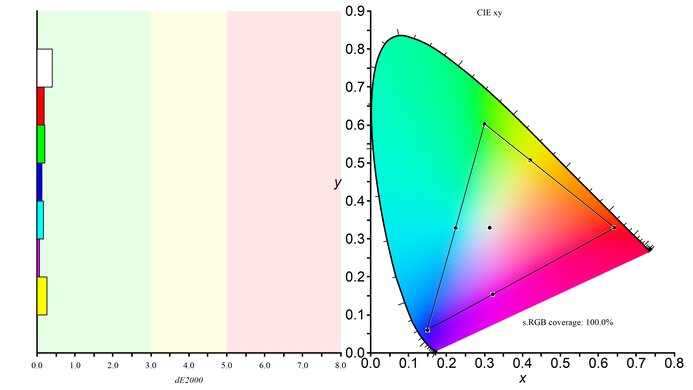
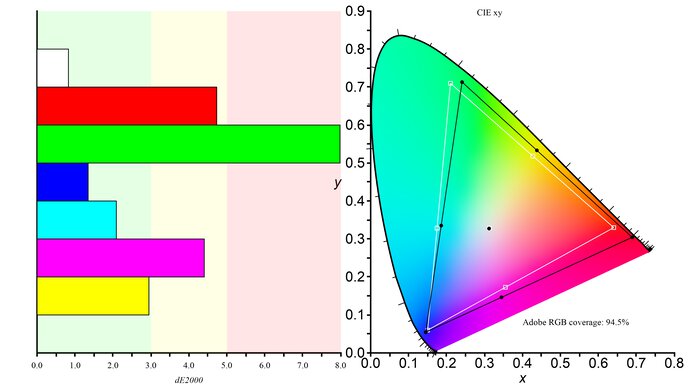
    Impressive SDR color gamut for this monitor similar to the HP 27F. The standard sRGB color space is covered adequately, but the wider Adobe RGB color gamut, used mainly in professional applications, has just decent coverage.

    8.5
    SDR Color Volume
    sRGB In ICtCp
    93.2%
    Adobe RGB In ICtCp
    77.2%
    sRGB Picture Mode
    Standard
    Adobe RGB Picture Mode
    Standard

    s.RGB Picture Mode: Standard
    Adobe RGB Picture Mode:Standard

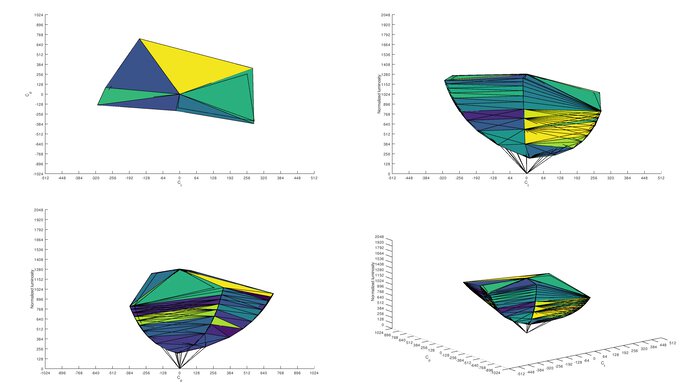
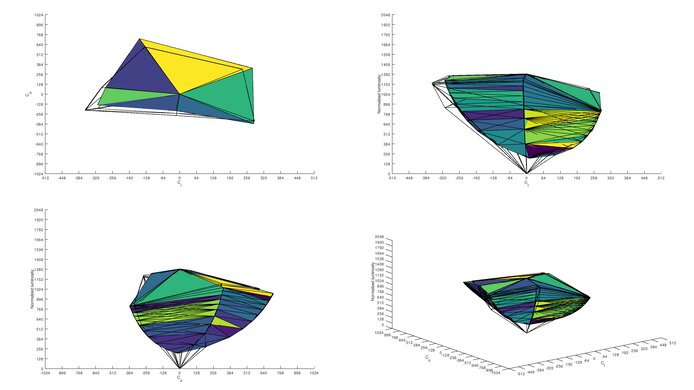
    Excellent SDR color volume. The monitor displays the standard s.RGB color space well in various luminance levels. Its Adobe RGB volume, on the other hand, is good but still limited by the monitor's coverage of the Adobe RGB color gamut.

    0.0
    HDR Color Gamut
    Wide Color Gamut
    N/A
    DCI P3 xy
    N/A
    Rec. 2020 xy
    N/A
    DCI P3 Picture Mode
    No HDR
    Rec. 2020 Picture Mode
    No HDR

    HDR isn't supported.

    0.0
    HDR Color Volume
    DCI-P3 In ICtCp
    N/A
    Rec. 2020 In ICtCp
    N/A
    DCI P3 Picture Mode
    No HDR
    Rec. 2020 Picture Mode
    No HDR

    HDR isn't supported.

    10
    Image Retention
    IR After 0 Min Recovery
    0.00%
    IR After 2 Min Recovery
    0.00%
    IR After 4 Min Recovery
    0.00%
    IR After 6 Min Recovery
    0.00%
    IR After 8 Min Recovery
    0.00%
    IR After 10 Min Recovery
    0.00%

    There are no signs of temporary image retention on the ASUS Designo MX279HS, even immediately after displaying our high-contrast static test image for 10 minutes.

    8.8
    Gradient
    Color Depth
    8 Bit

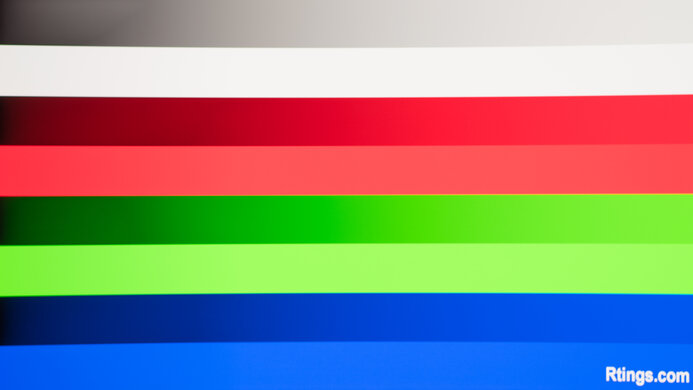
    Excellent gradient handling on the ASUS MX279HS. There's some minimal banding visible in the darker shades, but this is mainly due to the 8-bit color depth.

    10
    Color Bleed
    Pixel Row Error
    0.000%
    Pixel Column Error
    0.000%

    There are no signs of color bleed on this monitor.

    8.3
    Reflections
    Screen Finish
    Matte
    Total Reflections
    4.7%
    Indirect Reflections
    4.3%
    Calculated Direct Reflections
    0.4%

    Good reflection handling, very similar to the Dell P2417H. The monitor's matte coating diffuses slight reflections across the screen minimizing their intensity, but this causes some smearing across the screen. Reflections shouldn't be an issue unless you're in a very bright room.

    7.0
    Text Clarity
    Pixel Type
    IPS
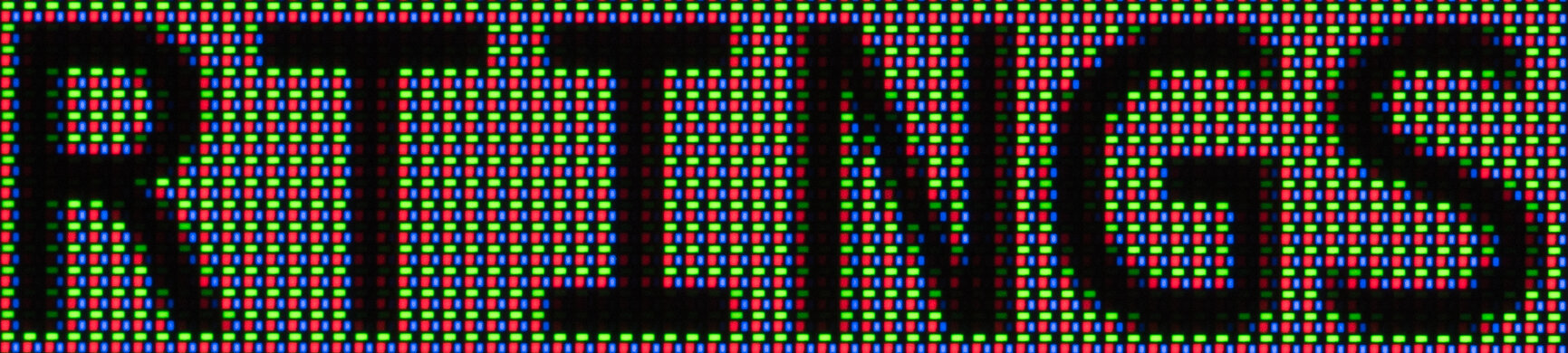
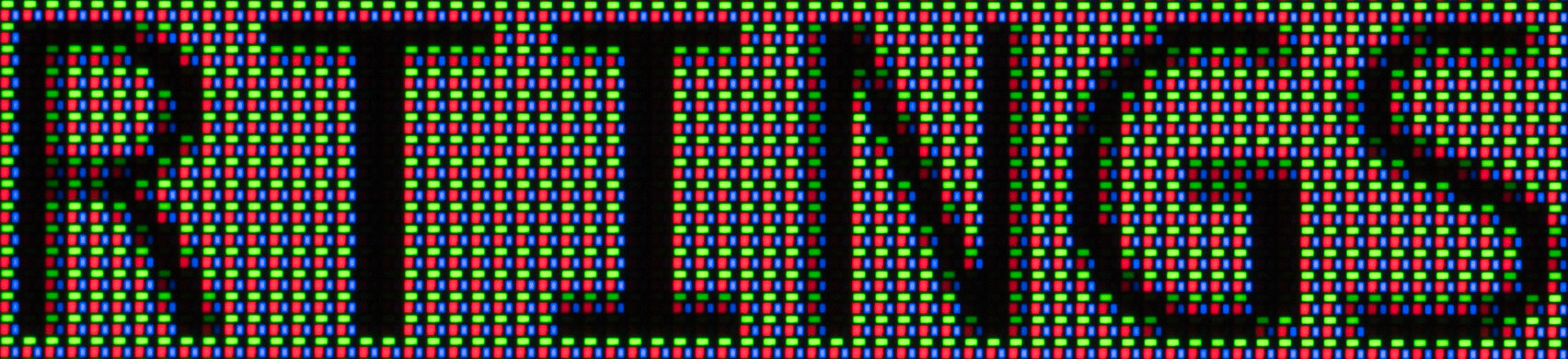
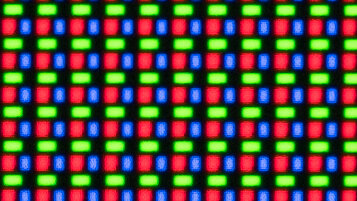
    Sub-Pixel Layout
    RGB
    Motion
    6.9
    Response Time @ Max Refresh Rate
    Best Overdrive Setting
    0
    Rise / Fall Time
    10.1 ms
    Total Response Time
    18.3 ms
    Overshoot Error
    0.0%
    Dark Rise / Fall Time
    11.1 ms
    Dark Total Response Time
    19.0 ms
    Dark Overshoot Error
    0.0%

    Response Time 0

    Response Time 20

    Response Time 40

    Response Time 60

    Response Time 80

    Response Time 100

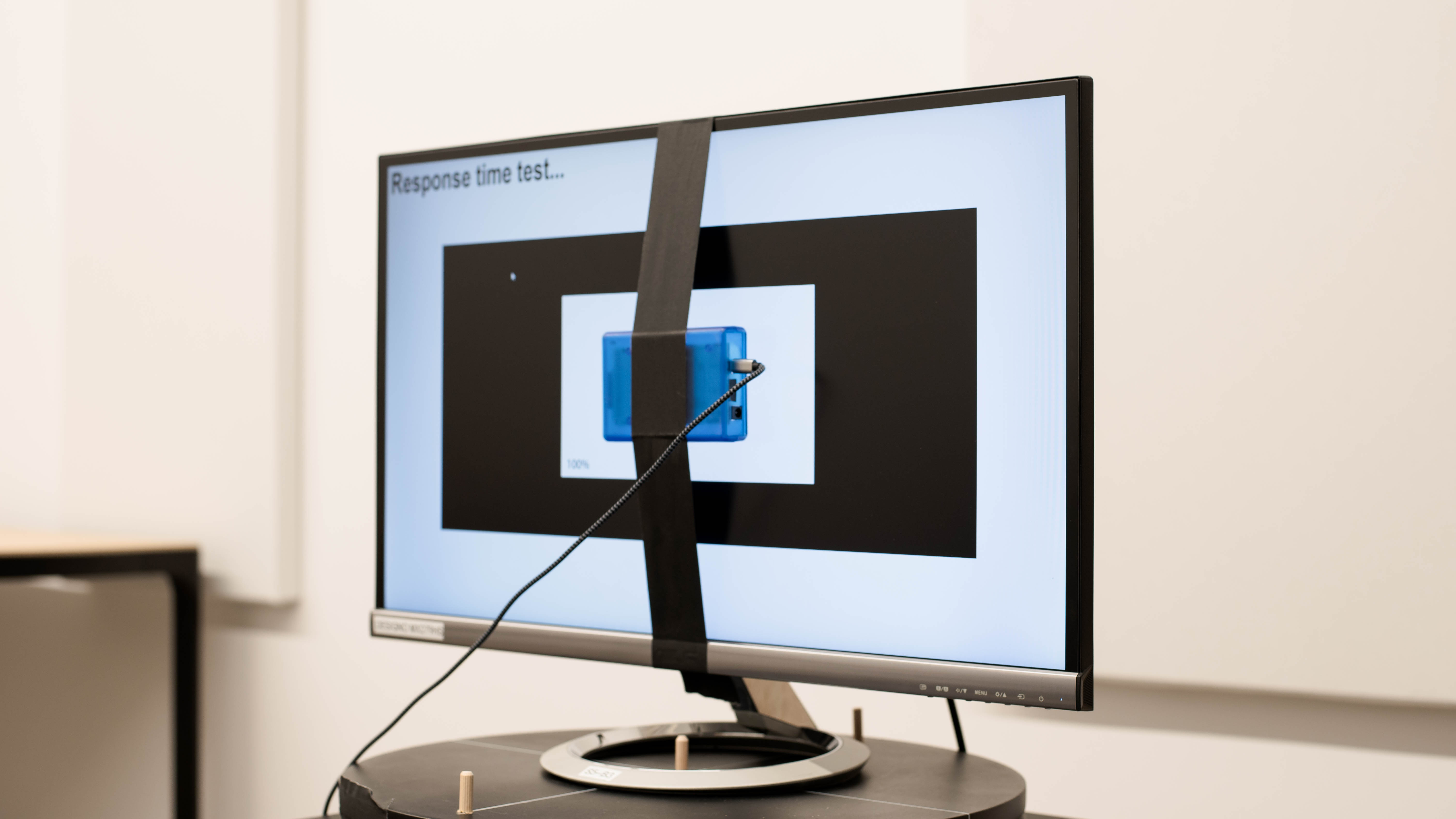
    The response time of the Designo MX279HS is good. Fast-moving content has a little more blur than most monitors, which is okay for casual use, but not good for gaming. You can select the overdrive setting at intervals of 20 in the range from '0' to '100'. We recommend that you choose level '0' as the rest of the levels either have significant overshooting or, in the case of level '20', the improvement in response time isn't enough to justify the overshoot level.

    6.9
    Response Time @ 60Hz
    Best Overdrive Setting
    0
    Rise / Fall Time
    10.1 ms
    Total Response Time
    18.3 ms
    Overshoot Error
    0%
    Dark Rise / Fall Time
    11.1 ms
    Dark Total Response Time
    19.0 ms
    Dark Overshoot Error
    0.0%
    10
    Image Flicker
    Flicker-FreeYes
    PWM Dimming Frequency
    0 Hz

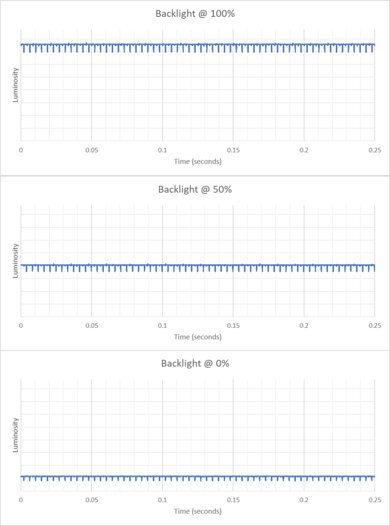
    The ASUS MX279HS is completely flicker-free at all brightness levels. Unfortunately, there's no black frame insertion feature to help make motion appear clearer.

    0.0
    Black Frame Insertion (BFI)
    Black Frame Insertion (BFI)
    No
    BFI Maximum Frequency
    N/A
    BFI Minimum Frequency
    N/A
    6.2
    Refresh Rate
    Variable Refresh Rate
    No VRR
    Native
    60 Hz
    Max Refresh Rate
    60 Hz
    Variable Refresh Rate
    No
    FreeSync
    No
    G-SYNC
    No
    VRR Maximum
    N/A
    VRR Minimum
    N/A
    VRR Supported ConnectorsNo VRR

    This monitor has a native refresh rate 60Hz and doesn't support any advanced features like FreeSync or G-SYNC.

    Inputs
    9.0
    Input Lag
    Native Resolution
    8.8 ms
    Native Resolution @ 60Hz
    8.8 ms
    Variable Refresh Rate
    N/A
    Variable Refresh Rate @ 60Hz
    N/A
    10 Bit HDR
    N/A
    Black Frame Insertion (BFI)
    N/A

    The input lag of this monitor is very low and helps deliver a very responsive gaming experience.

    7.1
    Resolution And Size
    Native Resolution1920 x 1080
    Aspect Ratio16:9
    Megapixels2.1 MP
    Pixel Density
    82 PPI
    Screen Diagonal27.0"
    Screen Area310 in²

    This monitor has a decent native resolution and size. Although it's not ideal for working simultaneously with many windows, it's gentle on the eyes thanks to its larger size. If you need to stay productive while traveling, check out the Lepow Z1 Gamut portable monitor.

    Inputs
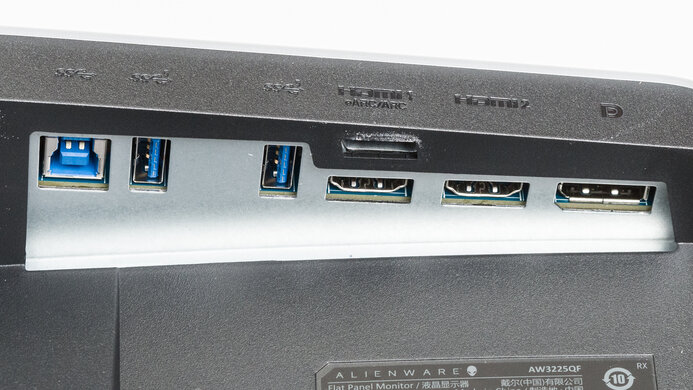
    Total Inputs
    DisplayPortNo
    Mini DisplayPortNo
    HDMI2 (HDMI 1.4)
    DVINo
    VGA1
    DisplayPort OutNo
    USBNo
    USB CNo
    Analog Audio Out 3.5mm1
    Microphone In 3.5mm1
    Digital Optical Audio OutNo
    Analog Audio Out RCANo
    Power SupplyExternal Brick
    Features
    Additional Features
    RGB Illumination
    No
    Speakers
    Yes
    HDR10No
    Multiple Input Display
    No

    The monitor features very few additional features apart from the speakers. It has a Kensington Lock to help you secure it, and allows you to display a grid and certain alignment options.

    On-Screen Display (OSD)
    Controls

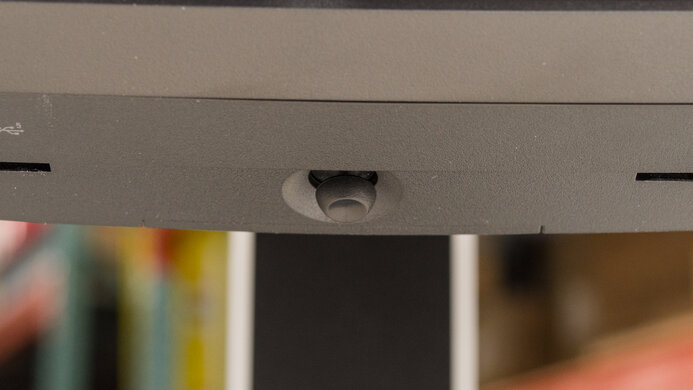
    The controls are a series of touch-sensitive buttons found on the underside. They're easy to use.

    In The Box

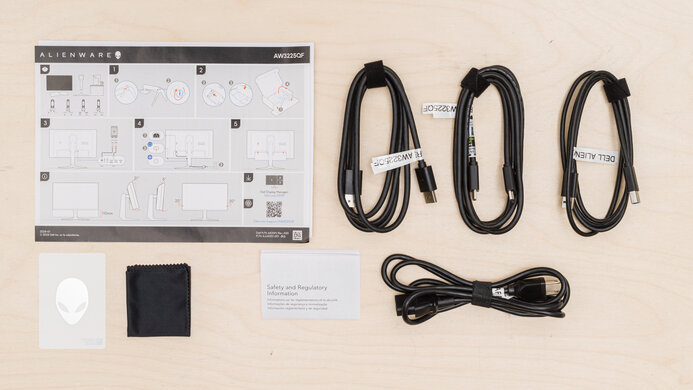
    • Manual
    • Power Cable
    • Power Adapter
    • HDMI to DVI
    • Aux Cable
    • VGA Cable