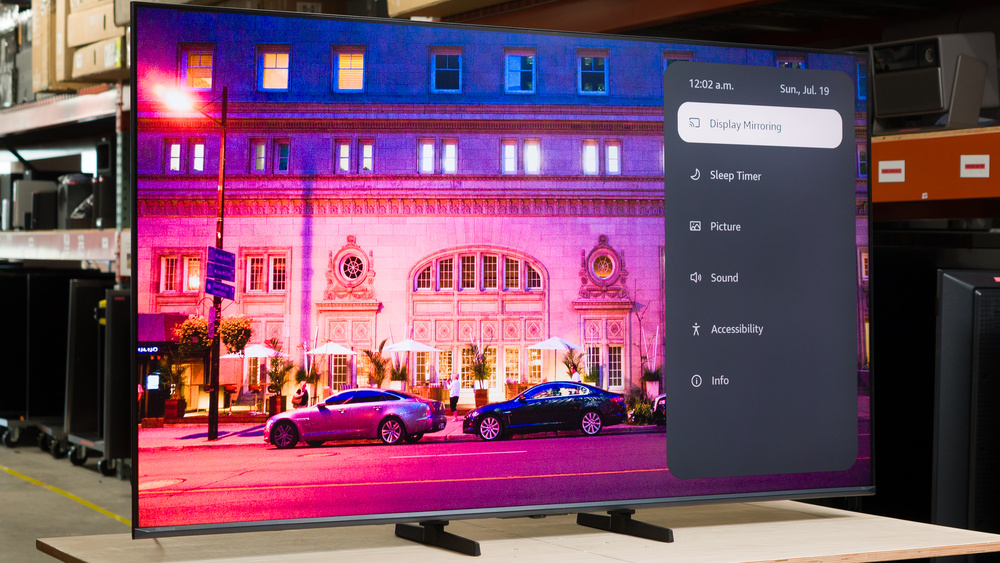
The Hisense U6SF is a budget Mini LED TV released in 2026. It sits below the Hisense U7SG and its higher-end variant, the Hisense U6SF Pro. It features a Mini LED backlight with local dimming, a 4k screen, and a matte anti-reflective coating to help reduce glare. Although it's a budget model, it's surprisingly well-equipped, with a fast 144Hz refresh rate, HDMI 2.1 bandwidth on two ports, and VRR support to reduce tearing. It also supports a boosted 240Hz refresh rate mode at 1080p for PC gamers. It's powered by the Fire TV smart interface, which has most common streaming apps. We bought and tested the 65-inch version, but it's also available in 50-, 55-, 75-, 85-, and 100-inch sizes.
Our Verdict
The Hisense U6SF is a decent TV overall. It's a versatile TV that fits well in a variety of room setups. It has great reflection handling and okay peak brightness, so it's a good choice for a moderately lit room. It also looks decent in a dark room, with deep blacks and an alright local dimming feature, but you'll see some distracting haloing around bright details and subtitles. It's okay for gaming, with low input lag, a high refresh rate, and great gaming features, but fast motion in video games and sports is blurry.
Good contrast.
Does a great job smoothing out low-quality content.
Motion is very blurry.
Image degrades rapidly from the sides.
Distracting uniformity issues.
The Hisense U6SF delivers a decent home theater viewing experience. It has decent black levels, so the image looks okay in a dark room, but it has limited local dimming capabilities, so you'll see some haloing around bright details and subtitles. It also has decent colors, with good accuracy out of the box, but saturated colors are a bit washed out in very light scenes. It also has good image processing and does a good job of cleaning up low-quality content from streaming services. It has good format support, including support for both Dolby Vision and HDR10+, and its eARC feature supports all common audio formats.
Good contrast.
Does a great job smoothing out low-quality content.
Excellent audio/video format support.
Small highlight details are muted.
Noticeable haloing around bright highlights and subtitles.
The Hisense U6SF is a good choice for a bright room. It gets moderately bright, so bright content like sports is easy to see in a moderately lit room. Its matte screen coating does a great job of reducing glare from windows and mirrors facing the screen, so even dark scenes are easy to see during the day.
Great reflection handling.
Ambient light has no noticeable impact on colors or contrast.
Bright enough to overcome some glare in a moderately-lit room.
The Hisense U6SF is a decent TV for watching sports during the day. It gets bright enough to overcome some glare during the day. It also has good processing and does a good job of cleaning up low-quality streaming channels. Unfortunately, it has a slow response time, so motion is blurry and uneven, and edges are soft. It also has noticeable uniformity issues, with a patchy screen that doesn't look even, and the image degrades rapidly from the sides, so it's not suitable for a wide seating area.
Does a great job smoothing out low-quality content.
Motion is very blurry.
Image degrades rapidly from the sides.
Distracting uniformity issues.
The Hisense U6SF is an okay gaming TV. It has a great selection of gaming features, including VRR support and a high refresh rate. It supports HDMI 2.1 bandwidth, but only on two inputs, so you can't take full advantage of more than two recent gaming consoles. It has low input lag, so games feel a bit responsive, but it has a very high CAD, causing fast motion to appear blurry.
Good contrast.
Extremely low input lag.
VRR support and HDMI 2.1 bandwidth.
High CAD that results in extremely blurry motion.
The Hisense U6SF has great expected reliability. Similar to direct-lit models, LEDs housed directly behind the LCD layer are less likely to overheat and fail than in edge-lit models. There's also no possibility of burn-in or image retention, so the type of content you watch doesn't affect its lifespan. Unlike direct-lit models, the LEDs are grouped together in zones, so a single failed LED will usually cause only one zone to fail, not the entire backlight.
Single LED failures affect only a single zone, not the entire backlight.
No possibility of permanent burn-in.
The Hisense U6SF has okay peak brightness. It's bright enough to handle a bit of glare in a moderately lit room. Small details in movies and shows don't stand out very well, though, and very bright outdoor shots are a bit dim.
Bright enough to overcome some glare in a moderately-lit room.
Small highlight details are muted.
The Hisense U6SF has decent black levels. It has good contrast, resulting in fairly deep blacks in most scenes. Its local dimming feature does a good job keeping black levels deep in most scenes, but due to the low number of zones, there's noticeable haloing around bright details or subtitles.
Good contrast.
Noticeable haloing around bright highlights and subtitles.
The Hisense U6SF has decent colors. It has decent color volume, and saturated colors are a bit washed out in very light scenes. On the other hand, it has good color accuracy out of the box, with very few noticeable color mapping errors and a fairly neutral color temperature.
Good accuracy out of the box.
Saturated colors are slightly washed out in very light scenes.
The Hisense U6SF has decent motion handling when watching content. It removes judder from most sources, ensuring even frame timing, and there's no micro-judder. On the other hand, it has a slow, uneven response time, so motion is blurry, and edges are soft.
Removes judder from nearly all content.
Motion is very blurry.
The Hisense U6SF has okay overall responsiveness in Game mode. It supports a wide range of resolutions and a high refresh rate, and it has low input lag in all supported display modes. Unfortunately, it has a very high CAD, though, so motion appears blurry, especially when gaming at 60Hz.
Extremely low input lag.
VRR support and HDMI 2.1 bandwidth.
High CAD that results in extremely blurry motion.
Note: We're in the process of improving our tests related to image processing, but this score should give you a general idea of how a TV performs overall with its image processing capabilities.
The Hisense U6SF has good image processing capabilities. It does an excellent job cleaning up low-quality streaming content, but there's a slight loss of fine details in the process. It upscales DVDs and low-resolution content well, with no obvious oversharpening. When watching HDR content, it displays most content close to the correct brightness level, but there's some noticeable banding, especially in dark scenes.
Good PQ EOTF tracking.
Does a great job smoothing out low-quality content.
Good upscaling.
Noticeable banding in areas of similar colors, especially in dark shades.
Performance Usages
Changelog
-
Updated Nov 20, 2026:
We bought and tested the Hisense M7QG and added a comparison in the Direct Reflections section of the review.
- Updated Nov 10, 2026: We converted this review to Test Bench 2.4. With this update, we've added a new Vertical Banding test, which evaluates a TV for vertical banding in near-black scenes.
- Updated Oct 27, 2026: We converted this review to Test Bench 2.3.1. With this update, we've added a new Panel Reliability Risk Factors test, which breaks down the components used to assess a TV's expected reliability.
- Updated Oct 21, 2026: Review published.
Check Price
Differences Between Sizes And Variants
We bought and tested the 65-inch Hisense U6SF, and these results also apply to the 50-, 55-, 75-, 85-, and 100-inch models. This TV is different from the Hisense U6SF Pro, which we've reviewed separately.
| Size | US Model |
|---|---|
| 50" | 50U6SF |
| 55" | 55U6SF |
| 65" | 65U6SF |
| 75" | 75U6SF |
| 85" | 85U6SF |
| 100" | 100U6SF |
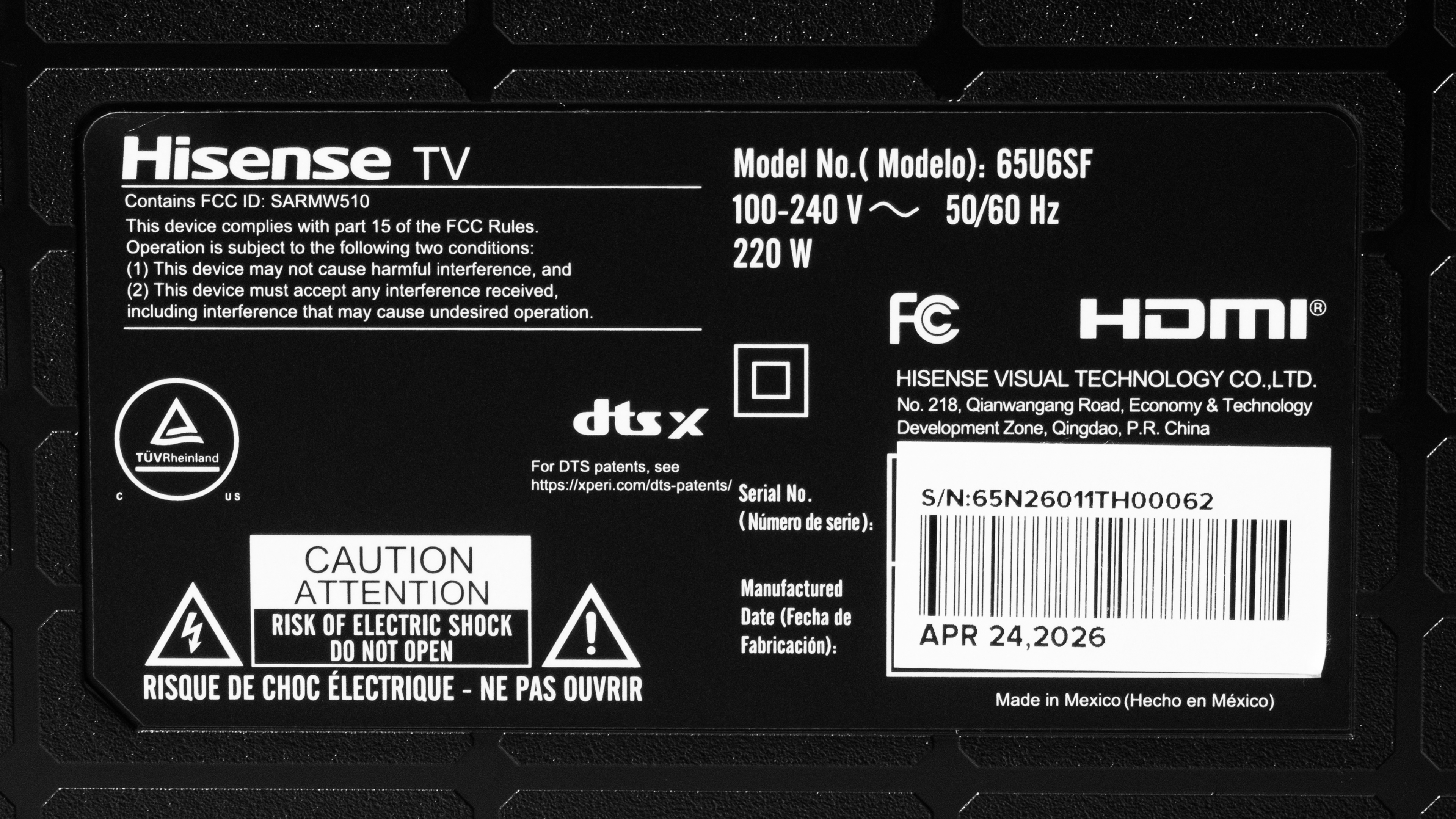
The unit we bought and tested was made in Mexico, in April, 2026, according to the label.
Popular TV Comparisons
The Hisense U6SF is a decent budget TV that performs about as you'd expect for the price. It has a great selection of extra features not always found on budget models, like HDMI 2.1 bandwidth, VRR support, and a high refresh rate. It faces steep competition, though, especially against new cheap OLED options like the Roku Pro Series OLED or the LG B6 OLED 2026, both of which offer a far better experience overall for only slightly more.
For more options, check out our recommendations for the best TVs for bright rooms, the best budget TVs, and the best TVs for gaming.
The TCL QM6K and the Hisense U6SF trade blows in a few different ways, and the best one depends on your usage. You should get the TCL if you mainly watch TV in a dark or dim room, as it has better contrast and less haloing around bright details or subtitles. The Hisense is the better choice for a bright room, though, as its matte anti-reflective coating significantly improves the visibility of dim scenes during the day and reduces glare in general.
The Hisense U6SF Pro is a considerable step up over the regular Hisense U6SF. The Pro version is significantly brighter, so small details stand out better, and it can handle more glare during the day. The Pro version also has a much better local dimming feature, resulting in much deeper blacks around bright details and subtitles in a dark room.
The Hisense U6SF is significantly better than the Hisense QD6QF. The biggest difference is the addition of a full-array local dimming feature on the U6SF, which significantly improves dark scene performance and helps it deliver a much nicer home theater experience. The U6SF is also a bit brighter, and it has better processing, so you won't see compression artifacts as much when watching low-quality streams.
The LG B6E OLED delivers substantially better picture quality than the Hisense U6SF. The LG has perfect blacks, without a trace of haloing around bright details or subtitles on a dark background. The LG also has much better motion handling, with no distracting motion blur behind fast-moving objects, so it's also significantly better for watching sports or gaming.

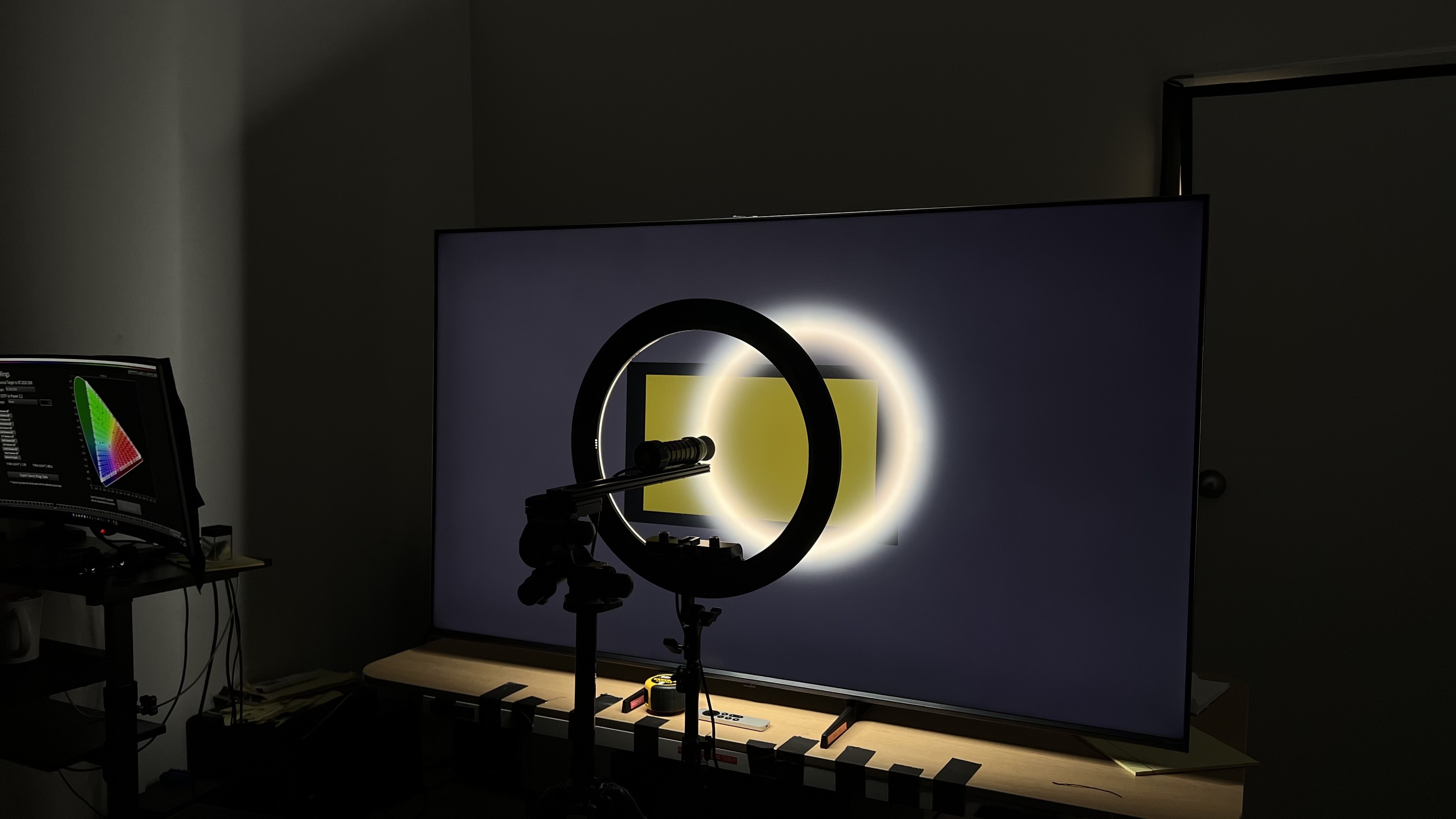
We buy and test dozens of TVs yearly, taking an objective, data-driven approach to deliver results you can trust. Our testing process is complex, with hundreds of individual tests that take over a week to complete. Most of our tests use specially designed test patterns that mimic real content, but we also use the same sources you have at home to ensure our results match the real-world experience. We use two main tools for our testing: a Colorimetry Research CR-100 colorimeter and a CR-250 spectroradiometer.
Test Results
for pictures & test results

for pictures & test results

for pictures & test results

The Hisense U6SF has mediocre peak brightness in HDR. Most scenes are bright enough to deliver an impactful viewing experience, but small details don't stand out nearly as well as they should. Very bright outdoor scenes are significantly dimmer and not very vivid.
for pictures & test results

for pictures & test results

for pictures & test results

Switching to Game mode has no impact on peak brightness in HDR.
The TV's peak brightness in SDR is good. It's bright enough to overcome some glare during the day, so bright scenes are still clear and easy to see in a well-lit room.
for pictures & test results

The Hisense U6SF has good contrast. The local dimming feature does a very good job of maintaining deep black levels when there are bright highlights on the screen. The native contrast of the panel is decent, which helps maintain deep blacks in more complicated scenes when the local dimming can't keep up.
for pictures & test results

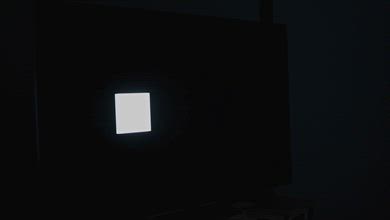
The local dimming has mediocre zone precision. It can't accurately dim zones around bright highlights or subtitles due to the large size of each zone. This results in noticeable haloing around bright areas.
for videos & test results

Unfortunately, the zone transitions on this TV are poor. There's a noticeable flicker effect as bright details move between zones. The TV's processing can't keep up with fast-moving objects, either, so the leading edge is darker than it should be.


for pictures & test results

for pictures & test results

The TV has decent black uniformity. With local dimming disabled, you can see some flashlighting out of the corners and sides of the screen. It looks much better with local dimming on, though, and there are no noticeable issues.
for pictures & test results

for pictures & test results

The Hisense U6SF has decent color volume in SDR. It displays the DCI-P3 color space well, but reds and greens are undersaturated in most content. It also struggles to display vibrant colors in lighter scenes. It struggles more with content mastered in the BT.2020 color space, and can't display overly saturated colors in that space at all.
| Volume ΔE³ | DCI-P3 Coverage |
BT.2020 Coverage |
|---|---|---|
| L10 | 94.96% | 71.53% |
| L20 | 94.72% | 71.19% |
| L30 | 93.37% | 70.20% |
| L40 | 91.01% | 69.80% |
| L50 | 88.64% | 68.80% |
| L60 | 87.19% | 66.52% |
| L70 | 86.90% | 58.68% |
| L80 | 86.50% | 56.01% |
| L90 | 86.47% | 56.17% |
| L100 | 88.68% | 63.72% |
| Total | 88.40% | 63.32% |
for pictures & test results

for pictures & test results

The TV has decent color volume in HDR. Saturated colors in dark scenes are displayed well thanks to its good contrast ratio. It struggles to display saturated colors in bright scenes, though.
for pictures & test results

for pictures & test results

for pictures & test results

The Hisense U6SF has good accuracy before calibration. The average color error is very low, and most colors are displayed accurately. The white balance error is a bit higher, but still very low. Its average color temperature is a bit cool, though, and reds are underrepresented in most shades. Gamma is also a bit high, which means nearly all content is slightly darker than it should be.
for pictures & test results

for pictures & test results

for pictures & test results

This TV has nearly perfect SDR accuracy after a full calibration. It's easy to calibrate, and any remaining inaccuracies aren't noticeable.
See our full calibration settings.
for pictures & test results

for pictures & test results

The TV has great accuracy in HDR before calibration. There are a few minor issues, including some white balance issues in the midtones and some minor color errors, but it's not too bad, and most people won't notice.


for pictures & test results

The Hisense U6SF has good PQ EOTF tracking. Brighter midtones are slightly overbrightened, but it's very minor. The TV has a gradual rolloff near its peak brightness, which preserves fine details better in bright scenes but limits how bright those details can get.
for pictures & test results

The TV has great low-quality content smoothing. It does an excellent job of removing compression artifacts from most streaming services. There's some loss of fine details in the process, though.
for pictures & test results

This TV has good upscaling. Low-resolution content like DVDs is upscaled well, with no obvious upscaling artifacts. The image is a bit soft compared to the Hisense U6SF Pro, though.
for pictures & test results
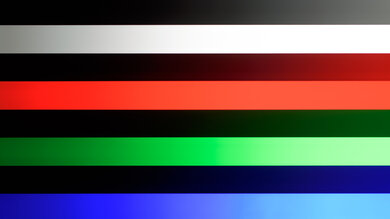
This TV has decent gradient handling. There's noticeable banding in all darker shades, so you'll see more issues in low-light scenes. Brighter scenes also have some noticeable banding, but it's not as bad.
The Hisense U6SF has excellent low input lag as long as you're in Game mode. It adds very little additional delay between your actions on the controller and what you see on the screen, especially at higher refresh rates.
This TV supports all common TV resolutions, up to a maximum of 144Hz with a 4k resolution or 240Hz at 1080p. It displays chroma 4:4:4 properly in all supported modes, which helps with clear text when used with a PC.
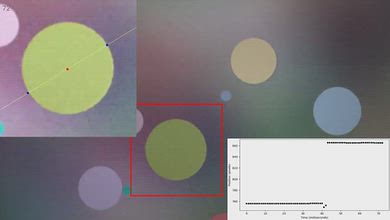
The TV supports a variable refresh rate to reduce tearing, and it's effective across an extremely wide refresh rate range thanks to its high maximum refresh rate.
for pictures & test results
for pictures & test results

The TV's CAD at its max 4k refresh rate of 144Hz is sub-par. There's no overshoot or undershoot, so you won't see any white inverse ghosting around shadow details. Most transitions are slow to complete, though, which causes a long blur trail behind fast-moving objects.
for pictures & test results

for pictures & test results

Decreasing the refresh rate down to 120Hz actually improves its CAD slightly compared to the Max Refresh Rate, but it's still sub-par overall. Again, there's no overshoot or undershoot, but there's a long blur trail behind fast-moving objects.
for pictures & test results

for pictures & test results

Unfortunately, the TV's CAD at 60Hz is bad. Nearly all transitions are very slow, leading to a very long blur trail behind fast-moving objects, and fast-action games are very blurry overall.
for pictures & test results

The TV is fully compatible with everything the PS5 and PS5 Pro offer, like 1440p @ 120Hz and 4k @ 120Hz, as well as HDMI Forum VRR. It also supports Auto Low Latency Mode, so you don't have to worry about manually switching to Game mode to get the lowest input lag.
for pictures & test results

The TV is fully compatible with everything the Xbox Series X|S offers, including 1440p @ 120Hz, 4k @ 120Hz, HDMI Forum VRR, FreeSync Premium Pro, and Dolby Vision gaming. It also supports Auto Low Latency Mode, so you don't have to worry about manually switching to Game mode to get the lowest input lag.
for videos & test results
for pictures & test results

for pictures & test results
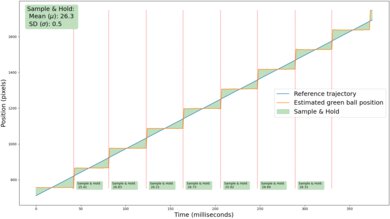
Thanks to the TV's relatively slow response time, there's just a bit of stutter in cinematic content. It's still noticeable in very slow or wide-panning shots, but it's not too bad.
for videos & test results
for pictures & test results

for pictures & test results
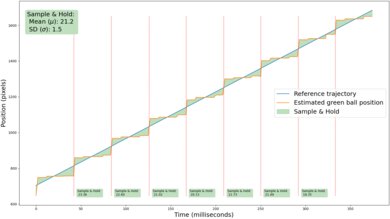
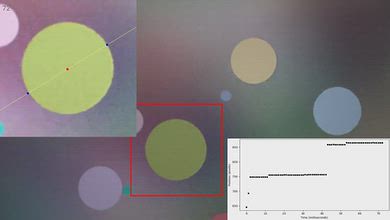
The TV's motion interpolation feature does a great job of reducing stutter in slow-panning shots. It's extremely consistent as well, maintaining smooth frame pacing in complicated shots.
for pictures & test results
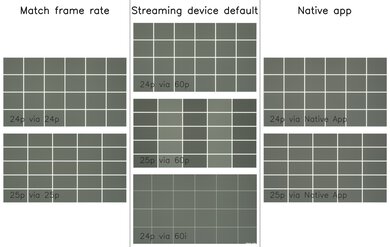
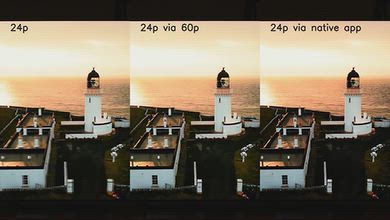
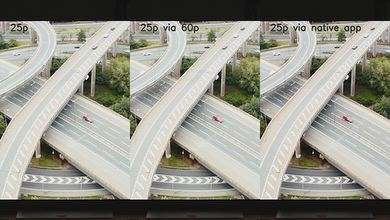
This TV removes judder from most content. The frame timing is slightly off with some European 25p content, but it's a very minor issue that most people won't even notice.
for pictures & test results

for pictures & test results

Unfortunately, the TV has a sub-par response time when watching content. It struggles more in dark scenes, and there's a lengthy blur trail behind fast-moving objects. Bright shades transition a lot quicker, so content that's mostly bright, like sports, looks a lot better.
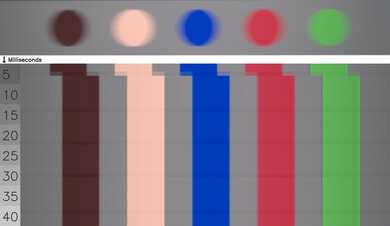
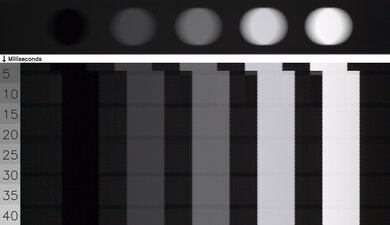
for pictures & test results

The Hisense U6SF uses a combination of pulse width modulation (PWM) and direct DC dimming to control its backlight, which introduces flicker that can bother people who are sensitive to it. Fortunately, it flickers at an extremely high frequency in every picture mode, so it's not noticeable.
for pictures & test results
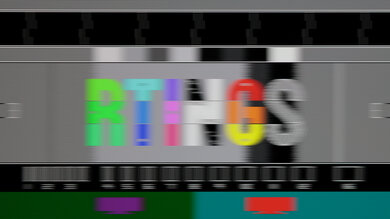
for pictures & test results
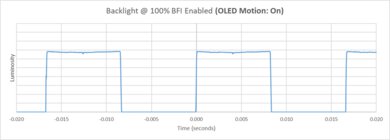
This TV has an optional backlight strobing feature, commonly known as black frame insertion (BFI). It can only flicker at 120Hz in Filmmaker Mode, which causes a distracting double image when watching 60Hz content. In Game mode, however, it flickers at either 60 or 120Hz, depending on the content, and there's no double image.
for pictures & test results

for pictures & test results

The Hisense U6SF has a matte anti-reflective coating that does a fantastic job of reducing the intensity of bright, mirror-like reflections. This significantly improves dark scene visibility during the day, making it a much better choice for a bright room than the lower-end Hisense M7QG.


for pictures & test results

for pictures & test results

The total amount of reflected light is good. There are no distracting diffraction artifacts like rainbow smearing. Bright lights are still clearly visible, but they're not too distracting.
for pictures & test results

Ambient light has no noticeable impact on the perceived color volume of this TV.
for videos & test results
for pictures & test results

for pictures & test results

for pictures & test results

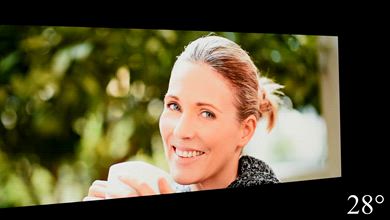
Unfortunately, the Hisense U6SF has a sub-par viewing angle. The image degrades rapidly as you move to the sides of the screen, with a very noticeable red shift, so it's not well-suited for a wide seating arrangement.
for pictures & test results
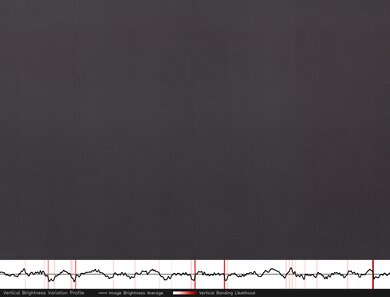
The TV has no noticeable vertical bands. The screen is a bit uneven, but there are no distinct lines in near-black scenes.
for pictures & test results

for pictures & test results

Unfortunately, the screen has sub-par uniformity. There are very noticeable patches throughout the screen that are noticeable in most content, but especially when watching sports. The top and bottom of the screen are also darker than the center, and there's significant vignetting in the corners. These issues aren't nearly as noticeable in dark scenes, though.
for pictures & test results

for pictures & test results

This TV uses a VA panel with a BGR (Blue-Green-Red) subpixel layout. This doesn't cause any issues for video or gaming content, but for PC monitor use, it can be a problem as it impacts the text clarity, although not everyone will notice this. It uses a KSF phosphor coating to produce reds, and has a good overall separation of colors.
This TV has a very low risk of experiencing most common panel issues. As an LCD TV, it's completely immune to permanent burn-in. There's also a low risk of optical layer degradation, as the full-array backlight spreads the heat-generating components, like LEDs, around the panel rather than concentrating them along a single edge. There's a low risk of panel delamination, but there's still a low risk of individual pixels failing or getting stuck over time. Finally, while there's very little chance the LEDs will decrease in brightness over time, they can still fail. Unlike direct-lit LCD models, though, when an LED fails, it should only affect that dimming zone instead of the entire backlight.
for pictures & test results

for pictures & test results

This TV uses an older HDMI chipset, so it only supports HDMI 2.1 bandwidth on two of its four inputs. This means that you can only take full advantage of recent gaming consoles or PCs on two of the inputs. The eARC port is on one of the low-bandwidth ports, so you don't lose one of them if you connect a soundbar or home theater receiver.
The TV supports eARC, which lets you pass high-quality, uncompressed audio to a compatible receiver or soundbar through an HDMI cable. It supports all major audio formats, so you don't have to worry about compatibility with external sources.
for pictures & test results

The TV has a fairly nice design for a budget TV. The bezels are thin on three sides, and even the thicker bottom bezel isn't too bad.
for pictures & test results

The pedestal feet support the TV well. They can be placed in either the narrow position shown here, or in a wider position for better stability. The feet only lift the TV about 2.4" above the table, though, so most soundbars block part of the screen if they're placed right in front.
Footprint of the 65-inch screen in the narrow position: 15.2" x 11.8"
Footprint of the 65-inch screen in the wide position: 49" x 11.8"
for pictures & test results

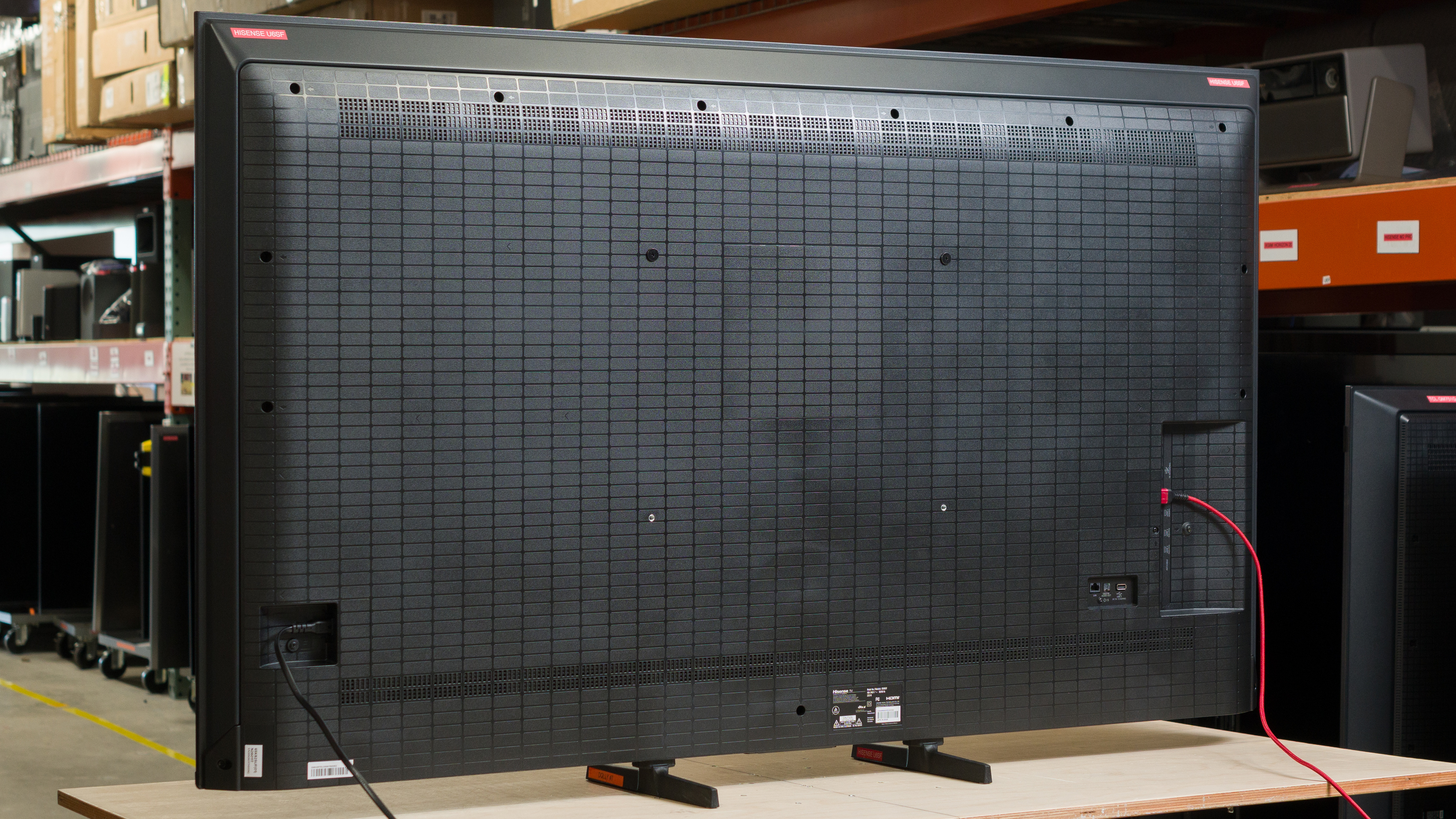
The back of the TV has a grid pattern that gives the TV a slightly more premium look. The inputs face towards the left side when viewed from the front, and they're easy to access when the TV is wall-mounted. Unfortunately, there's absolutely nothing to help with cable management.


for pictures & test results

The TV has decent build quality. It's mostly made of cheap plastic, but there are no obvious flaws or construction defects.
You can skip the network setup part during the initial setup and use the TV entirely offline, but most of the smart features won't work.

for pictures & test results

This TV ships with the Fire TV smart interface. It has a modern interface that's easy to use and has a good selection of streaming apps.
for pictures & test results

Unfortunately, like most TVs, the interface contains ads. You can opt out of personalized ads, but this doesn't change the number of ads you'll see; they just won't be personalized to match your search and viewing history.

for pictures & test results

- Quick setup guide
- Remote
- 2x AAA batteries
- Power cable
This TV was originally tested with FIRE OS 8.1.8.0.
for pictures & test results

Unfortunately, the TV's built-in speakers are sub-par, and unlike the Hisense U6SF Pro, it lacks a built-in subwoofer. It doesn't get very loud, and its sound profile isn't well-balanced so dialogue is uneven. It also lacks a room correction feature, so it can't correct for the room's mode.