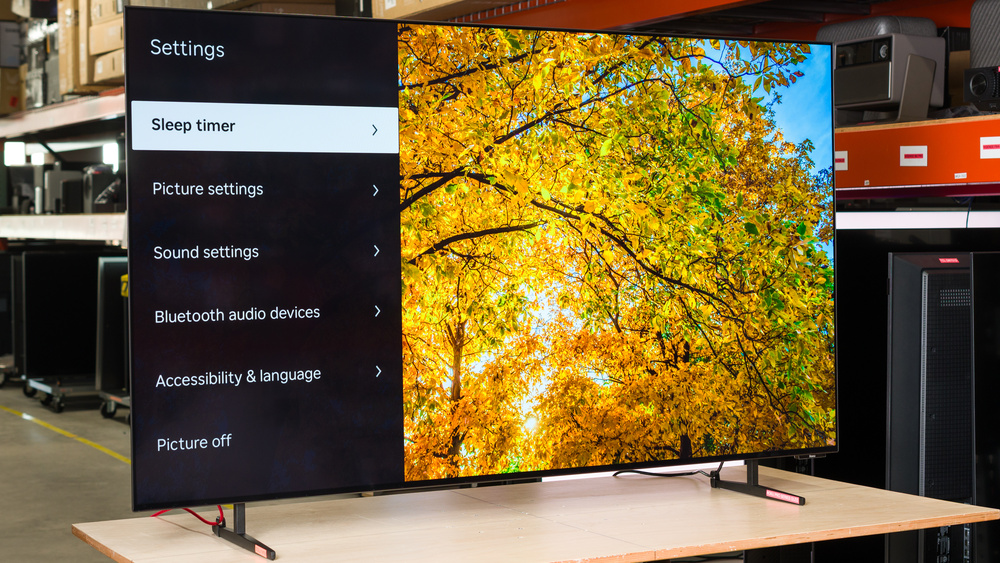
The Roku Pro Series OLED is a mid-range TV released in 2026 alongside the Roku Pro Series LX OLED TV, which features a brighter, more colorful panel. It has the features you'd expect from a mid-range model, including HDMI 2.1 bandwidth on two of its four HDMI inputs, eARC support, and a 120Hz refresh rate. It also supports VRR to reduce screen tearing. It's powered by the Roku TV smart interface, which has a decent selection of apps but a fairly simplistic user interface. We bought and tested the 65-inch version, but it's also available in a 55-inch size for smaller spaces.
Our Verdict
The Roku Pro Series TV is a good TV overall. It's best suited for a home theater room, as its deep, inky blacks deliver a fantastic dark room experience, with no haloing around bright details or subtitles. It's also great for gaming thanks to its low input lag, crystal-clear motion, and good selection of gaming features. Unfortunately, it's not as well-suited for watching shows or sports during the day in a bright room, as it can't overcome glare in a well-lit space. It also has limited processing capabilities, so low-quality and low-resolution content isn't as crisp and clean as it should be.
Perfect blacks with no haloing around bright details or subtitles.
Image remains consistent when viewed from the sides.
Good color accuracy out of the box.
Only available in a 55-inch and 65-inch size.
Very noticeable stutter in slow-panning shots.
Not bright enough to overcome glare.
The Roku Pro Series TV is a great choice for a home theater. Its nearly infinite contrast ratio results in stunning picture quality in a dark room, with deep, inky blacks and no trace of haloing around bright details. Colors are bright and vibrant in most scenes, but they can be a bit washed out in very light content. It also has very good motion handling when watching content, but it can't remove judder from European shows shot at 25p, so the frame pacing can feel slightly off. It has good format support, including HDR10+ and Dolby Vision support, but it doesn't support DTS:X or DTS-HD audio formats, which may be an issue for physical media collectors. Unfortunately, it's not very bright, so small details in movies don't stand out very well, and bright scenes are dull and dim overall.
Perfect blacks with no haloing around bright details or subtitles.
Removes judder from 24p sources like Blu-ray players.
Good color accuracy out of the box.
Only available in a 55-inch and 65-inch size.
Very noticeable stutter in slow-panning shots.
Small highlight details are too dim.
Can't entirely remove judder from 25p sources.
The Roku Pro Series TV is a mediocre choice for a bright room. It's not bright enough to overcome glare during the day, so bright lights and windows facing the TV are clearly visible and distracting. Ambient light has no impact on contrast, but colors aren't quite as vibrant during the day, especially in lighter scenes.
Ambient light has no impact on contrast.
Slight loss of color saturation in a bright room.
Not bright enough to overcome glare.
Direct, mirror-like reflections are distracting.
The Roku Pro Series OLED is alright for watching sports. It has a wide viewing angle, so it's a great choice for watching the big game with a large group of friends, as the image doesn't degrade from the sides. It also has a quick response time, so fast action is clean and smooth. Unfortunately, it's not bright enough to overcome glare in a bright room, so you should leave the blinds closed during the day. It does a decent job cleaning up low-quality streams, but it can't upscale low-resolution channels very well, and the image looks a bit soft.
Image remains consistent when viewed from the sides.
No intermediate color or edge artifacts.
Good color accuracy out of the box.
Only available in a 55-inch and 65-inch size.
Not bright enough to overcome glare.
Direct, mirror-like reflections are distracting.
The Roku Pro Series TV is a great TV for gaming. It has a good selection of gaming features, including VRR support and HDMI 2.1 bandwidth on two inputs. It also has low input lag for a responsive feel and a nearly instantaneous response time that delivers incredibly clear motion.
Perfect blacks with no haloing around bright details or subtitles.
Low input lag.
No ghosting behind fast-moving objects.
Good selection of gaming features like VRR and HDMI 2.1 bandwidth.
Good color accuracy out of the box.
Only available in a 55-inch and 65-inch size.
Small highlight details are too dim.
This TV has good expected reliability. As there's no backlight, there are no LEDs that could fail due to heat, so the panel itself is expected to last for a very long time. On the other hand, there's a risk of permanent burn-in with cumulative exposure to static elements, like the UI from your favorite game or the news ticker on a cable news channel. We don't expect this to be an issue with varied usage, though.
Panel itself is unlikely to fail over time.
Possibility of permanent burn-in over time.
The Roku Pro Series TV has sub-par peak brightness. It's not bright enough to bring out small details in movies or games very well, and very bright scenes are dim and dull overall. It's also not bright enough to overcome glare during the day, so it's best suited for a light-controlled or moderately lit room.
Not bright enough to overcome glare.
Small highlight details are too dim.
Like all OLEDs, the Roku Pro Series TV displays perfect blacks, with no haloing at all around bright highlights or subtitles on a dark background.
Perfect blacks with no haloing around bright details or subtitles.
The Roku Pro Series TV has good colors. It has good color accuracy out of the box, with very few noticeable issues. It also has decent color volume in most scenes, but very light content is washed out.
Good color accuracy out of the box.
Bright colors are washed out in HDR.
The Roku Pro Series OLED has very good motion handling when watching content. It removes judder from all 24p content, and there's no micro-judder, but it can't remove it from European content at 25p. There are no intermediate transition artifacts, and it has an extremely quick response time, so motion is crisp. Unfortunately, there's noticeable stutter in wide and slow-panning shots, and its motion interpolation feature can't reduce stutter without adding a noticeable soap opera effect.
No ghosting behind fast-moving objects.
No intermediate color or edge artifacts.
Removes judder from 24p sources like Blu-ray players.
Very noticeable stutter in slow-panning shots.
Can't entirely remove judder from 25p sources.
Aggressive motion interpolation feature always adds soap opera effect.
The Roku Pro Series TV has fantastic responsiveness when gaming. Like all OLED TVs, it has a nearly instantaneous response time, resulting in crystal-clear motion and a responsive feel. It also has low input lag in all supported display modes, so there's very little added delay between your actions on your controller and what you see on the screen. It supports most formats and can take full advantage of the latest consoles, but PC gamers will be disappointed by its maximum 120Hz refresh rate.
Low input lag.
No ghosting behind fast-moving objects.
Note: We're in the process of improving our tests related to image processing, but this score should give you a general idea of how a TV performs overall with its image processing capabilities.
The Roku Pro Series OLED has just okay image processing. It does a good job cleaning up compression artifacts from low-quality streaming sources, but there's some slight loss of fine details. Its upscaling is a bit weak, though, and low-resolution content is a bit soft overall. Most HDR content isn't displayed at the correct brightness level, and there's noticeable banding in dark shades.
Some loss of fine details when cleaning up low-quality sources.
Performance Usages
Check Price
Differences Between Sizes And Variants
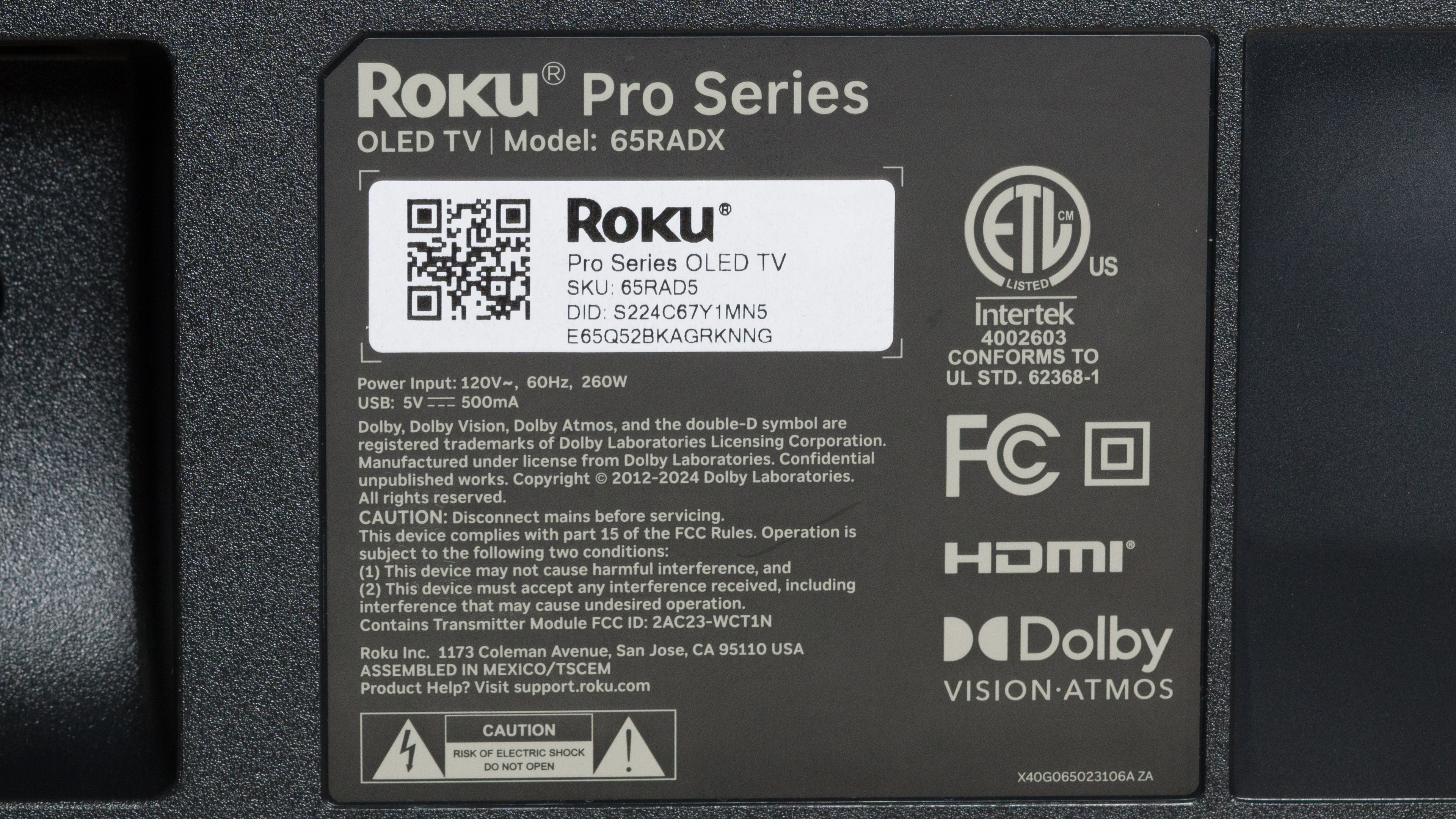
We bought and tested the 65-inch Roku Pro Series OLED, and these results also apply to the 55-inch models. The Roku Pro Series LX OLED TV is a different model, and this review isn't valid for that version.
| Size | Model |
|---|---|
| 55" | 55RAD5 |
| 65" | 65RAD5 |
The label on our unit indicates that it was assembled in Mexico, but no manufacturing date is listed.
Popular TV Comparisons
The Roku Pro Series OLED is a surprisingly good TV, with a few limitations. It's one of the cheapest OLEDs on the market, competing against models like the Sony BRAVIA 6, LG B6 OLED 2026, and Samsung S85H OLED. While it delivers the same fantastic blacks and perfect motion handling you'd expect from an OLED, it's not as bright or as colorful as most of the competition. Some people might also find its smart features to be a bit limiting, as the OS has a limited selection of streaming apps and a much less polished interface than the competition.
For similar options, check out our picks for the best OLED TVs, the best TVs under $1,000, and the best budget TVs.
The LG C6 OLED 2026 is significantly better than the Roku Pro Series OLED. The LG gets drastically brighter, which helps it in many different ways. The LG is easier to see during the day, making it a better choice for a bright room. The LG also delivers a more impactful viewing experience, as small details stand out better in movies, and very bright content is more vivid and lifelike. Finally, the LG has better smart features, with a more polished smart interface that has better app selection and four full-bandwidth HDMI 2.1 ports instead of just two.
The Sony BRAVIA 6 OLED and the Roku Pro Series OLED offer nearly identical picture quality, but the Sony is slightly better overall, mainly for its smart features and connectivity. The Sony offers four HDMI 2.1 bandwidth ports instead of just two, so you can take full advantage of more devices. The Sony also offers a more polished smart interface with a much wider selection of apps.
The LG B6 OLED 2026 delivers a better overall viewing experience than the Roku Pro Series OLED. The LG is a bit brighter in both SDR and HDR. This allows it to handle more glare during the day, as the screen is much easier to see. This also results in a more vivid movie-watching experience, as small details stand out better and bright scenes are more vibrant. Finally, the LG has better smart features and better connectivity, with four full-bandwidth HDMI 2.1 ports instead of just 2, and a cleaner smart interface with better app support.
The LG B6E OLED is better than the Roku Pro Series OLED. The LG gets a bit brighter, so it's easier to see during the day if you're in a moderately lit room. Small details in movies also stand out better on the LG, and very bright content is slightly more vivid. Finally, the LG has better smart features, with a more robust smart interface and four HDMI 2.1 bandwidth ports instead of just two on the Roku, so you can take full advantage of more devices.

We buy and test dozens of TVs yearly, taking an objective, data-driven approach to deliver results you can trust. Our testing process is complex, with hundreds of individual tests that take over a week to complete. Most of our tests use specially designed test patterns that mimic real content, but we also use the same sources you have at home to ensure our results match the real-world experience. We use two main tools for our testing: a Colorimetry Research CR-100 colorimeter and a CR-250 spectroradiometer.
Test Results
for pictures & test results

for pictures & test results

for pictures & test results

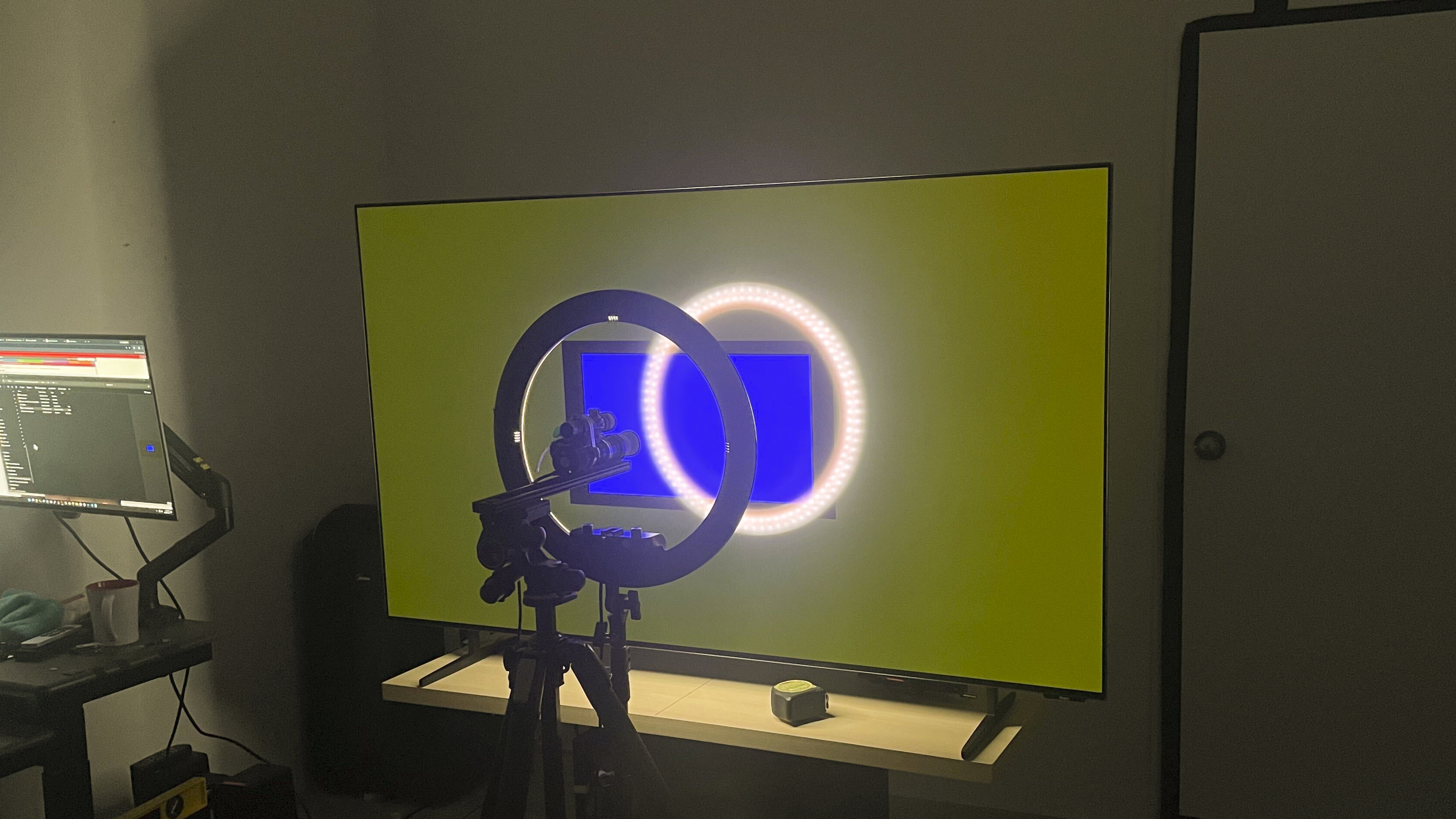
The Roku Pro Series TV has mediocre peak brightness in HDR. It's not bright enough to bring out small details very well, so HDR content looks a bit dull and muted. Very bright scenes are far dimmer than they should be, as the TV can't maintain its limited peak brightness when more of the screen is bright at once.
The posted results are in the 'Dark HDR' picture mode, as it's the most accurate. Switching to the 'HDR Bright' picture mode allows it to deliver slightly higher peaks over short periods of time, but it can't maintain those brightness levels, and it's also significantly less accurate.
| Window Size | Peak Brightness | Sustained Brightness |
|---|---|---|
| 2% | 901 cd/m² | 731 cd/m² |
| 10% | 726 cd/m² | 659 cd/m² |
| 25% | 472 cd/m² | 434 cd/m² |
| 50% | 258 cd/m² | 254 cd/m² |
| 100% | 147 cd/m² | 145 cd/m² |
for pictures & test results

for pictures & test results

for pictures & test results

Switching to Game mode has no noticeable impact on peak brightness in HDR.
Unfortunately, the TV has poor peak brightness in SDR. It can handle only moderate amounts of glare during the day, so it's best suited for a dark or light-controlled room. Bright content like sports is considerably dimmer and hard to see clearly during the day.
The posted results are in the most accurate 'Movie' picture mode. It's a bit brighter in the 'Vivid' mode, but it still can't handle daytime glare and it's less accurate.
| Window Size | Peak Brightness | Sustained Brightness |
|---|---|---|
| 2% | 468 cd/m² | 431 cd/m² |
| 10% | 467 cd/m² | 430 cd/m² |
| 25% | 466 cd/m² | 430 cd/m² |
| 50% | 254 cd/m² | 237 cd/m² |
| 100% | 146 cd/m² | 139 cd/m² |
for pictures & test results

Like all OLEDs, the Roku Pro Series TV has a nearly infinite contrast ratio, giving it perfect contrast. Due to OLED's self-lit pixels, it displays bright highlights next to perfect inky blacks, making it very impressive in a dark room.
for pictures & test results

Since OLEDs don't use lighting zones and instead have individual pixels that can be lit up to their maximum brightness next to pixels that are turned off, there's no haloing when bright elements are surrounded by deep blacks.
for videos & test results

Since OLEDs don't use lighting zones and instead have individual pixels that can be lit up to their maximum brightness next to pixels that are turned off, there's no haloing when bright elements are surrounded by deep blacks.


for pictures & test results

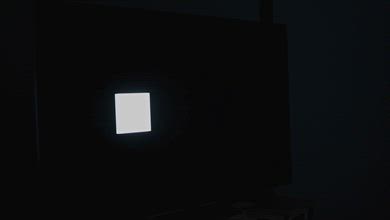
Because OLEDs can turn off individual pixels, the TV has perfect black uniformity with no haloing around bright objects.
for pictures & test results

for pictures & test results

The Roku Pro Series TV has very good color volume. It displays most of the DCI-P3 color space, but struggles slightly with very dark and very light colors. It can't display much beyond DCI-P3, though, so its BT.2020 coverage is very limited.
| Volume ΔE³ | DCI-P3 Coverage |
BT.2020 Coverage |
|---|---|---|
| L10 | 87.90% | 58.40% |
| L20 | 92.41% | 61.71% |
| L30 | 94.86% | 64.28% |
| L40 | 94.45% | 66.31% |
| L50 | 93.95% | 67.23% |
| L60 | 93.81% | 67.30% |
| L70 | 93.74% | 68.94% |
| L80 | 91.43% | 60.46% |
| L90 | 90.84% | 58.19% |
| L100 | 91.24% | 70.62% |
| Total | 93.09% | 64.93% |
for pictures & test results

for pictures & test results

The TV has decent color volume in HDR. Saturated colors in dark scenes are displayed well thanks to the TV's nearly infinite contrast ratio. Bright colors are displayed well for the most part, but like all TVs with WOLED panels, very saturated colors are washed out and appear whiter than they should.
for pictures & test results

for pictures & test results

for pictures & test results

The TV has very good accuracy before calibration. The average color temperature is close to neutral, but blues vary quite a bit and they're underrepresented in brighter shades. Gamma is also slightly too high, so most scenes are darker than they should be. It has great color mapping, with just a few minor issues.
for pictures & test results

for pictures & test results

for pictures & test results

The TV is easy to calibrate and looks fantastic after calibration. The color temperature is basically perfect across the board after calibration, and there are no noticeable white balance issues. Color mapping actually got a bit worse after calibration, though.
See our full calibration settings.
for pictures & test results

for pictures & test results

The TV has decent accuracy in HDR before calibration. It has a slightly warm color temperature out of the box, with too much red in brighter shades. Its white balance is fantastic, with just a few minor errors in midtones and darker shades of gray. Unfortunately, while it has fairly good color mapping for the most part, there are significant luminance errors.


for pictures & test results

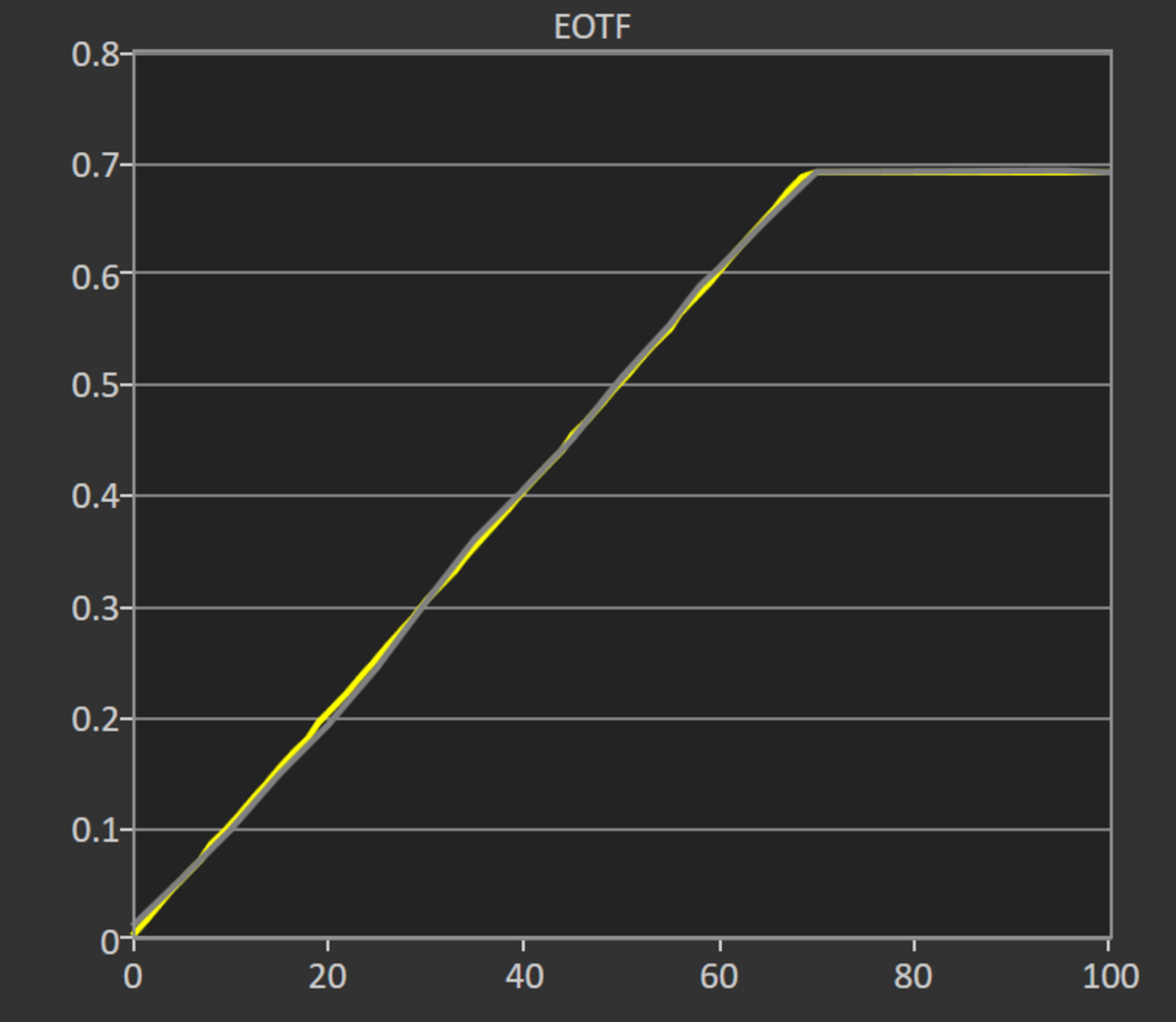
Unfortunately, the Roku Pro Series OLED has sub-par PQ EOTF tracking. Most midtones and bright details are brighter than they should be. There's also a very sharp cutoff at the TV's peak brightness, which helps bright details get as bright as they can, but this causes a loss of fine gradation in bright scenes.
It tracks the PQ EOTF curve nearly perfectly when displaying a 10% window, which is commonly used by TV reviewers but doesn't necessarily match a majority of real content.
for pictures & test results

The TV has decent low-quality content smoothing. It does a good job removing macro blocking and reducing compression artifacts from streaming services. There's some minor loss of fine details, though.
for pictures & test results

The TV's upscaling is just okay. The image is a bit soft overall, which makes it hard to make out fine details, but there are no obvious upscaling artifacts.
for pictures & test results
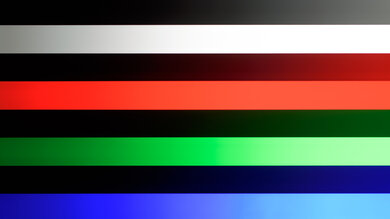
The TV has decent gradient handling. There's noticeable banding in many shades, and it's especially noticeable in dark shadow details.
The Roku Pro Series TV has fantastic low input lag. There's very little added delay when gaming, even at a low refresh rate.
The TV supports most common resolutions, up to a maximum of 4k @ 120Hz. It also supports chroma 4:4:4, which is important for clear text from a PC.
The TV supports HDMI Forum VRR and G-SYNC, ensuring a nearly tear-free gaming experience from any VRR-enabled source. It works well across the TV's entire refresh rate range and supports sources with Low Framerate Compensation (LFC), which ensures your games remain nearly tear-free even when your frame rate drops very low.
for pictures & test results
for pictures & test results

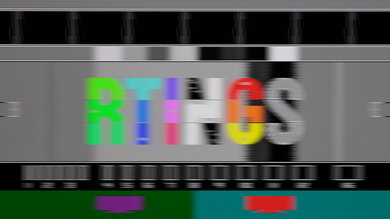
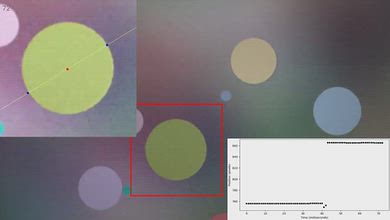
Like all OLEDs, the TV's CAD at its maximum 4k refresh rate of 120Hz is fantastic. Pixels transition almost instantly, so fast motion is very sharp. There's some very minor overshoot in shadow details that causes fast-moving shadow details to appear slightly lighter than they should be, but it's extremely minor and hard to notice.
for pictures & test results

for pictures & test results

The TV's maximum refresh rate is 120Hz, so these results are the same as the Max Refresh Rate test.
for pictures & test results

for pictures & test results

The TV has a fantastic CAD at 60Hz. Motion is crisp and clear, with no blur behind fast-moving objects. There's no noticeable overshoot at 60Hz, but there's some noticeable persistence blur.
for pictures & test results

The TV is fully compatible with everything the PS5 and PS5 Pro have to offer, including 1440p @ 120Hz and 4k @ 120Hz, as well as HDMI Forum VRR. It also supports Auto Low Latency Mode, so it automatically switches to Game mode to get the lowest input lag.
for pictures & test results

The TV is fully compatible with everything the Xbox Series X|S offers, including 1440p @ 120Hz, 4k @ 120Hz, HDMI Forum VRR, FreeSync Premium Pro, and Dolby Vision gaming. It also supports Auto Low Latency Mode, so it automatically switches to Game mode to get the lowest input lag.
for videos & test results
for pictures & test results

for pictures & test results
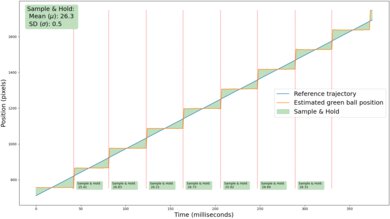
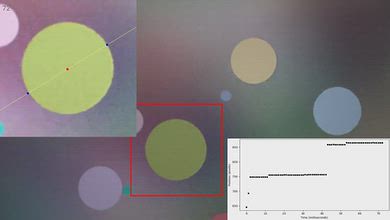
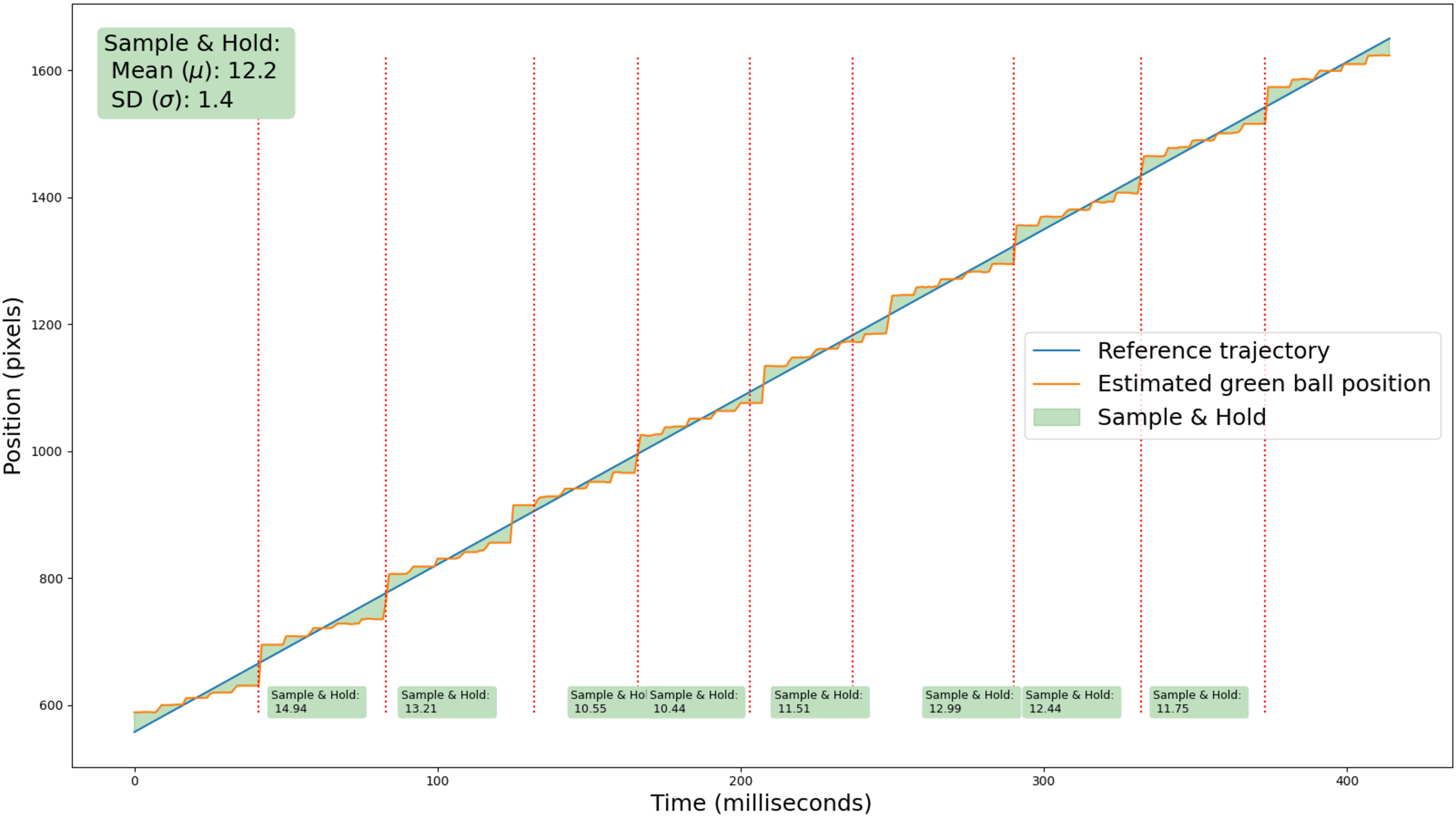
Unfortunately, like all OLED TVs, there's noticeable stutter when watching content. It's especially noticeable in slow and wide-panning shots.
for videos & test results
for pictures & test results

for pictures & test results
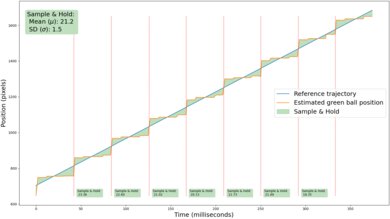
Unfortunately, the TV's motion interpolation feature is too aggressive, and it's impossible to only add low levels without adding any soap opera effect (SOE). Even with 'Action Smoothing' set to 'Low' the TV increases the frame rate of 24p content well above 30fps. This setting reduces the frame hold time significantly, but also adds significant SOE.
for pictures & test results
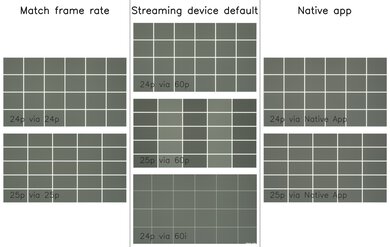
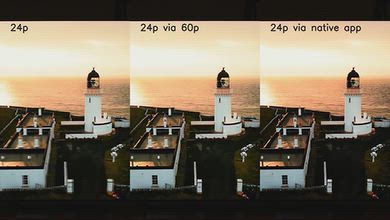
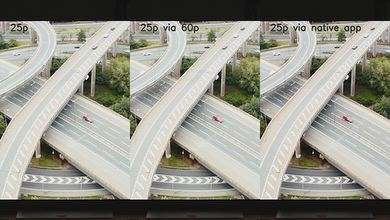
The TV removes judder from any 24p content with no issues, but it can't remove it entirely from any European content at 25p.
for pictures & test results

for pictures & test results

Like all OLEDs, the TV has an incredibly quick response time. It's not perfect, though, and there's some minor overshoot in most transitions. This causes some shades to appear slightly lighter or darker than they should be for a brief moment, but it's not noticeable in most real content.
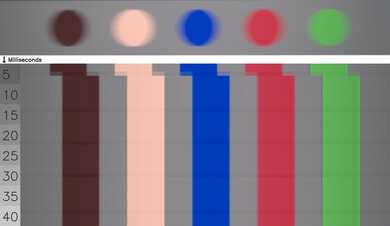
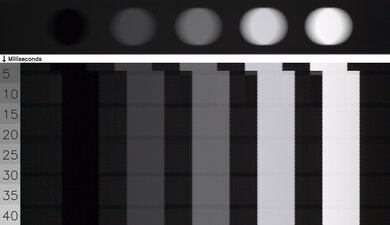
for pictures & test results

This TV doesn't have a traditional backlight and doesn't use pulse-width modulation (PWM) to dim each pixel, but it's not completely flicker-free. There's a slight dip in brightness that corresponds to the TV's refresh rate. This differs from the PWM flicker on TVs with LED backlights and occurs on every OLED display on the market. It's not noticeable, and most people won't be bothered by this, but it can still bother people who are extra sensitive to flicker.
This TV doesn't have an optional black frame insertion feature.


for pictures & test results

for pictures & test results

The total amount of reflected light is good. There are only minor diffraction artifacts around bright lights, but bright lights and windows facing the TV are clearly visible.
for pictures & test results

Ambient light slightly decreases the TV's perceived color volume, especially in lighter scenes.
for videos & test results
for pictures & test results

for pictures & test results

for pictures & test results

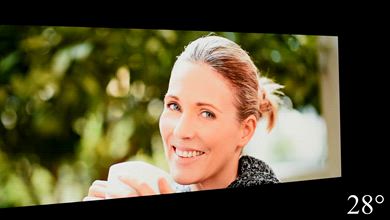
The Roku Pro Series TV has an excellent viewing angle. While the image slightly degrades at a wide angle, it's not noticeable. It's an excellent choice for a wide seating arrangement.
for pictures & test results

for pictures & test results

The TV has good uniformity. There's very little dirty screen effect in the center of the screen, which is great for watching sports. The sides of the screen are very slightly darker than the center, but it's extremely minor. Like most OLED TVs, there are some faint vertical lines in dark scenes, but they're hard to notice.
for pictures & test results

for pictures & test results

The TV uses a newer WOLED panel made by LG Display called "OLED SE". It's not as bright or as colorful as the tandem panel found on the LG C6H OLED and the LG G6 OLED, with a weaker separation of colors. The higher-end Roku Pro Series LX OLED uses a different panel.
It features a redesigned subpixel structure with an RGWB subpixel order. This subpixel structure helps improve text clarity from a PC, since the red, green, and blue subpixels are in the correct order that a PC expects.
for pictures & test results

for pictures & test results

The TV uses an older chipset, so unlike the LG B6E OLED, it only supports HDMI 2.1 bandwidth on two inputs. The input labeled in purple is the eARC port, and it's one of the low-bandwidth ones, so you don't lose a high-bandwidth port by connecting a soundbar to the TV.
The TV supports eARC audio passthrough, and it works with most common audio formats. It doesn't support DTS:X or DTS-HD audio formats, which are often used as the main audio channel on physical media. You can get around this by connecting your player directly to your sound system instead of using eARC.
for pictures & test results

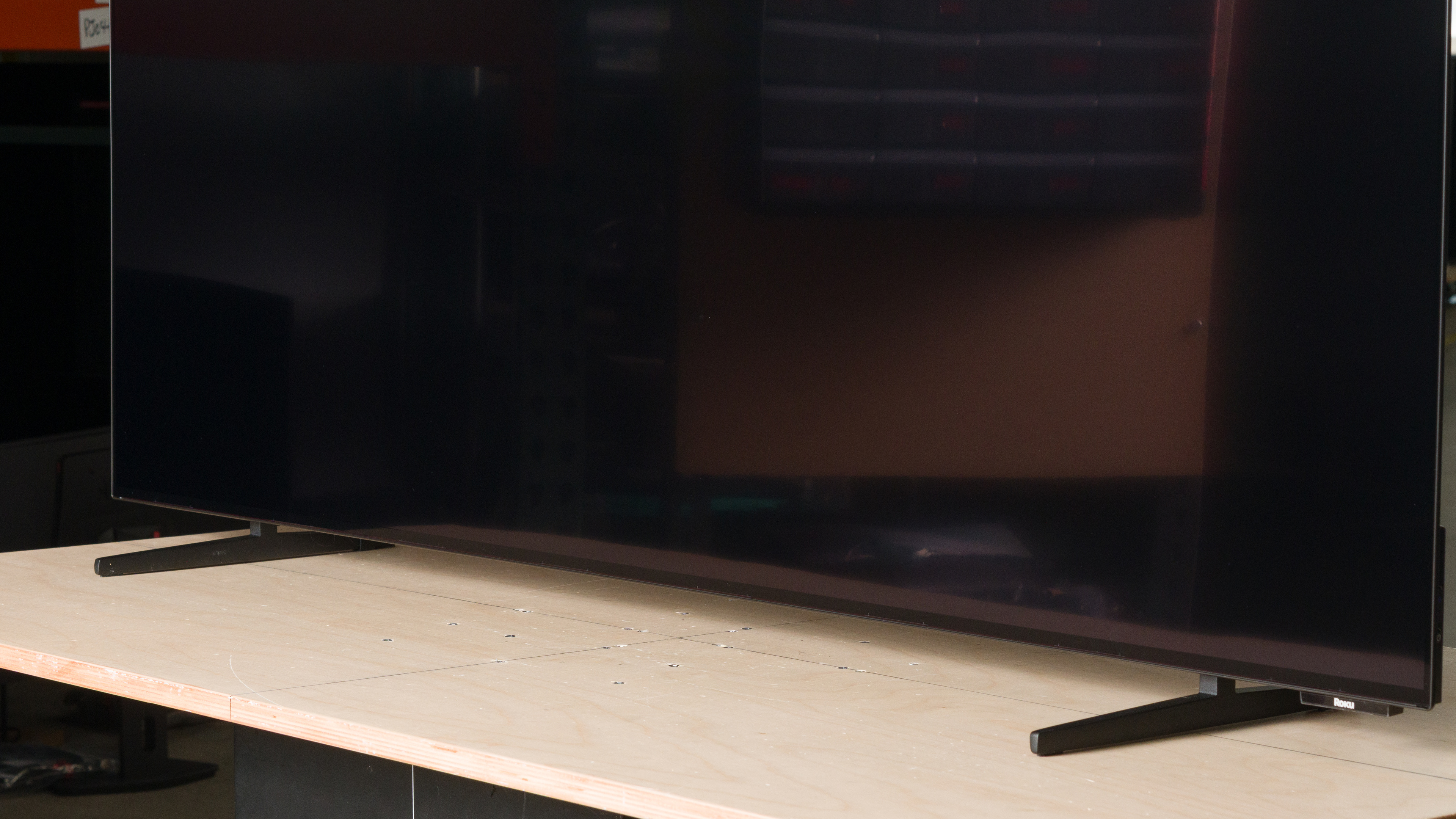
The Roku Pro Series OLED has a fairly simple design, but it looks nice, with thin bezels on all four sides. It looks incredibly similar to the Sony BRAVIA 6 OLED.
for pictures & test results

The blade-style feet support the TV well, but they take up a lot of space. The high position shown here lifts the TV about 3.4 inches above the table, so the vast majority of soundbars won't block the screen. There's also a low position that lowers the screen to about 1.9 inches above the table.
Footprint of the 65-inch stand: 42.3" x 11.8"
for pictures & test results

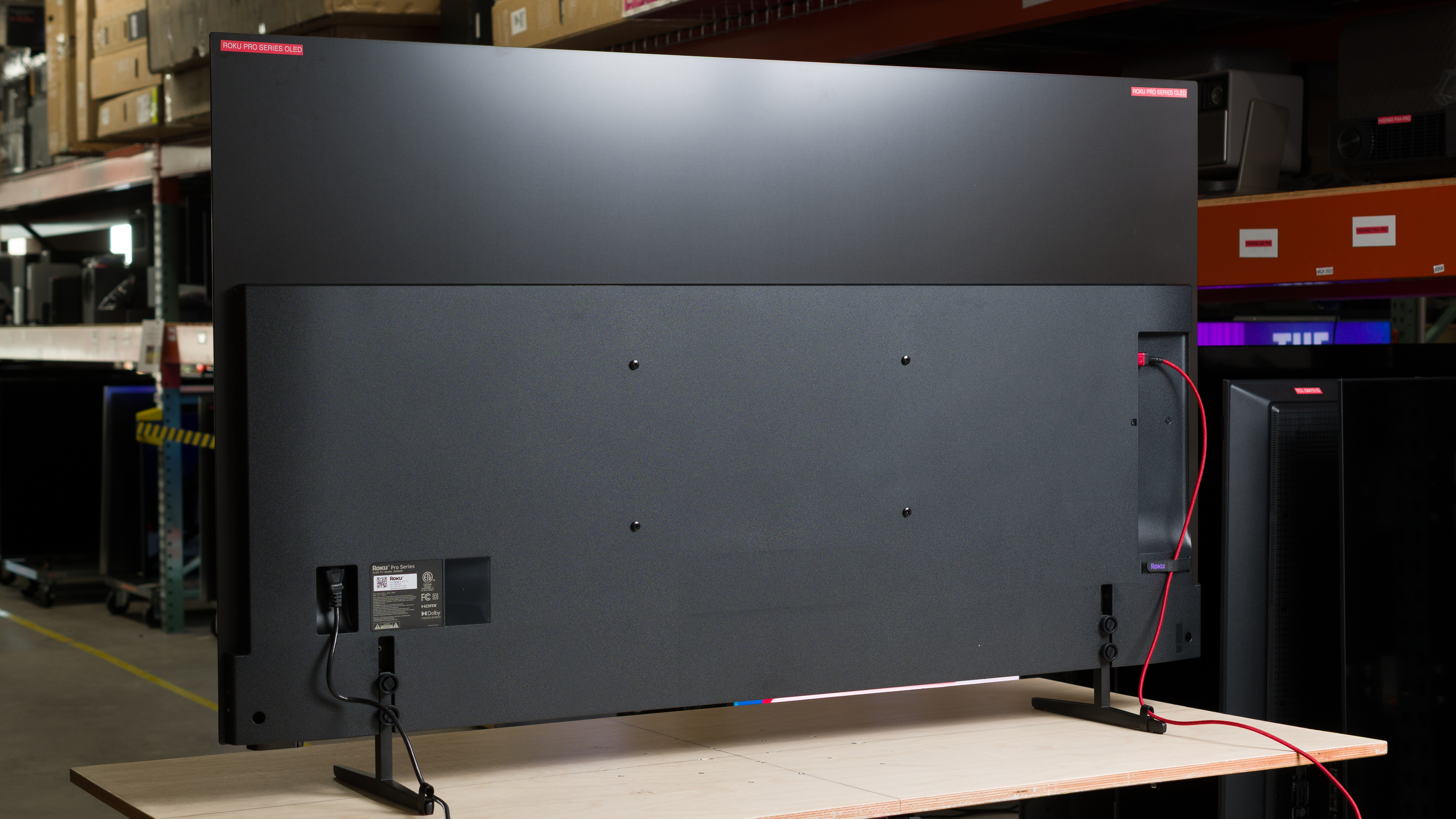
The back of the TV has a simple design, with a thin panel at the top of the screen and a thicker bottom portion that houses the electronics. The inputs face out the side and are easy to access. There are clips on the back of the feet to help with cable management.


for pictures & test results

The TV has excellent build quality. The back of the panel is made of metal, and the rest of the frame is made of high-quality plastic. There are no obvious flaws or issues with its overall construction.

for pictures & test results

The Roku Pro Series OLED runs the Roku smart interface. It has a good selection of apps, including most of the common streaming services, but the interface is very basic.
for pictures & test results

Unfortunately, like all TVs there are ads throughout the interface and home screen.

for pictures & test results

- Remote (2x AA batteries)
- Power cable
- Stickers
- Documentation
This TV was originally tested on firmware 15.3.
for pictures & test results

The TV's built-in speakers are mediocre. It has a well-balanced sound profile at low and moderate listening levels, and dialogue is clear and easy to understand. It lacks a room correction feature, though, so it can't remove the room's mode, and like most TVs, it lacks any deep bass. It gets extremely loud, but there's significant compression, and dialogue is very muted.