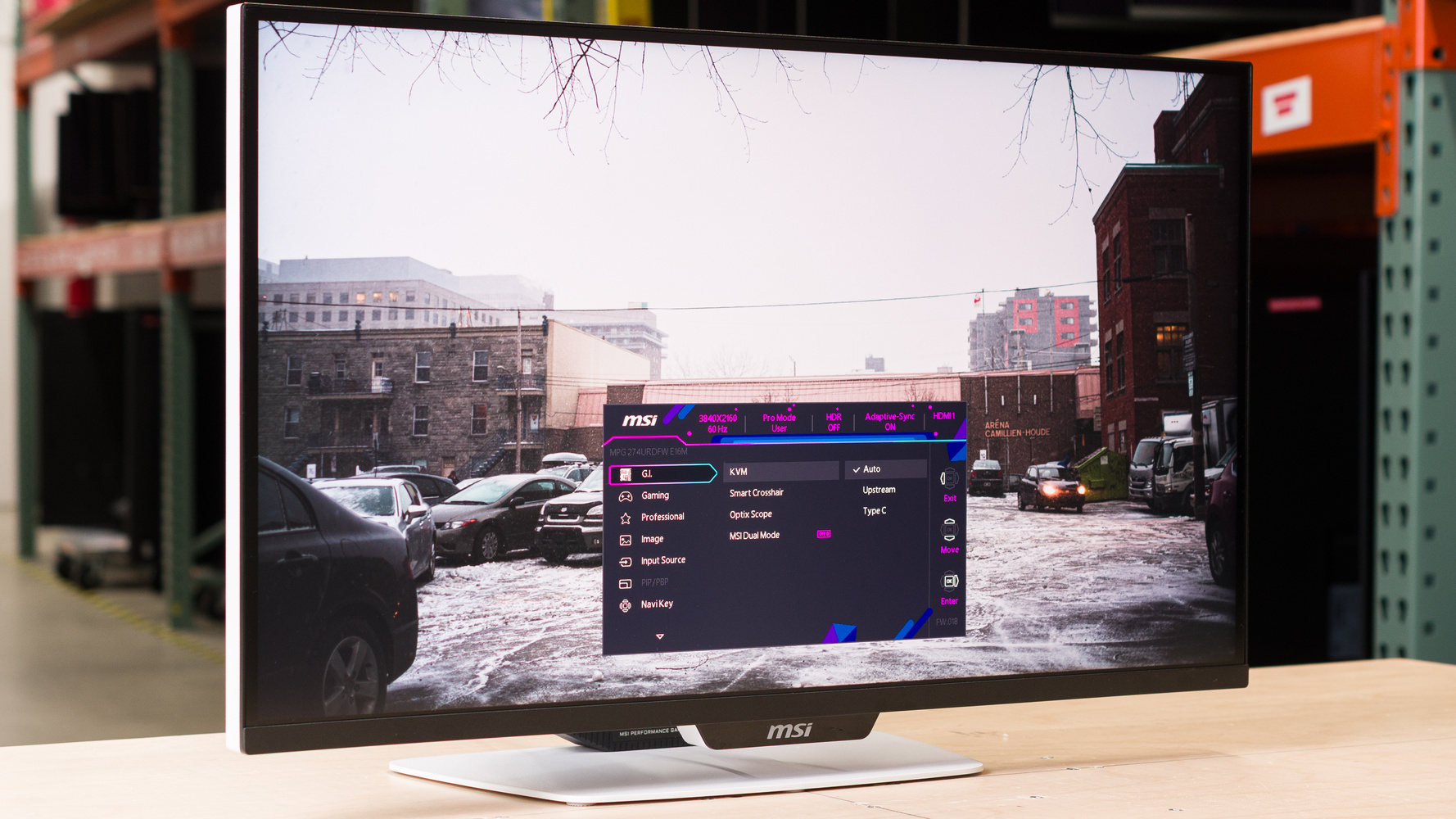
MSI MPG 274URDFW E16M  Monitor Review

Reviewed Dec 15, 2025 at 02:55pm
Tested using Methodology v2.1.1 
MSI MPG 274URDFW E16M
7.7
PC Gaming 
8.5
Console Gaming 
8.5
Office 
7.7
Editing 
8.8
Brightness 
7.8
Response Time 
6.6
HDR Picture 
6.8
SDR Picture 
 80

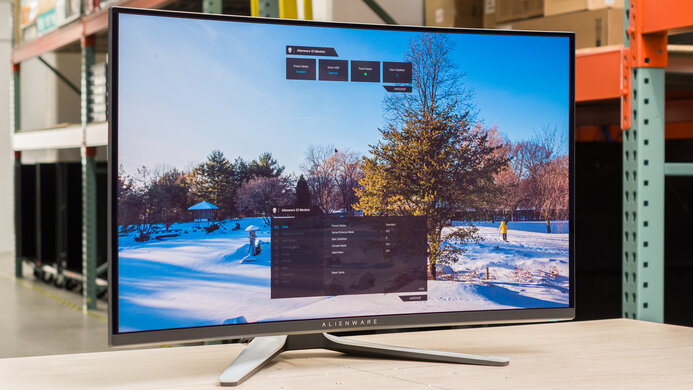
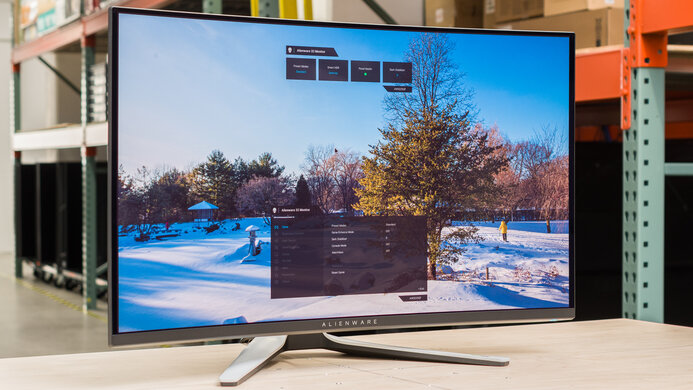
The MSI MPG 274URDFW E16M is a mid-range 27-inch gaming monitor. It uses Mini LED backlighting with 1,152 zones, and it has a native 4k resolution and 160Hz refresh rate. You can use its Dual Mode feature to boost the refresh rate to 320Hz with a lower 1080p resolution. It competes directly with other 4k, 160Hz Mini LED models that have a 1080p, 320Hz dual mode, like the Acer Nitro XV275K P5biipruzx, and the lower-end MSI MAG 274UPDF E16M. Besides its gaming perks that include HDMI 2.1 bandwidth, FreeSync Premium, and G-SYNC Compatibility, it has some productivity features, like a USB-C port with DisplayPort Alt Mode and up to 98W of power delivery.

Our Verdict

7.7
PC Gaming 

The MSI MPG 274URDFW E16M is good for PC gaming. You can use it at its native 4k resolution and 160Hz refresh rate or with its dual-mode 1080p resolution and 320Hz refresh rate, so it's versatile for playing different types of games. It has consistent motion handling across any refresh rate, and it has low input lag for a responsive feel. It also supports all common VRR formats to reduce screen tearing. The downside of getting this for gaming is that it doesn't have the best picture quality. Its local dimming feature overbrightens content in SDR, while crushing blacks and causing haloing in HDR. On the plus side, it makes highlights pop in HDR and gets bright enough to fight glare in well-lit rooms.

Pros
  • 4k, 160Hz and 1080p, 320Hz modes.

  • Supports all common VRR formats.

  • Consistent motion handling across VRR.

  • Low input lag at any refresh rate.

  • Bright enough to fight glare in most well-lit rooms.

Cons
  • Local dimming in SDR results in an overbrightened image.

  • Black crush and haloing with local dimming in HDR.

  • Low native contrast ratio.

  • Some blur behind fast-moving objects.

8.5
Console Gaming 

The MSI MPG 274URDFW E16M is excellent for console gaming. It supports almost any signal from a PS5, PS5 Pro, and Xbox Series X|S, but it doesn't support Dolby Vision with an Xbox. It has low input lag for a responsive feel, and motion looks good for the most part, but there's still some blur behind fast-moving objects. While it displays a wide range of colors and makes highlights pop, it fails to deliver an impactful HDR gaming experience. Its local dimming feature crushes blacks and has some haloing around bright objects, and blacks look gray if you don't use the local dimming feature.

Pros
  • Consistent motion handling across VRR.

  • Low input lag at any refresh rate.

  • Supports almost any signal from consoles.

  • Sharp text and image clarity in 4k mode.

  • Bright enough to fight glare in most well-lit rooms.

Cons
  • Local dimming in SDR results in an overbrightened image.

  • Black crush and haloing with local dimming in HDR.

  • Low native contrast ratio.

  • Some blur behind fast-moving objects.

8.5
Office 

The MSI MPG 274URDFW E16M is excellent for office use. It has sharp text clarity in its 4k mode, and its 27-inch screen is big enough to view two windows side by side. It also comes with some useful productivity features, like an ergonomic stand that makes it easy to adjust, a small USB hub, and a KVM switch that you can use to change sources and use the same devices on both. It also gets bright enough to fight glare in most well-lit rooms, but reflections are distracting if you have it in a sunny environment.

Pros
  • Sharp text and image clarity in 4k mode.

  • Has an ergonomic stand.

  • Includes a USB-C port and a KVM switch.

  • Bright enough to fight glare in most well-lit rooms.

Cons
  • Distracting reflections in sunny rooms.

7.7
Editing 

The MSI MPG 274URDFW E16M is good for content creation. It delivers detailed images thanks to its 4k resolution, but you may find that its 27-inch screen is too small if you work with long video timelines. Although it comes with a dedicated sRGB mode, you need to calibrate it if you want proper color temperature and white balance. It also has some issues with its picture quality, as its local dimming feature causes an inaccurate image in SDR, depending on the setting you use, and it crushes details in HDR. If you choose not to use the local dimming feature, then blacks look gray, and highlights don't pop as much.

Pros
  • Sharp text and image clarity in 4k mode.

  • Has an ergonomic stand.

  • Includes a USB-C port and a KVM switch.

  • sRGB mode has good gamma tracking.

  • Bright enough to fight glare in most well-lit rooms.

Cons
  • Black crush and haloing with local dimming in HDR.

  • Low native contrast ratio.

  • Needs full calibration to fix white balance and color temperature issues.

8.8
Brightness 

The MSI MPG 274URDFW E16M has excellent brightness. It makes highlights pop in HDR, and it fights glare in most well-lit rooms.

Pros
  • Bright enough to fight glare in most well-lit rooms.

Cons
None
7.8
Response Time 

The MSI MPG 274URDFW E16M has a good response time. Its response time is consistently quick at any refresh rate, but there's still blur behind fast-moving objects.

Pros
  • Consistent motion handling across VRR.

Cons
  • Some blur behind fast-moving objects.

6.6
HDR Picture 

The MSI MPG 274URDFW E16M has okay HDR picture quality. Using the local dimming feature improves the black levels and makes highlights stand out, but it does this by crushing blacks. Plus, there are highlights around bright objects.

Pros
  • Displays wide range of colors.

Cons
  • Black crush and haloing with local dimming in HDR.

  • Low native contrast ratio.

6.8
SDR Picture 

The MSI MPG 274URDFW E16M has alright SDR picture quality. If you don't use its local dimming feature, blacks look gray. While local dimming in SDR can help improve black levels, it overbrightens content, so the image looks inaccurate, depending on the local dimming setting you use.

Pros
  • Displays wide range of colors.

Cons
  • Local dimming in SDR results in an overbrightened image.

  • Low native contrast ratio.

8.2
Color Accuracy 

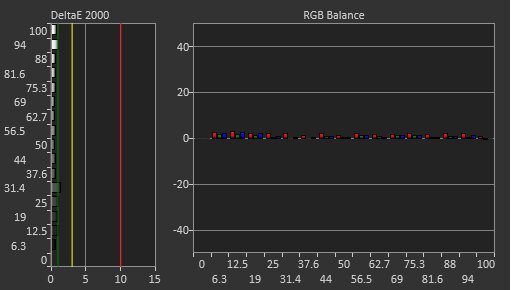
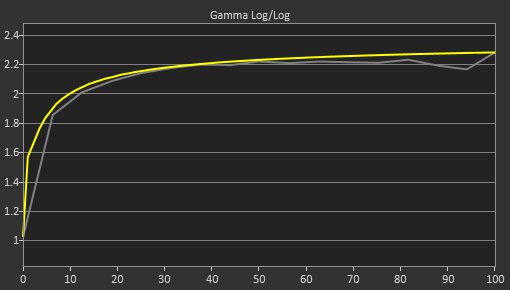
The MSI MPG 274URDFW E16M has great accuracy. Its dedicated sRGB mode locks colors well to the sRGB color space and has fantastic gamma tracking. However, it has color temperature and white balance issues that you would need to fix with a full calibration.

Pros
  • sRGB mode has good gamma tracking.

Cons
  • Needs full calibration to fix white balance and color temperature issues.

  • 7.7
    PC Gaming
  • 8.5
    Console Gaming
  • 8.5
    Office
  • 7.7
    Editing

  • Performance Usages

  • 8.8
    Brightness
  • 7.8
    Response Time
  • 6.6
    HDR Picture
  • 6.8
    SDR Picture
  • 8.2
    Color Accuracy
  • Changelog

    1.  Updated Dec 15, 2025: Review published.
    2.  Updated Dec 10, 2025: Early access published.
    3.  Updated Dec 01, 2025: Our testers have started testing this product.
    4.  Updated Nov 21, 2025: The product has arrived in our lab, and our testers will start evaluating it soon.

    Check Price

    27"MPG 274URDFW E16M
    SEE PRICE
    Walmart.com
    27"MPG 274URDFW E16M
    SEE PRICE
    Amazon.com
    27"MPG 274URDFW E16M
    SEE PRICE
    BestBuy.com
    27"MPG 274URDFW E16M
    B&H
    27"MPG 274URDFW E16M
    MSI

    Differences Between Sizes And Variants

    We bought and tested the 27-inch MSI MPG 274URDFW E16M, which is the only size available, and the results are only valid for this model. Even though MSI has the similar MAG 274UPDF available, it's a different monitor, as you can see below.

    Model Resolution & Refresh Rate USB-C 
    Power
    Body Color
    MPG 274URDFW Native: 4k, 160Hz 90W White
    Dual Mode: 1080p, 320Hz
    MAG 274UPDF Native: 4k, 160Hz 15W Black
    Dual Mode: 1080p, 320Hz

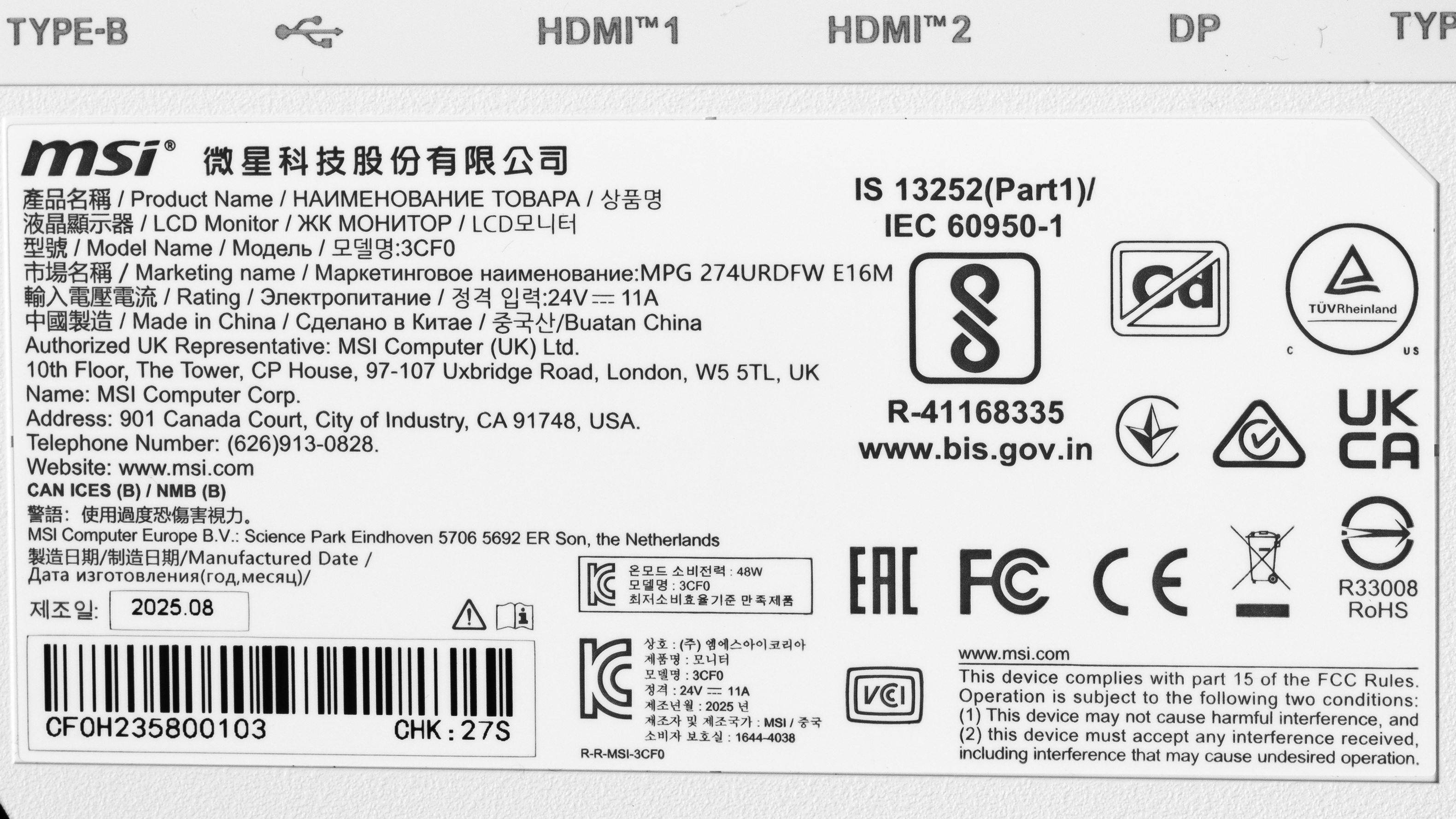
    Our unit's label indicates it was manufactured in August 2025 in China. We tested it with firmware FW.026.

    Popular Monitor Comparisons

    The MSI MPG 274URDFW is a mid-range gaming monitor with Mini LED backlighting. Featuring a native 4k resolution and 160Hz refresh rate with a 1080p, 320Hz dual mode, it competes against other models with the dual-mode specs, like the Acer Nitro XV275K P5biipruzx. It has what you'd expect in a gaming monitor, like sharp motion, low input lag, and HDMI 2.1 bandwidth, so it's versatile for playing different types of games. However, its local dimming feature is disappointing for a Mini LED display with 1,152 zones, as it has black crush and haloing in HDR, and certain settings overbrighten content in SDR. If you want to get a monitor to take advantage of its local dimming feature to improve picture quality in HDR, you'd be better off going for the Acer, if you can find it available in your region. Otherwise, the MSI is still a solid choice, with some trade-offs when it comes to local dimming.

    Also see our recommendations for the best Mini LED monitors, the best 4k 144Hz monitors, and the best 4k gaming monitors.

    Acer Nitro XV275K P5biipruzx

    The MSI MPG 274URDFW E16M and the Acer Nitro XV275K P5biipruzx are competing Mini LED monitors. They share many of the same specs, including 4k, 160Hz and 1080p, 320Hz dual modes, USB-C ports with DisplayPort Alt Mode, and KVM switches. While they both have 1,152 dimming zones, the local dimming on the Acer is more effective at improving the picture quality, as the local dimming on the MSI results in black crush and more haloing in HDR. However, you can't use local dimming in SDR on the Acer, but certain local dimming settings on the MSI cause an overbrightened image in SDR, so you may prefer not using it anyways. Besides that, the MSI has better motion handling across its VRR range, but they're very similar otherwise. 

    INNOCN 27M2V

    The INNOCN 27M2V and the MSI MPG 274URDFW E16M are both 4k Mini LED gaming monitors. While they each have a native 160Hz refresh rate, the MSI has a dual-mode feature to boost the refresh rate to 320Hz with a lower 1080p resolution, which the INNOCN doesn't have. They also both have 1,152 dimming zones, but the local dimming feature on the INNOCN results in much better picture quality with less black crush and haloing. The MSI has a few advantages for gaming, though, as it has lower input lag at 60Hz, leading to a more responsive feel with lower-frame-rate sources, like consoles.
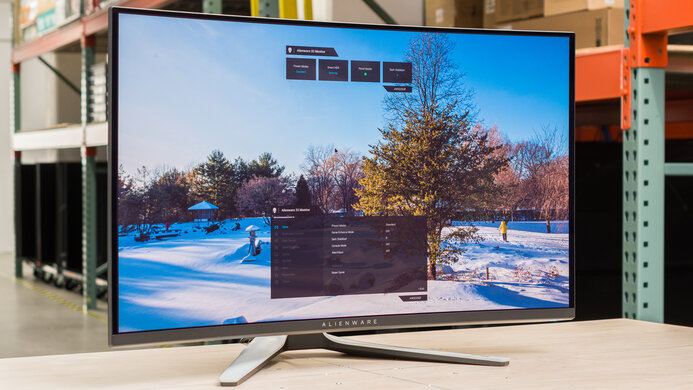
    Acer Nitro XV275K P3biipruzx

    The MSI MPG 274URDFW E16M and the Acer Nitro XV275K P3biipruzx are both 4k Mini LED displays. One main difference is that the MSI has a dual mode to boost its 160Hz refresh rate to 320Hz with a lower 1080p resolution, which the Acer doesn't have. However, the Acer has a few advantages in picture quality because its local dimming feature is more effective at improving picture quality, and it's a lot more accurate before calibration. The Acer even has superior reflection handling, so it's better to use in a well-lit room.

    How We Test Monitors
    How We Test Monitors

    We buy and test more than 30 monitors each year, with units that we buy completely on our own, without any cherry-picked units or samples. We put a lot into each unbiased, straight-to-the-point review, and there's a whole process from purchasing to publishing, involving multiple teams and people. We do more than just use the monitor for a week; we use specialized and custom tools to measure various aspects with objective data-based results. We also consider multiple factors before making any recommendations, including the monitor's cost, its performance against the competition, and whether or not it's easy to find.

    Test Results

    perceptual testing image
    Sort:
    RATINGS
    Category:
    All
    Design
    Style
    Curved
    No
    Curve Radius
    Not Curved

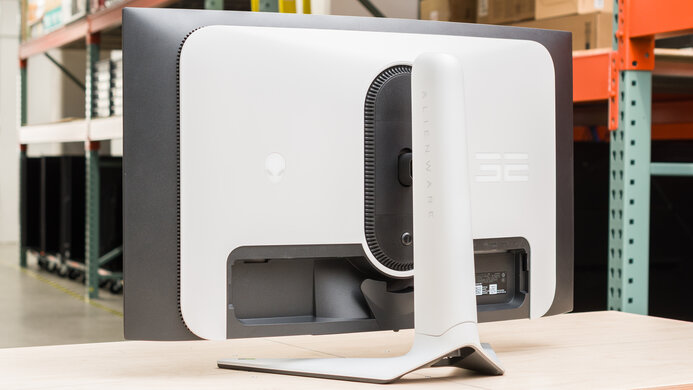
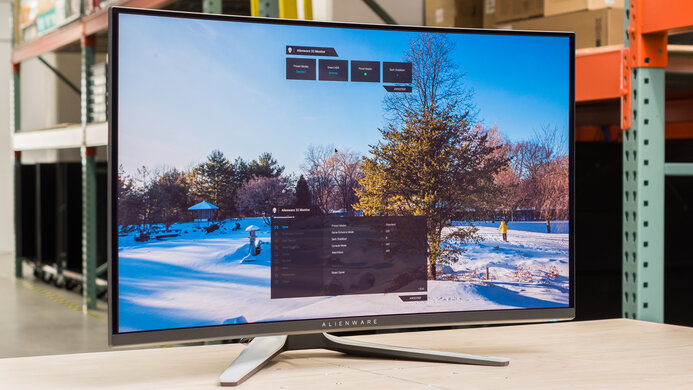
    The MSI MPG 274URDFW E16M has a rather premium look with an all-white body and some black accents and RGB lighting on the back. While most of the plastic is matte, the black plastic covering the lighting is glossy and reflective.

    7.5
    Build Quality

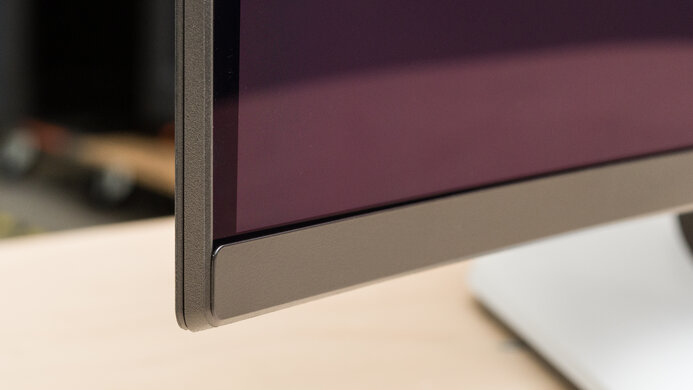
    The build quality is good. The materials feel good for the most part, but some of the plastics, like with the joystick control, feel cheap as they bend rather easily. The bezels are flush to the screen, but they aren't perfectly uniform throughout, either.

    Some people have reported this monitor getting hot easily. We played an HDR video for nearly 20 minutes, and the temperature in the hottest spots didn't exceed 40 °C. It didn't get significantly hot at any point during testing, either.

    9.2
    Ergonomics
    Min Height To Top Of Panel
    15.3" (38.8 cm)
    Height Adjustment
    4.4" (11.2 cm)
    Tilt Range
    -20° to 7.5
    Rotate Portrait/Landscape
    Yes, Both Ways
    Swivel Range
    -30° to 30°
    Wall Mount
    VESA 100x100

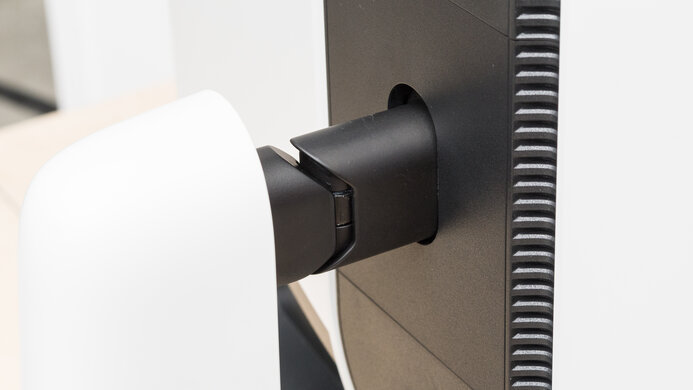
    The ergonomics are incredible. You can adjust it in a number of ways, and the adjustments feel fluid and easy to perform, and the screen stays in place well. The stand also has a cutout for basic cable management.

    Stand
    Base Width
    12.3" (31.3 cm)
    Base Depth
    8.0" (20.2 cm)
    Thickness (With Display)
    7.7" (19.5 cm)
    Weight (With Display)
    18.2 lbs (8.2 kg)

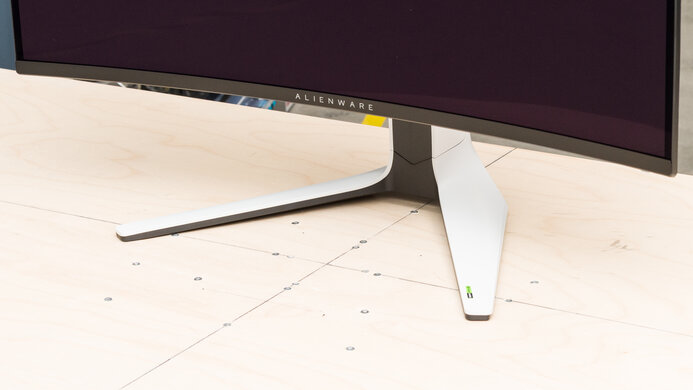
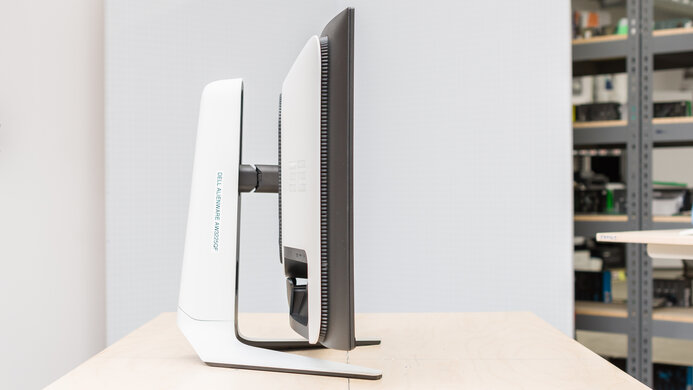
    The stand consists of a metal base plate and a plastic pillar, but the screen wobbles easily and takes time to stabilize itself. While the base of the stand is big, it's flat, and you can still place stuff on top. As the stand is tilted, the thickness from the screen to the back of the stand depends on the height you set the screen to. The measurement in the review is with it at its highest setting, and the thickness at its lowest is 7.5" (19.0 cm).

    Display
    Size
    27"
    Housing Width
    24.1" (61.3 cm)
    Housing Height
    14.7" (37.3 cm)
    Thickness (Without Stand)
    2.8" (7.0 cm)
    Weight (Without Stand)
    10.9 lbs (5.0 kg)
    Borders Size (Bezels)
    0.4" (0.9 cm)

    The housing height measurement includes the branding element below the bottom bezel, which adds an extra 0.5" (1.3 cm).

    Controls

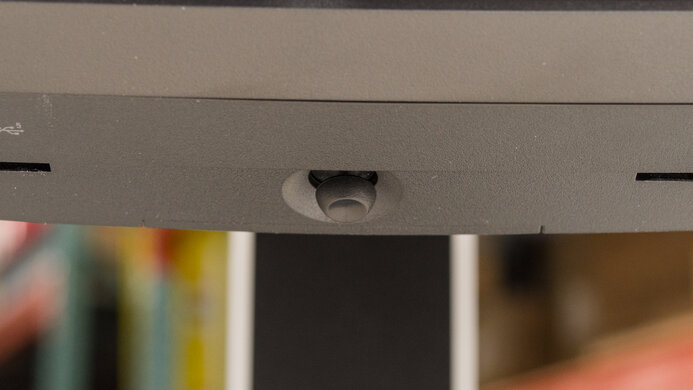
    The joystick underneath the bottom bezel controls the on-screen display (OSD) and acts as a power button. However, it feels cheap and unresponsive at times.

    In The Box
    Power Supply
    External Brick

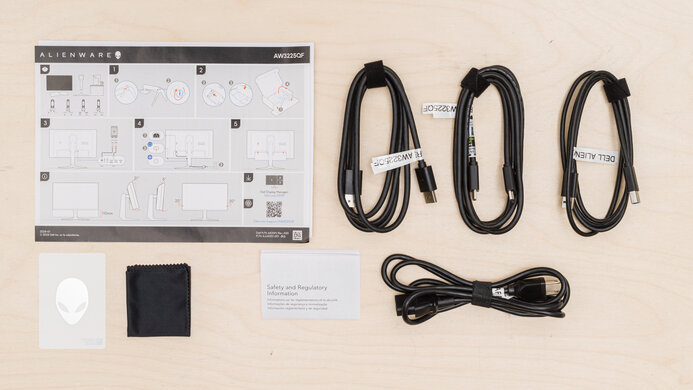
    • HDMI cable
    • DisplayPort cable
    • USB-C cable
    • USB-A to USB-B cable
    • Power cable and supply
    • 4x VESA standoffs
    • User documentation, including calibration report
    Picture Quality
    6.3
    Contrast
    Native Contrast
    970 : 1
    Contrast With Local Dimming
    2,395 : 1

    The MSI MPG 274URDFW E16M has a poor native contrast ratio without using local dimming. The contrast ratio greatly improves with Local Dimming set to 'Level 3,' as it helps it display deeper blacks. With Local Dimming on 'Level 2,' the contrast ratio is 1,251:1.

    3.5
    Local Dimming
    Local Dimming
    Yes
    Backlight
    Full-Array

    Settings

    • Local Dimming: Level 3
    • Halo Dimming: 100

    SDR Local Dimming

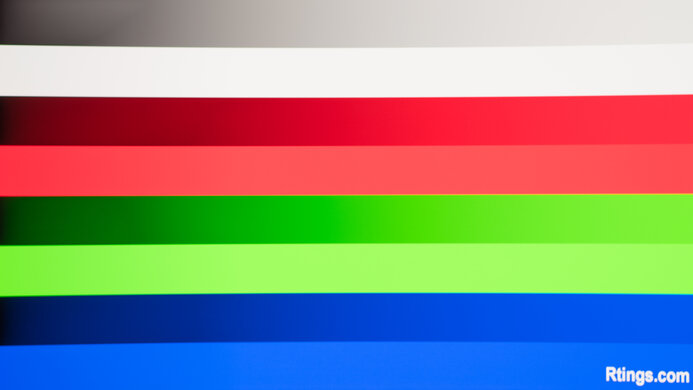
    The local dimming feature is bad. Despite having 1,152 dimming zones, it fails to effectively improve the picture quality in dark content and has some issues. When using the feature in SDR, the 'Level 1' and 'Level 2' settings don't turn off any of the zones, and instead, they dim the backlight. Setting Local Dimming to 'Level 3' is more effective at dimming the zones, but it results in a more inaccurate image in SDR. Gamma tracking is off, so midtones and grays are overbrightened, resulting in a muted and flat overall image in bright content. You can see this when comparing desktop elements between 'Level 2' and 'Level 3.' However, the 'Level 3' setting is still better than 'Level 2' at improving black levels in dark content, so you have to choose whether you want the more accurate image or better black levels if you're going to use local dimming in SDR.
    There's also a 'Customization' Local Dimming setting that allows you to adjust a slider from 0 to 255. However, changes only take effect every seven steps in the slider. Setting it to its max performs like 'Level 3,' but you can still find a balance between the performance of 'Level 2' and 'Level 3' by adjusting the slider between 186 to 204.

    HDR Local Dimming

    If you're going to use local dimming in HDR, then the 'Level 3' setting looks a lot more accurate than SDR content. It improves the black levels, but it does so by crushing blacks, causing a loss of details in dark scenes. It also has haloing around bright objects, which could get distracting with subtitles. Overall, it's not a good implementation of local dimming, especially for a Mini LED monitor.

    There's a Halo Dimming setting that's meant to reduce haloing, but even at its max, there's haloing. Setting it to 0 results in more haloing, but smoother transitions of objects between dimming zones.
    8.3
    SDR Brightness
    Real Scene
    416 cd/m²
    Peak 2% Window
    441 cd/m²
    Peak 10% Window
    442 cd/m²
    Peak 25% Window
    442 cd/m²
    Peak 50% Window
    442 cd/m²
    Peak 100% Window
    442 cd/m²
    Sustained 2% Window
    440 cd/m²
    Sustained 10% Window
    441 cd/m²
    Sustained 25% Window
    441 cd/m²
    Sustained 50% Window
    442 cd/m²
    Sustained 100% Window
    442 cd/m²
    Automatic Brightness Limiting (ABL)
    0.000
    Minimum Brightness
    27 cd/m²

    Settings

    • Game Mode: User
    • Brightness: Max
    • Local Dimming: Off

    The SDR brightness is great. It gets bright enough to fight glare, and it maintains consistent brightness with Local Dimming off. However, if you want the lowest brightness possible, you have to set Local Dimming to 'Level 3.'

    Setting Local Dimming to 'Level 2' results in similar brightness, except smaller windows are dimmer:
    • Real Scene: 370 cd/m²
    • Peak 2% Window: 317 cd/m²
    • Peak 10% Window: 385 cd/m²
    • Peak 25% Window: 414 cd/m²
    • Peak 50% Window: 428 cd/m²
    • Peak 100% Window: 443 cd/m²
    • Sustained 2% Window: 316 cd/m²
    • Sustained 10% Window: 384 cd/m²
    • Sustained 25% Window: 412 cd/m²
    • Sustained 50% Window: 426 cd/m²
    • Sustained 100% Window: 442 cd/m²
    • Minimum Brightness: 32 cd/m²
    9.2
    HDR Brightness
    VESA DisplayHDR Certification
    DisplayHDR 1000
    Real Scene
    1,209 cd/m²
    Peak 2% Window
    1,134 cd/m²
    Peak 10% Window
    1,562 cd/m²
    Peak 25% Window
    1,748 cd/m²
    Peak 50% Window
    1,841 cd/m²
    Peak 100% Window
    1,460 cd/m²
    Sustained 2% Window
    1,132 cd/m²
    Sustained 10% Window
    1,557 cd/m²
    Sustained 25% Window
    1,736 cd/m²
    Sustained 50% Window
    1,291 cd/m²
    Sustained 100% Window
    820 cd/m²
    Automatic Brightness Limiting (ABL)
    0.037

    Settings

    • DisplayHDR: 1000 nits
    • Game Mode: User
    • Brightness: Locked to max
    • Local Dimming: Level 3
    • Halo Dimming: 0

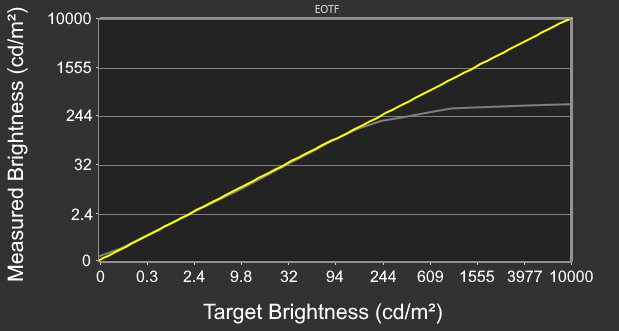
    The MSI MPG 274URDFW E16M has remarkable HDR brightness. It allows highlights to pop against the rest of the image for an impactful HDR experience. It also has fairly accurate PQ EOTF tracking, but bright content is slightly overbrightened, and it's tone mapping before your source.

    You need to use Local Dimming on 'Level 3' with Halo Dimming set to '0' to get the brightest screen possible, even if that means there's more haloing than with Halo Dimming at its max of '100.' That setting results in a dimmer image, as you can see below:

    Window Size Local Dimming: Off Local Dimming: Level 3
    Halo Dimming: 100
    Real Scene 754 cd/m² 937 cd/m²
    Peak 2% Window 819 cd/m² 828 cd/m²
    Peak 10% Window 820 cd/m² 1,424 cd/m²
    Peak 25% Window 820 cd/m² 1,683 cd/m²
    Peak 50% Window 820 cd/m² 1,813 cd/m²
    Peak 100% Window  820 cd/m² 1,462 cd/m²
    Sustained 2% Window 818 cd/m² 825 cd/m²
    Sustained 10% Window 818 cd/m² 1,418 cd/m²
    Sustained 25% Window 819 cd/m² 1,674 cd/m²
    Sustained 50% Window 819 cd/m² 1,491 cd/m²
    Sustained 100% Window 818 cd/m² 822 cd/m²
    7.8
    Gray Uniformity
    50% Std. Dev.
    3.350%
    50% DSE
    0.153%

    The gray uniformity is good. It maintains uniform colors throughout, but the edges are a bit dimmer. It's the same even with 5% gray.

    There's a Brightness Uniformity setting that we used for testing, but turning it off results in similar uniformity, as you can see with 50% gray and 5% gray.
    6.3
    Black Uniformity
    Native Std. Dev.
    2.203%
    Std. Dev. w/ L.D.
    0.136%

    The MSI MPG 274URDFW E16M has bad black uniformity without local dimming, as there's clouding throughout. This is with Brightness Uniformity on, and it performs similarly even with it off.

    Setting Local Dimming to 'Level 3' with Halo Dimming to '100' improves the uniformity, which is the setting we used for the photo in the review. Setting Halo Dimming to '0' results in more haloing. You can see additional photos with Local Dimming on 'Level 2':
    7.8
    Color Accuracy (Pre-Calibration)
    Picture Mode
    sRGB
    sRGB Gamut Area xy
    97.3%
    White Balance dE (Avg.)
    4.83
    Color Temperature (Avg.)
    5,681 K
    Gamma (Avg.)
    2.18
    Color dE (Avg.)
    3.62
    Contrast Setting
    N/A
    RGB Settings
    Default
    Gamma Setting
    No Gamma Setting
    Brightness Setting
    10
    Measured Brightness
    89 cd/m²
    Brightness Locked
    No

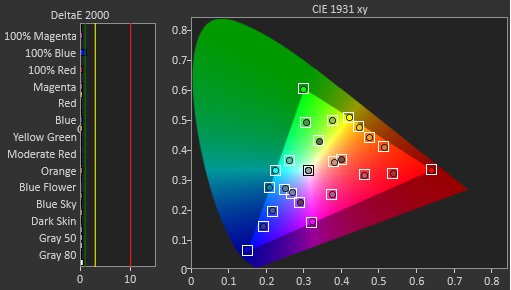
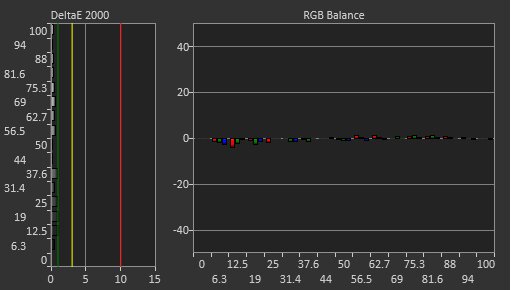
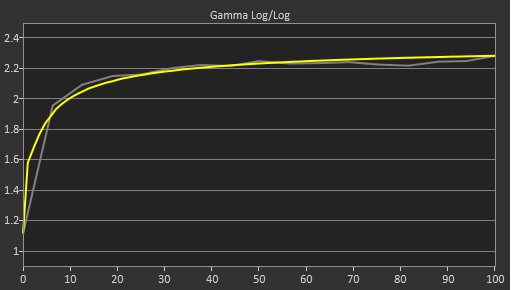
    The accuracy before calibration in the 'sRGB' Pro Mode is good. It locks colors well to the sRGB color space and has accurate gamma tracking. However, there are white balance inaccuracies, and the color temperature is on the warm side, giving the image a red tint.

    Using the 'sRGB' mode locks the Color Temperature, Low Blue Light, and Contrast settings. You'd have to use another, less accurate mode if you want access to those settings.

    As explained in Local Dimming, setting Local Dimming to 'Level 3' causes an inaccurate image with overbrightened grays. It's better to disable Local Dimming in SDR if you care about accuracy.

    9.7
    Color Accuracy (Post-Calibration)
    Picture Mode
    User
    sRGB Gamut Area xy
    97.8%
    White Balance dE (Avg.)
    0.40
    Color Temperature (Avg.)
    6,491 K
    Gamma (Avg.)
    2.17
    Color dE (Avg.)
    0.37
    Contrast Setting
    70
    RGB Settings
    31-42-50
    Gamma Setting
    No Gamma Setting
    Brightness Setting
    24
    Measured Brightness
    100 cd/m²
    ICC Profile
    Download

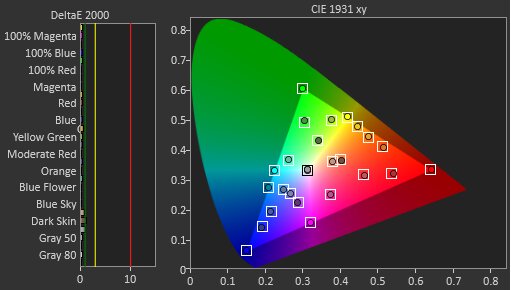
    The accuracy after calibration is fantastic. Calibrating it fixes most issues, but some colors, like blue, are undersaturated.

    9.8
    SDR Color Gamut
    sRGB Coverage xy
    98.3%
    sRGB Picture Mode
    User
    Adobe RGB Coverage xy
    99.9%
    Adobe RGB Picture Mode
    User

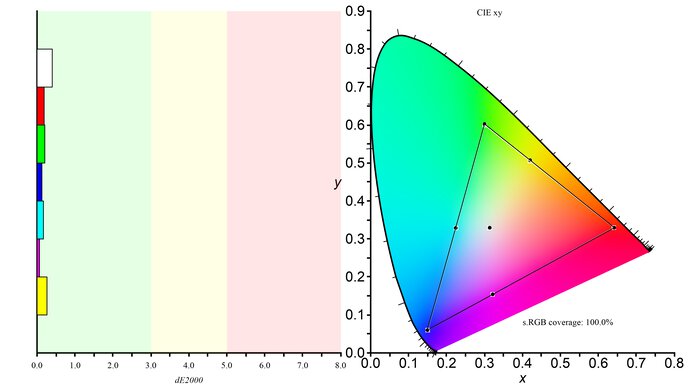
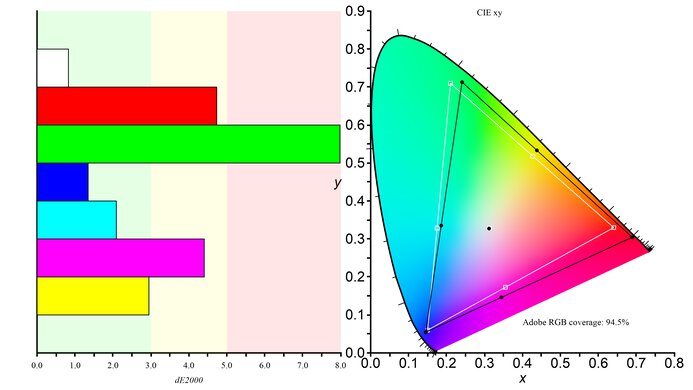
    The MSI MPG 274URDFW E16M has a superb SDR color gamut. It has near-perfect coverage of both the sRGB and Adobe RGB color spaces, with minimal inaccuracies. These results are from after a full calibration, which results in slightly better Adobe RGB coverage than the 'Adobe RGB' mode.
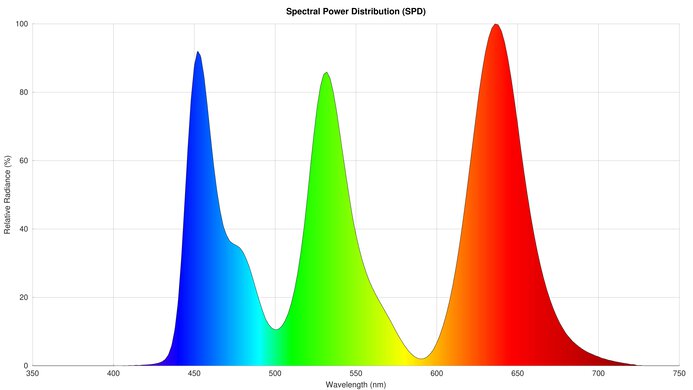
    It has a similar spectral power distribution (SPD) to the Acer Nitro XV275K P5biipruzx, as it uses proper quantum dots and not KSF phosphors.
    9.0
    HDR Color Gamut
    Wide Color Gamut
    Yes
    DCI-P3 Coverage xy
    95.5%
    DCI-P3 Picture Mode
    User, 1000nits
    Rec. 2020 Coverage xy
    80.9%
    Rec. 2020 Picture Mode
    User, 1000nits

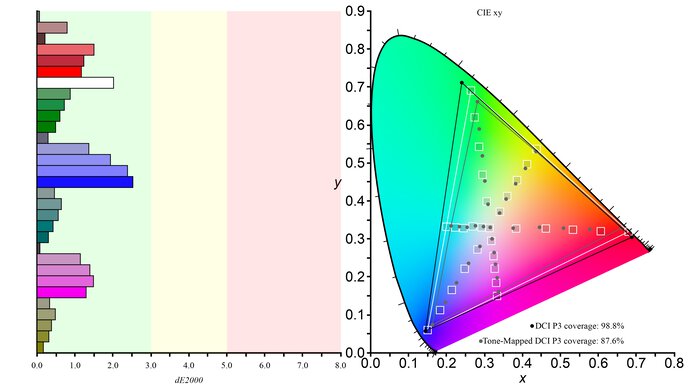
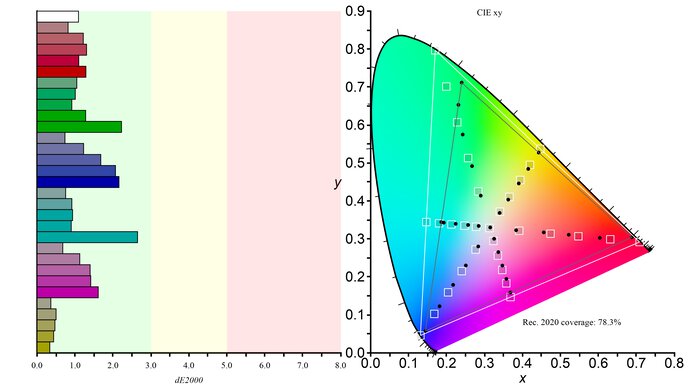
    The MSI MPG 274URDFW E16M has a fantastic HDR color gamut. It has wide coverage of the DCI-P3 color space used in most content, but it oversaturates greens. It also has good coverage of the Rec. 2020 color space, but most colors are undersaturated.

    8.9
    HDR Color Volume
    1,000 cd/m² DCI-P3 Coverage ICtCp
    89.1%
    DCI-P3 Picture Mode
    User, 1000nits
    10,000 cd/m² Rec. 2020 Coverage ICtCp
    47.6%
    Rec. 2020 Picture Mode
    User, 1000nits

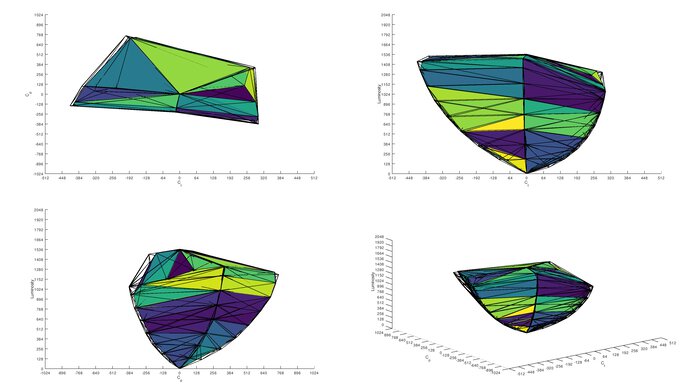
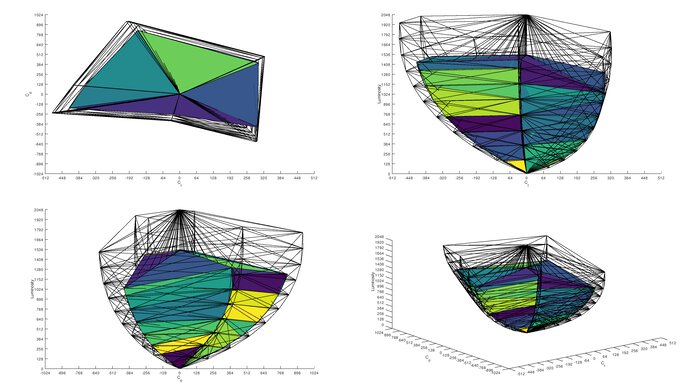
    The HDR color volume is amazing. It displays bright and vivid colors well, but the biggest downside is that it struggles properly displaying the darkest colors.

    6.9
    Viewing Angle
    Color Washout From Left
    30°
    Color Washout From Right
    31°
    Color Shift From Left
    36°
    Color Shift From Right
    44°
    Brightness Loss From Left
    33°
    Brightness Loss From Right
    35°
    Black Level Raise From Left
    70°
    Black Level Raise From Right
    70°
    Gamma Shift From Left
    31°
    Gamma Shift From Right
    32°

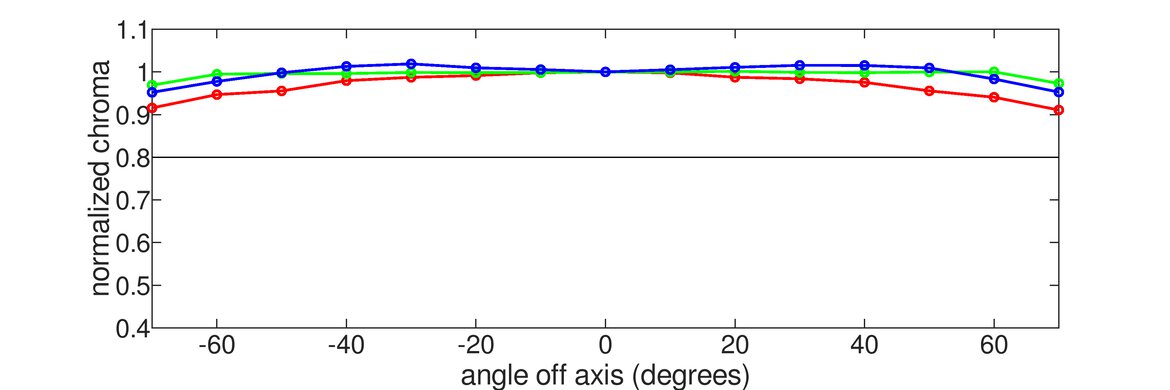
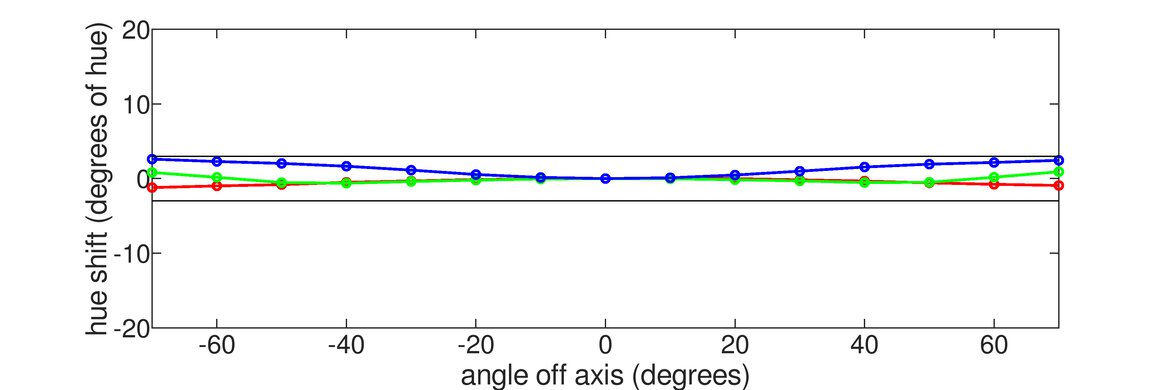
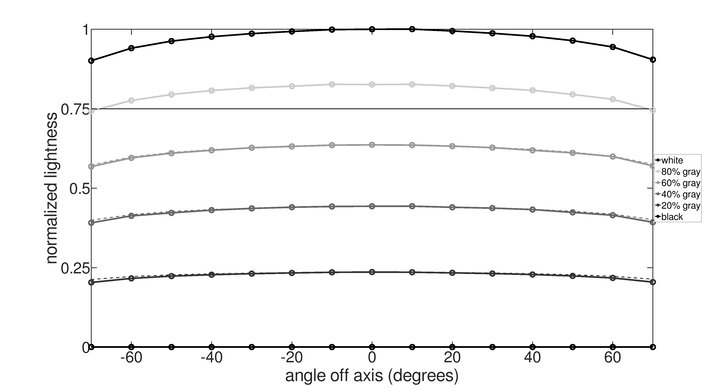
    The viewing angle is alright. The image gets darker at wide angles, but it's fine if you have a friend sitting next to you. That said, colors wash out quickly from the sides, so it's less ideal if you're a content creator showing work to a client or coworker.

    9.0
    Text Clarity
    Pixel Type
    IPS
    Subpixel Layout
    RGB

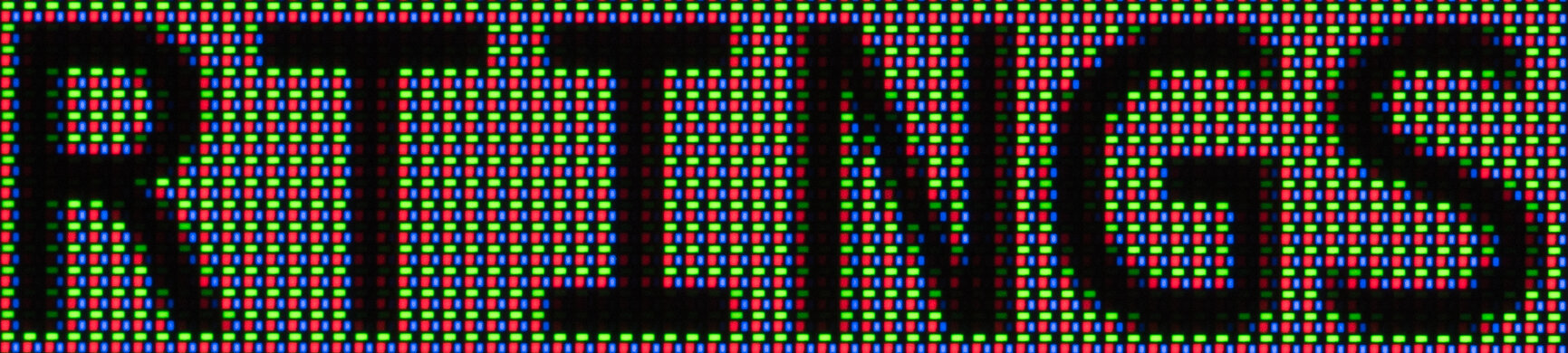
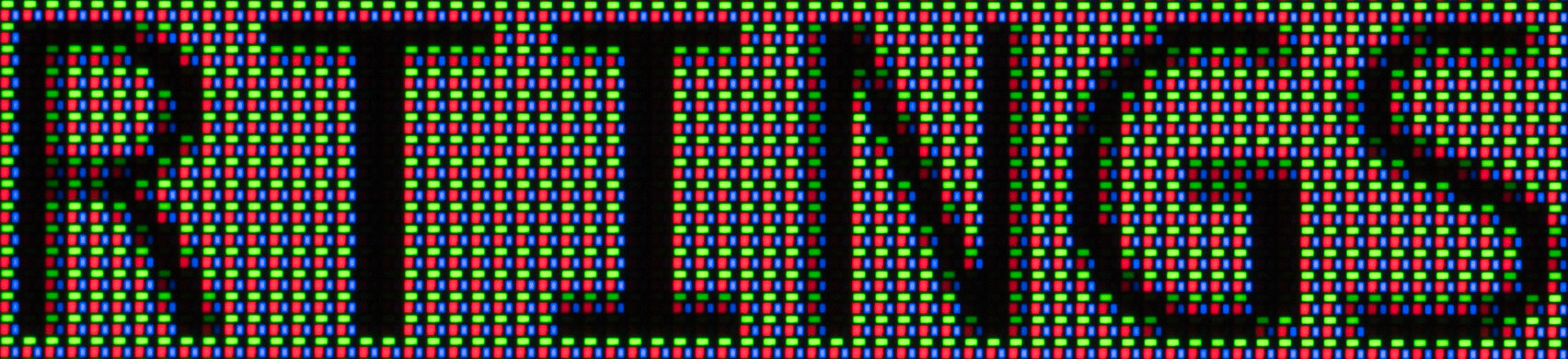
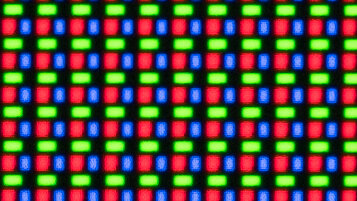
    The text clarity is fantastic in the 4k mode. Letters look sharp, and using Windows ClearType (top photo) makes text bolder. These photos are in Windows 10, and you can also see them in Windows 11 with ClearType on and with ClearType off.

    As expected, the text clarity is much worse in the 1080p mode. Despite the scaling, it still looks fine for a dual-mode monitor.

    You can see photos from the 1080p mode below:

    Operating System ClearType On ClearType Off
    Windows 10 Photo Photo
    Windows 11 Photo Photo
    6.5
    Direct Reflections
    See details on graph tool
    Peak Direct Reflection Intensity
    31.0%
    Screen Finish
    Matte

    The reflection handling is alright. The matte coating absorbs light well, but it still has some mirror-like reflections.

    9.1
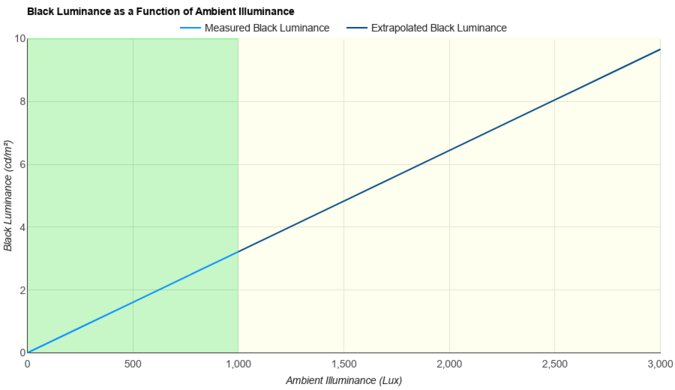
    Ambient Black Level Raise
    See details on graph tool
    Black Luminance @ 0 lx
    0.00 cd/m²
    Black Luminance @ 1000 lx
    0.38 cd/m²

    The MSI MPG 274URDFW E16M does a fantastic job at maintaining consistent black levels in bright rooms.

    5.8
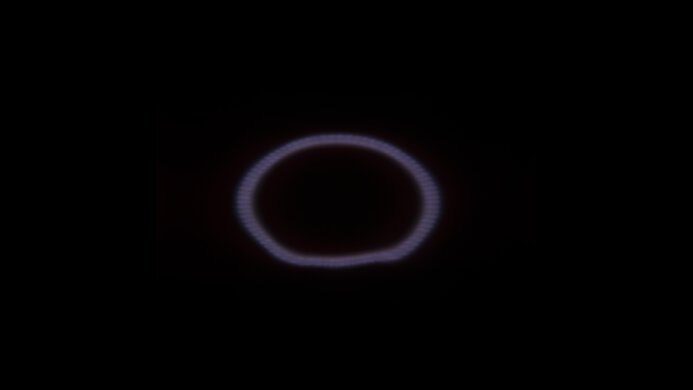
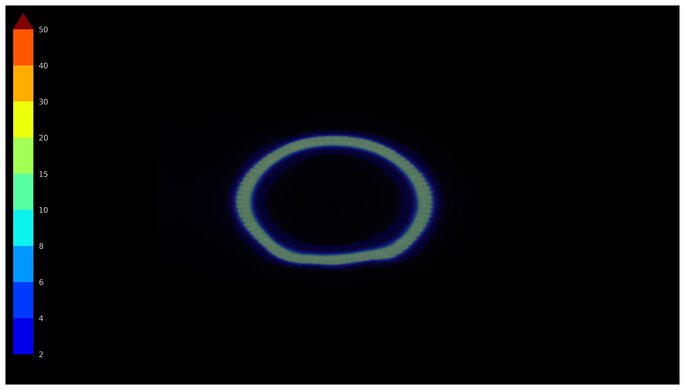
    Total Reflected Light
    Total Reflected Light Intensity
    34,360% ⋅ pixel
    Diffraction Artifacts
    No

    Reflections can get distracting on this monitor, especially if you have it placed in front of a sunny window. That said, it gets bright enough to fight most glare, so it's fine if you still have some lights around the monitor.

    9.8
    Gradient
    Color Depth
    10 Bit

    The gradient handling is superb. There's minimal banding between shades of similar colors.

    Motion
    8.3
    Refresh Rate
    Native Refresh Rate
    160 Hz
    Max Refresh Rate
    320 Hz
    Max Refresh Rate Over DP
    160 Hz
    Max Refresh Rate Over HDMI
    160 Hz
    Max Refresh Rate Over DP @ 10-bit
    160 Hz
    Max Refresh Rate Over HDMI @ 10-Bit
    160 Hz
    DSC Toggle
    Yes
    DSC Off Max Refresh Rate Over DP
    120 Hz
    DSC Off Max Refresh Rate Over HDMI
    120 Hz

    The MSI MPG 274URDFW E16M has an MSI Dual Mode setting that boosts the refresh rate to 320Hz with a lower 1080p resolution. However, it doesn't always work as intended because turning it on/off sometimes makes the screen go blank, and we wouldn't get an image without turning the monitor off and on again. It would even sometimes limit the refresh rate to 120Hz in the dual mode, and we wouldn't be able to get 320Hz without a custom resolution.

    In the 4k mode, your graphics card needs to use Display Stream Compression (DSC) to get a 160Hz refresh rate. There's a DSC setting that you can disable if you prefer, but that lowers the refresh rate.

    Variable Refresh Rate (VRR)
    Variable Refresh Rate
    Yes
    FreeSync
    Yes
    G-SYNC
    Compatible (NVIDIA Certified)
    VRR Maximum
    320 Hz
    VRR Minimum
    < 20 Hz
    VRR Supported Connectors
    DisplayPort, HDMI

    NVIDIA - G-SYNC Compatibility
    Connection VRR Min VRR Max
    DisplayPort <20Hz 4k mode: 160Hz
    1080p mode: 320Hz
    HDMI <20Hz 4k mode: 160Hz
    1080p mode: 320Hz
    AMD - FreeSync
    Connection VRR Min VRR Max
    DisplayPort <20Hz 4k mode: 160Hz
    1080p mode: 320Hz
    HDMI <20Hz 4k mode: 160Hz
    1080p mode: 320Hz

    The MSI MPG 274URDFW E16M also supports HDMI Forum VRR.

    7.8
    VRR Motion Performance
    See details on graph tool
    Recommended VRR OD Setting
    Normal
    Variable Overdrive Advertised
    No
    Avg. CAD
    179
    Best CAD
    179
    Worst CAD
    179

    MSI Dual Mode: Off
    4k @ 160Hz
    Frame Rate CAD Heatmap RT Chart Pursuit Photo
    159 Heatmap Chart Photo
    144 Heatmap Chart Photo
    120 Heatmap Chart Photo
    100 Heatmap Chart Photo
    80 Heatmap Chart Photo
    60 Heatmap Chart Photo
    MSI Dual Mode: On
    1080p @ 320Hz
    Frame Rate CAD Heatmap RT Chart Pursuit Photo
    318 Heatmap Chart Photo
    240 Heatmap Chart Photo
    165 Heatmap Chart Photo
    144 Heatmap Chart -
    120 Heatmap Chart -
    100 Heatmap Chart -
    80 Heatmap Chart -
    60 Heatmap Chart -

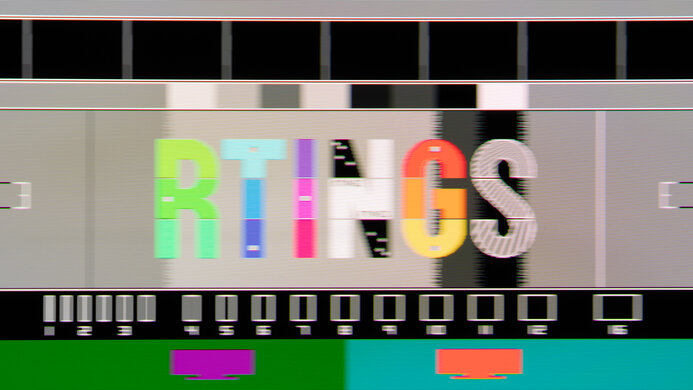
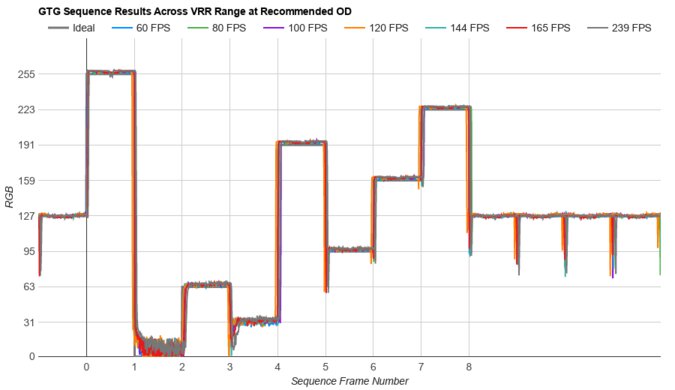
    The MSI MPG 274URDFW E16M has consistently good motion handling across its VRR range in the 4k mode. The 'Normal' Response Time overdrive setting is very consistent at any refresh rate without noticeable inverse ghosting, but there's still motion blur.

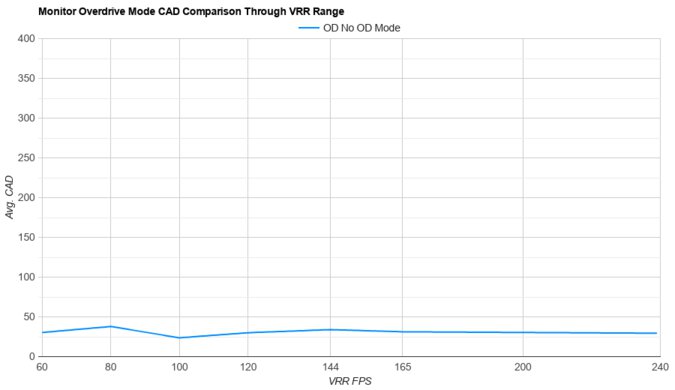
    If you're using the 1080p mode, the 'Fast' overdrive setting results in sharper motion, especially at refresh rates higher than 160Hz, as you can see in the overdrive comparison graph. At 160Hz and below, the overdrive settings perform the same in both modes, except at 60Hz. This is because Low Framerate Compensation (LFC) starts at 61 fps in the 1080p mode, compared to 54 fps in the 4k mode, so the screen is actually refreshing at 120Hz with 60 fps content in the 1080p mode.

    7.8
    Refresh Rate Compliance
    See details on graph tool
    See details on graph tool
    Compliance @ Max Hz
    54%
    Compliance @ 120 FPS
    62%
    Compliance @ 60 FPS
    81%

    The refresh rate compliance is good. While it's not perfect, the response time is fast enough to make near-full color transitions before the monitor draws the next frame.

    7.9
    CAD @ Max Refresh Rate
    OD Transition Max Refresh Rate
    od-transition-max-refresh-rate-dualmodefast-0-31
    OD dualmodefast
    0 to 31
    Recommended Overdrive Setting
    Fast
    Avg. CAD
    141
    Best 10% CAD
    86
    Worst 10% CAD
    240

    MSI Dual Mode: Off
    4k @ 160Hz
     
    Overdrive Mode CAD Heatmap RT Chart Pursuit Photo
    Normal Heatmap Chart Photo
    Fast Heatmap Chart Photo
    Fastest Heatmap Chart Photo
    MSI Dual Mode: On
    1080p @ 320Hz
    Overdrive Mode CAD Heatmap RT Chart Pursuit Photo
    Normal Heatmap Chart Photo
    Fast Heatmap Chart Photo
    Fastest Heatmap Chart Photo

    The CAD at the max refresh rate of 160Hz in the 4k mode is very good. The 'Fast' Response Time setting results in sharp motion, but it has some inverse ghosting. The 'Normal' overdrive setting is better to use if that bothers you.

    Motion looks smoother at 320Hz in the 1080p mode. Unlike at 160Hz, the recommended overdrive setting is 'Fastest' because it has the fastest response time with minimal overshoot.

    Response Time @ Max Refresh Rate
    Recommended Overdrive Setting
    Fast
    First Response Time
    4.4 ms
    Total Response Time
    7.5 ms
    RGB Overshoot
    5 RGB
    Worst 10% First Response Time
    9.7 ms
    Worst 10% Total Response Time
    10.6 ms
    Worst 10% RGB Overshoot
    13 RGB

    MSI Dual Mode: Off
    4k @ 160Hz
    Overdrive Mode First Response Heatmap Total Response Heatmap RGB Overshoot Heatmap
    Normal Heatmap Heatmap Heatmap
    Fast Heatmap Heatmap Heatmap
    Fastest Heatmap Heatmap Heatmap
    MSI Dual Mode: On
    1080p @ 320Hz
    Overdrive Mode First Response Heatmap Total Response Heatmap RGB Overshoot Heatmap
    Normal Heatmap Heatmap Heatmap
    Fast Heatmap Heatmap Heatmap
    Fastest Heatmap Heatmap Heatmap

    7.9
    CAD @ 120Hz
    OD Transition 120Hz
    od-transition-120-dualmodefast-0-31
    OD dualmodefast
    0 to 31
    Recommended Overdrive Setting
    Fast
    Avg. CAD
    147
    Best 10% CAD
    79
    Worst 10% CAD
    243

    MSI Dual Mode: Off
    4k @ 120Hz
    Overdrive Mode CAD Heatmap RT Chart Pursuit Photo
    Normal Heatmap Chart Photo
    Fast Heatmap Chart Photo
    Fastest Heatmap Chart Photo
    MSI Dual Mode: On
    1080p @ 120Hz
    Overdrive Mode CAD Heatmap RT Chart
    Normal Heatmap Chart
    Fast Heatmap Chart
    Fastest Heatmap Chart

    The MSI MPG 274URDFW E16M has very good CAD at 120Hz. Motion looks the same in the 1080p and 4k modes with each of the overdrive settings. The 'Fast' overdrive setting has the best motion, but it has some inverse ghosting, so you may prefer using 'Normal' if that bothers you.

    Response Time @ 120Hz
    Recommended Overdrive Setting
    Fast
    First Response Time
    5.3 ms
    Total Response Time
    6.6 ms
    RGB Overshoot
    1 RGB
    Worst 10% First Response Time
    9.1 ms
    Worst 10% Total Response Time
    10.5 ms
    Worst 10% RGB Overshoot
    7 RGB

    MSI Dual Mode: Off
    4k @ 120Hz
    Overdrive Mode First Response Heatmap Total Response Heatmap RGB Overshoot Heatmap
    Normal Heatmap Heatmap Heatmap
    Fast Heatmap Heatmap Heatmap
    Fastest Heatmap Heatmap Heatmap
    MSI Dual Mode: On
    1080p @ 120Hz
    Overdrive Mode First Response Heatmap Total Response Heatmap RGB Overshoot Heatmap
    Normal Heatmap Heatmap Heatmap
    Fast Heatmap Heatmap Heatmap
    Fastest Heatmap Heatmap Heatmap

    7.8
    CAD @ 60Hz
    OD Transition 60Hz
    od-transition-60-dualmodefast-0-31
    OD dualmodefast
    0 to 31
    Recommended Overdrive Setting
    Fast
    Avg. CAD
    161
    Best 10% CAD
    88
    Worst 10% CAD
    253

    MSI Dual Mode: Off
    4k @ 60Hz
    Overdrive Mode CAD Heatmap RT Chart Pursuit Photo
    Normal Heatmap Chart Photo
    Fast Heatmap Chart Photo
    Fastest Heatmap Chart Photo
    MSI Dual Mode: On
    1080p @ 60Hz
    Overdrive Mode CAD Heatmap RT Chart
    Normal Heatmap Chart
    Fast Heatmap Chart
    Fastest Heatmap Chart

    The MSI MPG 274URDFW E16M has good CAD at 60Hz. While all three overdrive settings perform similarly in the 1080p and 4k modes, the 'Fast' setting results in the best motion handling. This is only with 60Hz signals, because, as explained in VRR Motion Performance, motion looks different between the 1080p and 4k modes if the monitor starts at a higher refresh rate and uses VRR to go down to 60Hz.

    Response Time @ 60Hz
    Recommended Overdrive Setting
    Fast
    First Response Time
    6.2 ms
    Total Response Time
    7.2 ms
    RGB Overshoot
    0 RGB
    Worst 10% First Response Time
    9.6 ms
    Worst 10% Total Response Time
    17.6 ms
    Worst 10% RGB Overshoot
    5 RGB

    MSI Dual Mode: Off
    4k @ 60Hz
    Overdrive Mode First Response Heatmap Total Response Heatmap RGB Overshoot Heatmap
    Normal Heatmap Heatmap Heatmap
    Fast Heatmap Heatmap Heatmap
    Fastest Heatmap Heatmap Heatmap
    MSI Dual Mode: On
    1080p @ 60Hz
    Overdrive Mode First Response Heatmap Total Response Heatmap RGB Overshoot Heatmap
    Normal Heatmap Heatmap Heatmap
    Fast Heatmap Heatmap Heatmap
    Fastest Heatmap Heatmap Heatmap

    Backlight Strobing (BFI)
    Backlight Strobing (BFI)
    Yes
    Maximum Frequency
    160 Hz
    Minimum Frequency
    120 Hz
    Longest Pulse Width Brightness
    194 cd/m²
    Shortest Pulse Width Brightness
    194 cd/m²
    Pulse Width Control
    No
    Pulse Phase Control
    No
    Pulse Amplitude Control
    No
    VRR At The Same Time
    No

    4k Mode 1080p Mode
    160Hz 320Hz
    120Hz 120Hz

    The MSI MPG 274URDFW E16M has an optional backlight strobing feature that's meant to help reduce persistence blur. However, it's limited in how you can use it because it locks many settings, including Brightness and Adaptive-Sync, and it results in image duplication.

    9.3
    VRR Flicker
    Dark Gray Flicker
    0.6 RGB
    Middle Gray Flicker
    0.6 RGB
    Light Gray Flicker
    0.6 RGB

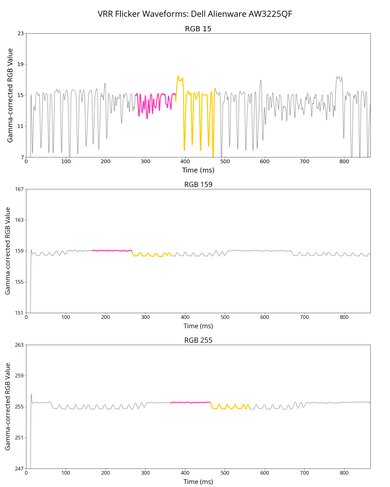
    The MSI MPG 274URDFW E16M has no distracting VRR flicker with changing frame rates. The results are in the 4k mode, and there's no visible flicker in the 1080p mode, either.

    10
    Image Flicker
    Flicker-Free
    Yes
    PWM Dimming Frequency
    >1000 Hz

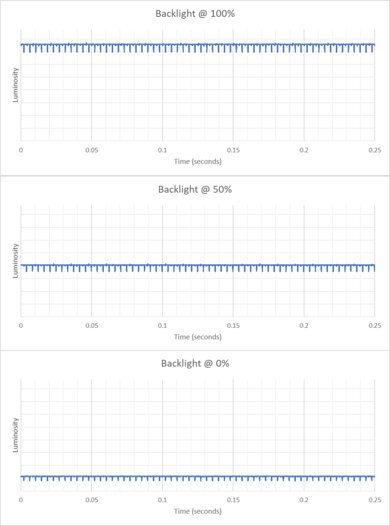
    While there's some variation in brightness, it's not the same as pulse-width modulation because it's not a full on and off flicker.

    Inputs
    9.0
    Input Lag
    Native Resolution @ Max Hz
    3.7 ms
    Native Resolution @ 120Hz
    4.6 ms
    Native Resolution @ 60Hz
    9.0 ms
    Backlight Strobing (BFI)
    3.9 ms

    The MSI MPG 274URDFW E16M has low input lag for a responsive feel at any refresh rate in the 4k mode. The input lag remains low for the most part in the 1080p mode, but it's a bit higher at 60Hz, as you can see below:

    • 1080p @ 320Hz: 2.1 ms
    • 1080p @ 120Hz: 4.7 ms
    • 1080p @ 60Hz: 13.0 ms
    • Backlight Strobing (1080p @ 320Hz): 4.8 ms
    8.8
    Resolution
    Native Resolution
    3840 x 2160
    Aspect Ratio
    16:9
    Megapixels
    8.3 MP
    Pixel Density
    163 PPI
    10
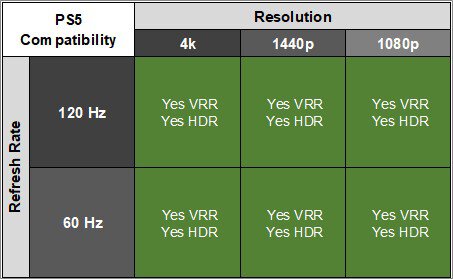
    PS5 Compatibility
    4k @ 120Hz
    Yes
    4k @ 60Hz
    Yes
    1440p @ 120Hz
    Yes
    1440p @ 60Hz
    Yes
    1080p @ 120Hz
    Yes
    1080p @ 60Hz
    Yes

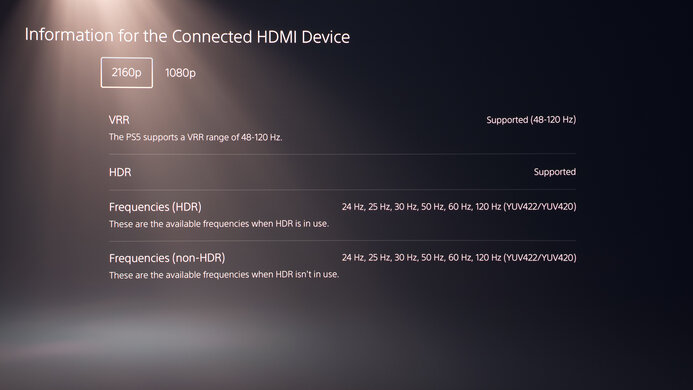
    There aren't any compatibility issues with a PS5, as long as you're in the 4k mode.

    10
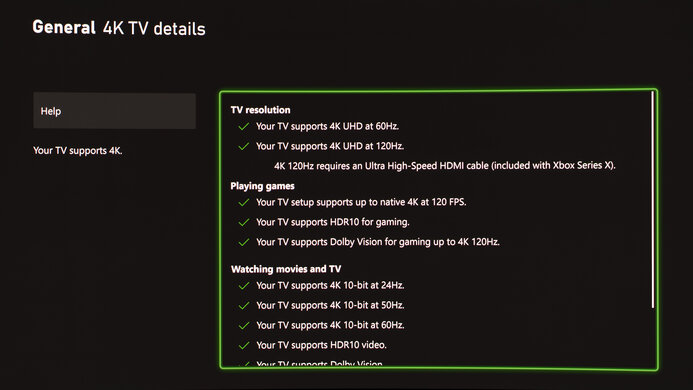
    Xbox Series X|S Compatibility
    4k @ 120Hz
    Yes
    4k @ 60Hz
    Yes
    1440p @ 120Hz
    Yes
    1440p @ 60Hz
    Yes
    1080p @ 120Hz
    Yes
    1080p @ 60Hz
    Yes

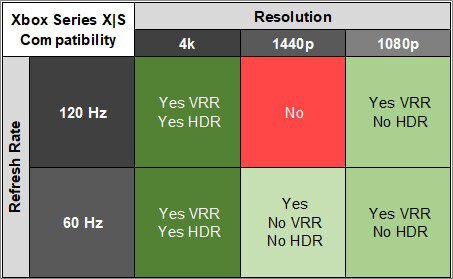
    Besides not supporting Dolby Vision, this monitor works well with an Xbox Series X|S. The Xbox doesn't support HDR with 1080p or 1440p signals, so this isn't a limitation of the monitor.

    Inputs
    DisplayPort
    1 (DP 1.4)
    DisplayPort Transmission Bandwidth
    No DisplayPort 2.1
    Mini DisplayPort
    No
    HDMI
    2 (HDMI 2.1)
    HDMI 2.1 Bandwidth
    48Gbps (FRL 12x4)
    Daisy Chaining
    No
    3.5mm Audio Out
    Yes
    Ethernet
    No
    HDR10
    Yes
    Dolby Vision
    No
    USB
    USB-A Ports
    2
    USB-A Rated Speed
    480Mbps (USB 2.0)
    USB-B Upstream Port
    Yes
    USB-C Ports
    1
    USB-C Upstream
    Yes
    USB-C Rated Speed
    5Gbps (USB 3.2 Gen 1)
    USB-C Power Delivery
    90W
    USB-C DisplayPort Alt Mode
    Yes
    Thunderbolt
    No

    Although the MSI MPG 274URDFW E16M is advertised as having 98W of power delivery, we couldn't draw more than 90W. Regardless, this enough power to charge most laptops while you're using it.

    macOS Compatibility

    Connection HDMI 2.1 USB-C
    Max Refresh Rate 4k mode: 160Hz
    1080p mode: 320Hz
    4k mode: 160Hz
    1080p mode: 320Hz
    VRR Range 4k mode: 48–160Hz
    1080p mode: 48–60Hz
    4k mode: 48–160Hz
    1080p mode: 48–320Hz
    HDR Yes Yes

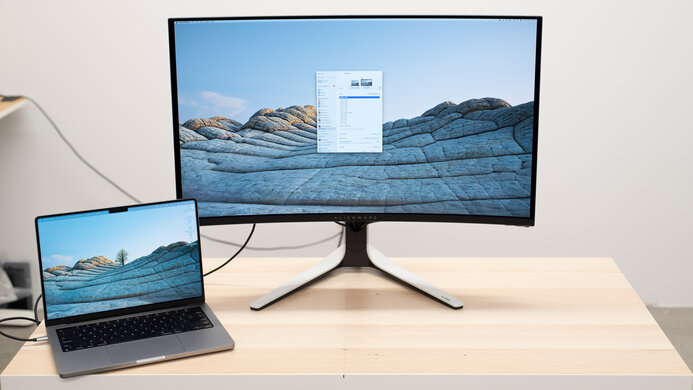
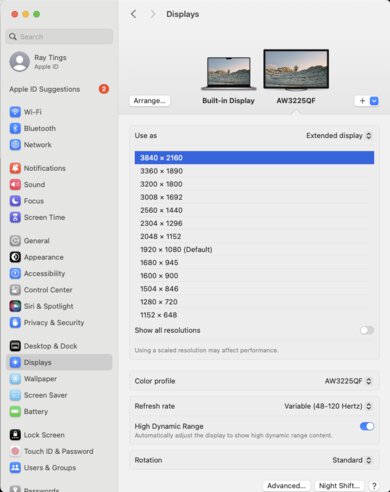
    This monitor works well with macOS without any issues. If you're using a MacBook with a USB-C connection, HDR looks oversaturated compared to the MacBook's screen in any of the picture modes. SDR looks more accurate compared to the screen. With a USB-C connection, you can close the laptop's lid and continue using the monitor. When you reopen the lid or wake it up from sleep, windows return to their original locations after a few seconds.

    With an HDMI connection, everything works as intended, except for the fact that the max refresh rate with VRR in the 1080p mode is 60Hz. We tried with other MacBooks and cables, and never got more than 60Hz in the 1080p mode over HDMI. HDR is a lot less saturated than over USB-C, and looks good compared to a MacBook's screen. With a MacBook connected over HDMI and plugged into power, you can close the lid and continue using the monitor. However, the laptop goes to sleep if you don't have it plugged into power. Like over USB-C, windows return to their original locations after a few seconds when reopening the lid.

    Features
    Additional Features
    Speakers
    No
    RGB Illumination
    Fixed (On/Off)
    Multiple Input Display
    PIP + PBP
    KVM Switch
    Yes
    Smart OS
    No

    The MSI 274URDFW E16M has a number of extra features, including a KVM switch that allows you to use the same devices on different sources. Other features include:

    • AI Vision: Automatically changes the brightness and contrast on a per-scene basis.
    • G.I.: Includes Smart Crosshair, Optix Scope, and MSI Dual Mode features to enhance your gaming experience.
    • HDMI CEC: Enabling this makes the monitor power on when you turn on HDMI CEC devices, like a gaming console.
    • Low Blue Light: Limits blue light to help reduce eye strain.
    • Image Enhancement: Adjusts the image sharpness.
    • Night Vision: Changes the picture quality to make it easier to see opponents in dark areas of games.
    • Refresh Rate: Displays the current refresh rate.
    • Screen Size: Allows you to change the aspect ratio of the image. It includes a mode to simulate a 24.5-inch screen size.
    On-Screen Display (OSD)