
The Sony X85J is a mid-range 4k TV in Sony's 2021 lineup. It's a replacement for the Sony X85H that was never released in North America; the closest model we've tested was the Sony X850G. It's a good TV, with excellent dark room performance thanks to its fantastic contrast ratio and excellent black uniformity. It's well-suited for bright rooms as it has great peak brightness and decent reflection handling, so glare isn't much of an issue unless you have a lot of natural light. It runs the updated Google TV interface, similar to the Android TV interface found on previous Sony TVs, but it's a bit more intuitive to use. It has the same great selection of streaming apps, so you're sure to find your favorite streaming service. Gamers will appreciate the low input lag, HDMI 2.1 bandwidth, and variable refresh rate (VRR) support after a firmware update. Sadly it doesn't have a local dimming feature to improve the contrast in dark scenes.
Our Verdict
The Sony X85J is a good TV for most uses. The outstanding contrast and excellent black uniformity are great for watching movies in the dark, but it lacks a local dimming feature, which is a bit disappointing. It's a good TV for watching sports or TV shows during the day, and its low input lag and fast response time make it a good choice for playing games.
- Outstanding contrast.
- Great response time.
- Huge selection of smart apps.
- Upscales low resolution content well.
- Image degrades at an angle.
- Direct reflections can be distracting.
The Sony X85J is a great TV for watching movies in a completely dark room, but it lacks a local dimming feature. It has outstanding contrast and excellent black uniformity, so dark scenes look great in a dark room, but, unfortunately, there's no local dimming feature. Older, low-resolution movies upscale well, and this TV can remove judder from any source. Unfortunately, there is some stutter when watching movies, especially in slow, panning shots.
- Outstanding contrast.
- Can remove 24p judder from any source.
- Upscales low resolution content well.
- Excellent black uniformity.
- Stutters in panning shots.
- No local dimming.
The Sony X85J is a very good TV for watching TV shows. There's a large selection of apps, so you don't have to worry about an external box for your streaming service of choice, and it upscales older content well, with no noticeable issues. It has great peak brightness, but direct reflections can still be distracting in a bright room. Unfortunately, the image degrades when viewed at an angle, so it's not a great choice if you like to move around.
- Huge selection of smart apps.
- Upscales low resolution content well.
- Great SDR peak brightness.
- Image degrades at an angle.
- Direct reflections can be distracting.
The Sony X85J is a good TV for watching sports. It has a great response time, resulting in little blur behind fast-moving objects. It also has a large selection of apps, including many sports streaming apps, and if you're watching on cable, it upscales lower resolution content well. This TV has great peak brightness, but direct reflections can still be distracting. Unfortunately, the image degrades when viewed at an angle, which isn't ideal for watching the big game with lots of friends.
- Great response time.
- Huge selection of smart apps.
- Upscales low resolution content well.
- Great SDR peak brightness.
- Image degrades at an angle.
- Direct reflections can be distracting.
The Sony X85J is a good TV for playing video games, and it's expected to get even better with a future update. It has low input lag, a great response time, and great peak brightness in SDR, and it's future-proof, with two HDMI 2.1 ports, and although it displays 4k @ 120Hz signals properly for playing games, text looks blurry with it. It also has VRR support to reduce screen tearing after a firmware update, but it doesn't support FreeSync.
- Outstanding contrast.
- Low input lag.
- Great response time.
- Great SDR peak brightness.
- VRR support after a firmware update.
- No local dimming.
- Direct reflections can be distracting.
- 4k @ 120Hz @ 4:4:4 isn't displayed properly.
Although it lacks a local dimming feature, the Sony X85J is great for watching movies in HDR. It has fantastic contrast and excellent black uniformity, resulting in deep, uniform blacks in a dark room. It also has decent peak brightness in HDR, so small highlights stand out a bit, but they're not as bright as the director intended. Finally, it has a great HDR color gamut, meaning it can display a wide range of colors with the latest HDR content.
- Outstanding contrast.
- Can remove 24p judder from any source.
- Excellent black uniformity.
- Stutters in panning shots.
- No local dimming.
- Some scenes are overbrightened.
The Sony X85J is good for gaming in HDR. It has outstanding contrast and excellent black uniformity, so blacks look black in a dark room. It delivers a great gaming experience, with low input lag and a great response time, for a responsive gaming experience with little blur. Also, it has HDMI 2.1 bandwidth on two ports for 4k @ 120Hz games, and it supports VRR, but it doesn't have FreeSync support.
- Outstanding contrast.
- Low input lag.
- Great response time.
- VRR support after a firmware update.
- No local dimming.
- Some scenes are overbrightened.
- 4k @ 120Hz @ 4:4:4 isn't displayed properly.
The Sony X85J is a great TV for use as a PC monitor. It has low input lag, so the cursor feels responsive and lag-free, and the fast response time results in relatively clear motion. It has great peak brightness in SDR, so glare isn't an issue in most rooms. It can display chroma 4:4:4 properly, which is important for clear text, but it doesn't display text properly with 4k @ 120Hz signals. Unfortunately, the image degrades at an angle, which can be an issue if you're too close.
- Low input lag.
- Great response time.
- Great SDR peak brightness.
- Image degrades at an angle.
- Direct reflections can be distracting.
- BGR subpixel layout can cause issues with text.
- 4k @ 120Hz @ 4:4:4 isn't displayed properly.
Changelog
- Updated Sep 26, 2025: We uploaded the latest brightness measurements and uniformity photos for the Accelerated Longevity Test.
- Updated Jul 08, 2025: We uploaded the latest brightness measurements and uniformity photos for the Accelerated Longevity Test.
- Updated Apr 17, 2025: We uploaded the latest brightness measurements and uniformity photos for the Accelerated Longevity Test.
- Updated Feb 11, 2025: We uploaded the latest brightness measurements and uniformity photos for the Accelerated Longevity Test.
Check Price
Differences Between Sizes And Variants
We tested the 55 inch Sony X85J TV (XB55X85J), and it's also available in a 43 inch, 50 inch, 65 inch, 75 inch, and 85 inch size. We expect our results to be valid for the other sizes as well, but we've seen some reports that the 43 inch model has an IPS-type panel in some regions, so we expect those variants to have worse contrast but better viewing angles. As Sony doesn't provide any panel information, if you have any information on the panel types for the other sizes, let us know in the discussions below.
The Sony X85J is also available as the X89J in some regions. We expect our results to be valid for it as well; the only difference is that the X89J has an adjustable stand.
| Size | Model Number | Alternate Model |
|---|---|---|
| 43" | KD-43X85J | KD-43X89J |
| 50" | KD-50X85J | KD-50X89J |
| 55" | KD-55X85J | KD-55X89J |
| 65" | KD-65X85J | KD-65X89J |
| 75" | KD-75X85J | KD-75X89J |
| 85" | KD-85X85J | KD-85X89J |
If you come across a different type of panel or your Sony X85J doesn't correspond to our review, let us know, and we'll update the review. Note that some tests, like the gray uniformity, may vary between individual units.
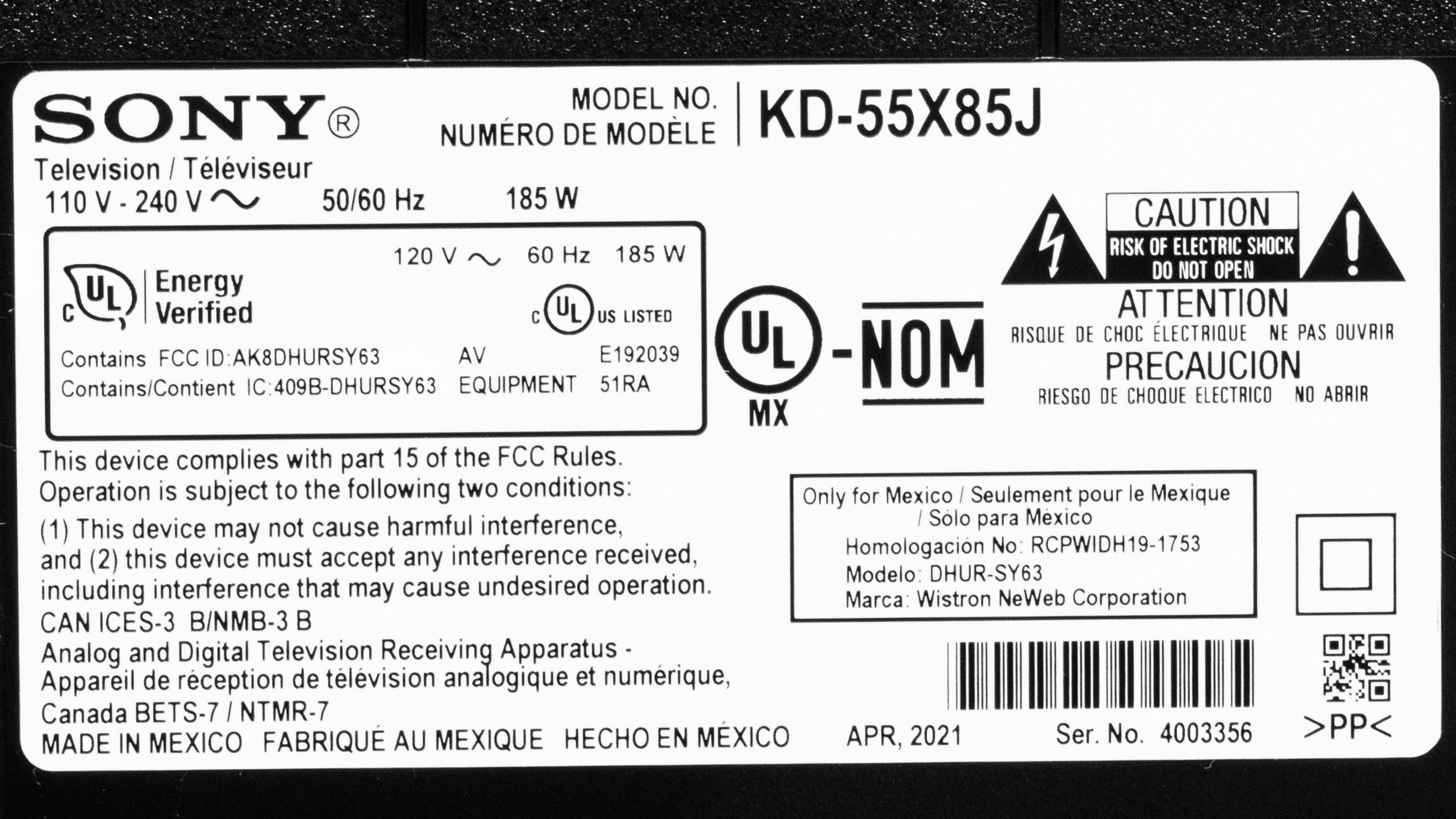
Our unit was manufactured in April 2021; you can see the label here.
Popular TV Comparisons
The Sony X85 is a good mid-range 4k TV and Sony's cheapest TV with HDMI 2.1. There are better options available from other brands at a lower price point, though, so this isn't the best choice for everyone. It has more gaming features like HDMI 2.1 bandwidth and VRR support, meaning if you want those gaming features without a premium price point, it's a good choice.
For more options, check out our recommendations for the best TVs, the best 4k gaming TVs, and the best movie TVs.
The Sony X90J and the Sony X85J are very similar overall. The X90J has a full array local dimming feature that can improve contrast and reduce blooming in dark scenes, but the X85J has better native contrast and a flicker-free backlight. The X90J is brighter in HDR and HDR content displays at the correct brightness. If you care about calibrating your display for the most accurate image possible, one important difference here is that the X85J doesn't have a color management system.
The Samsung Q70A and the Sony X85J are nearly identical. The Sony that we tested has better gray uniformity, but this can vary between units. The Samsung is a bit better for gaming, as it has lower input lag for a more responsive gaming experience, and it has FreeSync support. However, the Sony is G-SYNC compatible, which is good if you have an NVIDIA graphics card.
The Sony X80J and the Sony X85J use different panel technologies, each with strengths and weaknesses. The X85J is better for a dark room, as it has much better contrast and better black uniformity. The X80J is better for a wide seating area, as it has better viewing angles.
The Sony X85K is the newer version of the Sony X85J, and the differences between them are minor. Picture quality is nearly the same between each, and they use the same processor, so they have many of the same features. The X85K improves on some of its gaming features as it has a wider 1080p VRR range, but other than that, the differences between them are minor.

We buy and test dozens of TVs yearly, taking an objective, data-driven approach to deliver results you can trust. Our testing process is complex, with hundreds of individual tests that take over a week to complete. Most of our tests use specially designed test patterns that mimic real content, but we also use the same sources you have at home to ensure our results match the real-world experience. We use two main tools for our testing: a Colorimetry Research CR-100 colorimeter and a CR-250 spectroradiometer.
Test Results
Older Test Bench: This product has been tested using an older TV test methodology, before amajor update. Some of the test results below aren't directly comparable with other TVs. Learn more


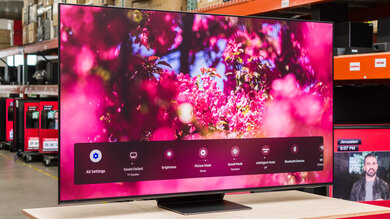
for pictures & test results

The stand is nearly identical to the one on the Sony X90J, and it supports the TV well, but there's a bit of wobble. Unfortunately, like the X90J, the feet aren't adjustable, but there's an alternate model known as the X89J that has two stand positions. The 43 inch and 50 inch models appear to have a different stand design, and the feet are closer to the center of the screen.
Footprint of the 55 inch stand: 41.9" x 13.3".
for pictures & test results

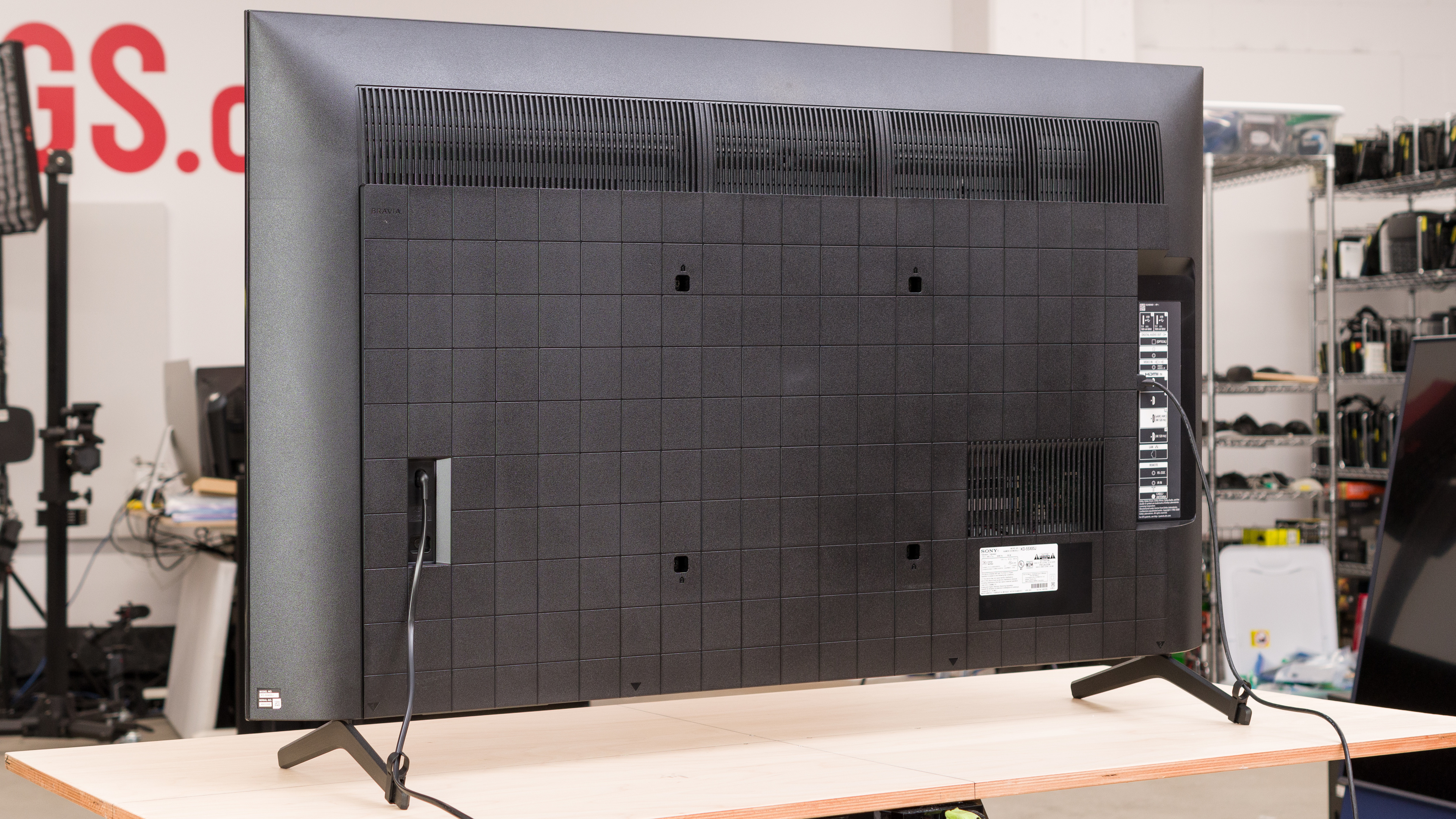
The back of the TV is nearly identical to the Sony X90J. It has a grid-like pattern across most of the back panel, but unlike the X90J, there's no brushed aluminum square in the middle. There's a clip on each leg for cable management. Although pretty basic, it can help to keep the back of your TV neat.

for pictures & test results

Due to the direct-lit backlight, this TV is a bit thicker than edge-lit TVs, like the Samsung Q60/Q60A QLED.
for pictures & test results

The Sony X85J has good build quality. It's entirely plastic, and there's some noticeable flex on the back panel, especially near the VESA mount and around the bottom edge. There's also a bit of concerning pull around the border. The TV leans a bit, but this isn't noticeable from the front at all. The stand supports the TV well overall, but there's a bit of wobble.
for pictures & test results

The Sony X85J has fantastic contrast, so blacks look black in a dark room. The native contrast of this TV without local dimming is similar to the Sony X90J's contrast with local dimming, but this varies between units.
Note: We've seen some reports that the 43 inch model has an IPS panel in some regions. If this is the case, we expect it to have much lower contrast but better viewing angles.
This TV has great peak brightness in SDR. It's about as bright as the Sony X90J, but not as bright as the Hisense U8G. There's no noticeable variation in peak brightness with different content, which is great.
We measured the SDR brightness after calibration in the 'Custom' Picture Mode, with Brightness at max, Contrast at '90', and Color Tone set to 'Expert 1'.
If you want a slightly brighter image, the 'Vivid' Picture Mode with Contrast at 'Max' results in a slightly brighter image, but this mode is less accurate.
for videos & test results

for videos & test results

for videos & test results

Although the Sony X85J uses a direct-lit backlight similar to the Sony X90J, there's no local dimming feature. The video is for reference only, so you can see how the local dimming feature on other displays compares to one without local dimming. If you prefer something with local dimming, then look into the TCL 5 Series/S546 2021 QLED.
for videos & test results
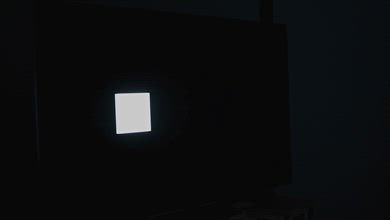
for videos & test results

for videos & test results

Unlike the Sony X90J, this TV doesn't have a local dimming feature. The video is for reference only, so you can see how the local dimming feature on other displays compares to one without local dimming.
for pictures & test results

for pictures & test results

for pictures & test results

The Sony X85J has decent peak brightness in HDR. It's bright enough to deliver an impact HDR experience with most content, but small highlights aren't bright enough to stand out the way the director intended.
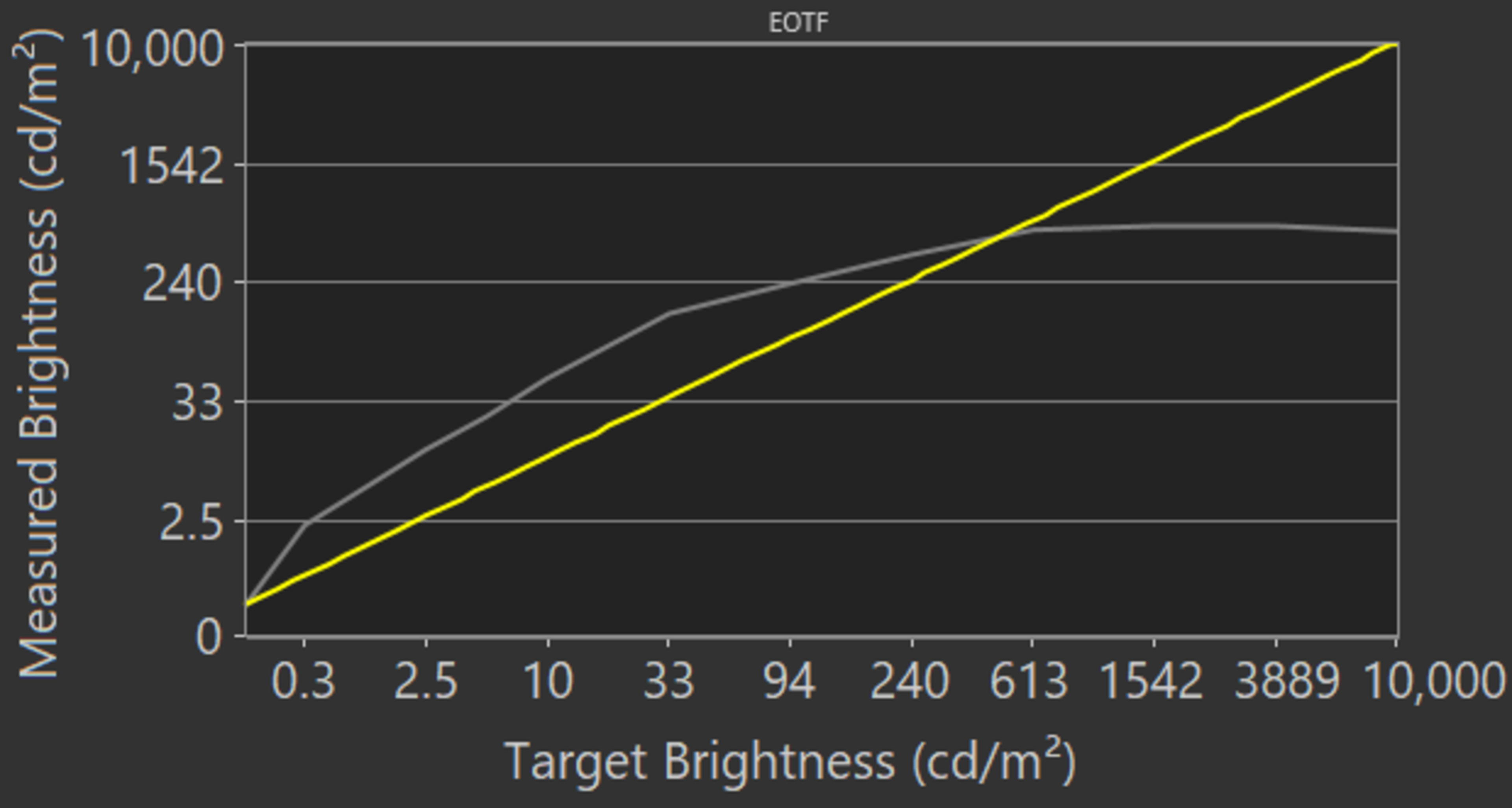
Unfortunately, the TV doesn't follow the EOTF curve properly, as most scenes are brighter than they're supposed to be. It's not as bad as the Hisense U8G, but it's not ideal if you care about an accurate image. It also cuts off sharply at the TV's peak brightness, resulting in a loss of fine details in bright scenes.
If you want to make HDR content brighter and don't mind losing image accuracy, change to the 'Vivid' Picture Mode, and set Contrast to 'Max'. These settings result in a much brighter image, as you can see in this EOTF plot.
We measured the HDR brightness in the 'Custom' Picture Mode, before calibrating the TV, with Brightness at max, Contrast at '90', and Color Tone set to 'Expert 2'.
for pictures & test results

for pictures & test results

for pictures & test results

The brightness in 'Game Mode' is identical to the 'Custom' Picture Mode. The TV still doesn't follow the EOTF properly, but this isn't as much of an issue, as most games have an option to adjust the HDR brightness.
for pictures & test results

for pictures & test results
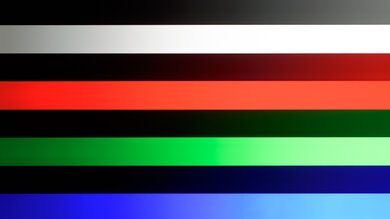
The Sony X85J has excellent gradient handling. There's some banding in darker shades, especially greens, but it's not very noticeable with most content. It has a less powerful image processor than the Sony X90J, and it doesn't have a smooth gradation feature or other options to remove banding.
for pictures & test results

for pictures & test results

The Sony X85J has very good gray uniformity, but this can vary between individual units. The sides of the screen are a bit darker than the center, but there's very little dirty screen effect, great for sports fans. Near-dark scenes look even better, with no noticeable issues at all.
for pictures & test results

The unit we tested has excellent black uniformity, but this can vary between units. There's a bit of cloudiness in the screen, which you can't reduce as there's no local dimming, but this isn't very noticeable in most content.
for videos & test results
for pictures & test results

for pictures & test results

for pictures & test results

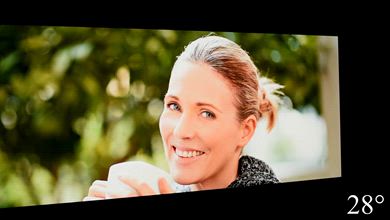
Unfortunately, as expected of a VA-type panel, the Sony X85J's viewing angles are disappointing. Colors stay accurate to a wider angle than the Hisense U8G, but dark shades look washed out at a narrow angle. A TV with an IPS-type panel, like the LG NANO90 2021, is a better choice for a wide seating arrangement.
Note: We've seen some reports that the 43 inch model has an IPS panel in some regions. If this is the case, we expect it to have much better viewing angles but worse contrast.
for pictures & test results

for pictures & test results
for pictures & test results

The Sony X85J has decent reflection handling. The semi-gloss finish reduces the intensity of direct reflections a bit without smearing them across the screen. Bright lights can still be distracting, but overall we don't expect visibility to be an issue in most environments.
for pictures & test results

for pictures & test results

for pictures & test results

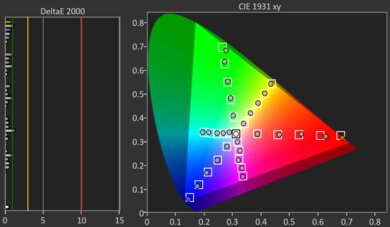
Out of the box, the Sony X85J is remarkably accurate. Gamma is very close to our target of 2.2, and the white balance is nearly perfect. There are some inaccurate colors, especially highly saturated blues, but they're close enough to the targets that we don't expect most people to notice them. Note that the exact accuracy out of the box can vary between units.
for pictures & test results

for pictures & test results

for pictures & test results

Calibration improved the white balance and gamma to near perfection, but as there's no color calibration on this TV, we weren't able to correct any of the color issues.
You can see our recommended settings here.
for pictures & test results

We didn't notice any issues upscaling 480p content like DVDs.
for pictures & test results

720p content, including most cable TV stations, is upscaled well by the Sony X85J, with no noticeable issues.
for pictures & test results

Like most TVs we've tested, 1080p content looks almost as good as native 4k content.
for pictures & test results

4k content is displayed perfectly, with no noticeable issues.
for pictures & test results

Like most TVs on the market, the Sony X85J uses a BGR (Blue-Green-Red) subpixel layout instead of the traditional Red-Green-Blue layout. For video content, this doesn't cause any issues, but it causes text clarity issues with some programs when used as a PC monitor. You can read more about this here.
for pictures & test results
for pictures & test results
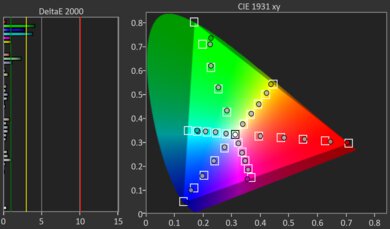
The Sony X85J has a great color gamut. It can display nearly the entire DCI P3 color space used by most current HDR content, but it falls short on highly saturated greens, although this won't be very noticeable with most content. It also has okay coverage of the wider Rec. 2020 color space, but it's not as good as the Hisense U8G.
The X85J we tested displays a wider color gamut than the Sony X90J, which is unexpected. This can vary between units, though, and the difference isn't very noticeable. We found that the X90J has better tone mapping, and in person, with real content, the X90J looks better.
for pictures & test results

for pictures & test results

The Sony X85J has decent color volume. It's limited by the incomplete color gamut and, like most LCDs on the market, blues aren't as bright as other colors. Thanks to the high contrast ratio, this TV can display dark, saturated colors well, but not as well as the Hisense U8G.
for pictures & test results

There are no signs of temporary image retention on our unit, but this can vary.
We don't expect VA panels to experience permanent image retention, as the VA panel in our long-term test appears immune.
for pictures & test results

for pictures & test results
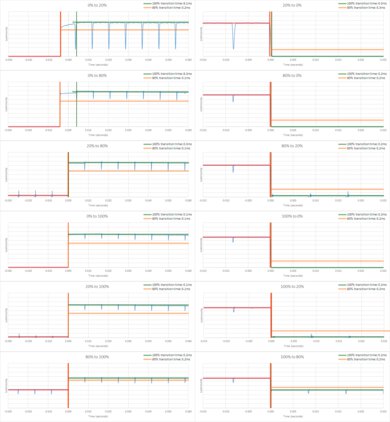
The Sony X85J has a great response time, resulting in very clear motion, with negligible blur behind fast-moving objects. Transitions in dark scenes look better than most VA panels, but there's still some black smearing behind dark objects. There's very little overshoot in any transition.
for pictures & test results

The Sony X85J uses direct (DC) dimming to dim the backlight. Like the Sony X850G, there's some noise at very low backlight levels, but this isn't noticeable at all, and the backlight never turns completely off. It's different from the Sony X90J, which uses Pulse-Width Modulation (PWM) to dim the backlight. PWM can bother some people, as it can cause eye fatigue or headaches.
for pictures & test results
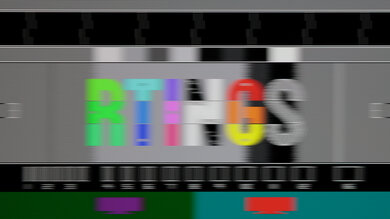
for pictures & test results
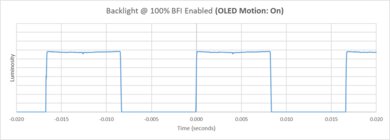
This TV has an optional backlight strobing feature, commonly known as black frame insertion (BFI), that can reduce the amount of persistence blur. Like the Sony X90J, it can only flicker at 120Hz, which can cause duplications when watching 60Hz content. Note that our scoring is based only on the refresh rates that support BFI and don't reflect how effective it is.
for pictures & test results

for pictures & test results

The Sony X85J has an optional motion interpolation feature that can improve the appearance of lower frame-rate content. Subjectively, it seems to perform well, but we did notice some artifacts in busier scenes.
Due to the fast response time of this TV, there is some noticeable stutter when watching movies. It's mainly noticeable in slow panning shots. If stutter bothers you, enabling motion interpolation can help to reduce it, but this can introduce the soap opera effect, which some people don't like.
The Sony X85J can remove judder from all sources.
Update 08/30/2022: With firmware version PKG6.5942.0698NAA released in July 2022, there aren't any issues with 1080p signals using VRR below 120 fps. There were some issues with the screen going black before this firmware version, so if you notice anything, just make sure to update the TV to the latest firmware.
Update 03/04/2022: Sony released an update to include VRR support with firmware PKG6.5660.0668NAA.
The VRR support works without issue on the Xbox Series X and reduces screen tearing. Sadly, it doesn't support FreeSync at all, as there's screen tearing with the AMD RX 580 and RX 6600 XT graphics cards, and because the Xbox Series X supports both HDMI Forum VRR and FreeSync, it's confirmed that it has native HDMI Forum VRR support.
It has G-SYNC compatibility with NVIDIA graphics cards, but there are some issues with it. It's tear-free with 4k @ 120Hz signals from the NVIDIA RTX 3060, but initially, the backlight flickered until the TV and PC were reset. Also, 1440p @ 120Hz works without any problem, but the TV is upscaling 1440p to 4k. The replacement for this TV, the Sony X85K, doesn't have as many VRR issues.
Update 03/04/2022: Sony released an update to include VRR support with firmware PKG6.5660.0668NAA. Like other TVs, we couldn't get proper VRR input lag readings because the TV kept crashing. We experienced the same issue with some other TVs like the Sony X90J, and we're looking into it.
The Sony X85J has outstanding low input lag, which is especially important when gaming or for use as a PC monitor. It's a tiny bit slower than the Hisense U8G but a bit faster than the Sony X90J.
Update 01/28/2022: Some users have reported that this TV occasionally skips frames when playing 23.976fps content, like Blu-rays. We tested it but didn't notice any frame skipping or judder issues.
Update 11/24/2021: We rechecked 4k @ 120Hz with chroma 4:4:4 support on this TV. Unfortunately, like most other TVs we've tested in 2021, it can't display 4k @ 120Hz signals properly. The vertical resolution is cut in half, resulting in a 3840 x 1080 interlaced signal, so text isn't displayed properly. This isn't very noticeable when gaming, though.
The Sony X85J supports most common resolutions, except 1440p, which requires a forced resolution. Chroma 4:4:4 signals are displayed properly in most supported resolutions, except for 4k @ 120Hz, which is important for clear text from a PC.
for pictures & test results

Update 03/04/2022: After a firmware update (version PKG6.5660.0668NAA) the TV now supports both VRR and ALLM support, and no settings are required for ALLM to work.
The Sony X85J doesn't support 4k @ 120Hz and Dolby Vision at once, so you have to choose between them by changing the HDMI Signal Format setting.
for pictures & test results

The Sony X85J has two HDMI 2.1 ports. Unfortunately, one of these is also the eARC port, so if you're planning to connect a home theater system, you'll only be able to take full advantage of one HDMI 2.1 source.

Unlike the Sony X850G, there's no dedicated component or composite input. Instead, there's a single composite in port, which requires a breakout adapter that's sold separately. It has a built-in tuner, which has received an update for NextGen TV ATSC 3.0, allowing it to receive over-the-air 4k broadcasts in supported regions.
The Sony X85J supports eARC on HDMI port 3. This allows the TV to pass high-quality, uncompressed audio to an external home theater system or soundbar.
for pictures & test results

The Sony X85J has a decent frequency response. Like most TVs, the low-frequency extension (LFE) is high, as it can't produce any deep thump or rumble. Above the LFE, the frequency response is very balanced, resulting in clear dialogue. It can get very loud, but there's a bit of pumping at max volume.
for pictures & test results
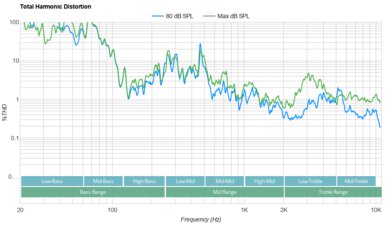
This TV has decent distortion performance. At lower volumes, there's very little total distortion, but it increases drastically at max volume. This varies between content, though, and not everyone will even notice it.
for pictures & test results

The Sony X85J runs on Google TV instead of the Android TV interface used in previous years. The core of the smart interface is the same, but the overall layout and some functionality have changed. It's easy to use, and the built-in content store has a huge selection of additional content.
for pictures & test results

Unfortunately, like almost all TVs on the market now, there are ads throughout the interface. We noticed them in the app store and on the main page, but the exact location varies.
for pictures & test results
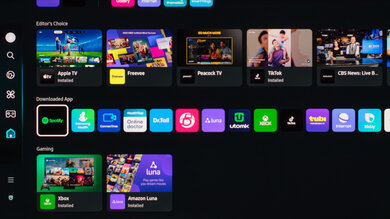
Through the built-in Google Play Store, this TV has a massive selection of apps.
for pictures & test results

The remote is identical to the one included with the Sony X90J. It's a bit larger than most remotes currently on the market, as Sony is one of the last brands to include a full numpad and full controls on the remote. The remote has a built-in mic for voice control, but it must be paired over Bluetooth with the TV for this feature to work. The voice commands work well, allowing you to change inputs, search for content, or even adjust some settings.

for pictures & test results

- Power cord
- Remote control
- Batteries
- VESA mount adapters
- Cable clips
- User manual