MSI MAG 274UPF  Monitor Review

Reviewed Sep 03, 2024 at 10:17am
Tested using Methodology v2.0.1 
MSI MAG 274UPF
7.1
PC Gaming 
8.0
Console Gaming 
8.5
Office 
7.6
Editing 
7.5
Brightness 
7.5
Response Time 
5.3
HDR Picture 
7.0
SDR Picture 
 16

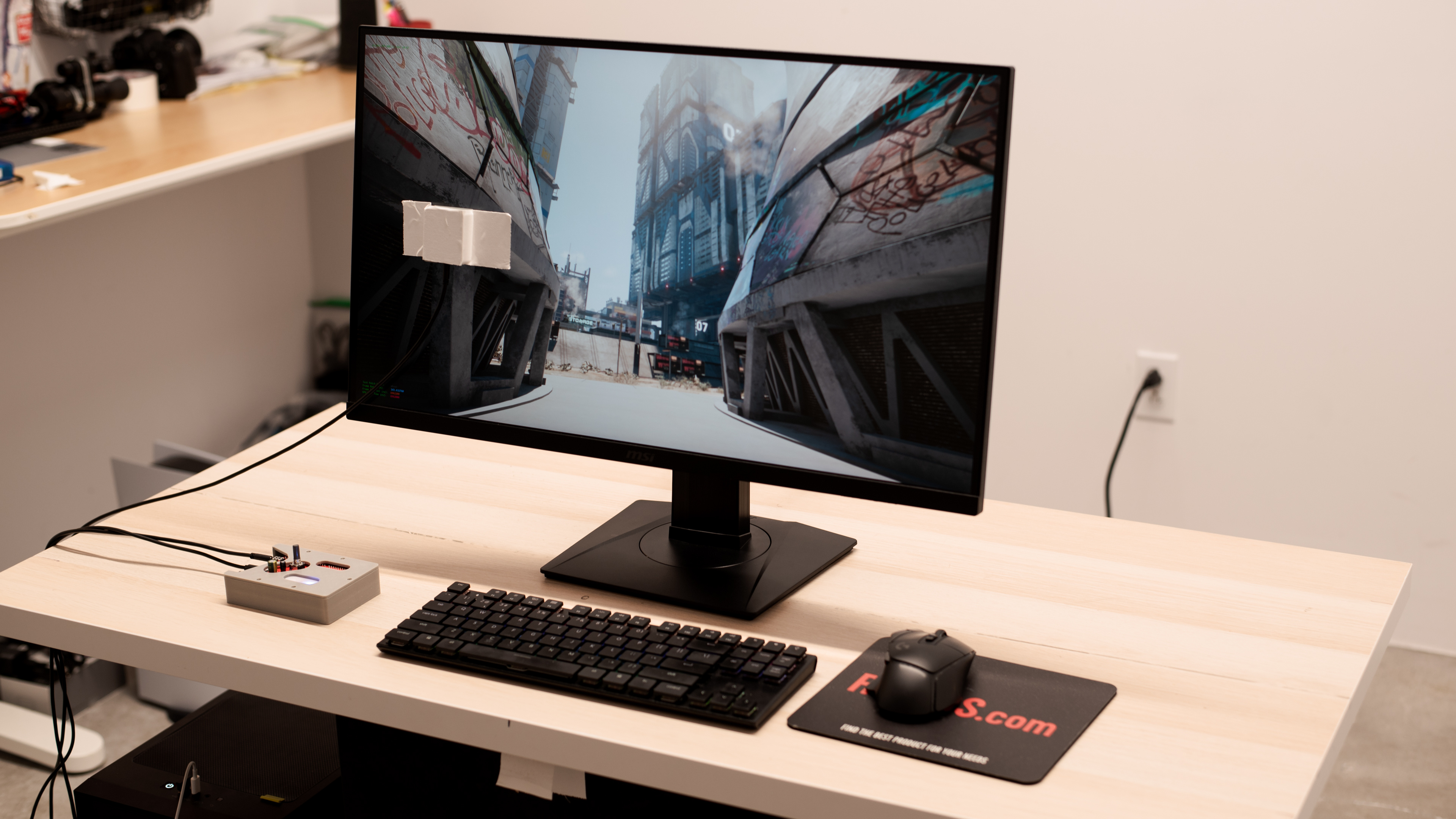
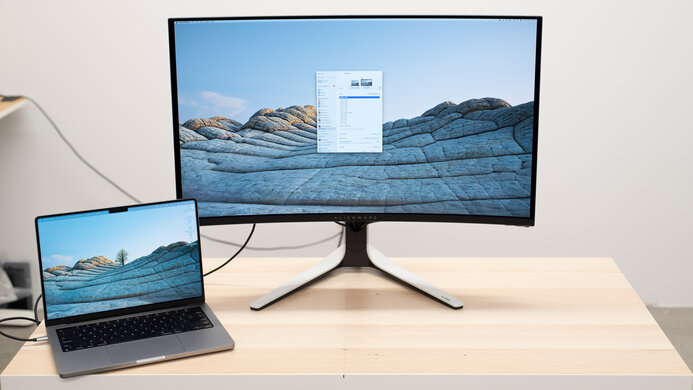
The MSI MAG 274UPF is a 27-inch, 4k gaming monitor with a 144Hz refresh rate and HDMI 2.1 bandwidth. It's one of several similar monitors in MSI's lineup, including the MSI G274QPF-QD. The MAG 274UPF competes with other 27-inch 4k gaming monitors like the LG 27GR93U-B and the Gigabyte M27U. While it doesn't have local dimming, it does have several added productivity features, like a USB-C port with up to 65W of power delivery and a KVM switch that makes it easy to multitask with different computers.

How We Test Monitors

We buy and test more than 30 monitors each year, with units that we buy completely on our own, without any cherry-picked units or samples. We put a lot into each unbiased, straight-to-the-point review, and there's a whole process from purchasing to publishing, involving multiple teams and people. We do more than just use the monitor for a week; we use specialized and custom tools to measure various aspects with objective data-based results. We also consider multiple factors before making any recommendations, including the monitor's cost, its performance against the competition, and whether or not it's easy to find.

Our Verdict

7.1
PC Gaming 

The MSI MAG 274UPF is decent for PC gaming. Some competitive gamers may find its 144Hz refresh rate limiting, but it has low input lag for a responsive feel and a good response time for fairly sharp motion. Unfortunately, its low contrast ratio causes deep blacks to look gray in a dark room, and it doesn't get bright enough for highlights to pop.

Pros
  • 144Hz refresh rate.
  • Good response time.
  • Low input lag.
Cons
  • Deep blacks appear gray in a dark room.
  • Limited HDR brightness.
8.0
Console Gaming 

The MSI MAG274UPF is great for console gaming. It takes full advantage of the Xbox Series X|S and PS5 thanks to its HDMI 2.1 bandwidth and delivers detailed images thanks to its 4k resolution. Gaming feels responsive due to its low input lag, and this monitor has a good response time. Unfortunately, it has limited HDR picture quality, as deep blacks look gray in a dark room, and highlights don't pop.

Pros
  • HDMI 2.1 bandwidth.
  • Good response time.
  • Low input lag.
Cons
  • Deep blacks appear gray in a dark room.
  • Limited HDR brightness.
8.5
Office 

The MSI MAG274UPF is impressive for office use. It has a 4k resolution that results in high pixel density on its 27-inch screen, so it has fantastic text clarity. It also works well in a brighter room, as it's bright enough to overcome glare and has good reflection handling. And though it doesn't have wide viewing angles, it has fantastic ergonomics, so it's easy to share your screen with someone else. While it only has two USB-A ports, it has a USB-C port with up to 65W of power delivery and a KVM switch that makes it easy to multitask with different computers.
Pros
  • 4k resolution for sharp text and images.
  • Bright enough to fight glare.
  • USB-C port with 65W power delivery and KVM switch.
  • Good reflection handling.
Cons
None
7.6
Editing 

The MSI MAG274UPF is good for editing. It has great accuracy even before calibration in its sRGB mode and displays a wide range of colors. Its 4k resolution delivers sharp images, and this monitor is bright enough to overcome glare even in fairly bright rooms. However, it's not ideal if you're editing HDR content, as deep blacks appear gray in a dark room, and highlights aren't bright enough to pop.

Pros
  • 4k resolution for sharp text and images.
  • Bright enough to fight glare.
  • USB-C port with 65W power delivery and KVM switch.
  • Great accuracy in the sRGB mode.
Cons
  • Deep blacks appear gray in a dark room.
7.5
Brightness 

The MSI MAG274UPF has good brightness. It gets bright enough to fight glare in well-lit rooms, but highlights don't pop in HDR.

Pros
  • Bright enough to fight glare.
Cons
  • Limited HDR brightness.
7.5
Response Time 

The MSI MAG274UPF has a good response time, though fast-moving objects still have a bit of blur.

Pros
  • Good response time.
Cons
None
5.3
HDR Picture 

The MSI MAG274UPF is disappointing for HDR. Its low contrast ratio makes deep blacks appear gray in a dark room, and it lacks a local dimming feature to improve the picture quality further. Additionally, colors don't look vivid.

Pros
None
Cons
  • Deep blacks appear gray in a dark room.
  • No local dimming feature.
7.0
SDR Picture 

The MSI MAG274UPF has decent SDR picture quality. While it displays a wide range of colors, its low contrast causes deep blacks to appear gray in a dark room.

Pros
  • Displays wide range of colors.
Cons
  • Deep blacks appear gray in a dark room.
8.4
Color Accuracy 

The MSI MAG274UPF has great color accuracy. Calibrating it results in the most accurate image, but it still has great accuracy before calibration in its sRGB mode. It also has decent gray uniformity with a consistent image throughout most of the screen, though the edges are darker in some places.
Pros
  • Great accuracy in the sRGB mode.
  • Decent gray uniformity.
Cons
None
  • 7.1
    PC Gaming
  • 8.0
    Console Gaming
  • 8.5
    Office
  • 7.6
    Editing

  • Performance Usages

  • 7.5
    Brightness
  • 7.5
    Response Time
  • 5.3
    HDR Picture
  • 7.0
    SDR Picture
  • 8.4
    Color Accuracy
  • Changelog

    1.  Updated Feb 21, 2025: We've converted this review to Test Bench 2.0.1. This includes a new test result for DisplayPort 2.1 Transmission Bandwidth.
    2.  Updated Sep 03, 2024: Review published.
    3.  Updated Aug 27, 2024: Early access published.
    4.  Updated Aug 22, 2024: Our testers have started testing this product.

    Check Price

    27"MAG 274UPF
    SEE PRICE
    Amazon.com
    27"MAG 274UPF
    SEE PRICE
    BestBuy.com
    27"MAG 274UPF
    SEE PRICE
    Walmart.com
    27"MAG 274UPF
    B&H

    Differences Between Sizes And Variants

    We tested the 27-inch MSI MAG 274UPF, which is similar to several other 27-inch 4k models from MSI, like the MPG 274URF QD. However, as the table below shows, there are differences between the models. The results are only valid for this model.
    Model Code Panel Type RGB Lighting Refresh Rate USB-C Power Delivery
    MAG 274UPF Standard No 144Hz 65W
    MPG 274URF QD Quantum Dot Yes 160Hz 65W
    MAG 274UPF E2 Standard No 160Hz 15W

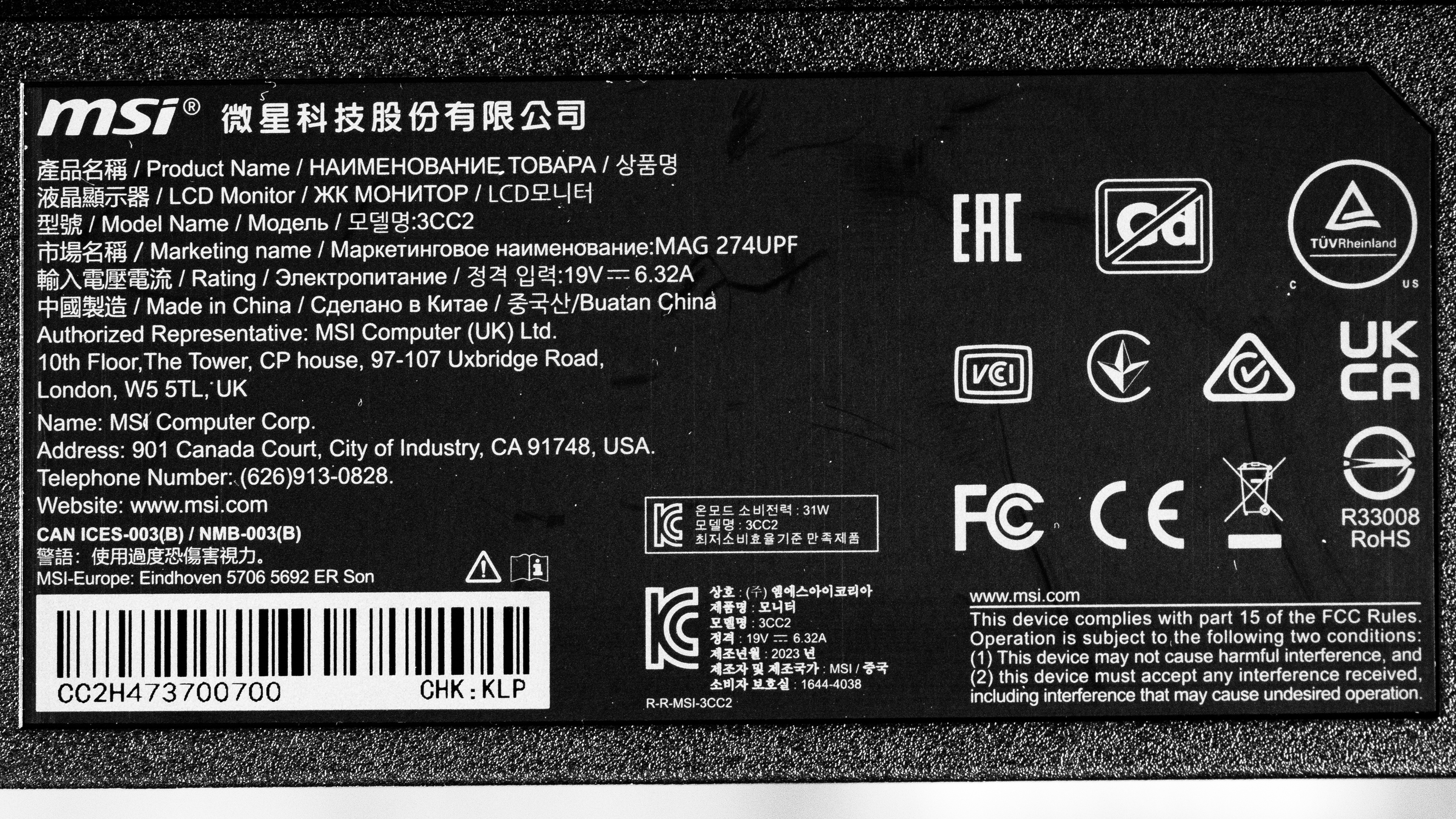
    We tested our unit with firmware FW.019. You can see the label here.

    Popular Monitor Comparisons

    The MSI MAG 274UPF is a lower-cost 4k monitor for someone who wants a dual-purpose display that's excellent for productivity and is also decent for gaming. Like other monitors in this category, it has a sharp 4k resolution that's great for office and editing work, and it can also work well for gaming, particularly if you're playing with a console, thanks to its HDMI 2.1 bandwidth. However, what sets it apart from the competition is that it often costs less, has a KVM switch, and delivers up to 65W of power over USB-C. However, it has limited HDR performance, so if you want a dual-purpose monitor without compromise, the Acer Nitro XV275K P3biipruzx has better gaming performance and office features but costs a lot more.

    See our recommendations for the best 27-inch gaming monitors, the best 4k gaming monitors, and the best monitors for Xbox Series X.

    AOC Q27G3XMN

    The AOC Q27G3XMN and the MSI MAG 274UPF are 27-inch gaming monitors. The AOC is a better choice if gaming performance is most important to you, as it has better motion handling, gets much brighter in HDR, and has far better contrast. However, if crisp text and productivity features like a KVM switch matter more to you than gaming performance, then the MSI is a better option.

    LG 27GR93U-B

    The LG 27GR93U-B and the MSI MAG 274UPF are 27-inch 4k gaming monitors. Both monitors have very similar performance; you may prefer to get whichever is cheaper. The MSI is a better choice if you want USB-C connectivity and a KVM switch. However, if you do a lot of co-op gaming, you may prefer the LG, as it has wider viewing angles.

    Gigabyte M27U

    The Gigabyte M27U and the MSI MAG 274UPF are 27-inch 4k gaming monitors. You may prefer to get whichever is cheaper, as both have similar performance. If HDR brightness is important to you, the Gigabyte is a slightly better option, as it gets a bit brighter in HDR. However, if you want to charge your laptop from the monitor, the MSI is a better option, as it provides more power over USB-C.

    Acer Nitro XV275K P3biipruzx

    The Acer Nitro XV275K P3biipruzx and the MSI MAG 274UPF are 27-inch 4k gaming monitors. Both are well-suited to gaming and productivity work, but there are some differences in features. The Acer uses Mini LED backlighting, so it has better picture quality with deeper blacks and brighter highlights. The Acer also delivers better motion handling, so it's the better choice if you play a lot of action games.

    Show more 

    Test Results
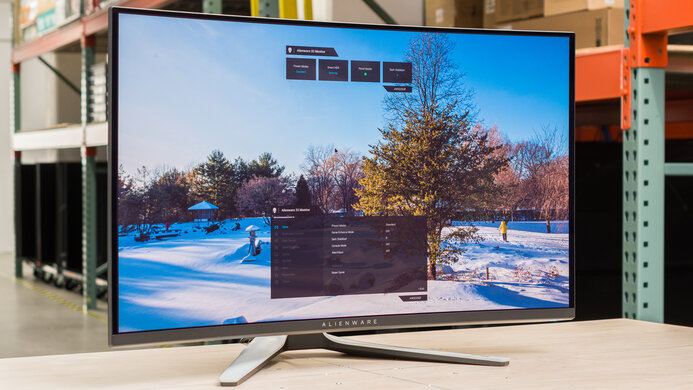
    perceptual testing image
    Sort:
    RATINGS
    Category:
    All
    Design
    Style
    Curved
    No
    Curve Radius
    Not Curved

    The MSI MAG274UPF has a black plastic body with a simple aesthetic from the front, though it has a much more gamer-oriented look when viewed from behind the monitor. The stand only takes up a little room below the front of the monitor, and you can place a keyboard or mouse very close to it.

    8.0
    Build Quality

    The monitor has great build quality. Although the body is plastic, it feels solid. The stand is also solid, and the monitor is well-constructed overall.

    9.4
    Ergonomics
    Min Height To Top Of Panel
    15.5" (39.3 cm)
    Height Adjustment
    5.2" (13.2 cm)
    Tilt Range
    -20° to 5°
    Rotate Portrait/Landscape
    Yes, Both Ways
    Swivel Range
    -45° to 45°
    Wall Mount
    VESA 100x100

    The monitor has fantastic ergonomics, and it's easy to adjust to your preferred position for a long gaming session or share your screen with another person. The stand features a loop for cable management.

    Stand
    Base Width
    9.5" (24.2 cm)
    Base Depth
    7.7" (19.6 cm)
    Thickness (With Display)
    6.9" (17.6 cm)
    Weight (With Display)
    15.0 lbs (6.8 kg)

    The square-based stand takes up almost no space in front of the monitor. It supports the monitor well, and there isn't much wobble. These results are with the display at its minimum height. When the display is at its maximum height, it's 6.3" (16 cm) thick because the stand is slightly angled back.
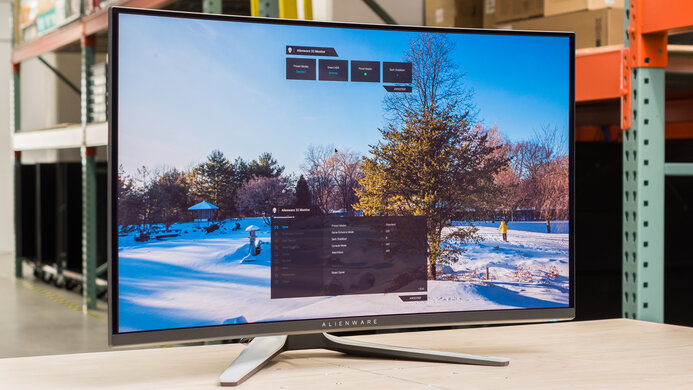
    Display
    Size
    27"
    Housing Width
    24.1" (61.3 cm)
    Housing Height
    14.3" (36.2 cm)
    Thickness (Without Stand)
    2.5" (6.3 cm)
    Weight (Without Stand)
    10.4 lbs (4.7 kg)
    Borders Size (Bezels)
    0.3" (0.8 cm)
    Controls

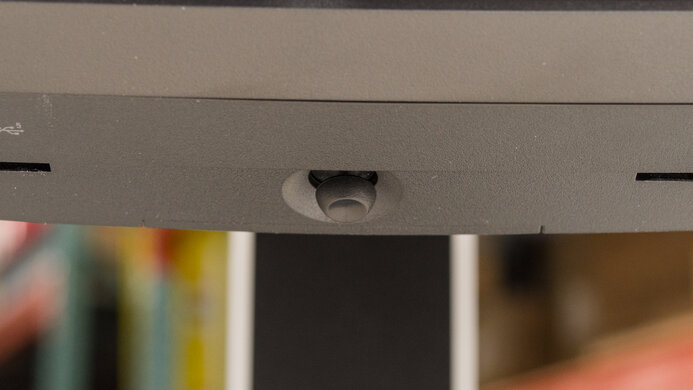
    A joystick on the back right side of the monitor controls the power and lets you adjust the on-screen menu.

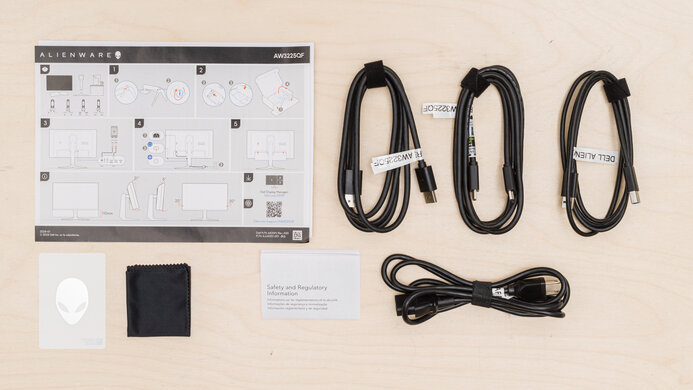
    In The Box
    Power Supply
    External Brick

    • HDMI cable
    • USB-C cable
    • USB-A to USB-B cable
    • Power cable
    • Power supply
    • Manuals
    • VESA standoffs
    Picture Quality
    6.2
    Contrast
    Native Contrast
    1,104 : 1
    Contrast With Local Dimming
    N/A

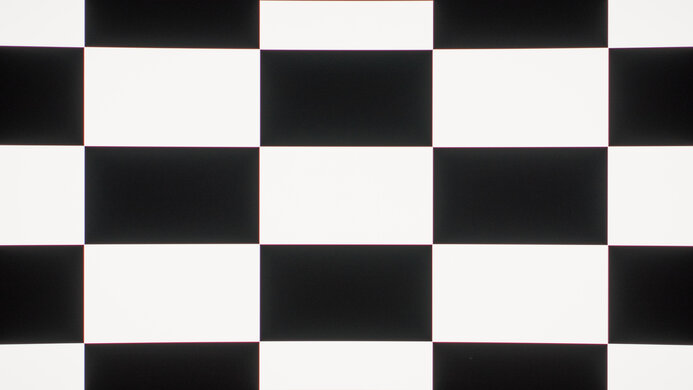
    The monitor's contrast is mediocre. As a result, deep blacks appear gray in a dark room, and there's no local dimming feature to improve the contrast further.

    0.0
    Local Dimming
    Local Dimming
    No
    Backlight
    Edge

    Though this monitor doesn't have local dimming, we still film these videos so you can compare the backlight performance with a monitor that has local dimming.

    8.2
    SDR Brightness
    Real Scene
    386 cd/m²
    Peak 2% Window
    422 cd/m²
    Peak 10% Window
    421 cd/m²
    Peak 25% Window
    420 cd/m²
    Peak 50% Window
    420 cd/m²
    Peak 100% Window
    419 cd/m²
    Sustained 2% Window
    421 cd/m²
    Sustained 10% Window
    420 cd/m²
    Sustained 25% Window
    420 cd/m²
    Sustained 50% Window
    419 cd/m²
    Sustained 100% Window
    419 cd/m²
    Automatic Brightness Limiting (ABL)
    0.000
    Minimum Brightness
    95 cd/m²

    Settings

    • Pro Mode: User (After Calibration)
    • Brightness: Max

    The SDR brightness is great. It gets bright enough to overcome glare and maintains its brightness consistently across different content. The monitor has a very high minimum brightness, which isn't ideal if you're playing in a dark room and prefer a lower brightness level or are sensitive to bright light.

    7.1
    HDR Brightness
    VESA DisplayHDR Certification
    DisplayHDR 400 - 1.0/1.1
    Real Scene
    452 cd/m²
    Peak 2% Window
    475 cd/m²
    Peak 10% Window
    476 cd/m²
    Peak 25% Window
    477 cd/m²
    Peak 50% Window
    477 cd/m²
    Peak 100% Window
    477 cd/m²
    Sustained 2% Window
    475 cd/m²
    Sustained 10% Window
    476 cd/m²
    Sustained 25% Window
    476 cd/m²
    Sustained 50% Window
    476 cd/m²
    Sustained 100% Window
    476 cd/m²
    Automatic Brightness Limiting (ABL)
    0.000

    Settings

    • Pro Mode: User
    • Brightness: Locked

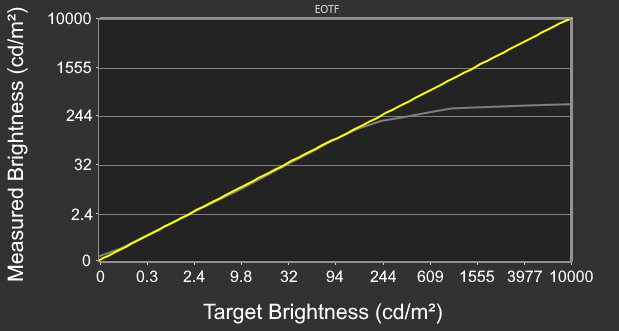
    The HDR brightness is satisfactory. It gets brighter than in SDR, but not enough for highlights to pop. It tracks the EOTF extremely well with a sharp cut-off at peak brightness, so highlights get as bright as possible.

    The following settings are locked out in HDR:

    Locked-Out Settings

    • MPRT
    • Low Blue Light
    • HDCR
    • Brightness
    • Contrast
    • Color Temperature
    • Optix Scope
    • PIP/PBP
    6.9
    Horizontal Viewing Angle
    Color Washout From Left
    30°
    Color Washout From Right
    29°
    Color Shift From Left
    34°
    Color Shift From Right
    40°
    Brightness Loss From Left
    33°
    Brightness Loss From Right
    33°
    Black Level Raise From Left
    70°
    Black Level Raise From Right
    70°
    Gamma Shift From Left
    32°
    Gamma Shift From Right
    32°

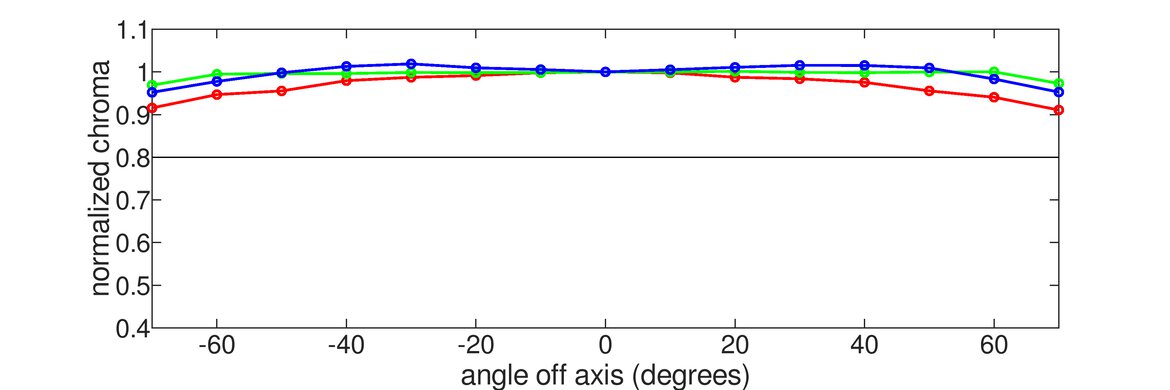
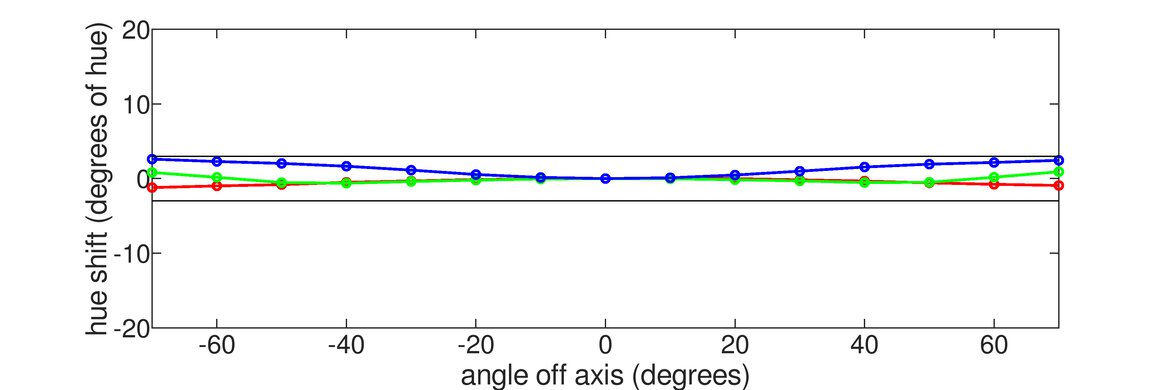
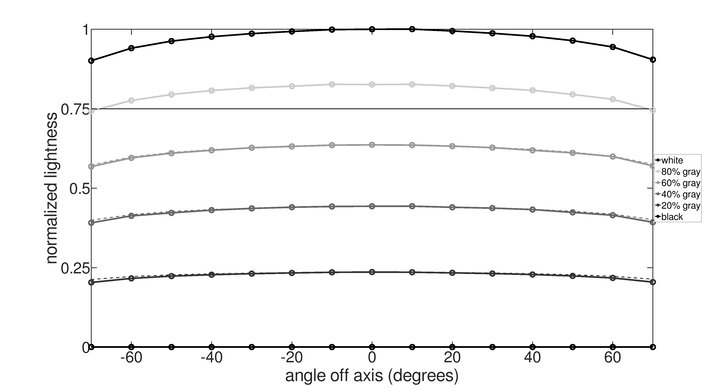
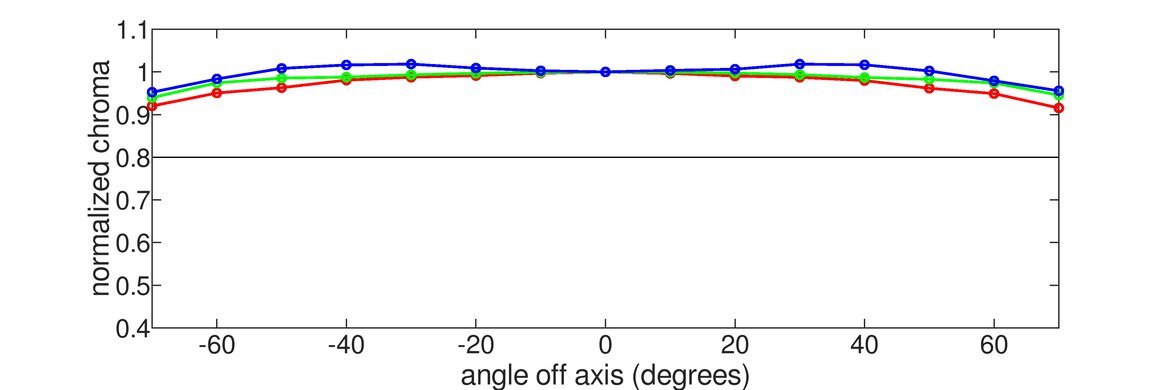
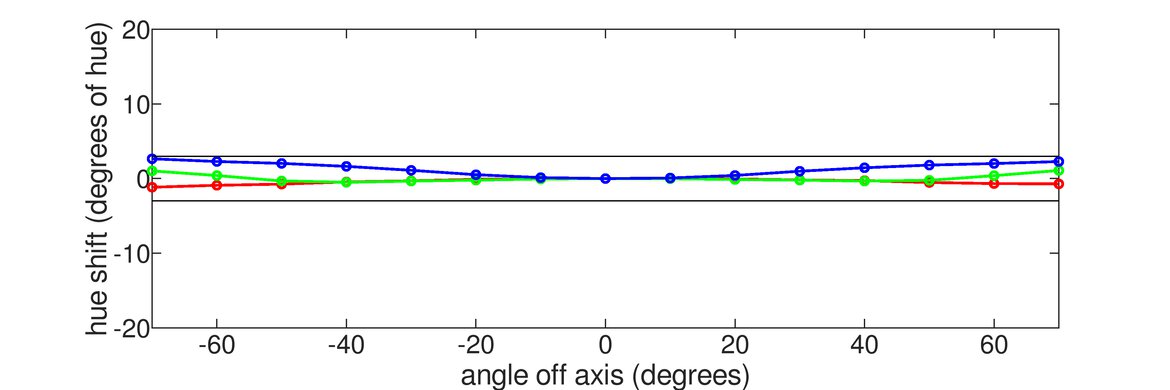
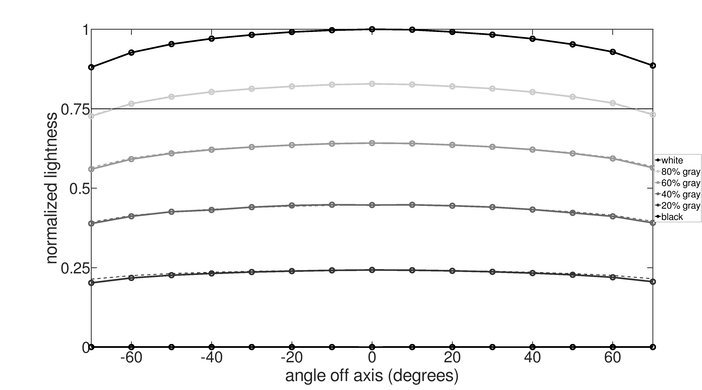
    The monitor's horizontal viewing angle is fair but not as good as many IPS displays. While you can share your screen with someone next to you, the image appears darker and washes out at wider angles.

    7.1
    Vertical Viewing Angle
    Color Washout From Below
    27°
    Color Washout From Above
    33°
    Color Shift From Below
    34°
    Color Shift From Above
    44°
    Brightness Loss From Below
    31°
    Brightness Loss From Above
    37°
    Black Level Raise From Below
    70°
    Black Level Raise From Above
    70°
    Gamma Shift From Below
    37°
    Gamma Shift From Above
    43°

    The vertical viewing angle is decent. If you stand up and look down at the monitor, the image appears slightly washed out.

    7.3
    Gray Uniformity
    50% Std. Dev.
    4.593%
    50% DSE
    0.162%

    The gray uniformity is decent. While the edges of the screen are darker than the rest in some places, there's minimal dirty screen effect in the center, which is great.

    6.4
    Black Uniformity
    Native Std. Dev.
    1.736%
    Std. Dev. w/ L.D.
    N/A

    The black uniformity is mediocre. Backlight bleed is visible along the monitor's edges, and the screen is a bit cloudy. There's no local dimming feature to improve this performance further.

    8.3
    Color Accuracy (Pre-Calibration)
    Picture Mode
    sRGB
    sRGB Gamut Area xy
    100.4%
    White Balance dE (Avg.)
    4.20
    Color Temperature (Avg.)
    6,117 K
    Gamma (Avg.)
    2.15
    Color dE (Avg.)
    2.91
    Contrast Setting
    N/A
    RGB Settings
    Default
    Gamma Setting
    No Gamma Setting
    Brightness Setting
    70
    Measured Brightness
    365 cd/m²
    Brightness Locked
    No

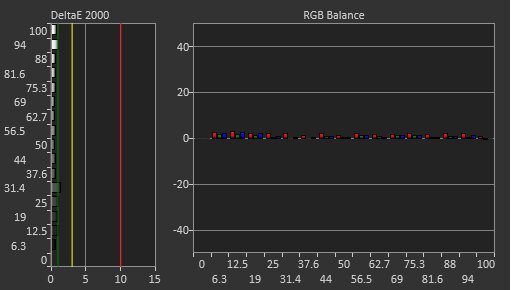
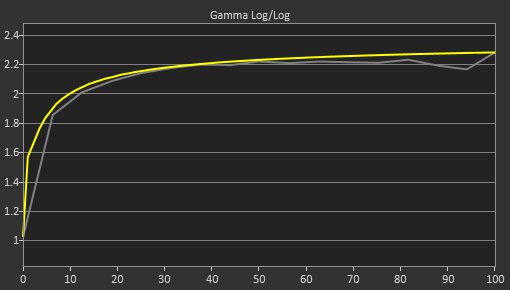
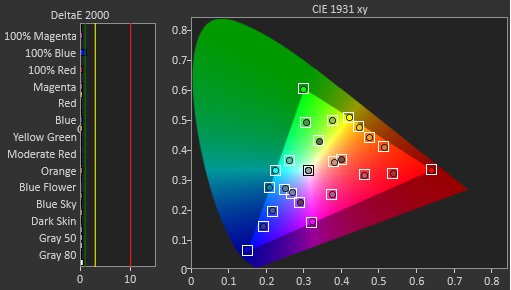
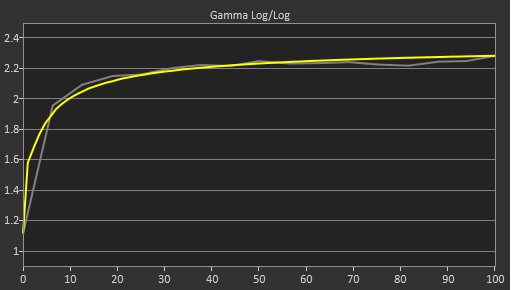
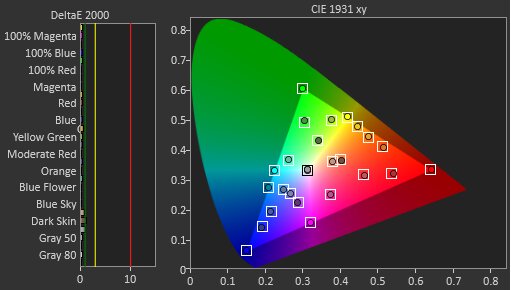
    The MSI MAG274UPF has great accuracy before calibration in the 'sRGB' Pro Mode. The color accuracy is good, and colors are almost perfectly saturated. The white balance is adequate, and the color temperature is fairly close to the 6500K target. Gamma follows the target curve fairly well, though dark parts of scenes are a bit too dark, and most other parts are a bit too bright.

    The following settings are locked out in the 'sRGB' mode:

    Locked-out Settings

    • Low Blue Light
    • Contrast
    • Color Temperature

    If you want to access these settings then you need to use another mode with worse color accuracy, like User.

    9.6
    Color Accuracy (Post-Calibration)
    Picture Mode
    User
    sRGB Gamut Area xy
    99.3%
    White Balance dE (Avg.)
    0.79
    Color Temperature (Avg.)
    6,550 K
    Gamma (Avg.)
    2.18
    Color dE (Avg.)
    0.61
    Contrast Setting
    65
    RGB Settings
    48-51-50
    Gamma Setting
    No Gamma Setting
    Brightness Setting
    0
    Measured Brightness
    100 cd/m²
    ICC Profile
    Download

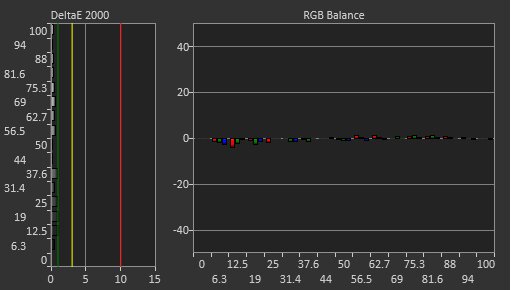
    The accuracy after calibration is remarkable, and you won't notice any problems. Additionally, you can use any of the settings that are locked out in the sRGB mode.

    9.7
    SDR Color Gamut
    sRGB Coverage xy
    99.4%
    sRGB Picture Mode
    User
    Adobe RGB Coverage xy
    94.7%
    Adobe RGB Picture Mode
    User

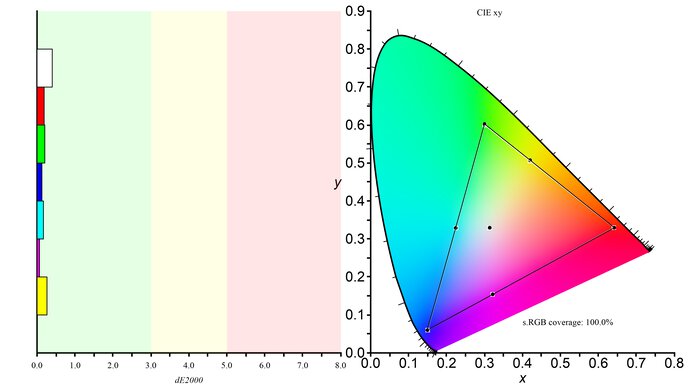
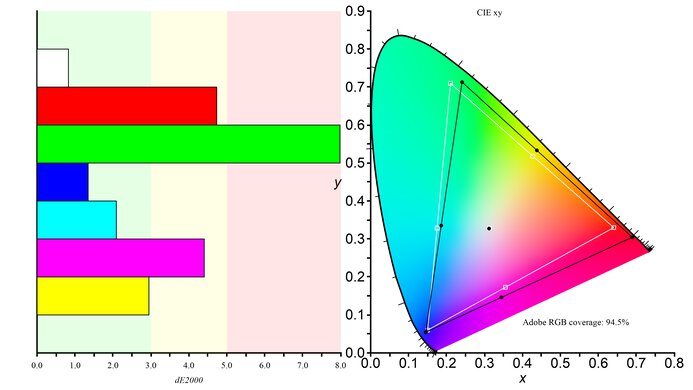
    The monitor has an incredible SDR color gamut. It has fantastic coverage of the sRGB color space and superb coverage of the Adobe RGB color space used in professional publishing. However, red and green are inaccurate in Adobe RGB.

    9.1
    HDR Color Gamut
    Wide Color Gamut
    Yes
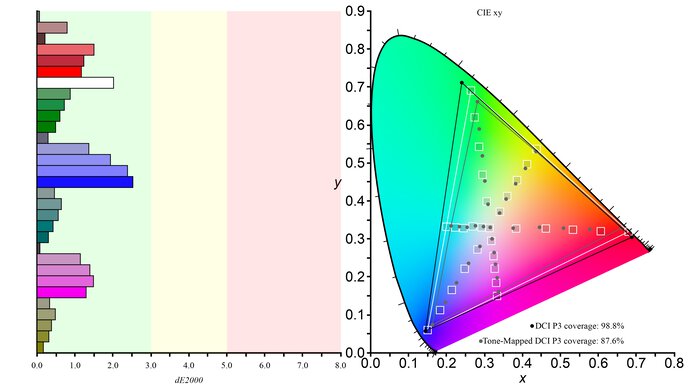
    DCI-P3 Coverage xy
    96.4%
    DCI-P3 Picture Mode
    User
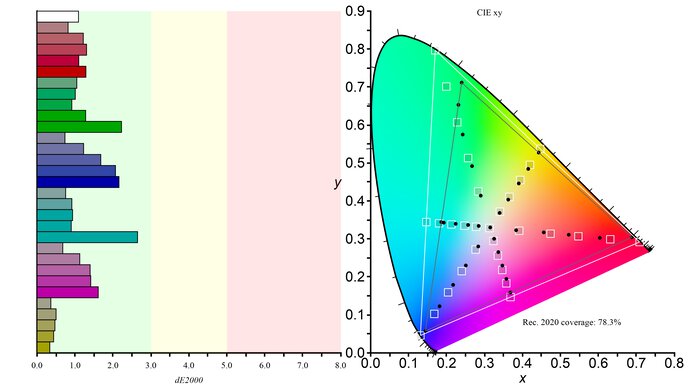
    Rec. 2020 Coverage xy
    74.0%
    Rec. 2020 Picture Mode
    User

    The HDR color gamut is fantastic. It has outstanding coverage in the common DCI-P3 color space and a wide range in the Rec. 2020 color space, though colors are less accurate in Rec. 2020.

    7.6
    HDR Color Volume
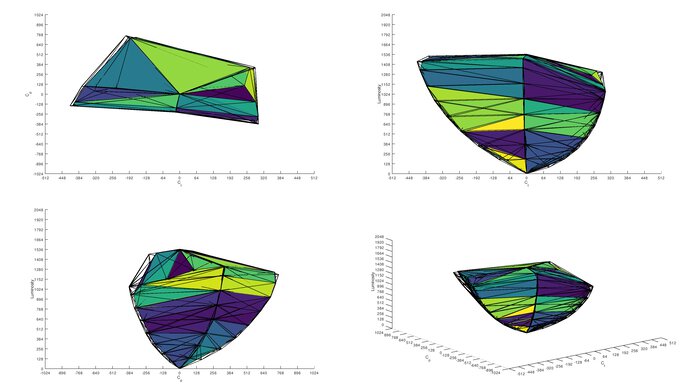
    1,000 cd/m² DCI-P3 Coverage ICtCp
    68.9%
    DCI-P3 Picture Mode
    User
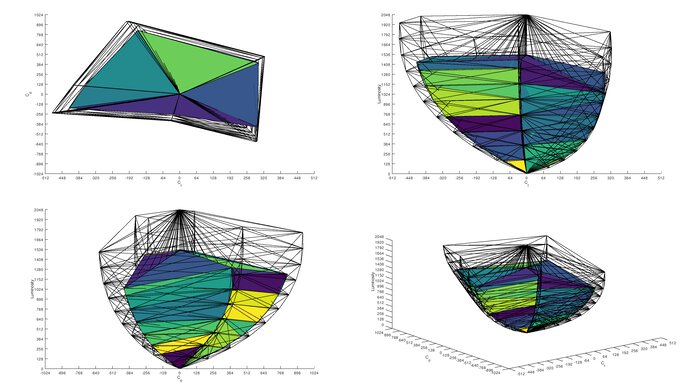
    10,000 cd/m² Rec. 2020 Coverage ICtCp
    30.6%
    Rec. 2020 Picture Mode
    User

    The HDR color volume is good. Its wide color gamut helps it display a large range of colors, but it struggles to display bright and dark colors well.

    9.0
    Text Clarity
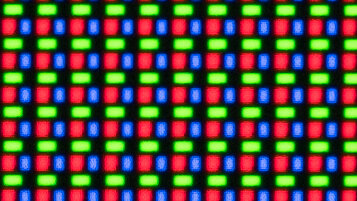
    Pixel Type
    IPS
    Subpixel Layout
    RGB

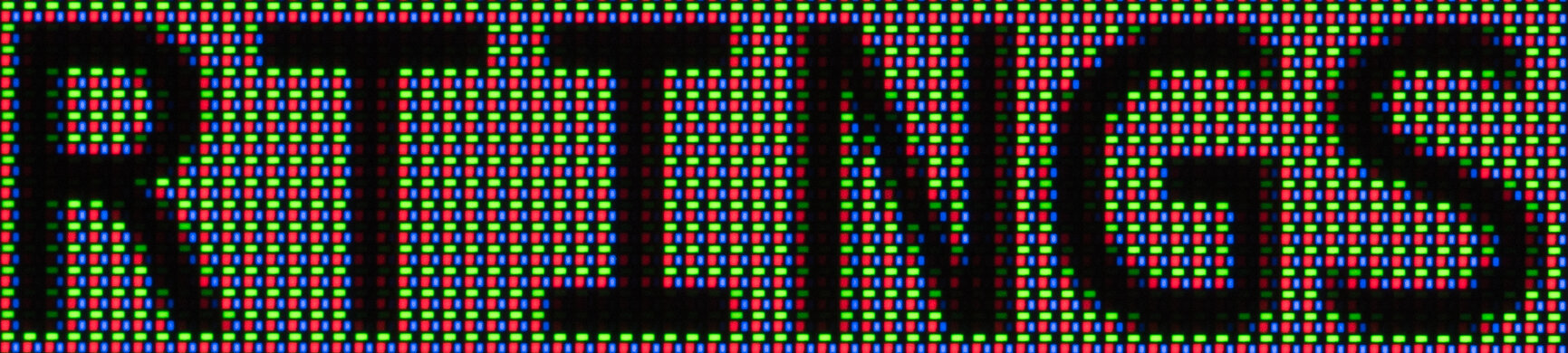
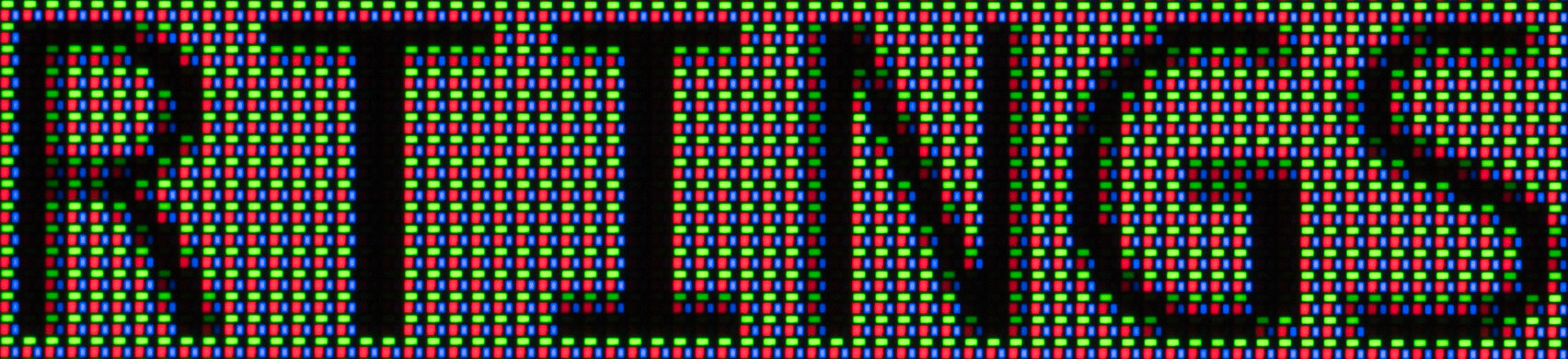
    The text clarity is incredible. Enabling Windows ClearType (top photo) helps improve the clarity of letters. These photos are in Windows 10, and you can see them in Windows 11 with ClearType off here, and with ClearType on here. This monitor has a strong matte coating, so text is slightly less sharp than on some other matte screens.

    7.5
    Reflections
    Screen Finish
    Matte
    Total Reflections
    5.4%
    Indirect Reflections
    3.3%
    Calculated Direct Reflections
    2.1%

    The MSI MAG274UPF has good reflection handling. While some strong light sources cause distracting glare, it's bright enough to fight glare in most environments.

    9.8
    Gradient
    Color Depth
    10 Bit

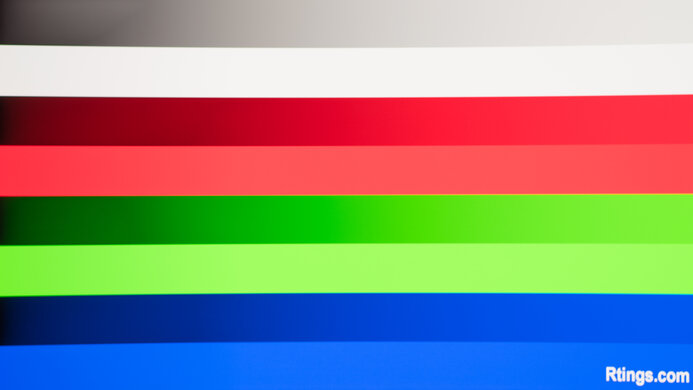
    The gradient handling is outstanding, and you won't notice any issues with banding in scenes with shades of similar colors.

    Motion
    7.4
    Refresh Rate
    Native Refresh Rate
    144 Hz
    Max Refresh Rate
    144 Hz
    Max Refresh Rate Over DP
    144 Hz
    Max Refresh Rate Over HDMI
    144 Hz
    Max Refresh Rate Over DP @ 10-bit
    144 Hz
    Max Refresh Rate Over HDMI @ 10-Bit
    144 Hz

    Your graphics card needs to use Display Stream Compression (DSC) to reach the maximum refresh rate over DisplayPort.

    Variable Refresh Rate (VRR)
    Variable Refresh Rate
    Yes
    FreeSync
    Yes
    G-SYNC
    Compatible (NVIDIA Certified)
    VRR Maximum
    144 Hz
    VRR Minimum
    < 20 Hz
    VRR Supported Connectors
    DisplayPort, HDMI

    NVIDIA VRR Min VRR Max
    DisplayPort <20Hz 144Hz
    HDMI <20Hz 144Hz

    AMD VRR Min VRR Max
    DisplayPort <20Hz 144Hz
    HDMI <20Hz 144Hz
    7.6
    VRR Motion Performance
    See details on graph tool
    Recommended VRR OD Setting
    Fast
    Variable Overdrive Advertised
    No
    Avg. CAD
    193
    Best CAD
    192
    Worst CAD
    195

    Refresh Rate CAD Heatmap RT Chart Pursuit Photo
    143 Heatmap Chart Photo
    120 Heatmap Chart Photo
    100 Heatmap Chart Photo
    80 Heatmap Chart Photo
    60 Heatmap Chart Photo

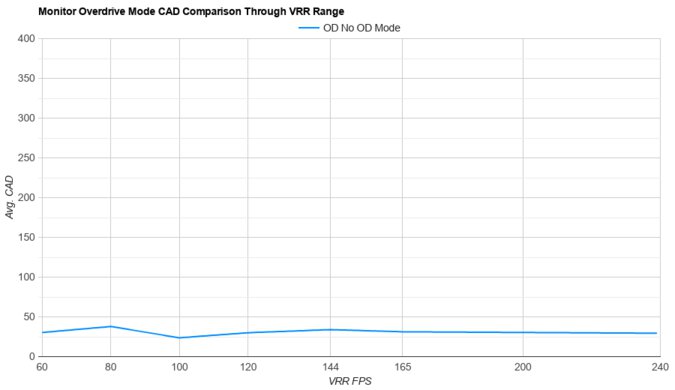
    This monitor has good motion handling across its refresh rate range with VRR enabled. Its motion handling is extremely consistent with the 'Normal' and 'Fast' Response Time overdrive settings, which is ideal if your game's frame rate varies a lot, but there's still some motion blur. The 'Fastest' overdrive setting has such a high CAD that it exceeds the limits of the default chart, though it's visible in an alternative chart.

    7.5
    Refresh Rate Compliance
    See details on graph tool
    See details on graph tool
    Compliance @ Max Hz
    53%
    Compliance @ 120 FPS
    59%
    Compliance @ 60 FPS
    78%

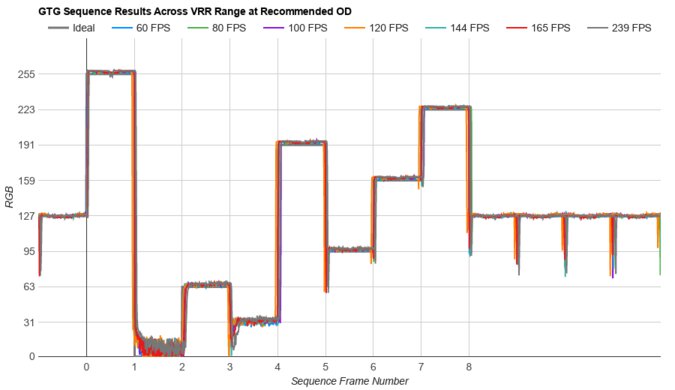
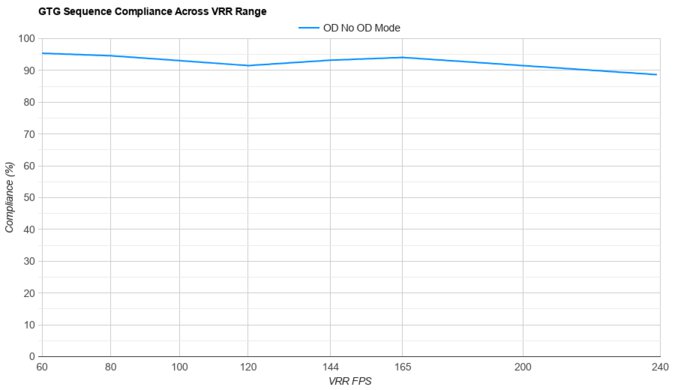
    The refresh rate compliance is good. The 'Normal' and 'Fast' overdrive settings have the most consistent compliance across the refresh rate range. The response time isn't fast enough to make full-color transitions before the monitor draws the next frame.

    7.4
    CAD @ Max Refresh Rate
    OD Transition Max Refresh Rate
    od-transition-max-refresh-rate-fast-0-31
    OD fast
    0 to 31
    Recommended Overdrive Setting
    Fast
    Avg. CAD
    192
    Best 10% CAD
    103
    Worst 10% CAD
    280

    Overdrive Mode CAD Heatmap RT Chart Pursuit Photo
    Normal Heatmap Chart Photo
    Fast Heatmap Chart Photo
    Fastest Heatmap Chart Photo

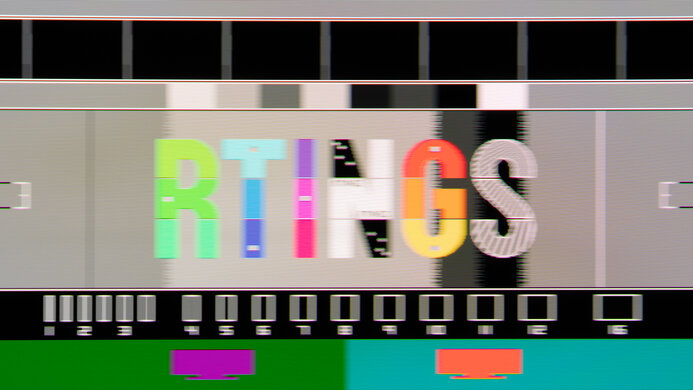
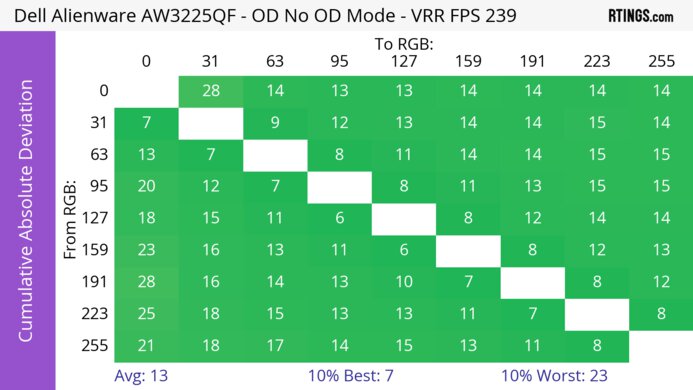
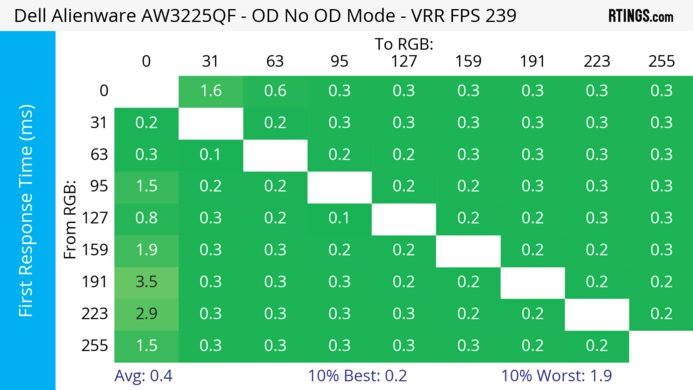
    The CAD at the max refresh rate of 144Hz is decent. There's a moderate amount of blur, even with the 'Fast' overdrive setting. The other settings are slightly blurrier, and 'Fastest' has inverse ghosting.

    Response Time @ Max Refresh Rate
    Recommended Overdrive Setting
    Fast
    First Response Time
    8.2 ms
    Total Response Time
    8.2 ms
    RGB Overshoot
    0 RGB
    Worst 10% First Response Time
    12.6 ms
    Worst 10% Total Response Time
    12.6 ms
    Worst 10% RGB Overshoot
    1 RGB

    Overdrive Mode First Response Heatmap Total Response Heatmap RGB Overshoot Heatmap
    Normal Heatmap Heatmap Heatmap
    Fast Heatmap Heatmap Heatmap
    Fastest Heatmap Heatmap Heatmap
    7.5
    CAD @ 120Hz
    OD Transition 120Hz
    od-transition-120-fast-0-31
    OD fast
    0 to 31
    Recommended Overdrive Setting
    Fast
    Avg. CAD
    186
    Best 10% CAD
    99
    Worst 10% CAD
    270

    Overdrive Mode CAD Heatmap RT Chart Pursuit Photo
    Normal Heatmap Chart Photo
    Fast Heatmap Chart Photo
    Fastest Heatmap Chart Photo

    The CAD at 120Hz is good, and fast-moving objects are slightly blurry. The recommended overdrive setting is still 'Fast,' as the other settings are slightly blurrier, and 'Fastest' has inverse ghosting.

    Response Time @ 120Hz
    Recommended Overdrive Setting
    Fast
    First Response Time
    7.9 ms
    Total Response Time
    8.1 ms
    RGB Overshoot
    0 RGB
    Worst 10% First Response Time
    11.8 ms
    Worst 10% Total Response Time
    11.9 ms
    Worst 10% RGB Overshoot
    3 RGB

    Overdrive Mode First Response Heatmap Total Response Heatmap RGB Overshoot Heatmap
    Normal Heatmap Heatmap Heatmap
    Fast Heatmap Heatmap Heatmap
    Fastest Heatmap Heatmap Heatmap
    7.5
    CAD @ 60Hz
    OD Transition 60Hz
    od-transition-60-fast-0-31
    OD fast
    0 to 31
    Recommended Overdrive Setting
    Fastest
    Avg. CAD
    177
    Best 10% CAD
    87
    Worst 10% CAD
    285

    Overdrive Mode CAD Heatmap RT Chart Pursuit Photo
    Normal Heatmap Chart Photo
    Fast Heatmap Chart Photo
    Fastest Heatmap Chart Photo

    The CAD at 60Hz is good, and fast-moving objects look slightly blurry. Unlike at 120Hz, the recommended overdrive is 'Fastest' as it has the fastest response time and almost no overshoot if you start the game at 60Hz.

    Response Time @ 60Hz
    Recommended Overdrive Setting
    Fastest
    First Response Time
    6.6 ms
    Total Response Time
    7.4 ms
    RGB Overshoot
    1 RGB
    Worst 10% First Response Time
    10.8 ms
    Worst 10% Total Response Time
    16.7 ms
    Worst 10% RGB Overshoot
    7 RGB

    Overdrive Mode First Response Heatmap Total Response Heatmap RGB Overshoot Heatmap
    Normal Heatmap Heatmap Heatmap
    Fast Heatmap Heatmap Heatmap
    Fastest Heatmap Heatmap Heatmap
    Backlight Strobing (BFI)
    Backlight Strobing (BFI)
    Yes
    Maximum Frequency
    144 Hz
    Minimum Frequency
    120 Hz
    Longest Pulse Width Brightness
    116 cd/m²
    Shortest Pulse Width Brightness
    116 cd/m²
    Pulse Width Control
    No
    Pulse Phase Control
    No
    Pulse Amplitude Control
    No
    VRR At The Same Time
    No

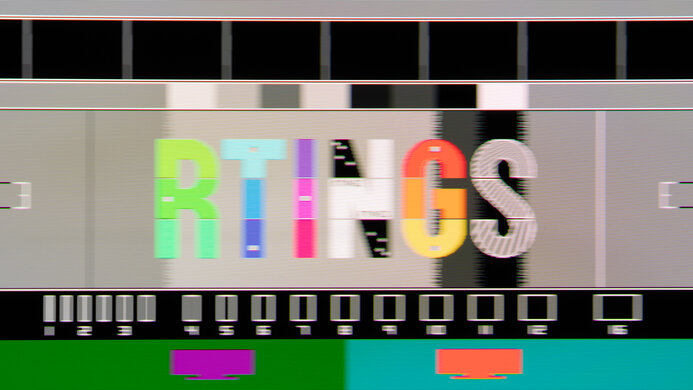
    This monitor has an optional backlight strobing feature to reduce image persistence. It only functions when the monitor's refresh rate is 120Hz or 144Hz, and it doesn't work if VRR is enabled. You can't adjust the monitor's brightness when it's on. Enabling backlight strobing results in image duplication. You can also see this at 120Hz.

    9.0
    VRR Flicker
    Dark Gray Flicker
    0.8 RGB
    Middle Gray Flicker
    0.4 RGB
    Light Gray Flicker
    0.6 RGB

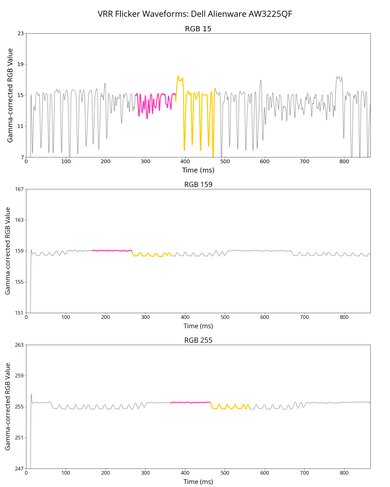
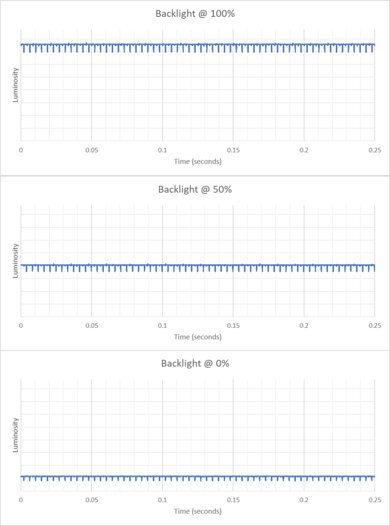
    This monitor has no noticeable VRR flicker with changing frame rates, which is fantastic for gaming.

    10
    Image Flicker
    Flicker-Free
    Yes
    PWM Dimming Frequency
    0 Hz

    The backlight remains flicker-free at all brightness levels, which helps reduce eye strain if you're sensitive to flicker.

    Inputs
    8.6
    Input Lag
    Native Resolution @ Max Hz
    5.2 ms
    Native Resolution @ 120Hz
    6.2 ms
    Native Resolution @ 60Hz
    15.3 ms
    Backlight Strobing (BFI)
    6.9 ms

    This monitor has low input lag for a responsive feel while gaming.

    8.8
    Resolution
    Native Resolution
    3840 x 2160
    Aspect Ratio
    16:9
    Megapixels
    8.3 MP
    Pixel Density
    162 PPI
    10
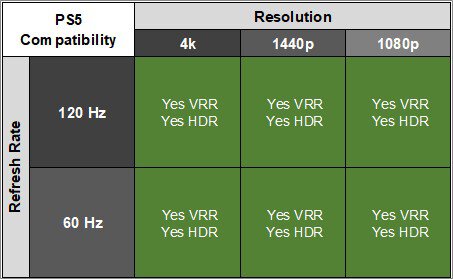
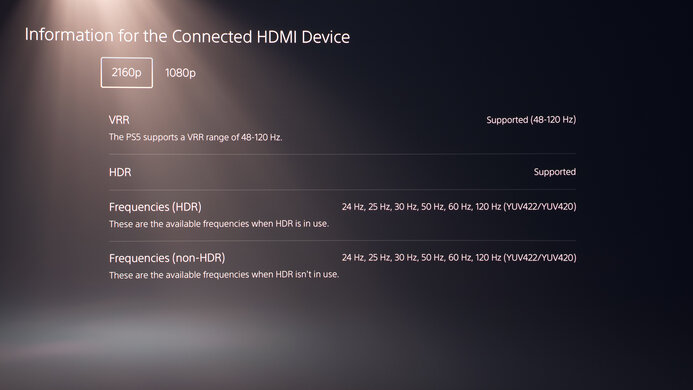
    PS5 Compatibility
    4k @ 120Hz
    Yes
    4k @ 60Hz
    Yes
    1440p @ 120Hz
    Yes
    1440p @ 60Hz
    Yes
    1080p @ 120Hz
    Yes
    1080p @ 60Hz
    Yes
    10
    Xbox Series X|S Compatibility
    4k @ 120Hz
    Yes
    4k @ 60Hz
    Yes
    1440p @ 120Hz
    Yes
    1440p @ 60Hz
    Yes
    1080p @ 120Hz
    Yes
    1080p @ 60Hz
    Yes

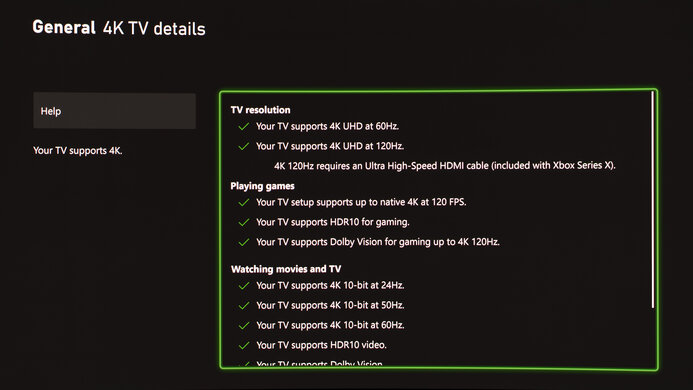
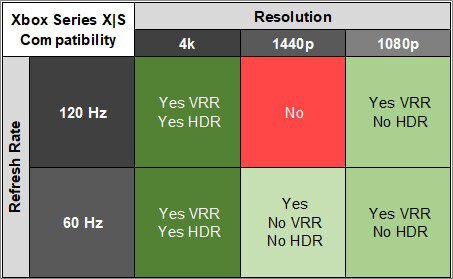
    The Xbox doesn't support HDR with 1440p or 1080p signals, so this isn't a limitation of the monitor.

    Inputs Photos
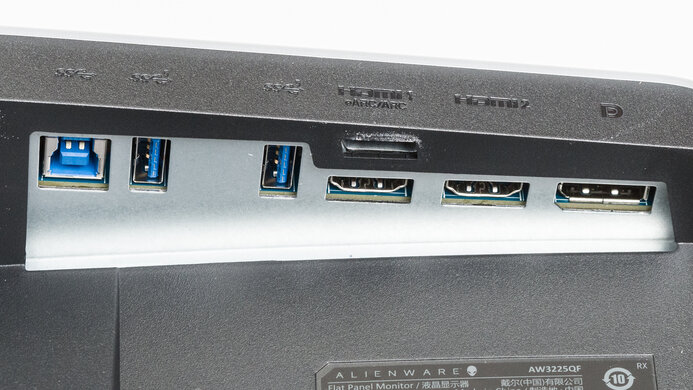
    Video And Audio Ports
    DisplayPort
    1 (DP 1.4)
    DisplayPort Transmission Bandwidth
    No DisplayPort 2.1
    Mini DisplayPort
    No
    HDMI
    2 (HDMI 2.1)
    HDMI 2.1 Bandwidth
    48Gbps (FRL 12x4)
    DVI
    No
    VGA
    No
    Daisy Chaining
    No
    3.5mm Audio Out
    1
    3.5mm Audio In
    No
    3.5mm Microphone In
    No
    USB
    USB-A Ports
    2
    USB-A Rated Speed
    480Mbps (USB 2.0)
    USB-B Upstream Port
    Yes
    USB-C Ports
    1
    USB-C Upstream
    Yes
    USB-C Rated Speed
    5Gbps (USB 3.2 Gen 1)
    USB-C Power Delivery
    65W
    USB-C DisplayPort Alt Mode
    Yes
    Thunderbolt
    No

    The MSI 274UPF has a USB-C port that supports DisplayPort Alt Mode to display an image from a compatible device. The USB-C port supplies 65W of power, which is enough to charge many laptops while they're operating. You can connect the monitor's USB-B port to another computer and use the monitor's KVM switch to use your keyboard, mouse, and monitor with two different computers.

    macOS Compatibility

    Connection HDMI 2.0 HDMI 2.1 USB-C
    Max Refresh Rate 60Hz 144Hz 144Hz
    VRR Range N/A 48-120Hz 48-144Hz
    HDR Yes Yes Yes

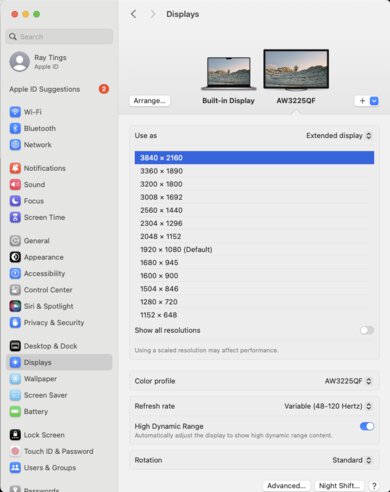
    This monitor works well with macOS. When using a MacBook, windows return to their original position when reopening the lid or waking the laptop up from sleep. Additionally, the KVM switch works well on macOS. VRR also works well, though the max refresh rate with HDMI 2.1 is 120Hz with VRR on. Additionally, colors in HDR look quite washed out.

    Features
    Additional Features
    HDR10
    Yes
    Speakers
    No
    RGB Illumination
    No
    Multiple Input Display
    PIP + PBP
    KVM Switch
    Yes

    The MSI MAG274UPF comes with a few extra features, including:

    • Gaming Intelligence: Lets you use your mouse and keyboard to configure the monitor.
    • Low Blue Light: Decreases blue light output to help reduce eye strain.
    • HDCR: Enhances image quality by increasing the contrast of images.
    • Image Enhancement: Enhances image edges to improve their acutance.
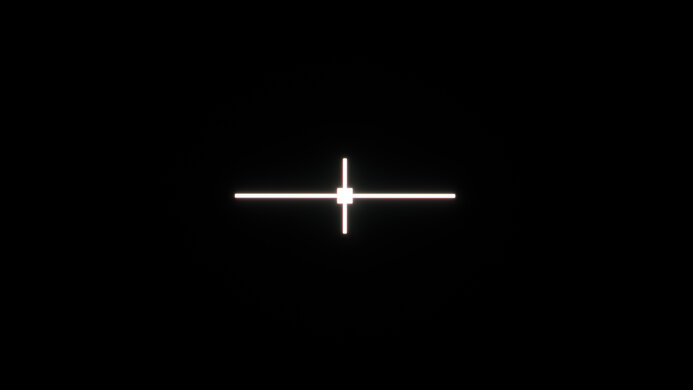
    • Smart Crosshair: Overlays crosshairs to assist with aiming.
    On-Screen Display (OSD)